Book review

An enigma wrapped in a conundrum

From our UK edition

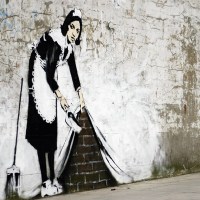
What to make of Banksy? Artist or vandal? Tate Modern holds no Banksys and, other than a redundant phone box that he folded in half and pretended to have reconfigured with a pickaxe, Banksy has never destroyed anything. So I ask my 15-year-old son what he knows of him: ‘He’s the guy who did the policeman with the Tesco bag, who does really cool graffiti, not lame stuff, and no one knows who he is.’ Actually, we do know who he is. His identity was discovered some years ago by the Daily Mail, an organ neither beloved nor believed by those who follow Banksy. But because the public loves a mystery I shall follow Will Ellsworth-Jones in his coy refusal to give the name away in this competent, broadly sympathetic and enjoyable book.

Recent crime novels | 26 May 2012

From our UK edition

William Brodrick’s crime novels have the great (and unusual) merit of being unlike anyone else’s, not least because his series hero, Brother Anselm, is a Gray’s Inn barrister turned Suffolk monk. The plot of The Day of the Lie (Little, Brown, £12.99), Anselm’s fourth case,  is triggered by the discovery of files relating to Poland’s suppression of dissidents in Warsaw, mainly in the 1950s. Anselm’s oldest friend, now blind, was caught up in a linked later betrayal while working as a journalist in Poland. He wants Anselm to go there in his stead to examine the file that holds the name of the informant who betrayed both him and many others.

Back to the Dreyfus Affair

From our UK edition

Not bad, this life. Now 95, Bernard Lewis, is recognised everywhere as a leading historian of the Middle East.He is the author of 32 books, translated into 29 languages, able in 15 languages, consulted by popes, kings, presidents and sheiks, on good or argumentative terms with many Western and Middle Eastern scholars and politicians, husband more than once, father, grandfather, and — true love at 80! — partner of the joint author of this book. He speaks with authority, although he is often disputed and occasionally sued, on so many different matters that his frequent name- and award-dropping somehow don’t exasperate. A non-observant English Jew, Lewis has visited most of the countries of the Middle East, even those that from time to time forbade Jews from entry.

Some legends flourish …

From our UK edition

Confronted by the dead Athenian heroes of the Peloponnesian War, Pericles gave voice in his funeral oration to an idea that explains better than any other why we are so obsessed by our military past. The freedom intrinsic to democracy, he said, made the unconstrained decision of its citizens to risk their lives in war more honourable than the choice forced on the soldiers of a militaristic system such as the Spartans’. ‘The man who can most truly be accounted brave,’ Pericles concluded, ‘is he who knows best the meaning of what is sweet in life and of what is terrible, and then goes out determined to meet what is to come.

A lord of thin air

From our UK edition

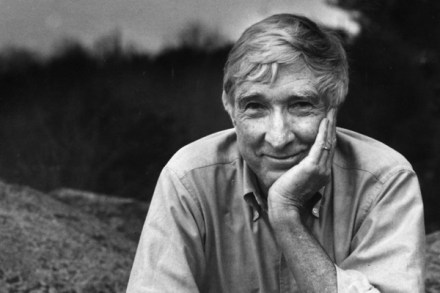
It is easy, especially if one is not American, to feel ambivalent about the fictions of John Updike. The immaculate clarity of his prose style, the precision of his vocabulary, the tenderness underlying his Wasp comedies of manners, the puckish wit rising above a sorrowful temperament — none of these can be gainsaid. But the ways in which his novels seemed to raise the banality of fornication to some remote altitude of meaning, his efforts to imbue the quandaries of adultery and cuckoldry with transcendent significance, can seem relentless and overdone.

Life imitates art

From our UK edition

The other evening my wife came home to find me watching re-runs of Steptoe and Son. The washing up had not been done, and everything was in a state of bedragglement (including Olga, the family dog). ‘How can you bear to watch that stuff? Steptoe’s got a face like a squeezed lemon. He’s perfectly horrible. I’ll go further: he’s perfectly revolting.’ How could my wife not like Steptoe? The series had been a hit from the moment it was launched in 1962 and drew audiences of over 20 million. Ray Galton and his co-writer Alan Simpson combined a seaside postcard sauciness with the cockney menace of Harold Pinter (only with shorter pauses). The series is, among other things, a meditation on human decrepitude and the frustrations of a father-son relationship.

Ladies, you don’t want to go back there

From our UK edition

In 2009 a magazine survey found that many women in their twenties wanted to stay at home baking while their husbands went out to work: ‘I’d love to be a captive wife.’ Jessica Mann’s thoughtful and emphatic book is a riposte to this, an overview of the Fifties, which she calls a polemic and a personal memoir, winding together fact and opinion with her own experience of being, first a teenager and then a young woman at that time. The result is a richly readable and persuasive piece of work. I found myself reverently ticking the notes I took (‘Yes! Yes!’) while being reminded of aspects of those days I had forgotten — or sublimated.

Forever waging wars

From our UK edition

Death by buggery. Death by castration. Even death by being scared to death. Or so we are led to believe for the Plantagenets’ world. They had a lighter side, too: Henry II employed a professional flatulist with the trade-name of Roland the Farter. The longest reigning royal dynasty in English history (1154-1399), the Plantagenets offer the glaring contrast between their even balance of outstanding kings and outstandingly bad ones; this adds to the already exciting dynamics of a dramatic period, captured to great effect in Dan Jones’s big book on a big subject. The Plantagenets were established on the English throne by the ‘incessantly busy’ Henry II.

Photo finish

From our UK edition

Christopher Isherwood kept diaries almost all his life. The first extant one dates from 1917, when he was 12, and like most schoolboys he used it more to measure than record his days: ‘Work in morning, walk in afternoon. In choir. More work. Nothing special.’ At Cambridge, however, inspired by the W.N.P. Barbellion’s The Journal of a Disappointed Man, he began keeping a more detailed and reflective record of his experiences. Fragmentary diaries survive from the years 1928 to 1938, but the four volumes of Isherwood’s published diaries begin with his arrival in America in January 1939 and end in 1983, three years before his death.

Who needs money?

From our UK edition

I was racking my brains, trying to understand money, trying to grasp exactly what it is, when I came across these two books. One is written by Aaron Brown, who is the risk manager of a large Wall Street hedgefund. The other is by David Graeber, the anarchist who has been called the leader — and, sometimes, the anti-leader — of the Occupy Wall Street movement. Both have written brilliant books about the history of money. As you’d expect, Brown thinks that money, in its various forms, has made the world a prosperous and interesting place, and Graeber thinks that money has divided the world into two tribes — a tiny, and shrinking, number of very rich people (like Brown), and a vast, and growing, army of debtors. In a way, they’re both right. So what is money?

Bookends: Prep-school passions

From our UK edition

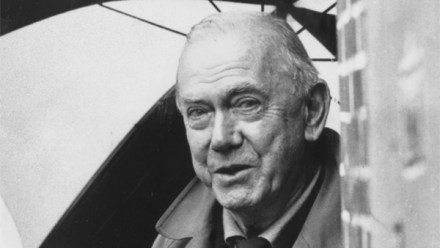
In his introductory eulogy, Peter Parker calls In the Making: The Story of a Childhood  (Penguin, £8.99) G. F. Green’s masterpiece, which, though not popular, attracted the admiration of E.M. Forster, Christopher Isherwood, Stephen Spender, J.R. Ackerley, John Betjeman, Philip Toynbee, C.P. Snow, Pamela Hansford Johnson, Frank Tuohy and Alan Sillitoe. According to Elizabeth Bowen, he was ‘the most neglected writer of his generation’. Explaining the title to his friend Michael Redgrave, Green (pictured above) said: ‘The theme is unequivocally that of the conditioning of a homosexual and the foreshadowing of his future love pattern.

Method in her magic

From our UK edition

Bring Up the Bodies, as everybody knows, is the sequel to Wolf Hall, Hilary Mantel’s fictional re-imagining of the life and times of Henry VIII’s most effective servant, Thomas Cromwell. We have long been banging our spoons and forks for it. Speaking for myself, I finished the first with an almost unbearable curiosity to find out what was going to happen next — a strange result, when you think of it, because we all know perfectly well what is going to happen. Mantel is comprehensive with her sources. Every scene is secured, like a piano key to its hammer, to the corresponding page of the great 21-volume Calendar of State Papers of Henry’s reign.

Fatal entrapment

From our UK edition

I am no great fan of spy thrillers and positively allergic to conspiracy theories, but I found this book difficult to put down. In an earlier study, Edward Lucas examined Russia’s use of energy as a weapon against the EU and the Atlantic alliance. In this one, he dives below the surface into the murky waters of the country’s security apparatus and demonstrates that, while it has shed the old KGB image, it remains as pervasive and just as menacing. Before the fall of the Berlin Wall, the battlelines were clear cut and so was the role of the Soviet Union’s defenders. At home, they silenced any criticism of the system. Abroad, they carried on an ideological struggle for dominance with the United States and its allies.

The courage of their convictions

From our UK edition

HHhH is a prize-winning French novel about a writer writing a novel about the plot to kill the Gestapo boss Reinhard Heydrich. A lot of people reckon it’s a big deal — Martin Amis, Mario Vargas Llosa, me — so naturally there’s a backlash afoot. In a fit of territorial pissing disguised as an interview, Michael Burleigh revealed that Laurent Binet ‘does not even read German’ (which HHhH admits on page 28) and professed surprise that his research failed to take in a Heydrich biography published (as Burleigh didn’t say) almost two years after HHhH first came out. I suppose part of the problem is that Binet asks for trouble with clever-dick lines like this one: ‘This scene is not really useful, and on top of that I practically made it up.

Trouble at mill

From our UK edition

I have some sympathy with the pioneering incomers who moved to the Yorkshire mill town of Hebden Bridge in the 1970s. At the time Hebden was in a near terminal decline, its factories closing in rapid succession. As a result, the town suffered one of the fastest depopulations ever seen in Britain, as the more animated locals left to find work elsewhere. The incomers, called ‘offcomers’ locally, sought to reverse this with a strong dose of middle-class culture, although being for the most part liberal Guardian readers they would probably baulk at the idea they ever sought to engineer working-class Hebden into something more bourgeois. Nonetheless, that is what they did, and it worked.

Mission accomplished

From our UK edition

Two shots killed Osama bin Laden, one in his chest and one in his left eye. ‘Two taps’ is standard practice for close-quarter shootings — firing twice takes virtually no longer than firing once and you increase (without quite doubling) your chance of an instant kill. He was in his top-floor bedroom, in the dark, and his killers wore night-vision goggles. He died 15 minutes after the first sounds of attack — the roaring of helicopters, the crash-landing of one outside the compound, the blowing of a steel door in the wall. During those fateful 15 minutes he waited with one of his wives in the pitch black of that small room, paralysed perhaps by fear or indecision and hampered by the design of his house.

They’re all in it together

From our UK edition

However often rehearsed, the facts remain eye-popping. Inequality has bolted out of control over the last three decades. Democracy has proved increasingly powerless to check the unaccountable runaway oligarchy that fails even to pay its taxes. Ferdinand Mount gives a lucid account of political decay alongside all this looting, a disengaged electorate and a cult of leadership in hock to overmighty media oligarchs, all ominously suggestive of the decline and fall of the Roman empire. When a Tory tells the story, it’s far more compelling than any left-winger. Mount was head of Margaret Thatcher’s Policy Unit from 1982 to 1984 and a director of the then most influential Tory think-tank, the Centre for Policy Studies.

The usual suspects | 3 May 2012

From our UK edition

It is disconcerting to discover that a novelist a generation older than oneself has been trying to write ‘a sort of Margaret Drabble effort’, even if the book ‘hadn’t turned out like that at all’. This is how Barbara Pym described her then unpublished campus novel An Academic Question in 1971 to her friend and admirer Philip Larkin. Naturally I was intrigued to know what she meant. Pym’s publishing history is well known: between 1950 and 1961 she published six  highly praised novels, and then ran up against a solid rock of refusals. Jonathan Cape dropped her, and she was told her work was out of fashion. Puzzled and down-hearted, she went on writing, somewhat hopelessly, because she couldn’t help it.