Book review

And the Mountain Echoed, by Khaled Hosseini – review

From our UK edition

The American comedian Stephen Colbert once joked that when he publicly criticised the novels of Khaled Hosseini, his front garden was invaded by angry members of women’s books groups. They were carrying flaming torches in one hand and bottles of white wine in the other. It’s a joke that neatly sums up two significant facts about Hosseini’s status as a writer. First — and not to be underestimated, of course — it proves that he’s famous enough to make jokes about. But it also reminds us that his fame has been driven by ordinary book-lovers rather than literary professionals. His two previous novels, The Kite Runner and A Thousand Splendid Suns, have sold around 38 million copies.


The Hermit in the Garden, by Gordon Campbell – review

From our UK edition

In his 1780 essay On Modern Gardening Horace Walpole declared that of the many ornamental features then fashionable, the one ‘whose merit soonest fades’ was the hermitage. Inspired by the ancient cells of genuine religious anchorites, but largely decorative, garden hermitages had flourished in Britain during the 18th century. While some were appropriately primitive in design, others had Gothick doorways and windows filled with stained glass, floors made of pebbles or sheep’s knucklebones arranged in elaborate patterns, ceilings ornamented with pine cones, rustic furniture made from elm boles ‘distorted by fungal disease’, and inscriptions carved in stone to aid philosophical reflection.

Perilous Question, by Antonia Fraser— review

From our UK edition

There are times when a major drama in the House of Commons really does change the course of British history. The period 1974–79, dramatised in the play This House, was one such. The crisis over the Great Reform Bill was another. Not so long ago, every schoolboy knew that the 1832 Reform Act gave the vote to the middle classes. Nowadays, thanks to the collapse of history teaching, very few schoolboys or girls know anything about it at all. Antonia Fraser has written a compelling and timely book on this almost forgotten political battle. The story begins with the election of 1830, which was called because of the accession of King William IV. The Tories, who had been in power for virtually 60 years, scraped in with a flaky majority.

A Delicate Truth, by John le Carré – review

From our UK edition

John Le Carré is one of a select group of novelists whose vivid and internally coherent imaginative worlds are so recognisable that their names have become adjectives — Dickensian, Wodehousian,  Kafka-esqe. Thus, we all know what we mean by Le Carré-esque — the shifting sands of the Cold War, its depths and shallows reflected in the moral composition of those who fought it, sinister and impersonal state interests pitted against the individual, the inevitability of doing the wrong thing for the right reasons, London grey in fog and rain, the outward manifestation of the inner landscape.

Americanah, by Chimamanda Ngozi Adichie, and Ghana Must Go, by Taiye Selasi – review

From our UK edition

Excitement over the extraterritorial birthplace of authors on Granta’s recent list of Britain’s best young novelists must have been old news in the United States, where the New Yorker’s equivalent exercise four years ago turned up Americans from China, the Dominican Republic, Ethiopia, Latvia, Nigeria, Peru, Russia and Serbia. Roughly speaking, this immigrant fiction makes a threefold appeal: it’s exotic, yet familiar (‘our’ culture measured by the standards of another), with a hairshirt’s prickle, too (by showing how short we fall). Chimamanda Ngozi Adichie’s new novel briefly features an eight-year-old Pennsylvanian boy who, before his nanny arrived from Nigeria, never knew that oranges contained pips.

Eleven Days in August, by Matthew Cobb – review

From our UK edition

It is fair to assume that Professor Matthew Cobb has often been asked if he is related to Professor Richard Cobb since he begins the acknowledgements of his new book by announcing that he is not. Richard Cobb wrote books about France — where he was known as l’étonnant Cobb and, according to his obituary in the Independent, ‘once greeted the dawn nude, in the company of a dozen similarly unattired men and women, in the fountains of the Place de la Concorde’ — and he had a son called Matthew; and Matthew Cobb’s father was called Richard, so the question is understandable. It must also be annoying, though, because Richard Cobb was such a stylish writer, while Matthew Cobb is less so.

Life and Letters, by Allan Massie – review

From our UK edition

It is a safe bet that Alex Salmond has no immediate plans to embrace Allan Massie as one of Scotland’s National Treasures. A Unionist in an increasingly nationalist country, a traditionalist in a time of change, an ungoogler engulfed by the internet, and an amateur of creative activities, cultural and sporting, when the fashion is for professional analysis, Massie could hardly be more out of step with the prevailing ethos of his countrymen. Yet, this collection of his Life & Letters columns for The Spectator illustrates why the larger community of readers and writers should clasp him to their collective bosom as a figure of genuine literary distinction.

The Devonshires, by Roy Hattersley – review

From our UK edition

Recalling being taken as a teenager on repeated outings to see Chatsworth, Roy Hattersley disarmingly confesses that in those days ‘I was impressed by neither the pictures nor the furniture’. Over the past three years, while working in the Chatsworth archives on this history of its owners, the Cavendish Dukes of Devonshire, Hattersley would break off from research to roam the rooms and reacquaint himself with the house’s treasures. Yet if he is now more appreciative of its contents, he is not completely under the spell of Chatsworth’s past occupants. The ‘founding mother’ of the Devonshire dynasty was the Tudor virago known as Bess of Hardwick.

‘Diana Vreeland’, by Amanda Mackenzie Stuart – review

From our UK edition

Over 80 and almost blind, Diana Vreeland was wheeled around a forthcoming costume exhibition at the Metropolitan Museum, issuing instructions all along the way about hats, shoes, lights and mannequins. She seemed, recalled the writer Andrew Solomon, an impossible old lady who couldn’t let go of her control and who was making everyone’s lives miserable for no good reason. And they did everything she’d said, and it was transformed. Her nearly sightless eyes could pick out things my youthful vision could not; enfeebled, she was still supreme at the discipline of chic. From childhood, Diana Vreeland had operated with deep faith in the power of self-presentation.

‘Lord Horror: Reverbstorm’, by David Britton and John Coulthart – review

From our UK edition

As the son of the last British artist to be successfully prosecuted for displaying obscene paintings, I have some empathy with David Britton, the last person successfully prosecuted in Britain for publishing obscene literature. Unlike my father, who accidentally strayed into the purview of the police, Britton’s prosecution in 1992 was almost inevitable. His publisher, Manchester-based Savoy Books, was raided by the police with vindictive regularity between 1976 and 1997. Ironically, Savoy has often been reviled as much by the left for its lack of political correctness as by the right for attacking the shibboleths of authority. It embodies a longstanding tradition of non-conformist and essentially anarchist thinking in Britain that also underpins Reverbstorm.

‘Ware’s Victorian Dictionary of Slang and Phrase’, by J. Redding Ware – review

From our UK edition

James Redding Ware, with his idiosyncratic treatment of slang, plunges the reader straight into the late 19th-century Bartholomew Fair of undeserving paupers, loafers, Ally Slopers, theatrical types and demi-mondaines. He drew on his own Grub Street life for this discursive lexicon, from A.D. (‘a drink’) to Zulu Express (the nickname for a Great Western service), published, days before his death in 1909, as Passing English of the Victorian Era: A Dictionary of Heterodox English, Slang and Phrase. The Bodder has faked it up nicely in smudgy facsimile, with burgundy end-papers, a new title and an introduction by John Simpson of the OED, who devours dictionaries with his morning porridge.

‘On Glasgow and Edinburgh’, by Robert Crawford – review

From our UK edition

Glasgow and Edinburgh are so nearby that even in the 18th-century Adam Smith could breakfast in one city and be in the other for early-afternoon dinner. For all that, these two cities cherish a rivalry and have followed different paths. Edinburgh, a royal capital until 1603 and a seat of parliament until 1707, and again in recent years, home to a great university and medical school and nurse to writers from Walter Scott to Joanne Rowling, has made almost as much history as Jerusalem. Edinburgh peers down from Castle Hill as if over a newspaper on its toiling rival to the west, besmirched with tobacco and slavery and laden with locomotives, boilers, ships, Vanguard-class nuclear submarines and incessant rain.

The Childhood of Jesus’, by J.M. Coetzee – review

From our UK edition

Stripping down prose is not a risk-free undertaking. The excision of adverbs and the passive voice is sound practice in journalism. However, to make very bare writing a thing of beauty in fiction requires enormous skill. Hemingway’s short stories — those clean, well-lighted places — manage it. Despite its author’s fellow possession of a Nobel prize, J.M. Coetzee’s new novel does not. In The Childhood of Jesus the South African eschews the baroque only to tend to the banal. Davíd and Simón arrive by boat in an unmanned Hispanophone country. They come to the city of Novilla, where a bureaucracy serves the needs of newcomers. Davíd is about five.

William Burges and the High Victorian Dream’, by J. Mordaunt Crook – review

From our UK edition

It is 32 years since the first edition of this hefty book appeared in 1981. The original was based on the research materials amassed by Charles Handley-Read, the pioneer scholar and collector of Victorian decorative arts and one-time art master at Bryanston, who killed himself in 1971. Other people’s research notes are often not easy to use, and Joe Crook has greatly expanded that core material, and presented it in an illuminating schematic way. This second, revised and enlarged edition, as well as correcting errors and fine-tuning matters of detail, incorporates many hitherto ‘lost’ art objects by Burges, rediscovered in the aftermath of the first edition. The rich ‘cream and brandy’ literary mannerisms have also been toned down slightly.

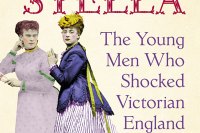
‘Fanny and Stella: The Young Men Who Shocked Victorian England’, by Neil McKenna – review

From our UK edition

Mick Jagger, the Danny La Rue of rock, impersonates a woman on the cover of the 1978 Stones album Some Girls. Vaudeville performers in the Jagger mould love to put on lipstick and ‘false bubbies’ (as Neil McKenna calls them). Boy X-Factor contestants, with their shaved eyebrows, diamond earrings and nails lovingly manicured, present an almost Gloria Swanson-like image of adornment. Perhaps it is merely romantic to suggest that the stylised wigs and gowns worn by our bishops and high court judges also have a homoerotic component. The former Pope Benedict XVI’s ruby-red pumps were nothing compared to the faux ermines worn in the House of Lords.

‘O My America!’, by Sara Wheeler – review

From our UK edition

You might not expect Sara Wheeler, the intrepid literary traveller, to be anxious about passing the half-century point. Surely a person who can survive the mental and physical rigours of Antarctica, as she brilliantly documented in Terra Incognita, can cope with ageing and menopause? Wheeler herself was not so certain. In her restless, creative way, she met the advent of what she calls ‘the Frumpy Years’ by taking to the road, following the trails of six indomitable Victorian women across the United States. The combination of that nation of eternal makeover and of Wheeler’s travelling companions makes O My America! a curious and teasing book.

‘The Infatuations’, by Javier Marías – review

From our UK edition

A café in Madrid. From her table across the room a solitary woman watches an attractive couple share breakfast morning after morning and speculates pleasurably about their relationship. One day they fail to appear and as time passes she feels a deepening sense of loss. Later she learns that the man has been murdered, stabbed to death in the street — an apparently senseless crime. The tragedy of the happy couple touches and disturbs her. Then, almost accidentally, she finds herself becoming involved with the widow and the dead man’s best friend. At first all is straightforward: loss, grieving, consolation. Gradually the relationship becomes more complex: she begins an affair with the friend, recognising that she is little more than a stopgap in his life.

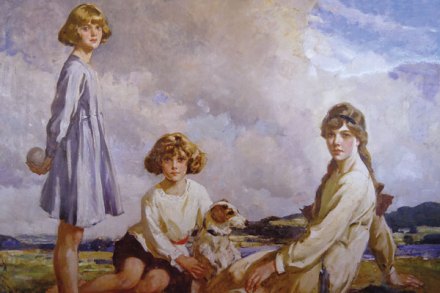
‘Daphne du Maurier and Her Sisters: The Hidden Lives of Piffy, Bird and Bing’, by Jane Dunn – review

From our UK edition

Jane Dunn is something of a specialist on sisterhood. She has — we learn from the dedication — five sisters of her own; she has already written a book about the sisters Virginia Woolf and Vanessa Bell, and another about the cousins Elizabeth I and Mary, Queen of Scots. Now the du Maurier sisters are in line to capture the public imagination like the Brontës or the Mitfords, their group celebrity fortified by genuine claims to fame. The fascination for readers is the different character and destiny of each sister, plus their relationships with one another and with the dynamics of the family romance —  and few family romances have been more potent than that of the du Mauriers.