Book review

Putting the fun in fundamentalism

From our UK edition

Turnaround Books, the publishers of Timothy Mo’s remarkable Pure, are revealed to operate from Unit 3, Olympia Trading Estate, Coburg Road, London N22. From this we may deduce that the publishing history of the three times Booker-shortlisted Anglo-Chinese novelist continues on its maverick way. Imagine if Mo had approached a conventional publisher with a proposition: this is a novel about jihad in south-east Asia, as seen through the eyes of a Muslim ladyboy. Mo’s perversity and boldness apply in equal measure to his hero/heroine.

Bookends: Pure gold

From our UK edition

Even nowadays, a 50-year career in pop music is a rare and wondrous thing, and for a woman triply so. And yet Carole King’s golden jubilee passed a couple of years ago without a murmur, let alone a box set. You get the impression from A Natural Woman (Virago, £20) that that’s the way she likes it. After writing hit after hit with her first husband Gerry Goffin in the early 1960s, and selling 25 million copies of her second solo album, Tapestry, in the early 1970s, she has enjoyed a steady rather than stellar career, which has given her time to bring up four children and go back to the land and milk goats in Idaho for a few years, because that’s what she wanted to do. Her memoir, unghosted, is as female as Keith Richards’s was unequivocally male.

Family get together 

From our UK edition

Mark Haddon is in what must sometimes seem like the unenviable position of having written a first (adult) novel which was, and continues to be, a smash hit. Drawing in part on his own experiences of working with the autistic, The Curious Incident of the Dog in the Night Time has become one of those books that anyone who claims to be a reader must know. His second novel, A Spot of Bother, did not receive the same acclaim, perhaps partly because the subject was a man in mid-life crisis who convinces himself he is dying. It too was wonderful, though — funny, perceptive and moving. His latest book, The Red House, is in the same mode as the second.

Reading the runes

From our UK edition

Martin Palmer is without doubt one of our leading authorities on the subject of Nature and sacred writing today — among his previous publications being Sacred Gardens and The Sacred History of Britain. One of the primary aims of his latest book is to teach us how to ‘read’ our surroundings; for, he believes, like all sacred art, Nature can be read as a book, if only one understands the language. Thus, through ‘decoding’ the towns, villages and countryside of Britain, we may come to see that ‘we are caught up in a part of something much greater and grander than ourselves’.

A moth to the flame

From our UK edition

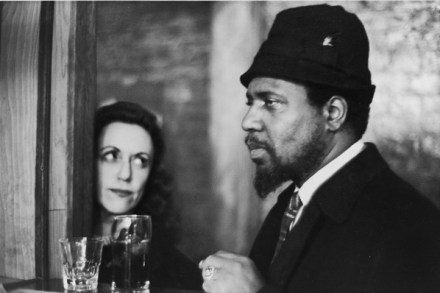
When Hannah Rothschild first met her great-aunt Nica it was 1984. Hannah was 22, and Nica, then 70, had asked her to come sometime after midnight to a basement jazz club in an area of pre-Giuliani downtown Manhattan ‘known for its crack dens and muggings’. She was able to find the venue, as promised, by the pale blue Bentley parked erratically outside and inhabited by a couple of drunks. Inside, her aunt, ‘the Baroness’, was easily identifiable as the only white person: a wizened old doll in a fur coat with a a long black-filter cigarette, drinking whisky out of a teapot.

Out of sight, out of mind

From our UK edition

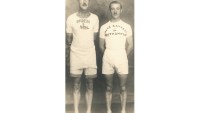
Arthur Newton and Peter Gavuzzi, long-distance interwar runners, are two of the most extraordinary British athletes. They are also the most forgotten. This is because the distances they favoured were too long to be accommodated by any athletics event: to them a marathon would have been a mere warm-up jog, their distances were 100 miles, and, in one case, a run across the whole of the United States, when they completed 40 miles a day for 80 consecutive days. Mark Whitaker has thus set out to write a poignant account of unrecognised achievement. The only thing is, in the process he has written the most bizarre and bleakly humorous book there will probably ever appear on athletics.

It concentrates the mind wonderfully

From our UK edition

It’s odd, but we mostly go about as if death were optional, something we could get out of, like games at school. Philip Gould, in When I Die, admits that he never gave it much thought. Then he got oesophageal cancer. He had a horrible operation, got a bit better. Then the cancer came back. He had chemotherapy, more surgery, a lot of pain. And it came back again: ‘I knew then that the game was up.’ Having worked as Tony Blair’s strategist, Gould at first imagined his illness as another kind of campaign. But once his death became certain, he underwent a remarkable change: The unvarnished certainty that you are going to die within a certain period of time is an immensely powerful thing.

Going to the fair

From our UK edition

Why would anyone want to buy this dreadful book? The frightful Simon Cowell appears to have co-operated with the author, and it is littered with repellent photographs — chiefly of a smirking Simon surrounded by beautiful ‘ex-girlfriends’. (Cowell is keen to inform us that he has had lots of girlfriends. He is not gay. Not. Gay.)    Surely, if one wanted to read about Cowell and gaze at pictures of his over-indulged, hairy body, why not just browse the internet? The websites featuring comments such as, ‘Simon Cowl is reelly horibel and rood’ are far more amusing than Tom Bower’s repetitive biography.

Celebrating the Tube …

From our UK edition

The London Underground is methadone for people with nerd habits. Were it not for its twisty, multi-coloured map, its place in the capital’s history, its tendency to throw up facts such as ‘the QE2 would fit inside North Greenwich station’, we’d be on the hard stuff. The smack of nerd-dom. We’d be on the platform at Crewe with notebooks, taking down numbers, ruining our marriages. As it is we maintain social respectability by obsessing about the Tube. The Tube is sexy in a way that mainline trains aren’t. Even young people, proper trendy young people who know the names of bands, get excited by the Tube.

Bookends: … and the inner tube

From our UK edition

In the early 1990s, when Boris Johnson was making his name as the Daily Telegraph’s Brussels correspondent, Sonia Purnell was his deputy, and last year she published a biography of him — the second, and surely not the last — entitled Just Boris: A Tale of Blond Ambition. Now follows Pedal Power: How Boris Failed London’s Cyclists (Aurum Press, £2.05), which is described as an ebook but is more accurately a (badly written) epamphlet. There are ‘votes in cycling’, as she puts it, ‘in a way that there never has been before’, and she means to sway those votes in the imminent mayoral election. She is, though, a more effective biographer than a polemicist.

The American way of justice

From our UK edition

Conrad Black sympathises with the NatWest Three — victims of British cowardice and a corrupt US legal system It was the misfortune of David Bermingham and his co-defendants to be very peripherally connected to the Enron debacle. Enron was the ultimate hot financial client for a merchant banker and designer of sophisticated financial vehicles, the author’s occupation at Greenwich National Westminster. Bermingham’s offence was to produce a spectacularly imaginative new structure for an existing financial company, which impressed the Enron financial officers, at a time when Greenwich National Westminster was being offered for sale and NatWest itself was a takeover candidate.

A law unto itself

From our UK edition

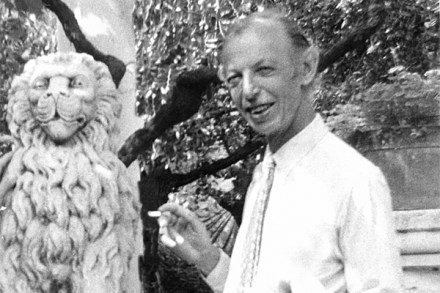
One could meet any day in Society Harold Acton, Tom Driberg or Rowse: May there always, to add their variety, Be some rather Odd Fish at The House. Thus W. H. Auden (something of an odd fish himself) reminiscing at a Christ Church gaudy half a century ago. There have certainly been quite a lot of such fish in living memory, not least in the Senior Common Room.

Ultimate issues

From our UK edition

In his preface to this anthology of brief memoirs, Robert Silvers suggests that its ‘invisible, tragic core’ is to be found in an account by Isaiah Berlin of one of his several meetings with Boris Pasternak. Pasternak told Berlin how Stalin had once telephoned him to ask him two questions: had Pasternak been present when Mandelstam read out his notorious ‘Epigram’ about Stalin; and was Mandelstam a ‘master’? Pasternak sidestepped these questions by saying that it was essential that he and Stalin meet: they needed to ‘speak about ultimate issues, about life and death’. This was in 1934, not long before Mandelstam’s first arrest.

Cry freedom

From our UK edition

Scenes From Early Life is a rather dull title for a deeply interesting book. It is a novel; this is stated on the jacket, as if anticipating the possibility that readers may question that definition. Set in Dacca (now Dhaka), it is about the emergence of Bangladesh as a state independent of Pakistan after the savage civil war of 1971. Philip Hensher has drawn on memory and history — family history and ‘real’ history. Historical characters, notably Sheik Mujib, the courageous and civilised Bangladeshi leader, mingle with semi- and wholly fictional ones. The joins are seamless. Finishing the book, I was startled to realise that Hensher, an Englishman, had written a novel without a single English character in it, and that I, at least, had been wholly convinced.

One that got away | 21 April 2012

From our UK edition

There are six drawings in the back of this book. They’re not very good drawings. In fact they look as if they come from an unusually hamfisted comic strip. However, it’s their crudity that makes them so powerful. One shows a young boy being suspended over a coal fire, a rope round his wrists, a chain round his ankles and a hook through his abdomen. The boy is Shin Dong-hyuk, the only person born in a North Korean labour camp ever to have escaped from one. Shin’s first memory is of being taken to see an execution aged four. He watched a man having his mouth stuffed full of pebbles in case he tried to shout out anything unpatriotic, and then shot.

The calls of the wild

From our UK edition

This is a weird and wonderful book. Bernie Krause, who started out as a popular musician and then in the mid-Sixties began to experiment with synthesisers and electronic mixing, has spent the past 40 years recording natural noises — individual species, but more importantly, perhaps, whole habitats and therefore the relationship of the different sounds within specific environments. He has recorded over 15,000 different topographies, and is recognised as a global expert. However — and this is his point — at least half of these ‘soundscapes’ no longer exist; their ancient music has been corroded, thinned out or even silenced by human background din, as well as by the exploitation and destruction of so many of the habitats and species themselves.

Road to ruins

From our UK edition

This is a delightful book, nostalgic, slyly witty, perceptive and at times flirting — deliberately — with old fogeyism. Tom Fort, a BBC radio journalist, starts from the assumption that ‘many of us have a road that reaches back into our past’. For him, this is the 92 miles of the A303 — as he subtitles his book, the ‘Highway to the Sun’. At first glance I imagined there might a be a sort of literary suicide in store; but I quickly discovered that Fort had much more in mind than an anorak’s guide to a road.