Paul Binding

Tip-toeing through Sri Lanka

From our UK edition

‘The first night I stayed in Kilinochchi, I was a little apprehensive,’ admits the usually cool-headed Vasantha, van-driver and narrator of all the stories in Noontide Toll. Kilinochchi was the operational centre of the LTTE (Liberation Tigers of Tamil Eelam) until the Sri Lankan army’s entry in January 2009. Now the town offers amenities like the Spice Garden Inn, with glass-walled cafeteria and reception desk overflowing with coconut flowers and bougainvillea. Yet its assistant manager, Miss Saraswati, belies such luxurious blandness. A rat suddenly appears in the café; immediately she hurls a bottle, breaking the creature’s skull without destroying the implement. ‘I stared at Miss Saraswati. “You learn to do that at Jaffna hotel school?


The making of a novelist

From our UK edition

Karl Ove Knausgaard was eight months old when his family moved to the island of Tromøya; he left it aged 13, because of his father’s higher-grade teaching appointment on the mainland. As they drove over the bridge linking the island with the southern Norwegian port of Arendal, ‘it struck me with a huge sense of relief that I would never be returning, that… the houses and the places that disappeared behind me were also disappearing out of my life, for good.’ Only in a literal sense did they disappear. And the six-volume autobiographical novel sequence, My Struggle, on which Knausgaard embarked after the success of his first two books, demanded his coming to terms with his formative early milieu.

From frankness to obsession – the novels of Francis King

From our UK edition

Gide wrote to Simenon: ‘You are living on a false reputation — just like Baudelaire and Chopin. … You are much more important than is commonly supposed.’ Something of the kind could, I feel, be said about Francis King (1923–2011), who was prolific, like Simenon (his last book, Cold Snap published in 2009 was his 50th), an active, sociable member of the British literary community, conservative but beguilingly tolerant, and an internationally respected professional. But now that Macmillan Bello have reissued 24 titles from his large output, of commendably equal artistic quality, we are better placed to appreciate just how unflinchingly penetrative was the gaze he turned on individuals and societies and how unusually daring his imaginative scope.

The Child’s Child, by Barbara Vine – review

From our UK edition

‘I always know when a novel is going to be a Barbara Vine one,’ Ruth Rendell said to me in 1998. ‘In fact I believe that if I weren’t to write it as Barbara Vine, I wouldn’t be able to write it at all.’ A Barbara Vine — from the first, A Dark-Adapted Eye (1986) onwards — tends to take a specific period, distinct in mores and cultural tensions, and to concentrate on emotionally charged events, invariably climaxing in violent death, which stand in metaphoric relationship to it. In the body of this latest Vine book — the 192-page narrative actually entitled ‘The Child’s Child’ — all these requirements are amply met.

A snake in the grass

From our UK edition

‘He walked straight past the wolf and picked up the dead garter snake.’ This is the exemplary sentence that young teacher Connie writes out for a good-looking, baseball-loving pupil three grades behind in his studies. ‘Fifteen years old, and thick as a plank,’ the school Principal, Parley Burns considers him. Connie chooses her words to meet what this boy really cares about. The school is in Jewel, a small town in south-west Saskatchewan, and Michael, always happier out-of-doors, really did bring in a snake, to display its beauty. Finding it, Parley killed it with his blackboard-pointer. Unfortunately the best Michael can do with the sentence is: ‘He wakt past the fol and pickt up the ded grtre snake.

Doctor in distress

From our UK edition

It is winter 1936. Every weekday morning a group of young people travel by train from Ferrara, their home city, to Bologna where they are studying at the university. Theirs is a six-carriage stopping train, often infuriatingly late because of delays on the line, thus contradicting the famous Fascist boast about improvement of Italian railways. But these youths enjoy their ride, its camaraderie and little rituals. Only one carriage is not third class, and here, they notice, an eminent member of their own community is sitting: Dr Athos Fadigati. To this ENT specialist’s clinic most of them have, during childhood, been taken.

Abiding inspiration

From our UK edition

In 1971 looking back over his life, Lionel Trilling (1905-1975) declared himself surprised at being referred to as a critic. Certainly his plan when young had been the pursuit of the literary life, ‘but what it envisaged was the career of the novelist. To this intention, criticism, when eventually I began to practise it, was always secondary, an afterthought: in short, not a vocation but an avocation.’ As Adam Kirsch comments, in his timely, incisive, succinct study, this admission was made when Trilling was ‘the most famous and authoritative literary critic in the English-speaking world.

The father of songs

From our UK edition

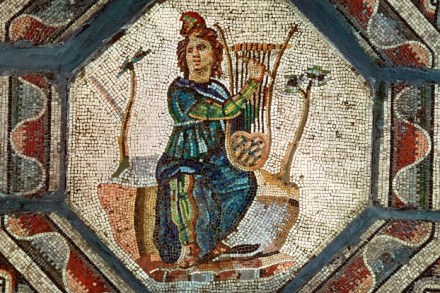
‘The two great gifts of the Greeks to humanity, said the poet Hölderlin, were Orpheus-Love and Homer-Song.’ ‘The two great gifts of the Greeks to humanity, said the poet Hölderlin, were Orpheus-Love and Homer-Song.’ The great German poet’s statement shows him as belonging to our own phase of Western civilisation. For us Orpheus — born probably a generation before Homer, who never once mentions him — is eminently a lover. His grief at his wife Eurydice’s death (generally ascribed to snake-bite) drove him to the Underworld itself, to find her and bring her back. His love for her made him accept the harsh injunction never to look at her during their return-journey — and, tragically, caused him also to disobey it.

. . . or sensing impending doom

From our UK edition

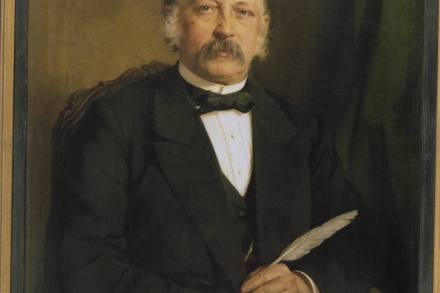
‘What am I? A completely ordinary person from the so-called higher reaches of society. ‘What am I? A completely ordinary person from the so-called higher reaches of society. And what can I do? I can train a horse, carve a capon, and play games of chance.’ So reflects Botho von Rienäcke, the central character of Theodor Fontane’s novel of 1888, Irrungen, Wirrungen (newly translated as On Tangled Paths). His bitter self-examination is a consequence of his predicament. Like many a fellow officer, he has taken up with a working-class girl. He met her on a boating trip when he came to her rescue from an accident in the water.

Terrors of the imagination

From our UK edition

Of the four Prime siblings of the Beacon farm, Frank, the second boy, was, throughout their early lives, ‘almost invisible’. He did everything late, spent most of his time alone, and was a dunce at school, where he bemused teachers and children alike. They never knew what to make of Frank, they said; what went on in Frank’s head was one of the great mysteries. He did little speaking but a great deal of staring out of large green-grey, slightly bulbous eyes. He followed people too … Turn round, and Frank would be there, silent, watching, following. Beware of the individual close to you whom you have never got to know, whose mental life you have written off as ‘mysterious’.

The importance of being Henrik

From our UK edition

The celebrations and theatre- productions for this centenary year of Ibsen’s death certainly attest to the continuing vitality of his work. At August’s Ibsen conference in Oslo I heard delegates from China, Nigeria, Bangladesh, Latvia, Mexico speak both of the plays’ intrinsic fascinations and of their relevance to specific contemporary societies. Likewise scholars and critics of many orientations showed what satisfying harvests, say, Ghosts or The Wild Duck yield when looked at from this or that perspective. What we have lacked, however, has been a full-scale English-language study of the relationship of this impressive oeuvre to the western culture of which it provably is so firm and illustrious a part.

A member of the awkward squad

From our UK edition

On an autumn Saturday in 1944 Private Robert Prentice, an 18-year-old rifleman trainee, makes a long journey from his camp in Virginia to New York City, to see his mother. He is soon to be sent abroad, France most likely, and there he’ll see action, which will at least be a change from tedious, thankless camp duties. ‘Oh, Bobby!’ exclaims his ageing mother as she greets him. ‘My soldier! My big, wonderful soldier!’ A touching tableau, one would think, except that it’s riddled with falsity. Alice Prentice is a self-centred, self-indulgent, attitudinising spendthrift, who will occupy herself during Bobby’s long and endangered absence with plans for him to rescue her from an indigence largely her own fault.

Small is beautiful | 12 November 2005

From our UK edition

The British, publishers and booksellers regularly tell us, have an antipathy to the short story; they respond unfavourably to even a well-known writer coming up with a collection, and for an emergent one to devote creative energy principally to the medium would be regarded as literary suicide. And this despite determined efforts by certain key literary editors, competition-setters and indeed the South Bank itself to keep the art-form alive. Elsewhere the short story is differently regarded. In the English-speaking world, Ireland, the American South, and, thanks to Raymond Carver and Tobias Wolff, the Pacific North-West of the US have long exhibited short stories as supreme expressions of their culture’s genius.

Singing for your supper

From our UK edition

On 23 February l937 a small boy of seven arrives at Victoria station, London. Here he is met, as arranged, by his uncle, a man he has never seen before though he has heard an intriguing plenty about him - that he is very amusing and also famous, a national hero. The boy doesn't understand his own present situation. Why has he had to come to this distant foreign country and undergo an immediate name-change, from Andrei to Andrew? Why did his father, who travelled with him for a whole fatiguing week across Europe from Romania, abandon him in Paris, rather than accompany him to London himself? Why did he have no proper leave-taking with his mother, that affectionate, devout woman, mysteriously referred to in some quarters as the 'Debt-Collector's daughter'?