Book review

The Annals of Unsolved Crime, by Edward Jay Epstein – review

From our UK edition

Edward Jay Epstein is an American investigative journalist, now in his late seventies, who has spent at least half a century trying to find answers to the troubling theories and nagging questions that always swirl around notorious crimes. The more famous the crime, the harder it is to get at the truth, especially if the crime has political consequences. For example, John Wilkes Booth, who murdered Abraham Lincoln in 1865, was quickly proven to have been part of a conspiracy involving leaders of the defeated Confederate states; but when a reunited country was later seeking reconciliation, it was found expedient to suppress this fact and portray him instead as a deranged individual who had acted alone.
Wreaking, by James Scudamore – review

From our UK edition

An abandoned lunatic asylum, a nasty pornographer in a wheelchair, a bizarre glass-ceilinged viewing dome beneath a scummy lake, a vast henchman, a mother who hears angels telling her she must harm her child: these are some of the places and people to be found in James Scudamore’s new novel. Dickensian excess is the name of the game here. It is as if Mr Murdstone and Steerforth and Magwich (and even the foggy salt-flats which herald his startling arrival in fiction) appeared in the same story as Fagin, together with a couple of lost boys, ripe for criminal exploitation. Scudamore’s relish for names, too, is Dickensian.

Foreign Policy Begins at Home, by Richard N. Haass – review

From our UK edition

A year or so after the ‘liberation’ of Iraq, an unnamed senior Bush administration official (later revealed to be Karl Rove) boasted: ‘We are an empire now, and when we act, we create our own reality.’ Yet a decade later, America’s power and influence has diminished considerably and the American people are suffering from foreign policy fatigue. The greenback is weak, the debt mountain is of Himalayan proportions, the credit rating is downgraded and economic growth is exceptionally sluggish for a nation that is four years out of a recession. The Chinese own more and more of the US debt and they show no inclination to heed Washington’s demands to revalue the yuan or end their cyber-espionage or prevent North Korea from using nuclear weapons.

Horace and Me, by Harry Eyres – review

From our UK edition

After Zorba the Greek, here comes Horace the Roman. The peasant Zorba, you’ll remember from the film, releases uptight, genteel Alan Bates from his cage of repressed Englishness. Now it’s Horace, the Augustan lyric poet, releasing another repressed Englishman: Harry Eyres, Old Etonian scholar, Cambridge graduate, poet and author of the ‘Slow Lane’ column in the Financial Times. This charming, moving book calls itself ‘Life Lessons’, as if it were a general teaching guide for the reader. Really, though, it’s a personal guide for Eyres — who realises that the poet he first struggled to appreciate at school has valuable lessons to teach about love, wine and friendship.

Music & Monarchy, by David Starkey – review

From our UK edition

British royalty, considered from a purely mechanistic angle, cannot function adequately without music. Deprived of marching bands, trumpeters and choristers or even of those ever so well-mannered regimental ensembles which dispense selections from favourite musicals at an investiture or a garden party, the royal performance would lose much of its authenticity. Playing the king in this country has always depended on being able to do the whole shtick to the right tunes. If, from time to time, a genuinely gifted or truly inspired composer should become available, so much the better. Dash and panache for parties and parades, decorous gloom for funerals and the occasional wedding anthem or victory Te Deum sound more like the real thing when knocked off by a Purcell, a Handel or an Elgar.

Dark Actors, by Robert Lewis – review

From our UK edition

No book about Dr David Kelly could start anywhere other than at the end. Kelly is found, dead, in a wood near his Oxfordshire home. A public inquiry, headed by Lord Hutton, concludes that Britain’s leading germ warfare expert has committed suicide. Those who question the procedure or the verdict are scorned as conspiracy theorists. Four years later, in response to a Freedom of Information Act request, the police reveal that there are ‘no fingerprints whatsoever’ on Kelly’s knife, on the tablet packets in his coat pocket or on the water bottle found nearby. This single stark fact — which was simply not mentioned at the public inquiry — seriously undermines the suicide verdict. There are countless other odd and perplexing aspects to the story.

Against Their Will, by Allen M. Hornblum – review

From our UK edition

After the Morecambe Bay Hospital scandal a new era opens of compassion, -whistle-blowing, naming names and possible prosecutions. But what about 70-odd years of harming children in ‘care’ homes, and prisoners, with toxin injections, -radioactive blasts, electro-shocks to the brain and frontal lobotomies — all done in the interests of medical advance by leading American doctors and scientists, one of whom was -awarded a Nobel Prize? Furthermore, what if the CIA sponsored such work in the interest of defending the US against Soviet threats?

Laidlaw by William McIlvanney – review

From our UK edition

Laidlaw was first published in 1977, 36 years back from now, 38 on from The Big Sleep. Like Chandler’s classic it has survived the passage of time. William McIlvanney did for Glasgow what Chandler had done for Los Angeles, giving the city its fictional identity. Hemingway used to say that all American literature came out of Huckleberry Finn; all Scottish crime writing — ‘tartan noir’ — comes out of Laidlaw. Two years before Laidlaw McIlvanney had won the Whitbread Prize for fiction with Docherty, a novel set in a mining community. This established him as the best Scottish novelist of his generation, and some of his admirers were dismayed when he followed it with a crime novel.

The Professor of Poetry, by Grace McCleen – review

From our UK edition

Elizabeth Stone, English professor at UCL,  has long lived on ‘paper and words and thin air’. Single, friendless, dessicated, respected, she passes out during a faculty meeting and wakes to find herself ‘attached by a chain of spit to her own cardigan’. A brain tumour is diagnosed, and removed. Expecting death, Elizabeth receives the news that her treatment was apparently successful as a gift: ‘Time had been returned to her.’ She takes her bravest decision in 30 years and goes back to ‘the city of books’ where, as an undergraduate, she had the only profound emotional experience of her adult life.

An Englishman in Madrid, by Eduardo Mendoza – review

From our UK edition

To Spaniards, the English must appear a highly contradictory people. The stereotype of the restrained, well-dressed gentleman (Spain’s largest department store is El Corte Inglés, ‘the English cut’) must contend with the binge-drinking phalanxes of tourists occupying Spain’s beaches every summer. Though generally thought to be fairly law-abiding, the English are still, mostly affectionately, referred to as pirates in Spain — a term dating back to Drake’s raids against Philip II. This dissonant, slippery persona is central to Eduardo Mendoza’s novel (winner of the prestigious Planeta prize), set on the eve of the Spanish civil war.

Boliver, by Marie Arana – review

From our UK edition

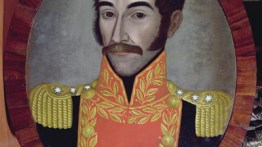
So here we go again into a heart of darkness:  the humbug and horror which is the history of Spanish South America ever since Columbus landed on the island of Hispaniola. Now modern Haiti and the Dominican Republic, the island’s population had within a few decades of Columbus’ arrival, through genocide and disease, been reduced to barely 200. And that was just the beginning. No Christian nation has ever trailed such a shameful colonial past, which is why the colonists must feel the need to assemble what they see as its glories. This, the 2,684th book about Simon Bolívar, is subtitled ‘The Epic Life of the Man Who Liberated South America’. But liberated it for whom?

Vauxhall, by Gabriel Ghadomosi; Sketcher, by Roland Watson-Grant – review

From our UK edition

At the grubbier end of my street in north London is the Somali mosque that was burned down earlier this month in an arson attack. The other day I asked at the police cordon if any arrests had been made. ‘Not that we know of’, said the duty officer. A smell of charred wood hangs over this dreary, out-at-elbow part of Muswell Hill. People complain that Somalis are heavily ‘welfare-dependent’, and have no wish to integrate into British society. It is true that immigrants today, with the internet, cheap flights and satellite television, are more likely to see themselves as members of a foreign country, hosted by, but not emotionally attached to, Britain. Diversity is here to stay, however, and many of us like it that way.

The Flamethrowers, by Rachel Kushner – review

From our UK edition

This bright, burning flame of a novel takes place in the art world of 1970s New York. Our guide to this scene of glittering parties and eccentric characters — such as the White Lady, who wears white and goes to a grocery store to buy ‘milk, white bread, a can of hominy, and two jars of mayonnaise’ — is Reno, a young aspiring artist. Alone and new to the city, Reno asks herself, ‘How do you find people in New York City?’ She relies on chance: ‘Chance shaped things in a way that words, desires, rationales could not. Chance came blowing in, like a gust of wind.’ She chances her way around New York, falling in with a crowd at a bar, tagging along to parties, going home with a man whose name she doesn’t want to know.

The Spinning Heart, by Donal Ryan – review

From our UK edition

Despite being so short, The Spinning Heart certainly can’t be accused of lacking ambition. Over the course of its 150-odd pages, Donal Ryan’s first novel introduces us to no fewer than 21 narrators living in or around the same small town in the west of Ireland. One by one, they reflect on their lives, past and present. Between them, though, they also tell us the story of a local kidnap and then of a local murder. This plot element is handled with considerable deftness — the various clues, perspectives, overlaps and contradictions duly coalescing into a single, comprehensible account. Yet, in the end, it only ever seems a handy framework (or completely acceptable excuse) for Ryan’s real concerns. For one thing, this is firmly a novel of the Irish crash.

Edwardian Requiem, by Michael Waterhouse – review

From our UK edition

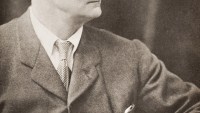
The photograph on the jacket, reproduced above, says it all — or at least all of what most of us think we know about Sir Edward Grey. Patrician, reflective, dignified, he stares into the future with the uncompromising honesty of one who has never even contemplated straying from the paths of rectitude. In fact, he was more interesting than that, but Michael Waterhouse’s thoughtful biography reveals that the image and the reality were not so very different. Grey’s private life was a little more chequered than might have been expected.  Though properly cautious about what can be no more than surmise, Waterhouse credits Grey with several extramarital affairs and at least two probable bastard children.

The Men Who Lost America, by Andrew O’Shaughnessy – review

From our UK edition

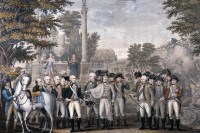
On Christmas Day 1776, the ambitious, well-connected war hero, General John Burgoyne, soon to be appointed commander of British forces in Canada, agreed a wager of 50 guineas with Charles James Fox ‘that he will be home victorious from America by Christmas Day 1777.’ Nine weeks short of that date, on 17 October, Burgoyne surrendered his sword and an army of more than 8,000 men, together with 50 cannon and vast quantities of muskets and gunpowder, to an American general, Horatio Gates, after defeat and encirclement at the battle of Saratoga in upstate New York. No bet was ever more comprehensively lost. The victory at Saratoga, won by citizen-soldiers over professional troops,  played a vital role in the dramatic events that led to the birth of the United States.

Constance, by Patrick McGrath – review

From our UK edition

Patrimony and infidelity are defining themes of the Anglo-American relationship, as they are of Constance, a novel with alternating narrators: Sidney Klein is English, in his forties, and an authority on Romantic literature. Constance Schuyler is American, 22, and believes her father hates her. Their new marriage enters crisis when Constance’s family reveals her origins in a Lady Chatterley-like tryst between her English mother and the groundsman at the family’s Hudson Valley estate, who committed suicide before she was born. (Did her parents know that ‘Constance’ was Lady Chatterley’s first name?) New York in the 1960s hosts a tale dense in literary and historical allusion.

‘The Shakespeare of the lunatic asylum’ – review of The Dostoevsky Archive by Peter Sekirin

From our UK edition

After you decapitate someone, might their severed head continue thinking? Prince Myshkin holds his audience spellbound with this macabre inquiry in The Idiot, a great novel whose author, Fyodor Dostoevsky, was once called the Shakespeare of the lunatic asylum. Each of his great novels concerns a murder (one a parricide); most also touch upon the sickening theme of the rape of a child. The writer Lafcadio Hearn warned that reading him might actually drive you mad: it can certainly invoke pity and terror, embarrassment and laughter. Dostoevsky’s life was even weirder than his fiction. He was born in 1821, the son of a surgeon whom he believed to have been killed by his own serfs.