Book review

Everest, by Harriet Tuckey

From our UK edition

This book, as the subtitle explains, makes a bold claim: Griffith Pugh was the ‘unsung hero’ of the 1953 ascent of Everest, his achievements neglected and nearly lost to posterity. Harriet Tuckey is Pugh’s daughter, so this assertion might be little more than a kindly attempt to revive her father’s flagging reputation. Yet, Pugh was clearly no ordinary father, and Tuckey’s advocacy on his behalf is correspondingly unusual. She casts her father as a ‘uniquely talented, turbulent man,’ ‘truly great,’ ‘difficult, bad-tempered,’ ‘rather cruel’ and ‘totally selfish’.

Last Friends, by Jane Gardam – review

From our UK edition

Any writer who embarks on a trilogy is either extremely confident or taking something of a risk. The danger is that the reader will have forgotten the first two volumes and will have lost any memory of the story and the characters who now occupy the foreground of what might be a fairly mystifying account. So it is with Jane Gardam’s present novel which forms the conclusion to her foregoing Old Filth and The Man with the Wooden Hat, which featured Terence Veneering and Edward Feathers, lawyers and rivals not only in their professional lives but in most other matters, both trivial and significant. They’re not sympathetic characters, and time and distance have not improved them.

Whirligig, by Magnus Mcintyre – review

From our UK edition

I do not have much time for the idea of the redemptive power of the countryside. I am not alone in this. Even theologians tend to dream of the day they enter the City of God rather than 1,000 acres of nowhere. But I will buy into a modern fairytale extolling the virtues of nature and country folk when told with wit and verve. So it is with Magnus Macintyre’s novel Whirligig. This is the story of Gordon Claypole, an English businessman who finds himself among the singular natives of a Scottish island. Or rather, an almost island. Like much in the novel nothing is clear cut. Claypole is half Scottish, but a childhood holiday to Scotland brings home to him how un-Scottish he really is.

The Dark Road, by Ma Jian – review

From our UK edition

If you are considering adopting — that is, buying — a Chinese baby girl, recycling a television or computer, or buying a Vuiton bag, think again. Ma Jian, author of the startling Beijing Coma, prepared for this evocative and sometimes horrifying novel by travelling through Chinese regions few tourists see. There he encountered some of the millions of women who had just given birth to babies declared illegal by the one-child family laws, which were taken away and sold by corrupt officials to rich foreigners eager to adopt. He saw, too, the effects on the poor migrants who disassemble our unwanted televisions and computers and poison themselves by handling the toxic parts.

Byron’s War, by Roderick Beaton – review

From our UK edition

On 16 July 1823 a round-bottomed, bluff-bowed, dull-sailing collier-built tub of 120 tons called the Hercules made its slow, log-like way out of the port of Genoa. Roderick Beaton writes: Aboard were a British peer, who happened to be one of the most famous writers of the day, a Cornish adventurer, an Italian count, a Greek count, a doctor and a secretary (both Italian), half a dozen servants of several nationalities, five horses, two dogs and a prodigious amount of money in silver coin and bills of exchange. The Hercules was not the most glamorous vessel to carry Lord Byron towards Greece and immortality, nor was the ship’s company the most bellicose to have sailed to a ‘seat of war’, but then little about Byron’s last days has ever corresponded with legend.

The Hive, by Gill Hornby – review

From our UK edition

Who would have thought that the idea for a novel about mothers at the school gate would spark a frenzied bidding for world  rights? Not a subject to make the heart race, surely, but race publishers did for a first novel by Gill Hornby, whose inspiration it was. Plainly she did her research at a school gate, and her acute ear has captured every nuance of the motherly buzz that will be universally recognised. Heavens, they’re a lively lot, and how they talk — all in a language that is particular to forty-something mothers. They share a vocabulary — keenos, newbie, yikes, oops.soz, bagsy, delish. The words ping off the page, indicating incredible speed of communication that sometimes leaves the reader breathless. The children all go to St Ambrose School.

Dear Lumpy, by Roger Mortimer – review

From our UK edition

After the success of Dear Lupin, Roger Mortimer finds himself facing something not normally experienced by former Guards officers who have been dead for more than 20 years — namely Difficult Second Album Syndrome. Lupin, a collection of letters written by Mortimer to his extremely errant son Charles (‘Lupin’) took everyone by surprise when it became a big hit last year. Certainly its success astonished Charles himself. ‘It would not be an exaggeration to say that expectations for sales were not that high’, he writes here in his preface — hardly surprising as ‘I had barely read a book before, let alone compiled one.

The Tank war, by Mark Urban – review

From our UK edition

In November 1941, Sergeant Jake Wardrop narrowly escaped being killed when his tank was crippled in the midst of a catastrophic battle in the north African desert where the armour and artillery of Rommel’s Afrika Korps destroyed scores of other British tanks. ‘It wasn’t a very healthy position to be in’, he wrote in his diary that evening, ‘but it could have been worse; at least it wasn’t raining.’ When he came across this mordant comment in the course of his research, Mark Urban must have realised that he had struck gold.

Inferno, by Dan Brown – review

From our UK edition

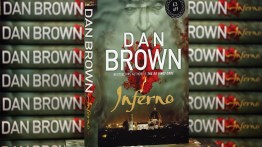
The other day, while shopping in Tesco, I was surprised to find copies of the Inferno for sale by the checkout. ‘Oh dear’, I declared, ‘who would have thought of finding Dante here?’ It was not Dante of course, but Dan ‘Dante’ Brown, whose latest extravaganza, Inferno, tips a nod to the Florentine poet’s medieval epic of fire and brimstone. Inferno, a bibliographic thriller in the Umberto Eco mould, is the fastest-selling novel of the moment. But let us be clear. Where Dante’s Inferno was ‘awful’ in that archaic sense of the word (still valid in Italian) of inspiring awe, Brown’s is merely awful. Correction: very awful.

Wave, by Sonali Deraniyagala – review

From our UK edition

Sonali Deraniyagala’s horrific book Wave, about her experience in and after the 26 December 2004 tsunami that struck the south-east coast of Sri Lanka, is one of the most moving memoirs I have ever read. All year round, day and night, if you looked down that long two-mile line of sea and sand, you would see, unless it was very rough, continually at regular intervals a wave, not very high but unbroken two miles long, lift itself up very slowly, wearily, poise itself for a moment in sudden complete silence, and then fall with a great thud upon the sand.  That moment of complete silence followed by the great thud, the thunder of the wave upon the shore, became part of the rhythm of my life.

The Black Russian, by Vladimir Alexandrov – review

From our UK edition

‘Unabashed luxury, elaborate displays of rich fabrics, gilt, soaring ceilings, glittering chandeliers...’ Thus does Vladimir Alexandrov describe what Moscow’s elite demanded of Maxim, the 1912 nightclub helmed by The Black Russian’s unlikely subject, the American Frederick Bruce Thomas. He was ‘the black man with a broad Russian nature’ who reinvented himself as celebrity nightclub impresario Fyodor Fyodorovich Tomas. Alexandrov’s sense of spectacle is no less keen. The Black Russian vaults breathlessly from set-piece to set-piece as it traces the journey of its hero from rural Mississippi to the opulent cabarets of Moscow, to Bolshevik-occupied Odessa and, finally, to a debtors’ prison in postwar Constantinople.

The Iraqi Christ, by Hassan Blasim – review

From our UK edition

There is much about Hassan Blasim that demands attention. He is an Iraqi. He escaped from Saddam’s dictatorship in 2000 by walking to Iran and smuggling himself into Europe. He has a confident, almost intimidating demeanour. And with the growing stack of literature about the wars in Iraq and Afghanistan all penned by westerners, there is an important space for Blasim to fill. The Iraqi Christ is his second collection of short fiction, the first being The Madman of Freedom Square, both translated into English by Jonathan Wright. Blasim has been called, ‘the best writer of Arabic fiction alive’. It is is not his identity, how-ever, but the quality of his writing that makes his voice striking. It is deeply troubling and complex, the metaphors arresting and violent.

Red Nile, by Robert Twigger – review

From our UK edition

When Bernini designed his fountain of the four rivers for the Piazza Navona in Rome in 1651 he draped the head of the god of the Nile with a loose piece of cloth, to denote the fact that its source remained unknown. Tracing the sources of both the Blue and the White Nile would become one of the most heated and consuming of all Victorian quests and the adventures and tribulations of the men — Petherick, Stanley, Baker, Bruce, Burton, Speke — and one woman, Baker’s Hungarian slave wife, Florenz, have provided rich material for many generations of writers.

All That Is, by James Salter- review

From our UK edition

Some authors’ lives are a great deal more interesting than others — James Salter’s, for one. Born in 1925 and educated at West Point, a fighter pilot in Korea and afterwards in Cold War Europe, the chiselled flyboy soon jettisoned this for writing and became a cosmopolitan and a worldly adventurer. He made a film in the Alps with Robert Redford, and climbed at Chamonix to produce what was meant to be another film but became the novel Solo Faces. He had homes in Aspen and the Hamptons, frequented the parlours of Paris and Rome but was always, always, too reticent, and, by his code, too honour-bound to divulge all he had seen. Privacy — his own and others’ — was all.

Feral, by Geoge Monbiot – review

From our UK edition

One of the greatest difficulties environmental activists have always had in the war for hearts ’n’ minds is that they so often seem priggish and negative. Everyone knows what they are against (central heating, fun, cod and chips, James Delingpole etc). Fewer people know what they are for. Here, therefore, is George Monbiot’s attempt — shot through — no, positively ravished — with personal feeling — to tell us. He offers, he says, a set of ideas ‘not about abandoning civilisation but about enhancing it [...] to “love not man the less, but Nature more”.

Big Brother, by Lionel Shriver – review

From our UK edition

‘I am white rice’ states Pandora Half-danarson, narrator of Lionel Shriver’s obesity fable. ‘I have always existed to set off more exciting fare.’ The exciting fare on offer is the big brother of the title, the handsome, free-wheeling, jive-talking Edison, a jazz pianist. The siblings grew up in LA, their dysfunctional family life paralleled, almost parodied, in Joint Custody, a prime-time television drama scripted by Travis Appaloosa, their smarmy, self-aggrandising father. This prolonged and subtle betrayal drives Pandora to seek anonymity in quiet Iowa, while Edison, in bohemian New York, craves public attention, and trades on his father’s fame to attain it.

Here and Now, by Paul Auster and J.M. Coetzee – review

From our UK edition

In love, there is always one who kisses and one who offers the cheek. So too in the luckless genre of letters artificially exchanged for the purposes of publication. There’s been a little spate of these lately, the most interesting and unbalanced having been Public Enemies, in which Michel Houellebecq brilliantly began the exchange by telling Bernard Henri-Levy that what they had in common was that they were both a bit contemptible, a bond from which BHL tried unsuccessfully to extract himself for the rest of their collaboration. Paul Auster and J.M. Coetzee had read each other’s work for years but only met for the first time in February 2008, when they were both in their sixties.

Folly de Grandeur, by Nicky Haslam- review

From our UK edition

Nicky Haslam is one of our best interior designers, a charmed and charming agent of style, a tastemaker for the sometimes directionless rich, a brighter star than most of his astronomically stellar client list. Considering a joint project, I asked him over lunch to tell me all the amazing people he had met. He demurred, but later that afternoon I got a 20-page handwritten document and on page one the names included John Kennedy, Svetlana Stalin, Picasso and Elvis. But Nicky is perhaps better known to Spectator readers as a contributor of meticulous, gossipy, beautifully crafted, super-well-informed and often rather saucy accounts of what used to be called high society. But how to describe the man to a reader who has not met him?