Book review

Tudor, by Leanda de Lisle – review

From our UK edition

As parvenus, the Tudors were unsurpassed. In the early 15th century no one would have predicted that within a couple of generations these minor Welsh land-owners would mount the English throne and rule the kingdom for more than 100 years. Notwithstanding their ‘vile and barbarous’ origins, their name would become synonymous with historical glamour and the ruthless exercise of regal power. The family started their precipitous ascent when young Owen Tudor was taken to England by his father and secured himself a position as a chamber servant to Henry V’s widow, Catherine de Valois. Having opportunely tripped and fallen into her lap while dancing, he secretly married her and had four children.

Holy Orders, by Benjamin Black – review

From our UK edition

It’s always a little disconcerting for the rest of us when literary novelists turn to crime. Have they become different writers? John Banville, winner of the 2005 Man Booker Prize with The Sea, has published seven crime thrillers. He writes as Benjamin Black. He certainly looks different — Black has a matching author photo that shows a sinister figure resembling a melancholy Mafia hitman with half his face in shadow. Quirke, Black’s series protagonist, is a Dublin pathologist in the 1950s, not that there’s a great deal of medical detail in the novels. He refers to himself as ‘a consultant to the dead’ and, like Colin Dexter’s Morse, is known only by his surname. He has a taste for handmade shoes. He is an alcoholic with misanthropic tendencies.

Death by Dior, by Terry Cooper – review

From our UK edition

This book may sound like it’s going to be about high fashion, but it’s actually about Nazism, satanism, incest and murder. Françoise Dior decided that her uncle Christian had been killed in a Jewish plot in 1957, so she joined a Nazi movement in France before moving to London to work for the cause over here. Later, she got more interested in the ‘spiritual side of Nazism’, which developed into a fascination with Satan. A sexual relationship with her teenage daughter Christiane eventually turned sour and when Françoise could no longer put up with her, she tricked Christiane into committing suicide. It’s all told in a cheerful, chatty way by Terry Cooper, who was Françoise’s lover for many years.

The Life and Death of the Spanish Republic, by Henry Buckley – review

From our UK edition

With Spain’s economic crisis in the forefront of global news, it would be fascinating to see what a reporter of Henry Buckley’s stature would have made of its current predicament. He was the Daily Telegraph’s man in Madrid from 1929, who for a decade furiously filed dispatches from all corners of the country as its young democracy sparked, and eventually burst into civil war — finding time to swap stories with Hemingway over whiskies in between. His eyewitness account of this conflict was never to see the light of day in book form after the London warehouse storing the copies awaiting distribution was bombed in 1940.

Island, by J. Edward Chamberlin – review

From our UK edition

‘Tom Island’ — that was the name I was given once by a girl I met on an island in the Tyrrhenian Sea. Of course, she broke my heart in due course. Turned out to be a lesbian, or so she claimed. But I liked the nickname, and as I think about it now, my life seems to be defined by islands of one sort or another (even putting aside England, which isn’t one). I live, at least part of the time, on the Greek island of Corfu. (It’s de rigueur, these days, for writers to ‘divide their time’ rather than be so dull as to live in just one place. I divide my time between Corfu and Chiswick.

A Corner of Paradise, by Brian Thompson – review

From our UK edition

Author has late-blossoming romance with authoress, both divorcees, and they live together in a cramped house in Harrogate full of stepchildren and then buy a derelict summer house surrounded by vast maize fields in the Charente-Maritime, but are no good at DIY, and they make friends with the locals who help them build a walled garden. They write books. Author is talkative and likes company; authoress prefers silence and solitude. They move from Harrogate to Oxford. One of them has to die first, and it’s the authoress, and it’s cancer, and the author is left bereft and describes the experience all too well. That, in a nutshell, is this book. Good books about being old but feeling young are rare and this is one. Brian Thompson knows how to keep the reader reading.

Reflections on a Metaphysical Flaneur, by Raymond Tallis – review

From our UK edition

There are books we read for pleasure and there are books we are paid to review. However enjoyable the books we review, they are still, in some sense, ‘work’, and my attitude to them is different. Even when reading them with delight, I find myself ticking off the pages, as so much ‘job done’. I was sent this book weeks ago. But I forgot that I was meant to review it. I have been carrying it round with me, reading and rereading, and it has been like the most engaging, stimulating conversation with an unpredictable, witty new friend. Only lately did I remember that I was actually expected by the Lit Ed to say what I thought about it.

Birds & People, by Mark Cocker – review

From our UK edition

‘A world without birds would lay waste the human heart,’ writes Mark Cocker. Following his Birds Britannica and prize-winning Crow Country, in Birds & People he embraces the planet, with the help of the wildlife photographer, David Tipling, and the ‘650 contributors from 81 countries’ to whom the book is dedicated. He begins his cultural celebration of the earth’s 200 recognised bird families with one of ‘the most primitive’, the partridge-like tinamou from South America. Tinamou are loth to fly, not surprisingly since once airborne they tend fatally to crash into things, even houses. A near relative is the completely flightless common ostrich, the largest surviving bird.

Magic, by Ricky Jay – review

From our UK edition

People, they say, want different things from a book over the summer than they do the rest of the year. If, by chance, you are looking for a book that will both give you a hernia and teach you how to make a bridge disappear, this could be just the thing for you. The motorbike messenger who delivered my copy of Magic had to come in for a glass of water and complained that the effort of carrying it had made his legs bowed. It is, quite simply, the largest book I have ever tried to read — the literary equivalent of the Great Bed of Ware. So what’s inside it? An awful lot of pictures, beautifully reproduced, interspersed with essays on the history of magic.

Empire of the Deep, by Ben Wilson – review

From our UK edition

‘I never before came across a man whom I could fancy being a Napoleon or a Nelson…His ascendancy over everybody is quite curious: the extent to which every officer and man feels the slightest praise or rebuke would have been before seeing him incomprehensible.’ Thus wrote the 22-year-old Charles Darwin of Robert Fitzroy, the 26-year-old captain of the Beagle, a good but not unusual example of captains during the Royal Navy’s zenith in the decades following Trafalgar.

Glorious Misadventures, by Owen Mathews – review

From our UK edition

So: Russia’s imperial possessions on the Pacific North West of America. Remember those? No. Me neither. Something vague about the Russians flogging a bit of Alaska to the United States in the middle of the 19th century perhaps. But until I’d read this book I didn’t know that at one point Continental Russian America, not counting the Aleutian Islands, stretched 1,400 miles from its Eastern Tip (today called Cape Prince of Wales, by little Diomede Island in the Bering Strait) to its southwestern boundary near Sitka. If laid on top of the Continental United States, the territory — which closely corresponds to the modern state of Alaska — would stretch from California to Florida.

A Slap in the Face, by William B. irvine – review

From our UK edition

A friend of mine who works for the NHS has been told recently by a superior that his ‘attention to detail is bordering on the obsessive’. Aside from observing that an obsessive attention to detail might serve the health service well, this is an example of the kind of insult that Professor Irvine would ascribe either to low self-esteem or to narcissism (high self-esteem with no self-knowledge). The speaker wasn’t offering constructive criticism (my friend had been praised for his attention to detail only days before, by a perhaps less negligent superior) but rather emphasising her superiority, something she had no need to do, unless she felt it threatened. My friend’s attention to detail is clearly her problem rather than his. Irvine begins with examples of insult.

Shire, by Ali Smith – review

From our UK edition

Pastoral elegy is not what you expect to find in a collection of short stories, but then Ali Smith is a wonderfully unexpected writer. In the first story, ‘The Beholder’, which was shortlisted for the Sunday Times Short Story Award, a patient develops a growth on her chest — ‘woody, dark browny, greeny, sort-of circular, ridged a bit like bark, about the size of a two pence piece’. The doctors are mystified, but a gypsy recognises it as ‘a young licitness’, a pun of mishearing later revealed to be ‘a Young Lycidas’, a rose named after Milton’s pastoral elegy.

The Son, by Philipp Meyer – review

From our UK edition

Colonel Eli McCullough, formerly known as Tiehteti, is a living legend. The first male child born in the Republic of Texas, wrested from Mexico in 1836, Eli has miraculously reached the age of 100. Captured by Comanche Indians in boyhood, he mastered their survival skills, and was well on the way to becoming the most respected member of the tribe when smallpox struck. The all-powerful Comanches — ‘the earth had seen nothing like them since the Mongols’ — had no defence against this invisible enemy. But Eli/Tiehteti, immunised in infancy, survived. Eli rampages through the next few decades, including a spell as state ranger when he is obliged to hunt down what remains of the people to whom he once belonged.

Land of Second Chances, by Tim Lewis – review

From our UK edition

This is a book about Rwanda. It’s a book about cycling. But it’s not, in the end, a book about Rwandan cycling. Well, it is. Tim Lewis gives us the story of Adrien Niyonshuti’s attempts to qualify for the 2012 Olympics under the tutelage of American cycling legend Jock Boyer. Adrien and his teammates are desperate to put Rwanda on the world map for something other than the 1994 genocide. But while the tale has its dramatic moments, it never really bursts into life. It’s too messy for that; as Lewis himself says, ‘situations in Africa are rarely, if ever, neat’. For instance, one of the cyclists refuses to train, being too busy pirating videos for the profitable film showings he organises.

Niccolo Machiavelli, by Corrado Vivanti; The Garments of Court and Palace, by Philip Bobbitt

From our UK edition

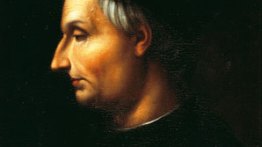
One more anniversary, one more cache of commemorative books. This time we are celebrating the half-millennium since Niccolò Machiavelli produced his notorious work, The Prince. He wrote it after a significant career blip in 1512, when the Florentine Republic fell and the Medici regained power. Machiavelli was not merely sacked from his job — secretary to the Republic — but also accused of conspiracy, imprisoned and horribly tortured. In 1513, he was released into exile, and went to live on his family farm, south of Florence. There he walked, consorted with ‘vulgarity’ (the locals) and read classical writers, including Livy, Tacitus, Sallust, Plutarch, Suetonius and Procopius.

Edwardian Opulence, edited by Angus Trumble – review

From our UK edition

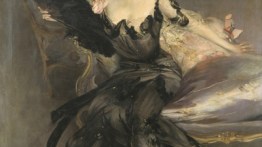
She sits there on the cover exuding sex and wealth and a certain knowingness. Mrs Lionel Phillips, who came from a modest background in South Africa, had the good sense to marry one of the ‘Rand Lords’ who made their piles in the new gold and diamond fields. She and her husband bought their way into society in Britain, accumulating houses and furniture and having themselves painted, as in this wonderful portrait, by the fashionable Giovanni Boldini. That of Mr Phillips is more subdued, even sombre.   The face, said the Athenaeum, ‘is amazing in its unscrupulous vulgarity’. Well, one might think, the anonymous critic could have taken a look around him.

The Breath of Night, by Michael Arditti

From our UK edition

There is always meat in Michael Arditti’s novels. He is a writer who presents moral problems via fiction but is subtle and shrewd enough to know that ‘issue books’, which are tracts not works of the imagination, are dull to read and rarely work as fiction should. He presents us with characters who are fully rounded, credible human beings living through moral dilemmas, affected by them, caring about them, living and dying within their context. In other words, he is an intelligent novelist.