Book review

The Girl Who Loved Camellias, by Julie Kavanagh – review

From our UK edition

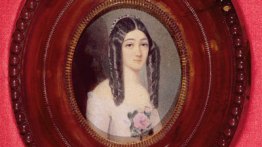
Verdi’s La Traviata is the story of a courtesan who is redeemed when she gives up the man she loves in order to preserve his family honour, and then dies tragically in his arms. Verdi based his opera on a novel by Alexander Dumas the younger, The Lady of the Camellias (1852). This work was inspired by a courtesan whom Dumas had known — and had an affair with — but she has been largely forgotten. Her name was Alphonsine Plessis — later changed to Marie Duplessis — and she was only 23 when she died. Julie Kavanagh has written the story of her extraordinary life. Alphonsine was born in 1824 in Normandy. Her peasant family could hardly have been worse. Today, social workers would have put her in care. She was probably sexually abused.

An Armenian Sketchbook, by Vasily Grossman – review

From our UK edition

Vasily Grossman, a Ukranian-born Jew, was a war correspondent for the Soviet army newspaper Red Star. His dispatches from the front between 1941 and 1945 combined emotional engagement with independent-minded commentary. A solitary, questioning spirit, Grossman set out always to document truthfully what he saw and heard. His report on the vile workings of the Treblinka death camp, ‘The Hell of Treblinka’, remains a masterpiece of controlled rage and unsparing lucidity. Unsurprisingly, Grossman was mortified when the man who had prevented Hitler’s annihilation of Jewry was suddenly set on their extinction. In early 1953, Stalin announced in the pages of Pravda that a plot to murder Kremlin members had been unmasked among Jewish doctors and intellectuals.

Bitter Experience Has Taught Me, by Nicholas Lezard – review

From our UK edition

What, really, is a literary education for? What’s the point of it? How, precisely, does it help when you’re another day older and deeper in debt? These are questions that after a while begin to present themselves with uncomfortable force and persistence to those of us who have believed from our earliest youth that if literature will not save us, it will,  surely, at least do us some small, perceptible good. What answer can we make, surveying the ruins? Nicholas Lezard is useful here, as a test case, a case tested to destruction even. Not only does he have a thoroughly literary turn of mind, he is, as he says, probably the last remaining person in the world who makes ‘what could loosely be called a living from reviewing books’.

As Green as Grass, by Emma Smith – review

From our UK edition

The title, the subtitle, the author’s plain name, even the jacket’s photograph of a laughing old lady in sunglasses: none of these is particularly enticing. But the book itself is a delight. Written in the crisp present tense by a 90-year-old with a remarkably clear recollection of the trains of thought of her teenaged and post-teenaged self, it draws you deeply in, so that by the end you feel that you, too, have been to a harsh girls’ school in Plymouth, and then to a keyboard-clattering secretarial college in Surrey and then — best of all — that you have manned canal boats carrying coal from Birmingham to London during the war years with your friends Kitty and Eve.

A Bright Moon for Fools, by Jasper Gibson – review

From our UK edition

Harry Christmas, the central character of this bitterly funny debut novel, is a middle- aged, overweight alcoholic, with no friends and no prospects. After marrying a woman and running off with her money, he flies to Venezuela. He justifies this in two ways, the first sentimental, the second pragmatic. He wants to visit the country of his deceased first wife’s family, and he wants to escape the Rot. The Rot can be defined as everything that Christmas doesn’t like about England (or, we soon learn, about the world in general). This turns out to be a long and varied list. He despises the indoor smoking ban and sport, but he also can’t stand scatter cushions and people who make quotation marks with their fingers.

They Eat Horses, Don’t They?, by Piu Marie Eatwell – review

From our UK edition

Oh the French! Where would the Anglo publishing industry be without them? Ever since Peter Mayle first made goo-goo eyes at sun dappled Provence in 1990 and pocketed a pile of dough in the process, many a self- respecting hack with a smidgeon of French culture has followed in his train. Most have been purveyors of what the tastily named Piu Marie Eatwell dismissively terms ‘Froglit’: A highly commercialised and formulaic genre of lightly humorous fiction or non-fiction, generally written by Anglo-American expats living in France and usually with an autobiographical bias, dedicated to eulogising, elucidating, satirising or otherwise promulgating stereotypical ideas about the French. With They Eat Horses, Don’t They?

Country Boy, by Richard Hillyer – review

From our UK edition

Under his real name, Charles James Stranks, the author of this little masterpiece wrote on a number of ecclesiastical subjects: the Venerable Bede, Jeremy Taylor, Durham cathedral, where he was a canon. He died in 1980. Country Boy was originally published in 1966. It is a memoir of the author’s childhood, and there is no reason to doubt the truth of its salient events. However, using a pseudonym, and changing the name of the Buckinghamshire village in which he grew up from Hardwick to Byfield (even giving us the proper pronunciation — ‘Biffield’) and presumably the names of the people characterised so brilliantly, perhaps accounts for the book’s coherence and heft. It reads like a novel.

A Trip to Echo Spring, by Olivia Laing – review

From our UK edition

The boozer’s life is one of low self-esteem and squalid self-denial. It was memorably evoked by Charles Jackson in his 1944 novel The Lost Weekend; having hocked his typewriter for a quart of rye, the writer Don Birnam spends his lost weekend in a New York psychiatric ward, with a fractured skull. Where did he get that? The previous night’s drinking is remembered (if remembered at all) with bewilderment and guilt. Of course, the illusion of drink-fuelled happiness is familiar to most of us, even if the hangover seems a cruel price to pay. Olivia Laing, in her study of six alcoholic American writers, The Trip to Echo Spring (the title is taken from a Tennessee Williams play), demonstrates that one hardly need drink every day to be alcoholic.

The Modern Peasant, by JoJo Tulloch – review

From our UK edition

You know that something’s afoot when Lakeland says so. Lakeland is the kitchenware company which has more of a finger on the pulse of Middle England than most MPs. So when the company declared that it can barely keep pace with demand for home mincers it’s a sign of the times. It attributes the home-made everything trend to the horsemeat scandal and a food supply chain that looks like the Tudor family tree. Its line of cheesemaking products and sausage casing is doing well. The surge in the number of DIY/artisan cookbooks is telling too. The title of one of them sums up the mood: The Modern Peasant by Jojo Tulloh (Chatto & Windus, £16.99). She observes that city-dwellers are cut off from the countryside and the chain of production that served our ancestors so well.

Tudor, by Leanda de Lisle – review

From our UK edition

As parvenus, the Tudors were unsurpassed. In the early 15th century no one would have predicted that within a couple of generations these minor Welsh land-owners would mount the English throne and rule the kingdom for more than 100 years. Notwithstanding their ‘vile and barbarous’ origins, their name would become synonymous with historical glamour and the ruthless exercise of regal power. The family started their precipitous ascent when young Owen Tudor was taken to England by his father and secured himself a position as a chamber servant to Henry V’s widow, Catherine de Valois. Having opportunely tripped and fallen into her lap while dancing, he secretly married her and had four children.

Death by Dior, by Terry Cooper – review

From our UK edition

This book may sound like it’s going to be about high fashion, but it’s actually about Nazism, satanism, incest and murder. Françoise Dior decided that her uncle Christian had been killed in a Jewish plot in 1957, so she joined a Nazi movement in France before moving to London to work for the cause over here. Later, she got more interested in the ‘spiritual side of Nazism’, which developed into a fascination with Satan. A sexual relationship with her teenage daughter Christiane eventually turned sour and when Françoise could no longer put up with her, she tricked Christiane into committing suicide. It’s all told in a cheerful, chatty way by Terry Cooper, who was Françoise’s lover for many years.

The Life and Death of the Spanish Republic, by Henry Buckley – review

From our UK edition

With Spain’s economic crisis in the forefront of global news, it would be fascinating to see what a reporter of Henry Buckley’s stature would have made of its current predicament. He was the Daily Telegraph’s man in Madrid from 1929, who for a decade furiously filed dispatches from all corners of the country as its young democracy sparked, and eventually burst into civil war — finding time to swap stories with Hemingway over whiskies in between. His eyewitness account of this conflict was never to see the light of day in book form after the London warehouse storing the copies awaiting distribution was bombed in 1940.

A Stone in the Shade, by Violet Powell – review

From our UK edition

Evelyn Waugh once recalled the anguish with which he greeted Edith Sitwell’s announcement that ‘Mr Waugh, you may call me Edith.’ I experienced similar misgivings on the occasion, some years ago, that Lady Violet Powell suggested that I might like to call her ‘Violet’. It was not that Lady Violet — Violet — made the least fuss about her title (‘as unswanky a Lady as could be imagined’, Kingsley Amis once declared); merely that she was the relict of a man whose eye for the social niceties made Lady Catherine de Bourgh look like a bumbling amateur. It was as if George Orwell, knocked into at some Fitzrovian party, had invited you to call him ‘Eric’.

Island, by J. Edward Chamberlin – review

From our UK edition

‘Tom Island’ — that was the name I was given once by a girl I met on an island in the Tyrrhenian Sea. Of course, she broke my heart in due course. Turned out to be a lesbian, or so she claimed. But I liked the nickname, and as I think about it now, my life seems to be defined by islands of one sort or another (even putting aside England, which isn’t one). I live, at least part of the time, on the Greek island of Corfu. (It’s de rigueur, these days, for writers to ‘divide their time’ rather than be so dull as to live in just one place. I divide my time between Corfu and Chiswick.

A Corner of Paradise, by Brian Thompson – review

From our UK edition

Author has late-blossoming romance with authoress, both divorcees, and they live together in a cramped house in Harrogate full of stepchildren and then buy a derelict summer house surrounded by vast maize fields in the Charente-Maritime, but are no good at DIY, and they make friends with the locals who help them build a walled garden. They write books. Author is talkative and likes company; authoress prefers silence and solitude. They move from Harrogate to Oxford. One of them has to die first, and it’s the authoress, and it’s cancer, and the author is left bereft and describes the experience all too well. That, in a nutshell, is this book. Good books about being old but feeling young are rare and this is one. Brian Thompson knows how to keep the reader reading.

Reflections on a Metaphysical Flaneur, by Raymond Tallis – review

From our UK edition

There are books we read for pleasure and there are books we are paid to review. However enjoyable the books we review, they are still, in some sense, ‘work’, and my attitude to them is different. Even when reading them with delight, I find myself ticking off the pages, as so much ‘job done’. I was sent this book weeks ago. But I forgot that I was meant to review it. I have been carrying it round with me, reading and rereading, and it has been like the most engaging, stimulating conversation with an unpredictable, witty new friend. Only lately did I remember that I was actually expected by the Lit Ed to say what I thought about it.

Birds & People, by Mark Cocker – review

From our UK edition

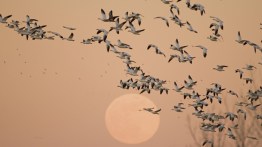
‘A world without birds would lay waste the human heart,’ writes Mark Cocker. Following his Birds Britannica and prize-winning Crow Country, in Birds & People he embraces the planet, with the help of the wildlife photographer, David Tipling, and the ‘650 contributors from 81 countries’ to whom the book is dedicated. He begins his cultural celebration of the earth’s 200 recognised bird families with one of ‘the most primitive’, the partridge-like tinamou from South America. Tinamou are loth to fly, not surprisingly since once airborne they tend fatally to crash into things, even houses. A near relative is the completely flightless common ostrich, the largest surviving bird.

Magic, by Ricky Jay – review

From our UK edition

People, they say, want different things from a book over the summer than they do the rest of the year. If, by chance, you are looking for a book that will both give you a hernia and teach you how to make a bridge disappear, this could be just the thing for you. The motorbike messenger who delivered my copy of Magic had to come in for a glass of water and complained that the effort of carrying it had made his legs bowed. It is, quite simply, the largest book I have ever tried to read — the literary equivalent of the Great Bed of Ware. So what’s inside it? An awful lot of pictures, beautifully reproduced, interspersed with essays on the history of magic.