Book review

A Mughal Disneyland and a ripping yarn

From our UK edition

Mysore, once the capital of a princely kingdom in South India, has lost its lustre. In Mahesh Rao’s darkly comic novel, grandiose futuristic visions are being floated: in a city desperate to reinvent itself for today’s brave new world, ancient temples and palaces are no longer enough. With India’s space programme about to send a man to the moon, Mysore must make its own giant leap. All hopes are pinned on what is destined to be a global tourist attraction: HeritageLand, planned as Asia’s largest theme park (think Mughal Waterworld — the Disneyland of south India!) And Mysore needs a new marketing slogan — ‘The Geneva of the East?’  suggests a desperate PR person. Well, at least there’s a lake.

Start with a torpedo, and see where you go from there

From our UK edition

Sebastian Barry’s new novel opens with a bang, as a German torpedo hits a supply ship bound for the Gold Coast. We experience everything through the senses of ‘temporary gentleman’ Jack McNulty — an Irish officer in the British army with a short-term commission. Brimful of whiskey, his racing winnings jingling cheerily in his pocket, McNulty stands on deck ‘somewhat in love with an unknown coastline’, and the reader is, instantly, somewhat in love, and completely bound up with, this red-haired chancer. In the seconds that follow the torpedo, McNulty, almost a medieval Everyman, experiences a vision of heaven and hell and all stages between.

A thriller that breaks down the publishing office door

From our UK edition

Like teenage children and their parents, authors and publishers have a symbiotic relationship characterised by well-justified irritation on both sides. Judith Flanders’s career bridges this divide. She is now best known as an author of innovatory and formidably detailed books on Britain’s social history in the 19th century. But she also has worked as a publisher, which gives her an insider’s knowledge of the murkier byways of literary London. Hence the setting for her first novel, Writers’ Block, an entertaining thriller whose narrator, Samantha, is ‘a middle-aged, middlingly successful editor’ in a publisher’s Bloomsbury offices. One of her authors delivers a biography of a recently deceased fashion designer.

Ladies’ hats were his waterlillies – the obsessive brilliance of Edgar Degas

From our UK edition

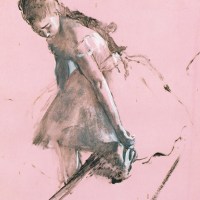
Lucian Freud once said that ‘being able to draw well is the hardest thing — far harder than painting, as one can easily see from the fact that there are so few great draughtsmen compared to the number of great painters — Ingres, Degas, Van Gogh, Rembrandt, just a few.’ Christopher Lloyd’s new study of Degas’s drawings and pastels, with over 200 beautifully reproduced illustrations, demonstrates that Edgar Degas (1834–1917) deserves his place on that list. And more than that, it shows that for him there was no distinction between painting and drawing. In his art these categories so blur together that it is hard to say whether certain pictures — pastels with tempera paint additions, for example — are one or the other.

Churchill was as mad as a badger. We should all be thankful

From our UK edition

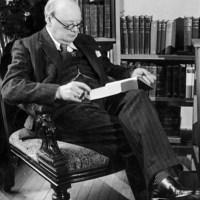
Land sakes! Another book about Winston Churchill? Really? Give us a break, the average reader may think. Actually though, as title and subtitle suggest, this isn’t just another biographical study. It’s at once odder and more conventional than that. More conventional because, in some ways, it is just another biographical study. Odder because — instead of being a straightforward discussion of Churchill’s literary work — it sees literature as the key to his biography. More than that, its author seems to think he has hit on a ‘new methodology’ in which ‘we can write political history as literary history’. Well, perhaps.

Wonders written on the wall

From our UK edition

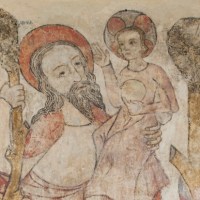
‘Take away, utterly extinct and destroy all shrines … pictures, paintings and all other monuments of feigned miracles, pilgrimages, idolatry and superstition so that there remain no memory of the same in walls, glass windows...’. These were the instructions handed down to churches in the reign of Edward VI, the death-knell for medieval church wall paintings following the wholesale destruction of the monasteries in his father’s time. That any church art survived this state-sponsored barbarism some five centuries ago seems extraordinary, and its rarity makes it all the more precious.

Why don’t we have statues of Michael Oakeshott?

From our UK edition

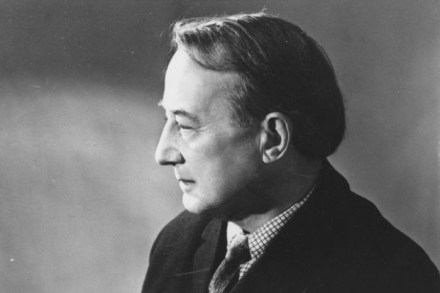
Who or what was Michael Oakeshott? How many of our fellow citizens — how many even of the readers of this journal — could confidently answer the question? I guess, not many. One of the paradoxes of Britain’s intellectual history is that a country which, alongside the Greeks and the Germans, has contributed more than any other to philosophical inquiry is extraordinarily uninterested in its own philosophers. A million people are said to have crowded the streets of Paris to see the funeral procession of Jean-Paul Sartre. In Scandanavia, Kierkegaard is a household name. In Germany, Heidegger is as well known as Thomas Mann. But in Britain no one has heard of Oakeshott — a philosopher who ranks with Sartre, Kierkegaard and Heidegger.

There was good art under Franco

From our UK edition

Everyone knows about the Spanish civil war, first battlefield in the struggle that broke out in 1936 and ended nine years later in the ruins of Berlin. It has been immortalised in the work of Hemingway, Orwell and Koestler and commemorated in the heroic deeds of the International Brigades. This is how it is remembered by Camilo José Cela, the conservative novelist and Nobel Prize winner: To the conscripts of 1937, all of whom lost something: their life, their freedom, their dreams, their hope, their decency. And not to the adventurers from abroad, Fascists and Marxists, who had their fill of killing Spaniards like rabbits and whom no one had invited to take part in our funeral… In my copy of the French translation of Cela’s San Camilo, that dedication does not appear.

Pompeii’s greatest gifts are not all archeological

From our UK edition

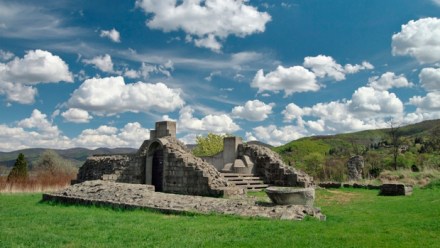
The first visitor to take a break on the Bay of Naples was Hercules. He had just defeated some rebellious giants and buried them beneath Mount Vesuvius. To celebrate, he staged a procession across the mountain’s slope — in Greek, a ‘pompe’. He also founded two cities: one named after the procession, the other after himself. To this day, visitors from across the world still beat a trail to Pompeii and Herculaneum. The popularity of the two cities as tourist destinations owes everything, of course, to the restless thrashing of the giants imprisoned beneath Vesuvius. In AD 79, a particularly violent spasm resulted in an eruption so devastating that both cities ended up entombed in ash. The memory of the disaster never entirely faded.

Charlie Chaplin, monster

From our UK edition

No actual birth certificate for Charles Spencer Chaplin has ever been found. The actor himself drew a blank when he went on a rummage in Somerset House. The latest research suggests that he was born ‘in a gypsy caravan in Smethwick, near Birmingham’. But surely the truth has been staring people in the face ever since the Little Tramp first popped on the screen: Chaplin is the lost twin of Adolf Hitler. Peter Ackroyd almost suggests as much. Both men first drew breath in April 1889. They had drunken fathers and nervous mothers. There were patterns of madness and illegitimacy in the family tree. They were short and sported an identical moustache. They had marked histrionic skills, each man ‘appealing to millions of people with an almost mesmeric magic’.

The diary that proves Anthony Seldon wrong about the first world war and the public schools

From our UK edition

In March 1915 the 27th Earl of Crawford and Balcarres, with an already distinguished political career behind him, took the unorthodox step of enlisting, aged 43, as a private in the Royal Army Medical Corps. In 1916 he returned to England from France to take up important government duties, but for 14 months he had been a medical orderly on the Western Front, the only cabinet minister to serve in the ranks in the first world war. He was based at the casualty clearing station at Hazebrouck, close to the principal areas of British military activity in 1915. He kept a diary throughout this time — now admirably edited by his cousin Christopher Arnander — giving a unique close-up view of the great war though the eyes of a shrewd participant.

This beautiful new history of Kew Gardens needs a bit of weeding

From our UK edition

Edward Bawden’s Kew Gardens is a beautiful book. Lovers of early 20th-century British art will find it hard to stop gazing at the painted board cover under the dustjacket. It is so sheenily brilliant that you want to frame it and hang it on the wall at once. Every page, including the endpaper plans of Kew, is visually perfect, and the book is an agreeable size. Peyton Skipwith, formerly of the Fine Art Society, and Brian Webb, the designer, have collaborated on beautiful books before; their track record is impeccable. Published by the V&A, their latest work is an utterly desirable object. Having had the privilege of being on a tour of Paul Nash’s paintings at the Dulwich Art Gallery in the company of Mr Skipwith, I am aware that his knowledge on this period is vast.

Don’t let creative writing students read this book

From our UK edition

One of these is by Lydia Davis, acclaimed American writer. One is not. They are whole pieces, by the way, not extracts. This morning I went into the park I often pass on my journeys to somewhere else. I can now say that I have been into this park and not always passed it by. Now that I have been here for a little while, I can say with confidence that I have never been here before. One of these accounts of a dream is by Lydia Davis. One is not. I am a college girl. I tell a younger college girl, a dancer, that the sun is very low in the sky now. Its light must be filling the caves by the sea. I am watching a man lift up the sails of a windmill in his bare hands. The sails catch the light and appear to be spinning. One of these observations is by Lydia Davis. One is not.

A Beckett fagend rescued from a bin

From our UK edition

Spectator readers of my vintage will remember their first encounter with Beckett as vividly as their first lover’s kiss. For me they happened around the same time, aged 18. The dramatic initiation was a Colchester rep performance of Waiting for Godot, in 1956. Twenty-five years after his first mature work was written Beckett had hit England with the burst of an unexploded wartime bomb. The general response at the time was one of fascinated bafflement. That has dispersed over the last half century but the fascination — as the headlines accompanying the publication of this Beckettian fragment witness — remains undiminished. The story, ‘Echo’s Bones’, is an early work but in no sense juvenile.

An escape to the country that became a struggle for Poland’s soul

From our UK edition

In 1993, John Borrell, a longtime foreign correspondent with no permanent home, decided to abandon journalism. Tired of writing about wars and violence — he had been in Beirut, Rwanda and Nicaragua — he determined to throw himself into European rural life. But instead of a year in Provence, he chose 20 years in Kaszubia, northeast Poland. Borrell, originally from New Zealand, had married a Pole. They bought an exquisite piece of land beside a pristine lake, and there they built a boutique hotel. I was a Warsaw correspondent at about the same time as Borrell, and remember a certain amount of head-shaking over this venture.

Arianna Huffington meets Madame de Menopause

From our UK edition

A-Huff’s career has been remarkable for the contrast between hard-headed social advancement (‘the most upwardly mobile Greek since Icarus’) and addle-pated spiritual questing. In this she resembles an older, colder Gwyneth Paltrow, who coincidentally came out with her ‘consciously uncoupling’ corker as I was ploughing my way through Thrive — such a G.P. cookbook title! Like Paltrow, who recently vowed that after years of lying she was ‘starting to get honest: the path to honesty has been one of the most beautiful, painful and interesting lessons of my life’, A-Huff attempts to portray trauma as a lifestyle accessory and growth enhancer.

If you think Virginia Woolf’s novels are good, you should try her bread

From our UK edition

I have to declare an interest: as a scion of the Bloomsbury Group, I was naturally brought up on their cooking. During the course of her research for this book I met, got to know and became friends with Jan Ondaatje Rolls. She has certainly chosen a novel way to portray that well-known group of friends about whom so much has been written that it’s hard to imagine there could be anything more to unearth. Hers is a sprightly approach. By defining them through their dinners, she makes us see the Bloomsberries from another, more domestic, more gleeful point of view: the kaleidoscope is twisted again.

Our leaders have betrayed the noble worker. Oh really?

From our UK edition

In his essay on the ‘Peculiarities of the English’, E.P. Thompson gave his theoretical definition of class: When we speak of a class we are thinking of a very loosely defined body of people who share the same congeries of interests, social experiences, traditions and value-system, who have a disposition to behave as a class, to define themselves in their actions and in their consciousness in relation to other groups of people in class ways. But class itself is not a thing, it is a happening. Selina Todd has a snappier and more prosaic definition of the working class (‘The People’) as ‘a class of workers who depended on earning a living and were in that way distinguished from the rich who lived on the labour of others’.