Anne Applebaum

The curious life of a foreign minister’s wife

From our UK edition

The Polish constitution delineates no role for the foreign minister’s wife. In fact, the foreign minister’s wife is not mentioned in Polish state documents of any kind. Nevertheless, there are times when, as the Polish foreign minister’s wife, I find that I have no choice but to bear witness to great historical events. On the Friday following the British election, the Polish foreign minister – better known as an occasional Spectator diarist – was informed that the new British Foreign Secretary planned to visit Poland on his first trip abroad. Because we had planned to spend that weekend at our country house, north-west of Warsaw, and because there is a nearby airport, it was suggested that the official talks be organised there.

(Getty)

From The Archives: Anne Applebaum

From our UK edition

25 min listen

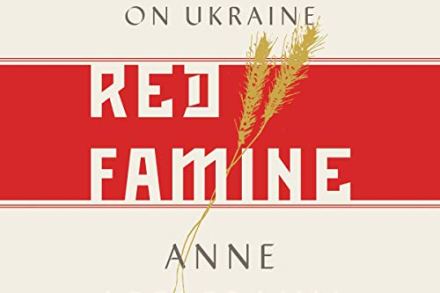
The Book Club is taking a brief Christmas break, so we have gone back through the archives to spotlight some of our favourite episodes. This week we are revisiting Sam's conversation from 2017 with the Pulitzer Prize winning historian (and former Spectator deputy editor) Anne Applebaum about her devastating new book Red Famine. The early 1930s in Ukraine saw a famine that killed around five million people. But fierce arguments continue to this day over whether the 'Holodomor' was a natural disaster or a genocide perpetrated by Stalin against the people and culture of Ukraine. Sam asks Anne about what we now know of what actually happened — and what it means for our understanding of the present day situation in the former Soviet Union.

The poisoning of Putin critic Alexei Navalny

From our UK edition

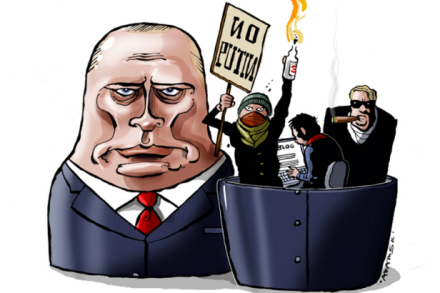
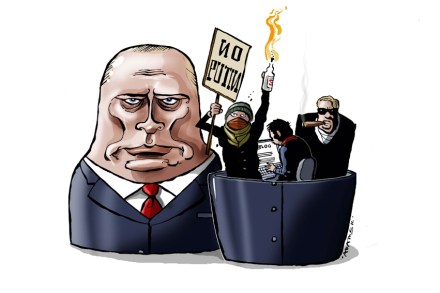
Alexei Navalny, the most important opposition leader in Russia, is unconscious in hospital after drinking poisoned tea on an airplane. This has happened before: Anna Politkovskaya, the crusading Russian journalist, was also poisoned on an airplane. She recovered, but was later murdered outside her apartment. This latest assassination attempt comes just as anti-government demonstrations gain strength in Belarus and the Russian Far East, demonstrations which have built on the example of Navalny, among other things. Over the past decade, Navalny promoted a new ethos and new forms of dissidence in Russia, using the internet to interact with millions of people, inspiring people to find new ways to participate in public life.

Torture a Tory, make him an MEP? Not any more

From our UK edition

‘Epiphany.’ That was the word that Robert Rowland, soon-to-be-ex-MEP for the Brexit party, used to describe his discovery of the real inner workings of the European parliament. I met Rowland in Strasbourg, a mere eight months after his election last May, at his very last plenary session. With no small degree of pride, he showed me around the debating chamber, with its sleek interior and its hi-tech voting machines. He told me about the ‘very high-quality’ people he had met, such as Nathalie Loiseau, the former French Minister for European Affairs. So interesting, so affable! Some of them — he mentioned a former Czech minister — even know quite a lot about economics!

The wrong right

From our UK edition

To the inhabitants of the British Isles, the nations of central Europe have always existed in a semi--mythical space, near enough to be recognised as somehow European, but too distant to be taken seriously. Neville Chamberlain dismissed them as ‘faraway countries of which we know little’; Shakespeare gave landlocked Bohemia a coastline. In British school textbooks, Poland appears for the first time in 1939 and then vanishes again, just as abruptly. In the feverish politics of the Brexit era, central Europe has once again returned — and, once again, it is in a semi-mythical form. This time, the region is playing the role of an imaginary alternative Europe, one perfectly suited to the needs of Brexiteers.

If Trump wins the White House, the US could be finished as a world power

From our UK edition

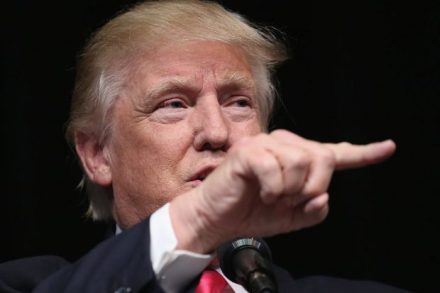
Spy novels and James Bond movies; post-war Vienna and East Berlin; Manchurian candidates and Third Men. The pop culture of the Cold War era created a set of stereotypes about hostile foreign intelligence services, especially Russian intelligence services, and they still exist. We still imagine undercover agents, dead drops, messages left under park benches, microphones inside fountain pens. It’s time to forget all of that, because the signature Russian intelligence operation of the future, and indeed of the present, is not going to unfold in secret, but rather in public. It’s not going to involve stolen documents, but rather disinformation operations designed to influence democratic elections.

Trump ♥ Putin

From our UK edition

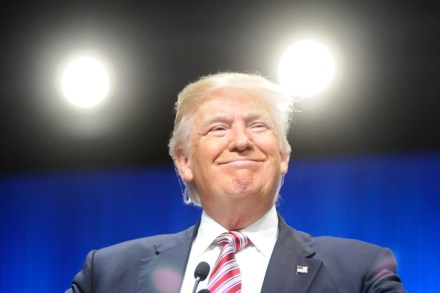
Spy novels and James Bond movies; post-war Vienna and East Berlin; Manchurian candidates and Third Men. The pop culture of the Cold War era created a set of stereotypes about hostile foreign intelligence services, especially Russian intelligence services, and they still exist. We still imagine undercover agents, dead drops, messages left under park benches, microphones inside fountain pens. It’s time to forget all of that, because the signature Russian intelligence operation of the future, and indeed of the present, is not going to unfold in secret, but rather in public. It’s not going to involve stolen documents, but rather disinformation operations designed to influence democratic elections.

Yes, Obama may be deeply annoying. But on Europe, he’s right

From our UK edition

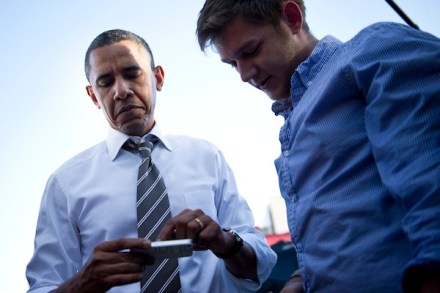
[audioplayer src="http://feeds.soundcloud.com/stream/260046943-the-spectator-podcast-obamas-eu-intervention-the-pms.mp3" title="Janet Daley and Freddy Gray discuss Obama's overreach" startat=27] Listen [/audioplayer]You don’t like Barack Obama’s foreign policy? Fine, I don’t either. You are impatient to know who the next president will be? Me too. But if you think that the current American president’s trip to the UK this week is some kind of fanciful fling, or that his arguments against Brexit represent the last gasp of his final term in office, then you are deeply mistaken. In Washington, the opposition to a British withdrawal from the European Union is deep, broad and bipartisan, shared by liberal Democrats and conservative Republicans alike.

He speaks for America

From our UK edition

[audioplayer src="http://feeds.soundcloud.com/stream/260046943-the-spectator-podcast-obamas-eu-intervention-the-pms.mp3" title="Janet Daley and Freddy Gray discuss Obama's overreach" startat=27] Listen [/audioplayer]You don’t like Barack Obama’s foreign policy? Fine, I don’t either. You are impatient to know who the next president will be? Me too. But if you think that the current American president’s trip to the UK this week is some kind of fanciful fling, or that his arguments against Brexit represent the last gasp of his final term in office, then you are deeply mistaken. In Washington, the opposition to a British withdrawal from the European Union is deep, broad and bipartisan, shared by liberal Democrats and conservative Republicans alike.

Israel notebook

From our UK edition

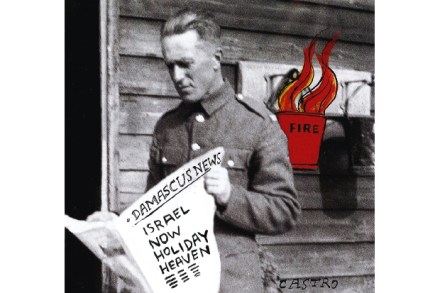
Portugal, Spain, Italy, Greece, Croatia, Morocco: if I had picked anywhere else on the Mediterranean for a family holiday, at least anywhere that’s not convulsed by civil war, I don’t think anyone would have noticed. But when I told friends that we were taking our children to Israel on vacation, I got some odd looks. Was there a special reason, someone wanted to know. Were we in search of political insight, asked another. Perhaps one of us was interested in finding his or her Jewish roots, an acquaintance suggested. Perhaps one of us was ‘searching’, spiritually speaking, and would like to walk in the steps of Jesus. Nobody seemed able to believe that we just…went to Israel, on Wizzair, in search of winter sunshine. But that wasn’t the end of it.

How Vladimir Putin is waging war on the West – and winning

From our UK edition

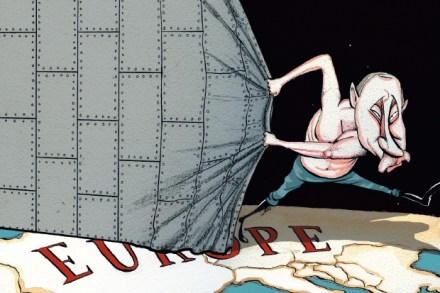
Last month, the speaker of the Russian parliament solemnly instructed his foreign affairs committee to launch a historical investigation: was West Germany’s ‘annexation’ of East Germany really legal? Should it be condemned? Ought it to be reversed? Last week, the Russian foreign minister, speaking at a security conference in Munich, hinted that he might have similar doubts. ‘Germany’s reunification was conducted without any referendum,’ he declared, ominously. At this, the normally staid audience burst out laughing. The Germans in the room found the Russian statements particularly hilarious. Undo German unification? Why, that would require undoing the whole post-Cold War settlement!

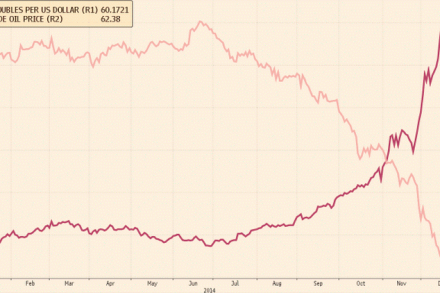
The crash of the ruble — and what’s next for Russia

From our UK edition

Since the Russian invasion of Crimea last February, many different phrases have been used to describe the tactics of the Russian President, Vladimir Putin. Some have spoken of a ‘new Cold War’. Others have described him as ‘anti-western’ or ‘anti-American’. But there is another adjective one could also use to describe his behaviour: ‘experimental’. For apart from everything else he has said and done, Putin has, in effect, launched a vast experiment into whether it is possible to extract a large and relatively well-integrated country from the global mainstream, and to reject the rules by which that mainstream runs. In truth, the experiment began long before Crimea.

An escape to the country that became a struggle for Poland’s soul

From our UK edition

In 1993, John Borrell, a longtime foreign correspondent with no permanent home, decided to abandon journalism. Tired of writing about wars and violence — he had been in Beirut, Rwanda and Nicaragua — he determined to throw himself into European rural life. But instead of a year in Provence, he chose 20 years in Kaszubia, northeast Poland. Borrell, originally from New Zealand, had married a Pole. They bought an exquisite piece of land beside a pristine lake, and there they built a boutique hotel. I was a Warsaw correspondent at about the same time as Borrell, and remember a certain amount of head-shaking over this venture.

Letting Russia into the G8 gave tacit approval to Putinism

From our UK edition

Expelling Russia from the G8 is an option being urged on Barack Obama this morning. The logic for admitting Russia in the first place was always tenuous - as Anne Applebaum argued in the Spectator when it last hosted the summit. For sale, the advertisement might read: One very large Russian energy company. Estimated assets, including oil wells, reserves, refineries: $60 billion. Possible liabilities: four major international lawsuits, a part-time CEO who works full-time as President Vladimir Putin’s deputy chief of staff, and a certain — shall we say — lack of clarity about whether the company legally acquired most of those assets at all. I am talking here about Rosneft, the very large Russian energy company whose shares go on sale in London next week.

Secrets of the Kremlin

From our UK edition

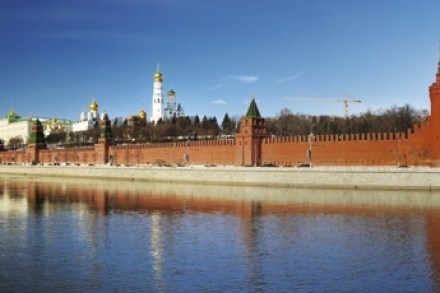
A building bearing testimony to the power of eternal Russia; a timeless symbol of the Russian state; a monument to Russian sovereignty. To the modern eye, the Kremlin fortress seems as if it had always been there, as if it had never changed and never will. All of which is utter nonsense, as Catherine Merridale’s fascinating history reveals: the story of this famous compound is not one of continuity, but of construction, destruction and reconstruction. Every reincarnation of the Russian state over the centuries — and there have been many — has been accompanied by a corresponding reincarnation of the Kremlin. Its history is thus a metaphorical history of Russia, as Merridale understands very well.

Time for our leaders to stop talking about ‘justice’ in Syria if we can’t or won’t enforce it

From our UK edition

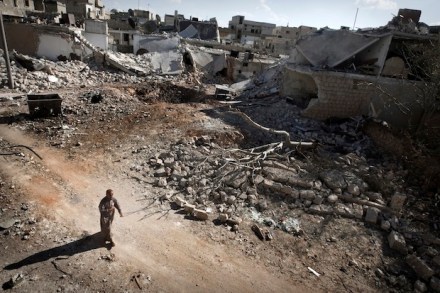
‘It’s about chemical weapons. Their use is wrong and the world shouldn’t stand idly by.’ — David Cameron, 27 August ‘The chemical massacre in Damascus cannot and must not go unpunished.’ — François Hollande, 30 August ‘We lead with the belief that right makes might, not the other way around.’ — Barack Obama, 31 August In their speech, in their manner and in their choice of language, the American President, the French President and the British Prime Minister have been impeccably clear about their motivations for military intervention in Syria. They don’t want to use force for economic gain. They aren’t in this for national interest.

Anne Applebaum’s diary: Spies, terrorists and an undercover ham sandwich

From our UK edition

I am trying very hard to understand why everyone is shocked — shocked! — by news that the US government helps itself to the massive data flows generated by Google, Facebook and Twitter. I have always assumed that something placed into an internet database is no more secret than something written in a letter. We all know that those pop-up advertisements — so amazingly compatible with what we searched for on Facebook ten minutes ago — aren’t there by accident. But if we aren’t bothered when ruthlessly efficient multinational corporations troll through our data in order to earn billions for their teenage CEOs, why are we bothered when the comparatively inept US government does the same while searching for terrorists?

Why are we all so shocked by Prism?

From our UK edition

I am trying very hard to understand why everyone is shocked — shocked! — by news that the US government helps itself to the massive data flows generated by Google, Facebook and Twitter. I have always assumed that something placed into an internet database is no more secret than something written in a letter. We all know that those pop-up advertisements — so amazingly compatible with what we searched for on Facebook ten minutes ago — aren’t there by accident. But if we aren’t bothered when ruthlessly efficient multinational corporations troll through our data in order to earn billions for their teenage CEOs, why are we bothered when the comparatively inept US government does the same while searching for terrorists?

Love conquers all

From our UK edition

Anyone who has ever written a history book will feel a twinge of envy on reading the preface to Just Send Me Word: We opened up the largest of the trunks. I had never seen anything like it: several thousand letters tightly stacked in bundles tied with string and rubber bands, notebooks, diaries, documents and photographs… It was a unique family archive, the property of Svetlana and Lev Mishchenko, and it contained, among other things, packets of their love letters.   The two had met as university students in Moscow in the 1930s, but their relationship was cut short by the outbreak of war. Lev joined the Red Army in 1940, fought near Moscow but then fell into German captivity.

Russia’s new dissidents

From our UK edition

Alexei Navalny, the de facto leader of the demonstrators who thronged freezing Moscow on Christmas Eve, minces no words. On ­rospil.info, a website he founded that is dedicated to the investigation of local and municipal corruption, he introduces the topic like this: ‘Why is all of this necessary? Because pensioners, doctors and teachers are practically starving while the thieves in power buy ever more villas, yachts, and the devil knows what else.’ Nor does Navalny shy away from sharp visual imagery. Another one of his projects is to collect photographs of potholes, crumbling motorways, cracking bridges and other road catastrophes waiting to happen.