Book review

The man who went to Hell and back – for a laugh

From our UK edition

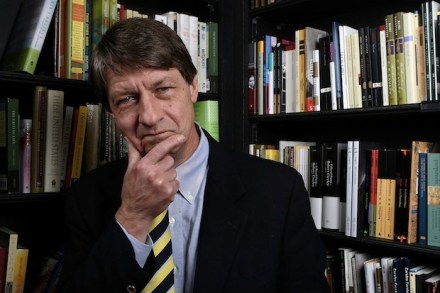
Since the passing of Auberon Waugh, there haven’t been many really successful right-wing comedians. The Mayor of London is one. Another is the American journalist and wit P.J. O’Rourke. The alliterative title of The Baby Boom, his 20th book, essentially sums up its author’s style, his childlike boisterousness, his resonant infantilism. Its scarcely less suitable subtitle — ‘How It Got That Way, And It Wasn’t My Fault, And I’ll Never Do It Again’— is almost as revealing, indicating a man engaged in a conversation with himself and determined to have the last word.
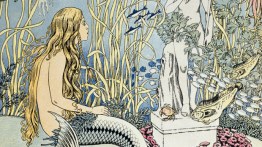
The fairytale life of Hans Christian Andersen

From our UK edition

It has long been my habit, when approaching a new biography, to read the account of the subject’s childhood first, then jump to the deathbed, before settling down to the main narrative between. It was rather disconcerting, therefore, to find that Paul Binding’s life of Hans Christian Andersen eschews the deathbed and ends with the author’s last, not very cheering, written words rather than his last breath: The brewer is dead, Auntie is dead, the student is dead, him whose sparks of ideas ended up in the rubbish bin. Everything ends up in the rubbish bin. It is only in the chronology that we learn that Andersen’s 70th birthday was internationally acclaimed and that his funeral a few weeks later was attended by the King of Denmark and a multitude of admirers.

Piketty’s decaff Marxism would be just as oppressive and intrusive as the old variety

From our UK edition

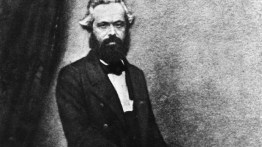
If a title works once, the chances are it will work again. Half the punch of Marx’s masterwork is in its name. Better in German of course, with the kick of the K and the ominous echo of Kaput. But even in English when blocked out in red caps on a  fat spine, CAPITAL sends a thrill along any bookshelf. Its fond midwives at Harvard can scarcely have expected to sell 200,000 copies of a 600-page treatise by a French economist unknown in the English-speaking world, but that only shows we must never underestimate the beauty of telling the target audience what it wishes to hear — in this case, that Marx is back in town. This, though, is certainly not the first impression you get from the book.

The wit, wisdom and womanising of Constant Lambert

From our UK edition

We owe Constant Lambert (1905–1951) a huge amount, and the flashes of brilliance that survive from his short life only suggest the energy with which he established the possibilities for English culture. What we remember about this extraordinary man are some delightful pieces of music, especially The Rio Grande; the funniest and most cultivated book about contemporary music ever written, Music Ho!; and a few surviving recordings of his work as a conductor. Before his death, aged 46, from chronic alcoholism and undiagnosed diabetes, he had established the Sadler’s Wells Ballet with Ninette de Valois and Frederick Ashton; in the trio, he was not only the conductor and musical expert, but someone who was acutely alive to the possibilities of stage design and drama.

Wealth is no guarantee of happiness. Look at the Sackville-Wests

From our UK edition

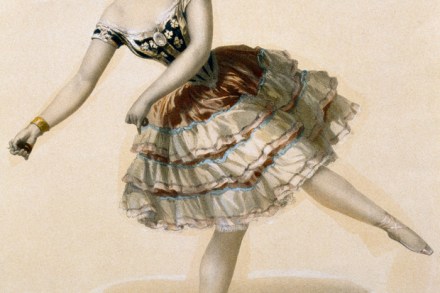
When Robert Sackville-West was writing Inheritance (2010), his history of Knole and the Sackvilles, he was ‘struck’, as he recalls in his new book, by the way that Sackvilles have ‘tended to take Italian or Spanish dancers as mistresses’. The most notable of these was Josefa Duran, the flamenco dancer known as ‘Pepita’. A barber’s daughter, she was born in 1830 in the backstreets of Málaga — ‘Oh such a slum it is!’ observed her grand-daughter Vita Sackville-West, who wrote a biography of her, Pepita (1937). By the 1850s she was the toast of Europe, and in 1852 she began a liaison with Lionel Sackville-West, later the 2nd Lord Sackville, which lasted until her death in 1871.

Mid-life crisis, 13th-century style

From our UK edition

The word delicate is seldom a compliment.  I once threw a saucepan of hot soup out of a fifth storey London window because a boyfriend said it had a delicate flavour, by which he meant none at all. This novel, though, is delicate in an entirely good way: it is fine, intricately wrought, understated. It imagines the life of the 13th-century Chinese scholar-artist Wang Meng, whose misfortune it was to live in interesting times, during the closing years of the Mongol invaders’ Yuan dynasty. Much of the time Wang spends staring at mountains and rivers and discussing the finer distinctions of Tao and Buddhist philosophy. He believes that ‘the good and gentle side of life was stronger and more permanent than the bad’.

Judge a critic by the quality of his mistakes

From our UK edition

What the title promises is not found inside. It is a tease. John Sutherland says he has ‘been paid one way or another, to read books all my life’, yet he does not regard himself as well read in the genre of novels. With two million languishing in the British Library vaults, nobody could be, he insists. And although the publishers have given it the subtitle ‘A guide to 500 great novels and a handful of literary curiosities’, the author declares in his admirably succinct preface: ‘This book is not a guide.’ He’s right. It is an engaging game, or a compendium of games (as the Gamages Christmas catalogue used to describe a chess board with snakes and ladders on the back). I started off by seeing what the Prof thought of some of the books I like.

Exclamation marks, no; aertex shirts, yes!

From our UK edition

Jonathan Meades, the architectural, food and cultural commentator, appears on television in a pair of retro shades and a trademark Blues Brother suit. He looks like a poseur, and indeed studied drama at Rada. Lynn Barber, the ‘celebrity interviewer’, is the self-acknowledged scourge of pomposity and pretension. (Melvyn Bragg, among others, has felt the lash of her schoolmarm tongue.) Like Meades, Barber grew up in early 1950s middle-class England. An only child, she found a way out of the bridge/ canasta tea parties and sherry-tippling of Twickenham, her childhood home, to become a staff writer on Penthouse girlie magazine; her first book, published in 1975, was a sex manual entitled How to Improve Your Man in Bed (which, incidentally, my wife has still not read).

Look again – the first world war poets weren’t pacifists

From our UK edition

If the poets of the first world war probably enjoy a higher profile now than they have done at any time in the last 100 years, it has not been a smooth passage. When Wilfred Owen was killed in the last week of the fighting he was still virtually unknown, and even 25 years later in the middle of another war, when the ludicrous Robert Nichols — the man Edmund Gosse had once seen as a new Keats and Shelley combined — brought out his anthology of first world war poetry, there was still room for only four poems by Owen and none at all by Isaac Rosenberg, Edward Thomas or Ivor Gurney.

An escape from New South Wales

From our UK edition

Thomas Keneally has constructed his latest novel around a framework of true events: the mass break-out of Japanese PoWs from a camp in New South Wales. This intrinsically thrilling incident, triggered by a fascinating clash between mutually uncomprehending cultures, is an obvious gift to a writer. There may be some who claim that any novelist could therefore have produced an interesting fictional version of it; but this is like saying that anyone could have made a landscape out of the fine park at Blenheim. Keneally spotted both the tale and its possibilities, which in itself is a truly enviable talent. His imagination is fired by the incongruities of the camp in the small town of Cowra, here fictionalised as Gawell.

Recent crime fiction | 24 April 2014

From our UK edition

Louise Welsh rarely repeats herself, a quality to celebrate in a crime novelist. Her latest novel, A Lovely Way to Burn (John Murray, £12.99, Spectator Bookshop, £10.99) is a dystopian thriller set in an all-too-plausible version of contemporary London. Three members of the establishment have shot dead innocent bystanders. The weather is broiling. A plague-like virus known as ‘the sweats’ spreads, bringing panic in its train. Stevie Flint, a cynical TV presenter on a shopping channel, is one of the few survivors. She contracts the disease shortly after stumbling on her boyfriend’s body. The boyfriend, a surgeon who apparently died of natural causes, had concealed a laptop in her loft shortly before his death.

The gambler’s daily grind

From our UK edition

Lord Doyle is a shrivelled English gambler frittering away his money and destroying his liver in the casinos of Macau. Aptly, since he is in a place filled with mock-Venetian canals and poor reproduction paintings, he himself is a fake: the man is not a real lord, and the money is not his own. He is a disgraced solicitor of modest origin, who ran off with a client’s savings after befriending her. Lawrence Osborne’s novel is a bleak and enjoyable account of someone who, perhaps through unacknowledged guilt, finds bitter solace in losing and in driving himself towards extinction.

What most imperilled country houses in the 20th century was taxes and death duties, not requisition

From our UK edition

Servicemen used paintings as dartboards.   Schoolchildren dismantled banisters and paneling for firewood. Architects from the Ministry of Works acted like pocket Stalins. Sarcophagi were dumped in gardens beside beheaded statues. And overhead, Luftwaffe Dorniers droned with menace. Such hazards ravaged requisitioned country houses during the last war. Yet nothing imperilled them more, in the 20th century, than super-taxes and the rattle of death duties. When the country houses were handed back, the majority were defiled as well as decaying from leaking roofs and dry rot. Cash-poor owners, already penalised by towering taxation, could not afford to carry out major repairs to their caves of ice — to borrow from Coleridge and James Lees-Milne.

Up close and personal | 24 April 2014

From our UK edition

What should a writer write about? The question, so conducive to writer’s block, is made more acute when the writer is evidently well-balanced, free of trauma and historically secure. It is made still more urgent when that writer is solipsistic in tendency and keen to write, not about the world, but about perceptions of the world. Two American authors of the same period arrived at different solutions to the problem. Sylvia Plath, in her husband Ted Hughes’s assessment, first found nothing worth writing about, and then deliberately encouraged demons and hitherto controlled minor difficulties until they flared up and killed her. John Updike, on the other hand, had an immensely long and sustained writing career, with few troubles to cope with other than psoriasis.

Beauty in beastly surroundings

From our UK edition

The vast majority of books written about British gardens and their histories are concerned with large ones, made and maintained, sometimes over several centuries, by people with money. ’Twas ever thus. In this country, recognisable gardens began in monasteries, as well as the surroundings of palaces and noblemen’s houses, and it is only in the last couple of centuries that the middle classes have got into the act. As for the poor and dispossessed, theirs has been a very different story, too rarely told.

Sudan was always an invented country. Maybe we should invent it again

From our UK edition

Sudan — a country that ceased to exist in 2011 — is or was one of the last untouristed wildernesses on earth. And for good reason: while it still existed it was the biggest country in Africa, a mainly flat and uninhabitable wasteland, mostly brown, with barely a mountain or a bosky valley to its name, unbearably hot, unhealthy, poor, and full of every sort of trouble. And yet … The author of this new book on what are now the two Sudans — the country has voluntarily split into two lesser states — says that this is one of the world’s most interesting places. That is true. As anyone who has spent time there will tell you, the Sudans (as we must now call them) both north and south exert a fascination.

From Göring to Hemingway, via Coco Chanel – the dark glamour of the Paris Ritz at war

From our UK edition

In Midnight in Paris, Woody Allen did a good job of showing how foolish it is to be obsessed by previous generations who’ve passed through Paris. Going back through the years, each group of geniuses turns out to be just as drunk and silly as the next, albeit with longer cigarette holders. Tilar Mazzeo, who has written biographies of Coco Chanel and the woman behind Veuve Clicquot, has done a similar service with this history of the Ritz. Focusing on the hotel is partly a device to write about the German occupation, but it’s mainly a way of gathering all the old Paris icons under one roof. Marcel Proust, Ernest Hemingway, Marlene Dietrich and Coco Chanel all drank cocktails there, and no one comes out of it well.

Tea with Greta Garbo’s decorator

From our UK edition

Many people write, or at least used to write, fan letters to their film favourites. Usually all they received in acknowledgement was a 10 x 8 glossy with a mimeographed signature. A little persistence sometimes resulted in another, with a brief ‘personal’ message written by the ladies toiling in the fan-club HQs. Not so for the two authors of this riveting book. The Mutti-Mewse twins, early on, became obsessed with all things Hollywood, firing off missives not just to the major stars but to every man Jill they saw or heard was connected to that once fabulous industry. They must have had a magic formula in their letters. Replies flowed back hand over fist.