Book review

Charlie Chaplin, monster

From our UK edition

No actual birth certificate for Charles Spencer Chaplin has ever been found. The actor himself drew a blank when he went on a rummage in Somerset House. The latest research suggests that he was born ‘in a gypsy caravan in Smethwick, near Birmingham’. But surely the truth has been staring people in the face ever since the Little Tramp first popped on the screen: Chaplin is the lost twin of Adolf Hitler. Peter Ackroyd almost suggests as much. Both men first drew breath in April 1889. They had drunken fathers and nervous mothers. There were patterns of madness and illegitimacy in the family tree. They were short and sported an identical moustache. They had marked histrionic skills, each man ‘appealing to millions of people with an almost mesmeric magic’.

Go east – the people get nicer, even if their dogs get nastier

From our UK edition

When Nick Hunt first read Patrick Leigh Fermor’s account of his youthful trudge across Europe in A Time of Gifts and Between the Woods and the Water, he knew ‘with absolute certainty’ that one day he would make that journey himself. When I embarked on Patrick Leigh Fermor’s biography, I made an equally firm resolve that I wouldn’t walk a step of it. Paddy’s books had left me with a vision of a timeless Europe suspended somewhere between memory and imagination, and I didn’t want that vision distorted by layers of personal impressions. But to Hunt the books posed a question. Eighty years on, was there anything left of the ‘gifts’ Paddy had enjoyed in prewar Europe?

The diary that proves Anthony Seldon wrong about the first world war and the public schools

From our UK edition

In March 1915 the 27th Earl of Crawford and Balcarres, with an already distinguished political career behind him, took the unorthodox step of enlisting, aged 43, as a private in the Royal Army Medical Corps. In 1916 he returned to England from France to take up important government duties, but for 14 months he had been a medical orderly on the Western Front, the only cabinet minister to serve in the ranks in the first world war. He was based at the casualty clearing station at Hazebrouck, close to the principal areas of British military activity in 1915. He kept a diary throughout this time — now admirably edited by his cousin Christopher Arnander — giving a unique close-up view of the great war though the eyes of a shrewd participant.

This beautiful new history of Kew Gardens needs a bit of weeding

From our UK edition

Edward Bawden’s Kew Gardens is a beautiful book. Lovers of early 20th-century British art will find it hard to stop gazing at the painted board cover under the dustjacket. It is so sheenily brilliant that you want to frame it and hang it on the wall at once. Every page, including the endpaper plans of Kew, is visually perfect, and the book is an agreeable size. Peyton Skipwith, formerly of the Fine Art Society, and Brian Webb, the designer, have collaborated on beautiful books before; their track record is impeccable. Published by the V&A, their latest work is an utterly desirable object. Having had the privilege of being on a tour of Paul Nash’s paintings at the Dulwich Art Gallery in the company of Mr Skipwith, I am aware that his knowledge on this period is vast.

A Beckett fagend rescued from a bin

From our UK edition

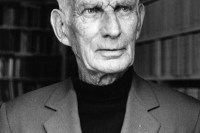
Spectator readers of my vintage will remember their first encounter with Beckett as vividly as their first lover’s kiss. For me they happened around the same time, aged 18. The dramatic initiation was a Colchester rep performance of Waiting for Godot, in 1956. Twenty-five years after his first mature work was written Beckett had hit England with the burst of an unexploded wartime bomb. The general response at the time was one of fascinated bafflement. That has dispersed over the last half century but the fascination — as the headlines accompanying the publication of this Beckettian fragment witness — remains undiminished. The story, ‘Echo’s Bones’, is an early work but in no sense juvenile.

An escape to the country that became a struggle for Poland’s soul

From our UK edition

In 1993, John Borrell, a longtime foreign correspondent with no permanent home, decided to abandon journalism. Tired of writing about wars and violence — he had been in Beirut, Rwanda and Nicaragua — he determined to throw himself into European rural life. But instead of a year in Provence, he chose 20 years in Kaszubia, northeast Poland. Borrell, originally from New Zealand, had married a Pole. They bought an exquisite piece of land beside a pristine lake, and there they built a boutique hotel. I was a Warsaw correspondent at about the same time as Borrell, and remember a certain amount of head-shaking over this venture.

Arianna Huffington meets Madame de Menopause

From our UK edition

A-Huff’s career has been remarkable for the contrast between hard-headed social advancement (‘the most upwardly mobile Greek since Icarus’) and addle-pated spiritual questing. In this she resembles an older, colder Gwyneth Paltrow, who coincidentally came out with her ‘consciously uncoupling’ corker as I was ploughing my way through Thrive — such a G.P. cookbook title! Like Paltrow, who recently vowed that after years of lying she was ‘starting to get honest: the path to honesty has been one of the most beautiful, painful and interesting lessons of my life’, A-Huff attempts to portray trauma as a lifestyle accessory and growth enhancer.

If you think Virginia Woolf’s novels are good, you should try her bread

From our UK edition

I have to declare an interest: as a scion of the Bloomsbury Group, I was naturally brought up on their cooking. During the course of her research for this book I met, got to know and became friends with Jan Ondaatje Rolls. She has certainly chosen a novel way to portray that well-known group of friends about whom so much has been written that it’s hard to imagine there could be anything more to unearth. Hers is a sprightly approach. By defining them through their dinners, she makes us see the Bloomsberries from another, more domestic, more gleeful point of view: the kaleidoscope is twisted again.

Our leaders have betrayed the noble worker. Oh really?

From our UK edition

In his essay on the ‘Peculiarities of the English’, E.P. Thompson gave his theoretical definition of class: When we speak of a class we are thinking of a very loosely defined body of people who share the same congeries of interests, social experiences, traditions and value-system, who have a disposition to behave as a class, to define themselves in their actions and in their consciousness in relation to other groups of people in class ways. But class itself is not a thing, it is a happening. Selina Todd has a snappier and more prosaic definition of the working class (‘The People’) as ‘a class of workers who depended on earning a living and were in that way distinguished from the rich who lived on the labour of others’.

The one-man spy factory who changed history

From our UK edition

With two new biographies of Kim Philby out, an espionage drama by Sir David Hare on BBC2, and the recent revelation that the aristocrat superspy John Bingham was the model for George Smiley, there is little doubt that Britain is currently going through one of its fitful bouts of spy fever, and this book can only add to the excitement. Philby has a walk-on role in Jason Webster’s gripping and stylish new account of the extraordinary career of Juan Pujol, aka Agent Garbo — and a multiplicity of other monikers — arguably the second world war’s most successful double agent apart from Philby himself.

Oriel: the college that shaped the spiritual heart of 19th century Britain

From our UK edition

Oriel was only the fifth college to be founded in Oxford, in 1326. Although it has gone through periods of relative obscurity in the intervening seven centuries, it has also, at other times, been at the very centre of the intellectual life, not only of the university but of the nation. In the early 19th century, the Senior Common Room was dominated by the Noetics. These broad churchmen, who included Thomas Arnold, a fellow of the college before he became a famous head-master, believed in the acceptance of utilitarian economics, but also an application of Christian principles to society at large. Against them, and in the same common room, were the high churchmen or Tractarians, the most hypnotic of whom, John Henry Newman, was the closest Oxford ever got to possessing a guru.

White, blue-collar, grey-haired rebels

From our UK edition

In the 2010 general election, Ukip gained nearly a million votes — over 3 per cent — three times as many as the Greens, and nearly twice as many as the SNP. Unlike those parties, it won no seats, but its intervention almost certainly cost the Conservatives an overall majority at Westminster. The paradoxical consequence was to hand the balance of power at Westminster to the most pro-European party in British politics, the Liberal Democrats. In the local elections last year, Ukip won 24 per cent of the vote, and is well placed to win the European parliament elections in May. Its impact in next year’s general election is likely to be even greater than in 2010. So far, explanations of the Ukip phenomenon have been long on assertion but short on evidence.

Brains with green fingers

From our UK edition

‘Life is bristling with thorns,’ Voltaire observed in 1769, ‘and I know no other remedy than to cultivate one’s garden.’ This is the remedy espoused by Candide at the end of Voltaire’s satirical novel, published ten years earlier, and the literal and metaphorical cultivating of gardens is the subject of Damon Young’s sprightly and stimulating little book. Young examines the relationship between gardening and philosophy in the life and work of 11 writers, from the 18th to the 20th century, topping and tailing these individual essays with a consideration of the Ancient Greeks.

Mortar fire, weddings, camels, the French revolution: all kind of things get in the way of cricket

From our UK edition

It isn’t just the elk, either. Also bringing proceedings to a halt in this wonderful anthology are camels (Bahrain), cows and donkeys (Botswana), unexploded landmines (Rwanda, silly mid-on), people learning to drive (East Timor), punch-ups (Bermuda), low cloud (Christmas Island, 300 metres above sea-level), mortars (Iraq, though not during the game held by coalition forces in the ballroom-sized anteroom of Saddam’s abandoned North Palace) and weddings (the ground on Ascension Island has a church inside its boundary). For the record, the elk (Finland) was twice the size of a horse. Even when play is possible, life can still be tricky.

How did revolution become Istanbul’s new normal?

From our UK edition

On a recent weekend I was thinking of taking my sons to downtown Istanbul to do some bazaar browsing. ‘Bad idea’,  a fellow expatriate warned me, ‘revolution on Taxim Square. Again.’ Revolt has become the new normal in Istanbul, a constant of urban life to be followed like the weather. Every few months the ritual dance erupts, chanting crowds on one side and sinister and well-drilled riot police on the other, followed by water cannon and the artillery-like noise of tear-gas canisters being fired into the crowd. How has Turkey come to this? Twelve years ago, Turkey’s then-new prime minister Recep Tayyip Erdogan promised to be an ‘Islamic Democrat’ in the sense that Germany’s Christian Democrats were Christians.

Sex and squalor in San Francisco

From our UK edition

Frog Music begins with a crime against a young mother, committed in a tiny space. Unlike Emma Donoghue’s bestselling novel Room, however, the setting is not present-day America but that of 1876. Blanche is travelling on a train with her new friend Jenny. She hears several loud cracks and feels something hot and wet fall on her face. When she collects her senses, Jenny lies dead. Like Kate Atkinson, Donoghue straddles the literary and the crime genre. Room, inspired by the discovery of a number of women abducted and impregnated by their captors, should have won the 2010 Orange Prize and didn’t — perhaps because its subject matter was simply too controversial. Frog Music, like Donoghue’s The Sealed Letter, is a return to a historical setting.

War is good for us

From our UK edition

At the heart of this work is a startling and improbable statistic and the equally surprising and counterintuitive thesis that flows out of it. We are used to looking back on the 20th century as comfortably the most violent in all human history — the silver medal usually goes to the 14th — but if Ian Morris(a fellow at Stanford University) is to be believed, the century that could wipe out perhaps 50 million to 100 million in two world wars and throw in the gulags, the Cultural Revolution, civil wars, government-orchestrated famine, trench-stewed pandemics and any number of genocides for good measure was, in fact, the safest there has ever been. If sometime around 7a.m.

When Mussolini came knocking on Hollywood’s door

From our UK edition

John Ford was the first of the five famous Hollywood film directors to go to war. He went expecting to get given a sword, which he could then brandish. After all, he knew about swords; they were things that came out of props baskets in his cavalry epics, but that was in films. Unfortunately in real life he found he had an arthritic thumb, which meant that having once drawn one he needed help to put the sword back in its scabbard. It had not been like that in his films, where he had only to say the word for anything to happen. There he could put a coal mine on top of a mountain in How Green Was My Valley, and farm the desert in his Westerns. But the first film he made in the navy was real life with a vengeance.