Book review

Only tourists think of the Caribbean as a ‘paradise’

From our UK edition

A couple of years ago in Jamaica, I met Errol Flynn’s former wife, the screen actress Patrice Wymore. Reportedly a difficult and withdrawn woman, her life in the Caribbean (apart from the few details she cared to volunteer) could only be guessed at. The Errol Flynn estate, an expanse of ranchland outside Port Antonio, was grazed by tired-looking cattle. ‘Haven’t we met before?’ Wymore said to me as I walked into her office after knocking. ‘You remind me of someone I know.’ I took in the riding crops and spurs hanging on the wall. After eight years of marriage, in 1958 Wymore had divorced Flynn, who died the following year at the age of 50 having more or less boozed himself into the grave.

The gentle intoxications of Laurie Lee

From our UK edition

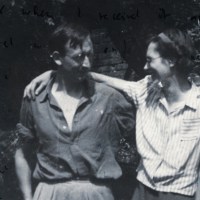
He was always lucky, and he knew it: lucky in the secure rural intimacy of the upbringing described in Cider with Rosie; in the love of some passionate, clever women, whose guidance and support get rather less than their due in As I Walked Out One Midsummer Morning; and in having survived the Spanish civil war — the subject of A Moment of War — despite seeing action (though on his part this involved more seeing than action) in the terrible last battle of Teruel, and being imprisoned three times as a suspected spy. Behind and beyond all that, he was lucky in his gifts: charm, which included a knack for emotional escapology; artistic skill — he drew, painted and was an agile violinist; and above all verbal fluency.

Thug, rapist, poetic visionary: the contradictory Earl of Rochester

From our UK edition

Despite being an earl, Rochester is very nearly a major poet. His poems and letters were torn up by a zealous mother after his death, bent on destroying anything obscene or scandalous. A good deal was lost, but a lot was passed from hand to hand, copied and recopied (it was never printed in Rochester’s lifetime). His full development as a poet cannot be traced, but some of what survives is tantalisingly rich, and has fascinated many subsequent writers. He is one of those rare poets who come to mean much more to later generations. ‘Upon Nothing’ bears a bleak relationship to the end of Pope’s ‘Dunciad’, and, very powerfully, to Hardy’s poem on the sinking of the Titanic, ‘The Convergence of the Twain’.

You know something’s up when MI6 moves its head office to Croydon

From our UK edition

Alan Judd’s spy novels occupy a class of their own in the murky world of espionage fiction, partly because they blend two elements of the genre that are rarely seen together. First, they are grounded in a wholly plausible version of the intelligence community, where decisions evolve in Whitehall committee rooms and the wiles of politicians and bureaucrats are just as important as the machinations of moles. Secondly, their central characters often recall an older tradition of gentlemen patriots that goes back to John Buchan’s Richard Hannay. The combination shouldn’t work but in Judd’s novels it does. These elements meet in the character of Charles Thoroughgood, who has already appeared in three earlier books, first as a soldier and later as an MI6 officer.

The Spanish Civil War hotel that Capa, Hemingway and Gelhorn called home

From our UK edition

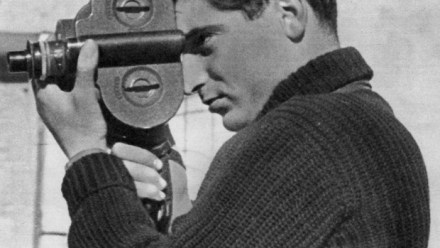
In February 1924 the Hotel Florida, a ten- storey marble-clad building with 200 rooms, a glass-roofed atrium and red plush furnishings, went up on Madrid’s Gran Via. Along with the Ritz in Paris, certainly the most celebrated hotel in the literary world, the Florida became, during the two-year battle for the capital waged between Franco’s nationalists and the republican forces, the meeting place for an eccentric, glamorous and self-important assortment of war tourists, zealots, opportunists, romantics, dreamers, buccaneers and writers who had come to observe the fighting, file dispatches of variable truthfulness and proclaim loyalty to the republic.

The Australian literary icon who fooled her family

From our UK edition

There aren’t many places you can get shouty about Proust without losing your job. The Lane Bookshop in Perth, Western Australia, is one of them. As an undergraduate, I’d pitch up there for work on Saturday mornings with as much song in the heart as a hangover allowed. Because for me the Lane wasn’t just a shop, it was a salon. The young staff, all writers, were encouraged (and fed, when cash was scarce) by the kind owners. Debates sparked between the shelves. And great Australian novelists came in to buy the books. The late Elizabeth Jolley was one of these. She must have been 80 when I last saw her, bird-thin with fiery eyes. Whenever she walked down the stairs, an awed hush descended.

The man who loathed emoticons – especially :)) as it reminded him of his double chin

From our UK edition

Paul O’Rourke, the narrator of Joshua Ferris’s third novel, is a dentist who spends his days staring into the murky recesses of his patients’ mouths. Despite encouraging them to floss, he is himself a man of curiously ingrained habits. Averse to the digital age and oddly superstitious, he stockpiles VHS recorders and watches the Boston Red Sox with a plate of bland chicken and rice, always careful to avert his eyes from the sixth innings. His small Park Avenue staff implore him to get with the times and develop a website for the practice; but Paul is a Luddite with no interest in kowtowing to a culture of smartphones and over-sharing. So when a well-produced website mysteriously appears and tweets under his name, he is understandably perturbed.

No special pleading needed for this disabled Dutch master

From our UK edition

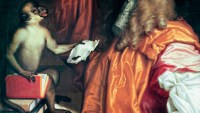
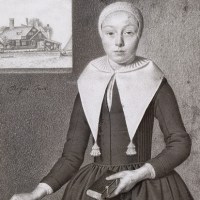
To discover an ‘unknown’ is the dream of anyone connected with the arts and in Johannes Thopas (c.1626-1688/95) we have just that. This book catalogues the exhibition now transfering from Aachen to the Rembrandt House Museum, Amsterdam (12 July–5 October). The curator is Rudi Ekkart, who discovered Thopas’s meticulous lead-pencil (plumbago) drawings on parchment as an art-history student in the early 1970s, when he had unlimited access to the University of Leiden’s famous drawing collection. After that he kept a record of everything to do with the artist, which now finds formal acknowledgment. Other recognised Dutch artists who were deaf and dumb have shown that a normal life could be profitably pursued.

Hillary Clinton’s autobiography seems destined to join her husband’s – in a bin marked ‘Free’

From our UK edition

Last year a Washington-based journalist called Mark Leibovich wrote This Town, a book whose thesis was, roughly, that Washington-based journalists are terrible people. Leibovich’s book exemplified a trend among self-described Beltway insiders who decry as venial and insipid the trivialities they spend their lives reporting. Sounds a bit precious, I know, not to mention suicidal. But it’s supposed to be waggish and endearing and ironical. The latest victim of this coprophagic tendency is Hard Choices, Hillary Clinton’s third book. Barely a week after its publication, with over a million copies in print, it has already been written off by the hacks who spent months doing potted F.R.

Recipe for a modern baker: first, move to Hoxton

From our UK edition

If I were the kind of person who invited people to come and have a bite to eat that very evening — and you’ve got to watch it in London, where people are inclined to draw themselves up to their full height, even by email, to ask what sort of sad case you think they are to imagine they’re free right now as opposed to in six weeks’ time — well, I’d reach for the Morito cookbook (Ebury, £26, Spectator Bookshop, £20).

The punk who inspired a generation of British woman to pick up a guitar

From our UK edition

Viv Albertine is deservedly famous as the guitarist of the tumultuous, all-female English punk band The Slits. Their debut album, Cut, released in 1979, combined jangly Captain Beefheart-style guitarwork with reggae rhythms and sardonic social commentary. Ariane ‘Ari Up’ Forster, the vocalist, added an element of wild-child abandon to Tessa Pollitt’s infectiously heavy bass lines. The album is a masterpiece. Albertine’s memoir takes its title from her mother’s routine complaint to her: ‘Clothes, clothes, clothes, music, music, music, boys, boys, boys — that’s all you ever think about!’ Albertine came to Britain from her native Australia in 1958, aged four.

The breasts that launched Les Fleurs du Mal

From our UK edition

This novel is based on the life of Charles Baudelaire and the relationship he enjoyed — or endured — with his Haiti-born mistress, his Black Venus, Jeanne Duval. We first see him in 1842, a young poet of 20, making his dandyish way through the slums of Paris to meet his friends at a cabaret theatre for an evening of wine and hashish. Here he will encounter for the first time his future muse. She is voluptuous, in a long red dress, singing risqué songs. In no time he is unlacing her boots and preparing to squander the legacy which he is shortly expecting. However, there are, as the author shows us, three people in this relationship, and the third one is Baudelaire’s mother.

Those weren’t the days

From our UK edition

If you wanted a brief epigraph for Linda Grant’s recent fiction, then five words from Dorothy Parker might well do the trick: ‘Time doth flit/ Oh shit.’ Certainly, there aren’t many writers who seem so astonished, even affronted, by life’s tendency (admittedly a strange one) to pass by more quickly than you ever imagined. Her previous novel, We Had It So Good, followed a group of students from the Oxford of the late 1960s to the present day, where they were bewildered to find themselves in the unthinkable position of being quite old. Now her new one does the same with a group of students from the York of the early 1970s. Inevitably, then, the two books do have similar themes, as youthful ideals come up against the annoyingly intractable world.

An old soldier sees through the smoke of Waterloo

From our UK edition

There is a very nice story of a dinner for Waterloo veterans at which Alexandre Dumas — ‘Dum-ass,’ as the Antarctic explorer Taff Evans would have him — was for some reason present. I can’t remember now the exact wording of the exchange between them, but Dumas had clearly spent so much of the evening sounding off about the battle as if he knew what he was talking about that a French general at the far end of the table could finally take no more. ‘But my dear Dumas,’ he protested, ‘it wasn’t at all like that! And remember, we were there!’ ‘Precisely, mon général,’ came back the reply. ‘You were there, so how could you possibly know?’ Gordon Corrigan is more than a chip off the old Dumas block.

A pork-pie and Capri-Sun fuelled hike around England’s moors

From our UK edition

‘No, no’ I said, when The Spectator’s literary editor rang up, ‘I’m sure you must be able to find someone who really wants to read another postcolonial analysis of the figure of the North African in English literature.’ But the book turned out to be about the other kind of moor, so I said yes, though not without some anxiety that it might be like Eeyore’s Gloomy Place: Rather Boggy and Sad. Luckily, William Atkins’s book, though it acknowledges that moors can be bleak, isolated and unforgiving, especially for permanent residents and those scraping a living off the land, is on the whole quite cheerful.

A Labour MP defends the Empire – and only quotes Lenin twice

From our UK edition

In a grand history of the British empire — because that is what this book really is —  you might expect more hand-wringing from a historian and Labour MP who has previously written a life of Engels. But despite quoting Marx half a dozen times (and Lenin, twice!) there is something about the idea of empire that excites Tristram Hunt. And this is a book about ideas, for all that it is rich in architectural description, economic fact and colourful anecdote. It describes how — and indeed when and where — the imperial ideology shaped and reshaped itself.

Not quite romantic fiction, or literary fiction, or commercial fiction – but still quite good

From our UK edition

Elements of Raffaella Barker’s new novel, her eighth for adults, suggest commercial fiction: a narrative that oscillates between the aftermath of the second world war and the present day, and two failsafe locations, Cornwall and the Norfolk coast. But From a Distance is not commercial fiction. Barker’s narrative is sparingly studded with quotations, but this is not literary fiction either. There is a strong love interest, which does not blossom into romantic fiction. Barker’s novel is a hybrid, enjoyable, ultimately heart-warming. It lacks the freshness and charm of the earlier Hens Dancing, but recalls some of its vividness and forensically detailed scrutiny of family life. In 1946, Michael, a demobilised soldier, avoids returning to his prewar life.

The queen, the cardinal and the greatest con France ever saw

From our UK edition

You usually know where you are with a book that promises the story ‘would violate the laws of plausibility’ if it appeared in a novel, and that’s in deep trouble. In the case of How to Ruin a Queen, however, this is a boast with a surprising amount of substance to it. You could make it up — just about — but you’d probably have a very sore head afterwards. In 1786 Cardinal Louis de Rohan, Grand Almoner of France and scion of one of the country’s leading families, went on trial accused of having stolen a 2,800-carat diamond necklace. This was serious enough, but what was far more serious was that he was accused of having appropriated the Queen’s name to do so.