Book review

The forgotten flank of the forgotten corps of the Forgotten Army

From our UK edition

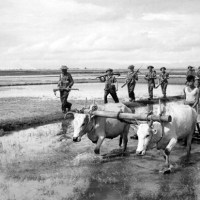
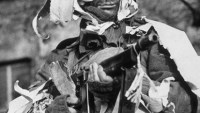
The British who fought in Burma became known as the ‘Forgotten Army’ because this was a neglected theatre of the second world war. Barnaby Phillips’s tale is about the African forces fighting across this green hell — ‘the forgotten flank of the forgotten corps of the Forgotten Army’. At the age of 16 Isaac Fadoyebo left his village in colonial Nigeria and joined Britain’s call for recruits in the war. Hitler did regard black people as ‘semi-apes’, but Britain enrolled 500,000 Africans to fight for a cause they barely understood against enemies on the other side of the world. Isaac was sent not to battle the Nazis in Europe, as many other Africans were, but to Burma, whose inhabitants were also caught up in a conflict that wasn’t theirs.

Is there anything left to say about Queen Victoria? A.N. Wilson has found plenty

From our UK edition

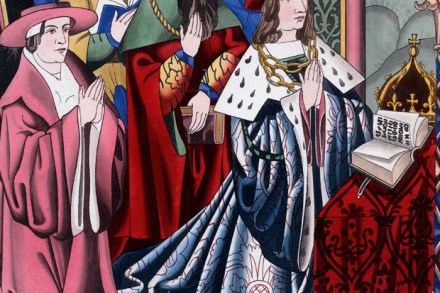
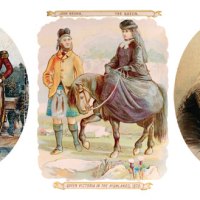
Do we really need a thumping new life of Queen Victoria? She seems to be one of our most familiar figures, the subject of countless books; but the surprising fact is that there hasn’t been a full, authoritative study since Elizabeth Longford’s life of 1974. A.N. Wilson has spent many years thinking and reading about Queen Victoria, and this superb revisionist biography is the book that he was born to write. In Wilson’s view there are two Victorias. The young Victoria was always someone’s pawn, trying to be a person that she wasn’t. She was in thrall first to Lord Melbourne and then to Baron Stockmar and Prince Albert. Only after Albert’s death was she able to become her true, strong-minded self.

In defence of the Jacobins

From our UK edition

The French Revolution ushered in not only a revolution of rolling heads but of talking ones too. ‘Speech-making was a new political instrument,’ writes Eric Hazan. ‘The King of France never gave speeches and neither did his ministers.’ Indeed Louis XVI’s lack of eloquence, or more specifically his egregious line of sentimental claptrap, had fatal repercussions for him in the court of public opinion. He was certainly no Mirabeau, whose speeches, printed in their thousands, were heard right across the country.

Kafka goes to Dubai

From our UK edition

‘X’ is in ‘the Situation’: Joseph O’Neill, author of the clever and superb Netherland, hereby lets us know that his new novel is a riff on Kafka’s The Castle. Kafka’s ‘K’ has become X, struggling for recognition by his lover, by his employer, by the world. The Situation is a residential block in Dubai (desert sand for Kafka’s snow). X is a corporate lawyer who has been invited there by an old college friend, a dodgy Lebanese billionaire, to handle the family’s personal financial affairs. The burdens of this job constitute the first of the three threads that bind the novel together. The second is the story of X’s relationship and break up with his high-powered girlfriend, Jenn, of whom he is terrified.

Exactly how much fun was it being an impoverished artist in Paris?

From our UK edition

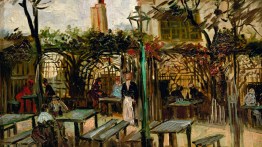
What he really wanted, Picasso once remarked, was to live ‘like a pauper, but with plenty of money’. It sounds most appealing: the perfect recipe for a bohemian life, dreamed up by a supreme master in the art of having it both ways. To begin with at least, however, Picasso had to make do only with the half of his formula: living like a pauper with scarcely any cash at all. La vie de bohème, this enjoyable book makes clear, might have been romantic but was also hard. Sue Roe has written a portrait in words of an era, through which are threaded the stories of the various people who passed by — painters, models, collectors, dealers. But her book takes its main title from a place: Montmartre. It’s an address that still has allure.

In love with the lodger

From our UK edition

Champion Hill, Camberwell, 1922. A mother and daughter, stripped of their menfolk by the Great War, struggle to make ends meet in their genteel villa. Servantless, Mrs Wray keeps up appearances while her daughter Frances confronts the reality of hands-and-knees housework. Reluctantly, they advertise for ‘paying guests’, and are rewarded with Leonard and Lilian Barber, who are young, noisy, sexy and vulgar, with a whiff of the music-hall about them. This is perfect territory for Sarah Waters. Women reshaping their lives without men, social barriers dismantled through economic necessity, notions of respectability challenged by the world convulsion of the preceding years.

When boxing ruled the world

From our UK edition

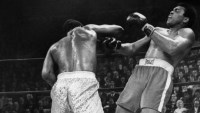
The early 1970s was a good time for heavyweight boxing. Indeed, it was probably the last truly great age for the sport. Flamboyant fighters contested brutal matches in exotic locations, from the Philippines to the Caribbean. The world watched open-mouthed. The marketing slogans attached to some of those fights remain instantly recognisable: who has not heard of the Rumble in the Jungle or the Thrilla in Manila? During these years boxing, and particularly American heavyweight boxing, was the most prominent and glamorous sport on the planet. Boxing in the early Seventies was also culturally important in a way that it is not any more. The sport was briefly about more than money and pain. It spoke to the politics of war, race, religion and international diplomacy.

The real Dad’s Army was no joke

From our UK edition

Dad’s Army, the sitcom to end all sitcoms, portrayed the Home Guard as often doddery veterans. In one episode, Private Godfrey’s genteel sisters are seen to prepare their Regency cottage for the feared Hitler invasion. ‘The Germans are coming, Miss Godfrey,’ Lance Corporal Jones warns. ‘Yes I know, so many people to tea,’ she chirrups, adding: ‘I think I’d better make some more.’ In contrast to Godfrey, the sitcom’s street-smart spiv Joe Walker could be relied on to come up with the goods. In his rakish trilby indeed he supplies the platoon with contraband cigarettes and is familiar with the legendary backs of lorries what things fall off of.

Ali Smith’s How to be Both: warm, funny, subtle, intelligent – and baffling

From our UK edition

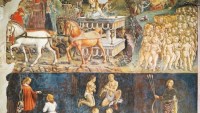
Pity the poor art historian writing a survey of painters from Giotto to, say, Poussin. In order to produce a history that is as gender-balanced as possible it is absolutely necessary to include every woman painter ever heard of, some perfectly worthy of their place, some less so. How the art historian might envy the novelist who at the stroke of a pen can change the sex of a little-known 15th-century painter — Francesco del Cossa, say — from male to female. Make the painter in question a woman disguised as a man, make her story the product of a teenager’s imagination and the trope is not only complete but irresistible. Such is half of the bare skeleton of Ali Smith’s brilliant novel, How to be Both. But which half?

Peter Levi – poet, priest and life-enhancer

From our UK edition

Hilaire Belloc was once being discussed on some television programme. One of the panellists was Peter Levi. The other critics expressed their doubts about the old boy. Levi leaned forward in his chair to say, with passionate intensity, ‘But Belloc is worth discussing... because he was... very nearly a poet.’ At the time, I thought this judgment a trifle snooty. Could the words ‘very nearly a poet’ not be applied to Levi himself? In the years since he died, however, revisitations of Levi’s work have convinced me that, uneven and florid as his poetry is, he was very definitely a poet. True, you can hear echoes of his masters in his verse – Valéry, George Seferis, Wallace Stevens.

This thriller is as good as anything by Hilary Mantel

From our UK edition

A few years ago, after a lifetime of wearing white shirts through which the straps of my white bra were plainly visible, I discovered a remarkable fact: if you wear a pink or even a crimson bra underneath a pale shirt, it doesn’t show. For several weeks I passed on this gem of truth to all my women friends. Was my enthusiasm met with relish, gratitude? It was not. They all said the same thing in response: ‘Oh, didn’t you know? I’ve always known that.’ I expected it would be the same in the case of Andrew Taylor. While reading The Silent Boy I was so overexcited by its brilliance that I asked numbers of friends if they’d ever come across Taylor’s work. Surely I was alone in the world in not having heard of this paragon?

Germans see the best of their soul in Weimar. Everyone else, on the other hand..

From our UK edition

Thuringia, a region of former East Germany, occupies a special place in the thoughts of Germans, who like to regard it as the origin of all their best virtues. It’s an alluring place, full of wonderfully untouched stretches of densely forested hills; the occasional small historic town seems hardly to have changed for decades, and the tourist can spend a happy week pottering from Schmalkalden to Ilmenau to Eisenach in the illusion that none of those unpleasant realities of the last century ever touched this place. I once asked the guide at the Wartburg, the magnificent medieval and mock-medieval castle on a snowy crop outside Eisenach, what this place meant to modern-day Germans.

Sorbet with Rimbaud

From our UK edition

The Bloomsbury of the title refers to the place, not the group. The group didn’t have a poet. ‘I would rather be a child and walk in a crocodile down a suburban path than write poetry, I have heard prose writers say,’ wrote Virginia Woolf, albeit tongue-in-cheek (maybe). Nonetheless, unsurprisingly, these non-poets steal the first chapter of this amuse-bouche of a publication. They are allowed to so that the author, or rather his sources, may describe the rather dull area of London that abuts the eastern end of the Euston Road to the north, and to the south High Holborn. ‘A cold grim house in a cold, grim district,’ wrote Harold Nicolson of Virginia and Vanessa Stephens’s house in Gordon Square.

A novel that will make you want to call social services

From our UK edition

Nina Stibbe has a way with children. Her first book, a memoir, was a deceptively wide-eyed view of a literary Hampstead family observed in all its turbulence by the teenage Stibbe, working as the nanny. Written as letters home to her sister, Love, Nina won over fellow writers and critics; reviews spoke of a quirky, life-affirming comic genius. Now she’s written her first novel, and again she has the domestic arena in her sights. Man at the Helm is a wicked anatomising of a dysfunctional family seen through the eyes of a nine-year-old narrator. Think What Maisie Knew with laughs and four-letter words, plus a touch of The Young Visiters — baroque formality undermined by an engagingly frank view of sex. Henry James meets Daisy Ashford.

Thomas Cromwell: more Tony Soprano than Richard Dawkins

From our UK edition

The travel writer Colin Thubron once told me that to understand a country and its people he first asks, ‘What do they believe?’ This is also a good place to begin when writing about the past, not least when your subject is Thomas Cromwell, a key figure in the English Reformation.  But Tracy Borman’s Cromwell doesn’t have beliefs so much as qualities: ones that will appeal to fans of the fictional Cromwell of Hilary Mantel’s Tudor novels. Borman’s Cromwell likes women, and is nice to the poor. True he fits up Anne Boleyn on treason charges, and has the illiterate nun Elizabeth Barton executed without a trial. But then he is a ‘pragmatist’, and much of his killing, torturing and bullying is ‘self-defence’.

Stalin’s Spanish bezzie

From our UK edition

During the Spanish civil war the single greatest atrocity perpetrated by the Republicans was known as ‘Paracuellos’. This was the village where an estimated 2,500 prisoners loyal to Franco were executed by leftish militiamen between November and December 1936. Even though the facts of this massacre are now widely known, one question still remains: who ordered the killings? In his latest book The Last Stalinist,Paul Preston claims that it was Santiago Carrillo who played a crucial role in signing the death warrants. (Carrillo, who died in 2012, always denied any involvement in the incident). It is worth mentioning this mass murder because history tends to catch up with power-hungry leaders devoid of moral integrity. With Carrillo, however, this hasn’t been the case.

The biography that makes Philip Larkin human again

From our UK edition

How does Philip Larkin’s gloom retain such power to disturb? His bleakest verses have the quality of direct address, as if a poetical Eeyore were protesting directly into our ear. ‘Aubade’, his haunting night-time meditation on the terrors of death and dying, focuses on ‘the sure extinction that we travel to/ And shall be lost in always’ and offers no consolation. His ‘Next Please’ makes grim fun out of our habit of hope, pictured as a ship we expect to greet us with its full cargo of rewards. But of course ‘Only one ship is seeking us, a black-/Sailed unfamiliar….’ He saw religious faith as a form of self-deception. Moreover, his ‘The Old Fools’ mercilessly depicts senility.

Siberia beyond the Gulag Archipelago

From our UK edition

Larger than Europe and the United States combined, Siberia is an enormous swathe of Russia, spanning seven time zones and occuping 77 per cent of the country’s land mass. Ryszard Kapuscinski describes the gulags which were placed there as being amongst the greatest nightmares of the 20th century — and that image of suffering has tarnished the region irrevocably. In her masterful study of Siberia’s people, Janet M. Hartley, professor of international history at the London School of Economics and Political Science, argues that this has not only been a place of torture and starvation. While it has certainly endured miserable times, and is likely to suffer many more, it should be considered a frontier land, comparable in some ways to America.