Book review

Soviet greyness, literary mediocrity and hot dates

From our UK edition

Right at the outset of this autobiographical novel — in fact it reads more like a memoir — Ismail Kadare sets up his stall as a lover of women. His lust even permeates his similes: ‘… that particular path, like some women who, though not beautiful, possess a hidden charm…’ and that’s only the walk to the post office. It’s a clue, and romance plays a big part. He starts with an encounter — Brigita, a beautiful Latvian at summer camp in Riga — and in Moscow he seems far more interested in the lovely Lida than his writing. But girls don’t hog all the imagery. Kadare has an almost Virgilian penchant for comparison.

The Jane Austen of Brazil

From our UK edition

When the American poet Elizabeth Bishop arrived in Brazil in 1951, she expected to spend two weeks there and ended up staying 15 years, a time of emotional turbulence and creative productivity. Bishop wrote poetry and prose and translated Latin American writers, including Octavio Paz, but this project, suggested by friends as a way to improve her Portuguese, is something completely different. It’s a teenager’s diary, written between 1893 and 1895 in the remote mining town of Diamantina, the highest town in Brazil. It’s a delightful, funny and revealing memoir, a little bit of Austen in the Americas. Helena’s real name was Alice Dayrell, (the pseudonym came from her English relations).

Falling in love with birds of prey

From our UK edition

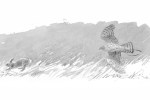
Is it the feathers that do the trick? The severely truculent expressions on their faces? Or is it their ancient origins? Or the places where they live? Whatever their secret, birds of prey have exercised an extraordinary hold on human beings for tens of thousands of years. In the bad old days, their fans ranged from ancient Teutonic kings to Hitler’s right-hand-man Hermann Göring. Today, it seems to be artistic types and country-lovers who keep the flag flying. Or, do I mean keep the tail feathers fluttering? In this exhilaratingly honest and passionately broadminded book, the poet and Cambridge academic Helen Macdonald combines her ‘sorry story’ of hawk addiction with the similar trials and tribulations suffered by the great T.H.

An invisibility cloak? You might just be able to see it on the horizon…

From our UK edition

The best books by good writers — and Philip Ball is a very good writer indeed — are sometimes the ones that don’t quite work. This brilliant study of how occultists and scientists alike have attempted to see the invisible is very much that kind of fascinating failure. Its subject is just too large — and, well, it is just too hard to see its edges clearly. Ball begins with pseudo-medieval recipes for invisibility: Take a black cat and a new pot, a mirror, a lighter, coal and tinder. Gather water from a fountain at the strike of midnight...

James Bond’s secret: he’s Jamaican

From our UK edition

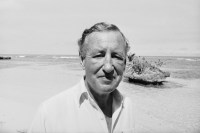
Ian Fleming’s first visit to Jamaica was pure James Bond. In 1943, as assistant to the Director of Naval Intelligence, he flew from Miami to Kingston to attend an Anglo-American naval conference and to investigate the rumour that Axel Wenner-Gren, a rich Swede and supposed Nazi, had built a secret submarine base at Hog Island, near Nassau. He was accompanied by his old friend Ivar Bryce, who was also in intelligence, and who put him up at a house his wife had recently bought. As they left the island, Fleming told Bryce, ‘When we have won this blasted war, I am going to live in Jamaica… swim in the sea and write books.

Murakami drops magic for realism in this tale of a lonely Tokyo engineer

From our UK edition

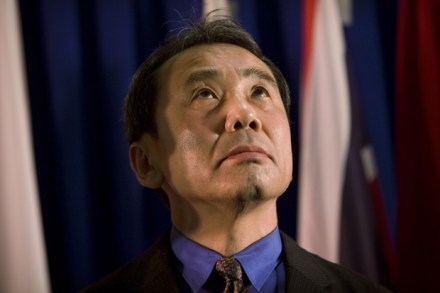
When Haruki Murakami — Japan’s most successful novelist at home and abroad — was interviewed by the Paris Review in 2004, the questions weren’t always characterised by their pithiness. Many of his novels, the interviewer suggested at one point, are variations on a theme: a man has been abandoned by, or has otherwise lost, the object of his desire, and is drawn by his inability to forget her into a parallel world that seems to offer the possibility of regaining what he has lost, a possibility that life, as he (and the reader) knows it, can never offer. Would you agree with this characterisation? Murakami’s answer, in full, was ‘Yes’. Ten years on, his new novel won’t require him to revise that answer a great deal.

Banned – and booming: the strange world of Chinese golf

From our UK edition

I was in Shanghai interviewing a Chinese film director and an actor. We were discussing government censorship. How did anyone manage in China, I lamented. The two men burst out laughing. I had not understood at all. ‘Because everything is forbidden, everything is permitted. You are free to do anything,’ they assured me. Dan Washburn in his book The Forbidden Game: Golf and the Chinese Dream, uses golf and the business around it to pin down the paradox that is China today. Golf is his back door into understanding the last 20 years, as China has grappled with modernity and an unnerving speed of change.

Creepy, dizzying and dark: a choice of recent crime fiction

From our UK edition

Philip Kerr is best known for his excellent Bernie Gunther series about a detective trying to survive with his integrity more or less intact in Nazi Germany. His latest novel, however, is a standalone thriller set in literary territory that might have appealed to Hitchcock. Research (Quercus, £18.99, Spectator Bookshop, £15.99) opens with the murder of the beautiful Irish wife of one of the world’s bestselling novelists in the couple’s luxurious Monaco apartment. Her husband, John Houston, has disappeared. He is the prime suspect. Houston researches and plans his thrillers but employs an ‘atelier’ of jobbing novelists to do the hard grind of writing what he describes as ‘books for people who have never read them before’.

Potato prints, paintings and the Soviet Union: the real Miss Jean Brodie

From our UK edition

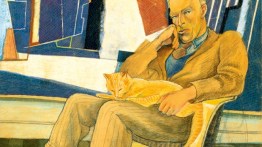
During the second world war, when not only food, but paper and artists’ materials were scarce, Peggy Angus made a virtue of necessity. Potatoes were one of the few foods not rationed, so she began cutting them in half, carving designs into the cut side and printing them onto old newspapers in repeated patterns of oak leaves, smiling suns, waves, chevrons and Welsh dragons. It was with these playful, naïve designs — which she later turned into tiles and wallpapers — that she made her name. Angus, like Eric Ravilious and Edward Bawden, her contemporaries at the Royal College of Art, moved easily between media: potato prints, silkscreens, oil paintings, watercolours, and ‘stained glass’ made from coloured tissue paper.

Like Birdsong – only cheerful

From our UK edition

It is difficult to know whether Clive Aslet intended a comparison between his debut novel, The Birdcage, set in Salonica during the first world war, and Sebastian Faulks’s similarly titled Birdsong. Whilst Faulks’s novel sits comfortably within the generally accepted narrative that the first world war was an unmitigated disaster, with lion-like Tommies led by donkey-like officers, Aslet has written what is effectively a panegyric to the officer class. Indeed, so casually heroic is every officer in the book it is almost as though Richard Attenborough’s version of Oh! What a Lovely War never existed.

The mad, bad and sad life of Dusty Springfield

From our UK edition

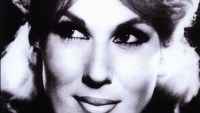
Call me a crazy old physiognomist, but my theory is that you can always spot a lesbian by her big thrusting chin. Celebrity Eskimo Sandi Toksvig, Ellen DeGeneres, Jodie Foster, Clare Balding, Vita Sackville-West, God love them: there’s a touch of Desperate Dan in the jaw-bone area, no doubt the better to go bobbing for apples. It is thus a tragedy that Dusty Springfield’s whole existence was blighted by her orientation, which explains ‘the silence and secrecy she extended over much of her life, and her self-loathing’. One glance at her chin should have revealed all — but the Sixties was not a fraction as liberated and swinging as people now assume.

The robber baron who ‘bought judges as other men buy food’

From our UK edition

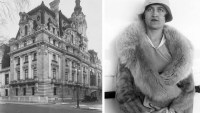
The robber barons of the gilded age, at the turn of the 20th century, were the most ruthless accumulators of wealth in the history of the United States, and none of them was less handicapped by moral scruples than W.A. Clark. He was up there near the pinnacle of acquisitiveness with Rockefeller but was not as legendary in popular imagination. While other pioneers were searching for gold, Clark developed copper-mining at the most opportune time, when there was a great and growing demand for copper for electrical wiring. The copper lode he discovered in Butte, Montana, produced 11 million tons and earned the town its nickname ‘The Richest Hill on Earth’. In those days, US senators were appointed by the state legislators, rather than elected.

Kaiser Wilhelm’s guide to ruining a country

From our UK edition

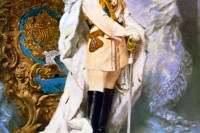
The role of personality in politics is the theme of this awe-inspiring biography. This is the third volume, 1,562 pages long, of John Röhl’s life of the Kaiser. It has been brilliantly translated — the labyrinth of imperial Germany navigated by many headed subdivisions in each chapter — by Sheila de Bellaigue. The fruit of what Röhl calls a ‘dark obsession’ with the Kaiser, it had its origin when, writing about Germany after the fall of Bismarck at the apogee of social and institutional history in the 1960s, he realised that he was analysing not a modern government but a court society. Personalities and dynasties were as important as classes and parties.

Lenin, Hitler, Sloane Square – a Polish noble’s 20th-century Odyssey

From our UK edition

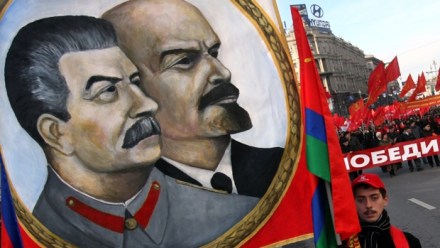
If Vincent Poklewski Koziell has really drunk as much as he claims in this book I doubt he would be the spry and handsome 88-year-old to be seen bicycling around Sloane Square that he is today — a slight fall having proved no impediment to his progress. He came from a grand family of diplomats on his mother’s side. She, Zoia de Stoeckl, was clearly ravishingly pretty and became, aged 18, a maid of honour to the last empress of Russia. Vincent’s father derived from what he describes as ‘run-down Polish nobility’ (only 56 peasants); but the family seems to have had an astonishing ability to rise, phoenix-like, from successive reverses, a huge fortune disappearing overnight in the Russian revolution.

The British countryside in prints and paper-cuts

From our UK edition

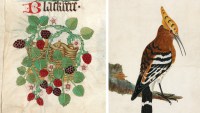
The Yale Center for British Art holds the largest collection of British art outside the UK. An impressive collection it is too, largely bequeathed by Paul Mellon of the American banking dynasty. He holidayed in England as a child before the first world war and, having developed a taste for ‘dappled tan cows in soft green fields’, began acquiring British works on natural history as a young man. In this book, Elisabeth R. Fairman, a curator of rare books at Yale, has gathered images, largely from the collection, of all that the British countryside has to offer, recorded by artists and naturalists from the 16th century to the present day. The sheer beauty of some of the watercolours, prints and paper-cuts is astounding.

Daring? No. Well written? Yes

From our UK edition

This has all the appearance of a book invented by a publisher. Two years ago W. Sydney Robinson published an excellent biography of the Victorian newspaperman W.T. Stead. How best to follow this? No attractive subject for another full-scale biography suggested itself. Why not therefore fill in time by writing long essays on four worthies from the generation that followed Stead? And so we have: ‘A Daring Reassessment of Four Twentieth Century Eccentrics: Sir William Joynson-Hicks, Dean Inge, Lord Reith and Sir Arthur Bryant.’ The only trouble is that the reassessment is not particularly daring and the characters hardly at all eccentric.

Tip-toeing through Sri Lanka

From our UK edition

‘The first night I stayed in Kilinochchi, I was a little apprehensive,’ admits the usually cool-headed Vasantha, van-driver and narrator of all the stories in Noontide Toll. Kilinochchi was the operational centre of the LTTE (Liberation Tigers of Tamil Eelam) until the Sri Lankan army’s entry in January 2009. Now the town offers amenities like the Spice Garden Inn, with glass-walled cafeteria and reception desk overflowing with coconut flowers and bougainvillea. Yet its assistant manager, Miss Saraswati, belies such luxurious blandness. A rat suddenly appears in the café; immediately she hurls a bottle, breaking the creature’s skull without destroying the implement. ‘I stared at Miss Saraswati. “You learn to do that at Jaffna hotel school?