Biography

Jessica was the only Mitford worth taking seriously

From our UK edition

Can there really be any point in yet another fat book about one of the Mitford sisters? Their antics have been appearing in print since the late 1940s, when the eldest – clever, waspish Nancy – displayed their family eccentricities in her sparkling novel The Pursuit of Love. Since then, by a rough count, there have been 15 biographies, individual and joint, including three of both Nancy and Jessica, two vast compendiums of correspondence and five autobiographies by four of the sisters (Jessica wrote two).

How the teenage Carole King struck gold

From our UK edition

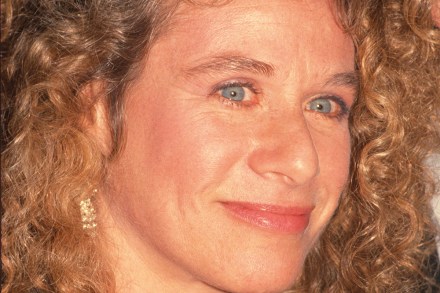
On 7 December 2015 the Kennedy Centre Honours were awarded to Carole King, George Lucas, Rita Moreno, Seiji Ozawa and Cicely Tyson. King sat by the White House Christmas tree during the afternoon reception wearing her medal and laughing as Barack Obama recited the most familiar of her thousands of song lines: ‘You make me feel like a natural woman.’ Obama grinned: ‘I think I just became the first president ever to say that... It sounded better when Aretha said it.’ That evening the tribute to King as a singer-songwriter included performances from James Taylor and the cast of the Broadway spectacular Beautiful: The Carole King Musical and concluded with an astounding performance by Aretha Franklin of ‘(You Make Me Feel Like) A Natural Woman’.

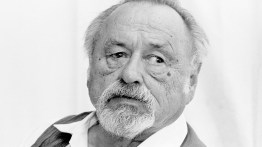
Inside Jim Harrison’s life of excess

Todd Goddard opens his biography of Jim Harrison, the first since the poet’s death in 2016, with an account of a 37-course meal Harrison once consumed in France, over the course of 11 hours. Harrison composed a comic recital of the event, “A Really Big Lunch” for the New Yorker. He loved gourmet dining to the point of gout and revered alcohol as well, guzzling potent vintages in quantity. “Eat the world” was the phrase Harrison lived by, Goddard tells us, which alludes to an appetite for all existence. The cumulative effect of such global consumption is evident on the cover of Devouring Time: Jim Harrison, a Writer’s Life.

jim harrison

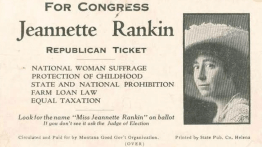
How Jeannette Rankin became the first woman in Congress

Susan B. Anthony and Elizabeth Cady Stanton; Alice Paul and Sojourner Truth; Ida B. Wells and Carrie Chapman Catt. They may not be household names, but to anyone with a passing interest in US women’s history, they’re hardly obscure. They’re widely associated with America’s fight for women’s suffrage: a tribe of trailblazers who’ve made it into history books and onto overpriced tote bags. Some were popularized by the Tony Award-winning musical Suffs. Three are immortalized as statues in New York’s Central Park. But behind the scenes of their various campaigns, another woman charted her own course for the same cause.

rankin

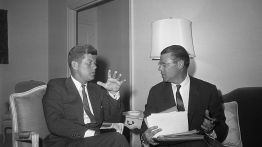
Did Robert McNamara know Vietnam was unwinnable?

Former US defense secretary Robert McNamara was known in Washington as a relentless, humorless taskmaster or even “a computer on legs.” Then on February 9, 1962, a little over a year after taking office, McNamara made headlines when he danced the twist with Jackie Kennedy at a White House party. A few days later, the then-first lady sent by hand to McNamara a lighthearted Valentine collage she had made from the news coverage of their dance. After her husband’s assassination, their friendship deepened. Jackie’s opposition to the Vietnam War grew, as did her conviction that McNamara secretly opposed it.

mcnamara

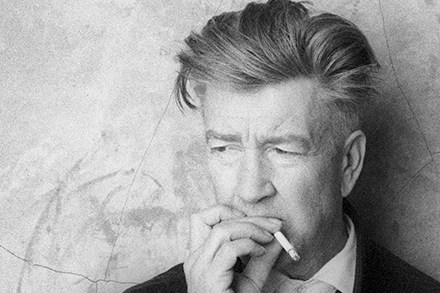
The inspiration for David Lynch’s mysterious, disquieting world

From our UK edition

‘He was the true Willy Wonka of film-making – I feel like I won the golden ticket getting the chance to work with him!’ The speaker is Lara Flynn Boyle, who played Donna Hayward, the friend of the murdered Laura Palmer in David Lynch’s small-screen masterpiece Twin Peaks. That comparison, cited in John Higgs’s terrifically lucid and compact study of the filmmaker, who died in January, aged 78, is rather brilliant.

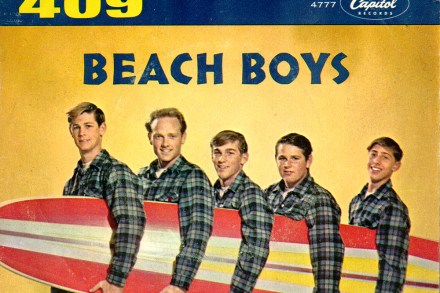
Unhappy band of brothers: the Beach Boys’ story

From our UK edition

Film noir was the term coined by the French in the late 1940s to describe the genre of Hollywood crime movies which probed the darkness that lay in the shadows cast by all that bright Californian sunlight. The Beach Boys, who broke through in the early 1960s with a repertoire that hymned, in five-part harmonies, the Golden State’s promise of sun, sand and waves, bronzed bodies, beach-party ‘babes’, hot rods and open highways, were – and remain – the quintessential Californian band. But their story, an unhappy family saga featuring the three Wilson brothers (Brian, Carl and Dennis) and cousin Mike Love, is, like that of California’s itself, as dark as it is light. Their presiding musical genius, Brian, died in June.

Paul Poiret and the fickleness of fashion

From our UK edition

Such was Paul Poiret’s influence that he is the only couturier whose clothes are known to have caused several fatal accidents. At a time (1910-11) when fashion was loosening up he persuaded chic women into the hobble skirt, a garment so narrow round the ankles that only tiny, mincing steps were possible, with the result that several tripped over when stepping down from a pavement and one toppled from a bridge into a river where, unable to swim from the constriction around her ankles, she drowned.  In Mary E. Davis’s book, however, this dangerous garment gets only a brief mention.

The lonely passions of Katherine Mansfield

From our UK edition

Katherine Mansfield refused to be pinned down. Aged 17, she told a friend she planned to lead ‘all sorts of lives’, already chafing at the limitations of her parents’ bourgeois world. She warned her first lover that she liked ‘always to have a great grip of life, so that I intensify the so-called small things – so that truly everything is significant’. Living, to Mansfield, was a challenge to be confronted head-on, a restless and active process of ‘shedding and renewing’. Her passion for life fortified her through a horrifying succession of troubles. It fed her art; it also exhausted her.  ‘Life’, in its most capacious sense, is the subject of Mansfield’s fiction.

The dangerous charm of Peter Matthiessen

From our UK edition

In 1951, the American author Peter Matthiessen moved to Paris. The scion of a wealthy Wasp family, he had studied at Yale and served in the navy, narrowly missing the second world war. He was then recruited to the CIA by James Jesus Angleton and sent to Paris, where he kept tabs on left-wing French intellectuals and expat Americans. As he later explained in a letter to a friend: When you’re 23, it seems pretty romantic to go to Paris with your beautiful young wife to serve as an intelligence agent and write the Great American Novel into the bargain. Weren’t you ever as young and dumb as that? While in Paris, Matthiessen helped to found the Paris Review with funding from CIA sources.

Shaw

A compelling account of actor Robert Shaw’s life

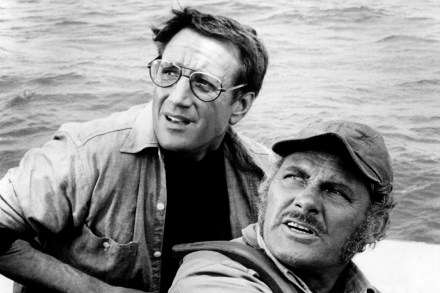
A narrative biography by a member of its subject’s family is, if not unique, something of a novelty. Here, Christopher Shaw Myers writes the story, while his uncle Robert Shaw’s life (1927-78) provides the book’s framework. Shaw Myers has previously written the as-yet-unfilmed screenplay Jaws & Mrs. Shaw and revisits some of the same material here. In both cases, a pivotal moment comes when Robert Shaw’s mother visits the set where Jaws is being shot in 1974 off the coast of Martha’s Vineyard, and thus happens to be present when her son polishes off the monologue about the shark attack on survivors of the USS Indianapolis that anticipates the gory finale of the film.

Francesca Wade’s Gertrude Stein biography is a study in frustration

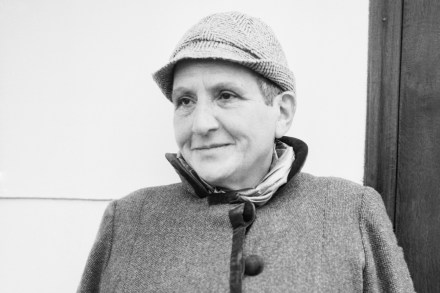
There came a point in time when Gertrude Stein was more famous for being Gertrude Stein than for anything she’d written. The American writer, born in Oakland, California, in 1874, moved to Paris in 1902 and devised a style of writing that privileged the sounds of words over narrative or plot, a process of discovery inspired by the art she discovered in the city. The non-representational canvases of Picasso and Cézanne, who became her close friends, made more of an impact on her emerging style than any writer: colors and shapes told a story of their own beyond any apparent subject or setting. She engaged in constant battles of wits with publishers and editors, eventually resorting to publishing her writing herself instead.

Stein

The young Tennyson reaches for the stars

From our UK edition

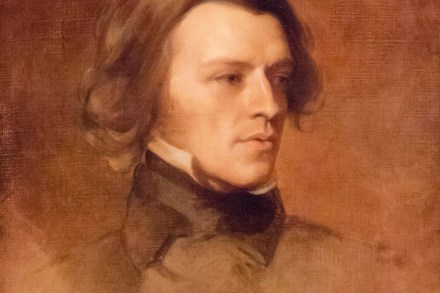
Edward FitzGerald had a good story about rowing across Lake Windermere at the end of May 1835 with his old friend Alfred Tennyson. As they rested on their oars and gazed into the clear, still water, Tennyson recited some lines from his work in progress, ‘Morte d’Arthur’, describing how the Lady of the Lake fashioned Excalibur out of sight: ‘Nine years she wrought it, sitting in the deeps/ Upon the hidden bases of the hills.’ Then he gave himself a little pat on the back: ‘Not bad that, Fitz, is it?’ The lines are better than not bad, as they imagine an invisible process of creation by incorporating several fragments of earlier writing.

The short, restless life of Robert Louis Stevenson

From our UK edition

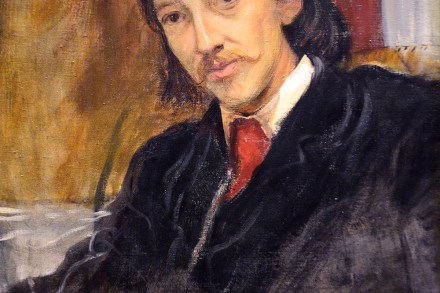
The discriminating Argentinian novelist Jorge Luis Borges once revealed his fondness for ‘hourglasses, maps, 18th-century typography, etymologies, the taste of coffee, and the prose of Stevenson’ – a list that was quirky and eclectic, adjectives that neatly encapsulate Robert Louis Stevenson himself. The story has often been told – but it’s a good one – of how the wiry, velvet-jacketed Stevenson emerged from Edinburgh’s haute bourgeoisie to become a hugely successful writer, before ending his shortish, sickly life on the Pacific island of Samoa in 1894, a revered expatriate married to a wilful American woman a decade his senior.

A more rounded picture of James Baldwin

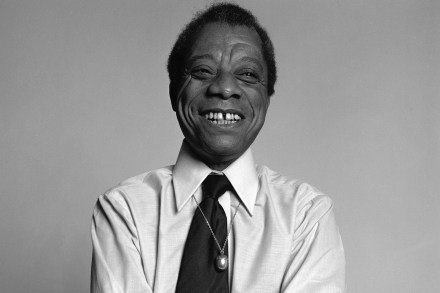
James Baldwin never wanted to be a symbol, but became one anyway: a stand-in for defiance, for beauty, for pain wrapped in elegance and for the entire weight of a country’s unresolved sin. Baldwin didn’t just write about America – he exposed it: the good, the bad and the ugly. He told the truth, even when it hurt. He didn’t soften the edges. What he never quite got, in his lifetime, was intimacy on the page about his own life. Biography existed around him, but he was rarely at the center of it. If we see him now, we see a man who smoked too much, drank too much and who sometimes ran from both his lovers and himself – rather than what he was: an intangible literary icon. Nicholas Boggs tries, in Baldwin: A Love Story, to give us a more rounded picture of the author.

Baldwin

The enigma of C.P. Cavafy

From our UK edition

C.P. Cavafy, who had a very high opinion of his own work, would no doubt be gratified to learn that he is now one of the most admired poets of the 20th century. This is all the more remarkable because during his lifetime (1863-1933) he did not allow a single volume of his poetry to be published, preferring to circulate privately printed sheets and pamphlets among his admirers. He was also disinclined to co-operate with those who wanted to translate the poems from their original Greek into other languages; but in English alone there have now been more than 30 different volumes of his complete or selected poems.

I actually feel sorry for Prince Andrew

From our UK edition

‘Many would have preferred this book not to be written, including the Yorks themselves.’ So Andrew Lownie begins his coruscating examination of the lives of Prince Andrew and Sarah ‘Fergie’ Ferguson, which has excited significant media attention due to its scandalous revelations. Lownie, a historian and literary agent, has pivoted away from an earlier, more conventional career as a biographer of John Buchan and Guy Burgess to the self-appointed role of royal botherer-in-chief. After earlier, similarly scabrous books about the Mountbattens and the Duke and Duchess of Windsor, he now finds his first contemporary targets, and the results are predictably marmalade-dropping.

How can Gwyneth Paltrow bear so much ridicule?

From our UK edition

There is nobody who finds Gwyneth Paltrow, 52, more interesting than the woman who was a teenager in the 1990s. This was the last era of the true pin-up, the heart-throb, the movie star as icon, rather than the whiffy melange of brand-pusher, pound-shop activist and reality star that constitutes celebrity today. I was as Nineties as the next girl living in provincial Massachusetts and when I first saw Shakespeare in Love in 1998, Paltrow’s first and only Oscar-winning role as the late-16th-century actress-in-male-garb Viola de Lesseps, I’d never enjoyed anything as much in my life. And in 2025, Paltrow’s career’s Take Two fascinates the early middle-aged woman who finally gives in to the barrage of wellness marketing sent her way on Instagram.

The spiritual journey of St Augustine

From our UK edition

When I lived in south London, my Algerian barber used to tell me that he came from Souk Ahras, ‘the home town of Augustine’. I found it strange to hear a forbidding doctor of the early church described as a local boy made good, but Catherine Conybeare shows me that I should not have done. Algerians have remembered what the Church has often overlooked: that Augustine’s thinking owes everything to his birth in 354 in what was then Roman North Africa. Although five million of his words survive, they come to us from the hands of medieval copyists who were more interested in setting out his doctrines than in recording his life. They cut up his sermons and letters, removing irrelevant or cryptic local allusions.

It was drug addiction that killed Elvis, not his greedy manager

From our UK edition

Colonel Tom Parker (1909-97) was the man who ripped Elvis Presley off and worked him to death. That’s the received wisdom about the person who managed the King from 1955 until his premature death, aged 42, in 1977. Peter Guralnick’s book, written with full access to Parker’s unpublished, witty, clever letters, now owned by the Elvis Archives, gives a more nuanced, sympathetic picture. The author is no biased sensationalist. His Elvis biography, Last Train to Memphis (1995), is one of the most serious and reliable. So, yes, Parker was a serial liar, not least when it came to his identity. Born Andreas Cornelis van Kuijk in humble circumstances in Holland, he fled, aged 16, to America and was then kicked out. He returned three years later, changing his name to Tom Parker.