The word ‘obscene’, according to the dictionary, refers to anything ‘offensively or grossly indecent, lewd’. By the standards of the day, the Little Review was a borderline obscene, certainly at times salacious, literary journal. For the crime of serialising Ulysses – James Joyce’s then unpublished steamy masterwork – it was made to face obscenity charges. Operating out of Chicago and New York from 1914 to 1929, the journal introduced American readers to such modernist heavyweights as Ezra Pound, Wyndham Lewis and Gertrude Stein. It was not just a platform for bookish shock effects; it altered the course of American literary culture.
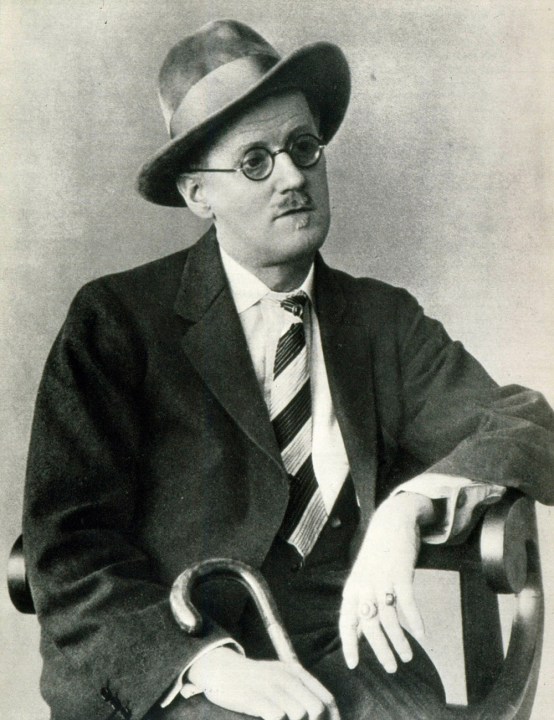
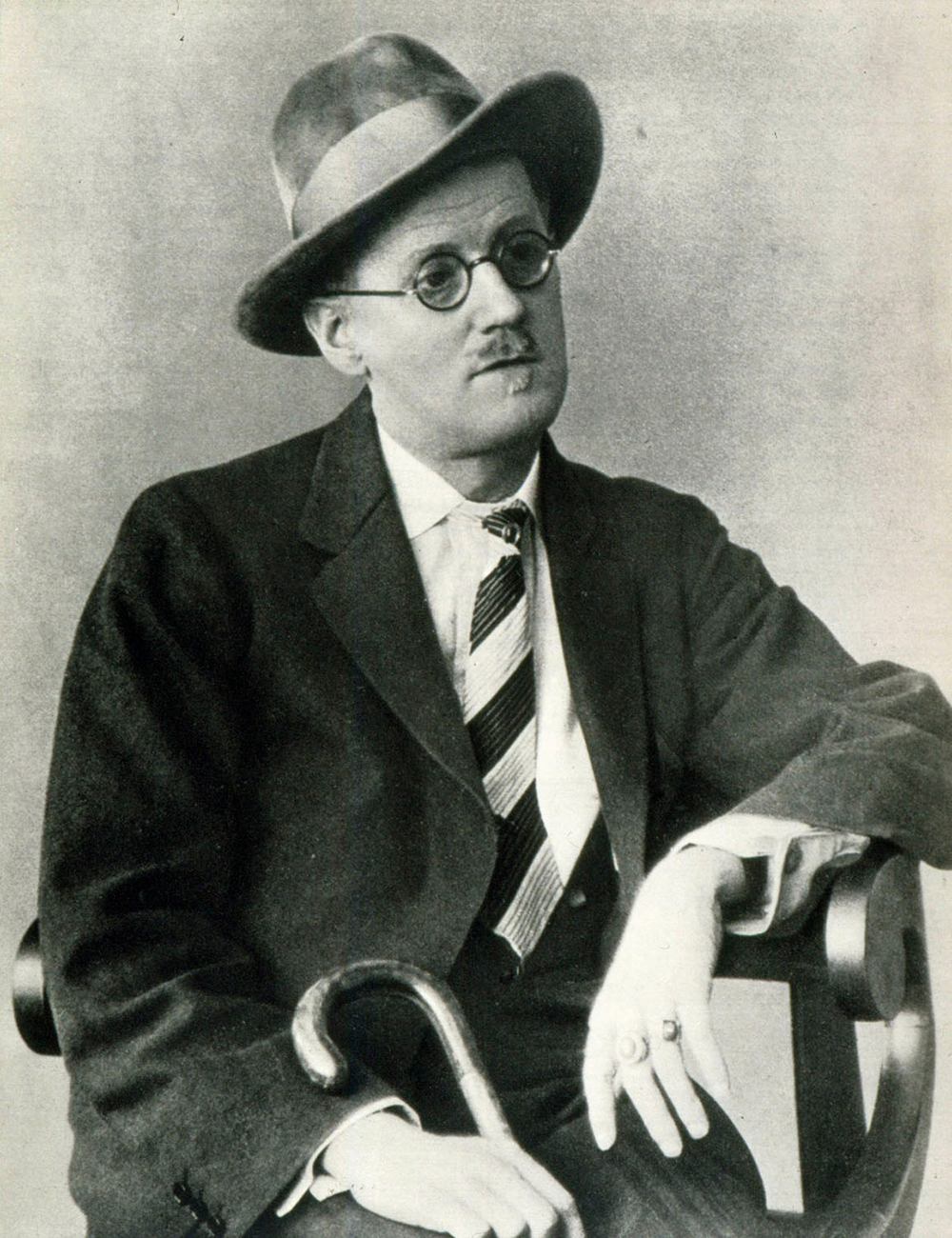
James Joyce, who relished litigation, dreamed of a trial of Ulysses as clamorous as that of Madame Bovary
Margaret C. Anderson, the caustic-tongued lesbian who edited the journal, had a taste in masculine-looking women but did not herself identify as an adult female (‘I haven’t the remotest connection with this alien race’.) She hung out with Djuna Barnes, the author of the sapphic fantasia Nightwood, and other Jazz Age exquisites who championed the literary convulsions set in train by Ulysses. Born in Indianapolis in 1886 to a wealthy railroad executive father, Anderson was pro-abortion, pro-suffrage and pro- anything else that riled the bridge-playing (she had a thing about bridge) stuffed shirts of the US literary establishment.
Hers is an intriguing story, and Adam Morgan (who edits the Chicago Review of Books) tells it very well in A Danger to the Minds of Young Girls. Neither Anderson nor her co-editor Jane Heap was allowed to communicate directly with Joyce, Morgan says, even though they admired his writing greatly. Pound, acting as intermediary, sent them excerpts from Ulysses, accompanied by often angry-sounding letters. (‘For the love of Christ, get a proof reader… You’ve bitched three of my poems.’) John Quinn, the New York lawyer and arts patron who bankrolled the Little Review, was so unsettled by Joyce’s salty language (‘The snot green sea; The scrotum tightening sea’) that Pound had to write him a robust defence.

Anderson and her lover Heap tried but failed to fend off assaults by the American authorities. The January 1920 edition of the Little Review, which contained the very saucy ‘Cyclops’ episode from Ulysses, was confiscated and burned by the US Post Office on the grounds that it was illegal to send material judged to be obscene through the post. Other copies were dispatched to the Salvation Army where, Morgan tells us, they were ripped up for recycling by sex workers in reform programmes. Joyce, who relished litigation, dreamed of a trial of Ulysses as clamorous as that of Madame Bovary. This came about soon enough.
The ‘Nausicaa’ episode, appearing in the July-August 1920 edition, was gleefully lewd. In it, Leopold Bloom is seen to masturbate on a Dublin beach at night-time while Gerty MacDowell raises her skirt for him obligingly and fireworks detonate suggestively overhead. Masturbation was a touchy subject in post-Woodrow Wilson America. On the one hand, ‘Nausicaa’ was literature; on the other, it was quite off colour. Drawing on court transcripts, Morgan recreates the 1921 obscenity trial where Anderson and Heap were summoned before three judges in a Manhattan court room. When the offending passages were read, two of the judges declared them incomprehensible. (Lack of conventional punctuation or some other typographical eccentricity had flummoxed them.) In Anderson and Heap’s defence, their appointed attorney Quinn argued that ‘Nausicaa’ was rather more disgusting than indecent. As for Miss MacDowell’s flaunting of underwear, the department store mannikins of Fifth Avenue were no less revealing. None of this helped the editors, who were fined $50 each for disseminating obscenity. When Anderson and Heap left the courtroom as convicted criminals Quinn said to them: ‘And now for God’s sake don’t publish any more obscene literature.’ The publication of Ulysses as a book fell to Sylvia Beach in Paris, where it appeared in 1922 under her Shakespeare & Company imprint.

The trial left Anderson with an aggrieved sense of outrage at the contrast between Joyce’s reception in Paris and the Little Review’s trashing in New York. (Only in 1933 did a US federal judge rule that Ulysses was no longer obscene.) The Little Review, battered by the trial, limped on for a further eight years. In France, meanwhile, Anderson and Heap fell under the spell of the Armenian-born mystic George Gurdjieff (whose mantra ‘Why are we sleeping?’ became the title of a 1968 Soft Machine song by the great Kevin Ayers).
Anderson died at the age of 86 in her home near Cannes in 1973. Heap settled in London, where she opened a toy shop called the Rocking Horse, which served (somewhat creepily?) as a centre for Gurdjieff teachings. In sharply written pages, Morgan restores Anderson to her rightful place in the history of American literary modernism. The biography, brimful of racy and piquant detail, is a delight to read.




Comments