Biography

The mystery of the waggle-dance

From our UK edition

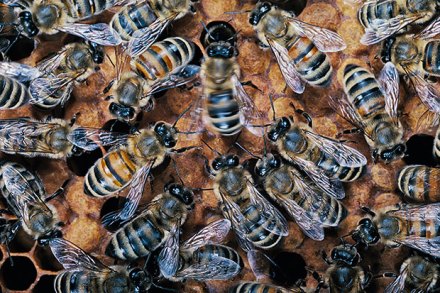
The Dancing Bees is a romantic title, evoking fantasy and fairy tale rather than scientific rigour, but actually this book is a story of fearsome determination. It is a biography of Karl von Frisch, who discovered the language of the honeybee, but Tania Munz’s account is much more besides, as it reveals the scientist’s struggle for survival under the Nazi regime. Although I kept bees for many years, I had no idea of the work which won Von Frisch a Nobel prize in 1973. I was first introduced to the waggle-dance, this marvel of the animal kingdom, in a laboratory at the University of Sussex. Francis Ratnieks, professor of apiculture, sat me in front of one of his observation hives where you could watch the colony of bees at work through a glass panel.
Dante’s egomania

From our UK edition

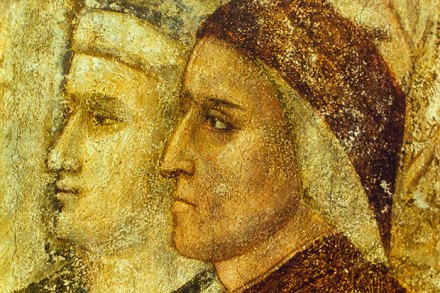
Unlike Shakespeare, who kept himself out of all his works, except the Sonnets, Dante was endlessly reworking his autobiography, even when supposedly writing on politics or arranging love poems to his dream-women. The core of this new book about him can be found in a sentence following Dante’s banishment from Florence, and his setting out as a poverty-stricken exile, deprived of all power, separated from his wife and family and stripped of his wealth. Marco Santagata writes: One of the typical features of Dante’s personality, which qualifies him as an ‘intellectual’ in the modern sense of the word, is his endless reflection on what he is doing, both as an author and as a man.

The gooseberry fool

From our UK edition

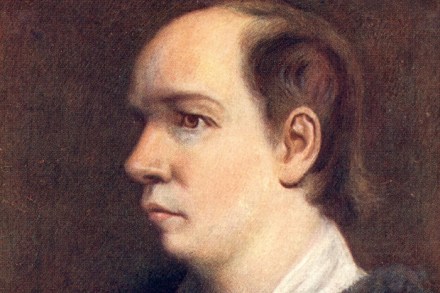
On 10 April 1772, the biographer James Boswell recorded in his diary that he had hugged himself with pleasure on discovering he would be dining with Oliver Goldsmith. This was not because he hoped to elicit from the Irish-born writer some fruity details for the life of Dr Johnson, the dictionary-maker, that he was planning to write (although Goldsmith did know Johnson intimately). On the contrary, Boswell, the literary groupie, was fascinated by Goldsmith himself. He devotes several pages of his Life of Johnson to him in an attempt ‘to make my readers in some degree acquainted with his singular character’. But, frustratingly, Goldsmith remains an enigmatic figure.

Running the triple crown

From our UK edition

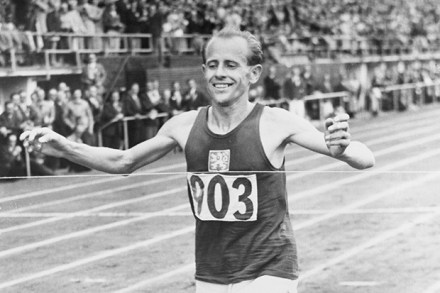
The story of the Czechoslovak runner Emil Zátopek is a tale from athletics’ age of innocence. Without the aid of qualified coaches, state-of-the-art equipment or ‘performance-enhancing’ drugs, Emil Zátopek set no fewer than 18 world records over distances between 5,000 and 30,000 metres with a style memorably described as that of ‘a man wrestling with an octopus on a conveyor belt’: all eccentricity above the waist, all efficiency below it. Brought up in poverty, he ate when he could and what he could, and treated beer as a prototype isotonic drink.

James Klugmann and Guy Burgess: the wasted lives of spies

From our UK edition

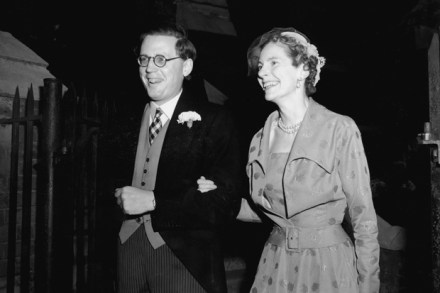
Geoff Andrews’s ‘Shadow Man’, James Klugmann, was the talent-spotter, recruiter and mentor of the Cambridge spy ring. From 1962, aged 21, I stayed frequently at the large north London house where Klugmann (1912–1977) stored the overflow of his vast library. My hosts, who treated me almost as family, were members of the Communist party, as were lots of their friends whom I met. They included a good many of the dramatis personae of Geoff Andrews’s life of Klugmann (as well as several of the Hollywood Ten in exile from McCarthyism; curiously, none of them features in this biography). Klugmann was a party functionary, loved and revered by my hosts and others as the CP’s chief theorist.

George and Martha Washington were an odd first First Couple

From our UK edition

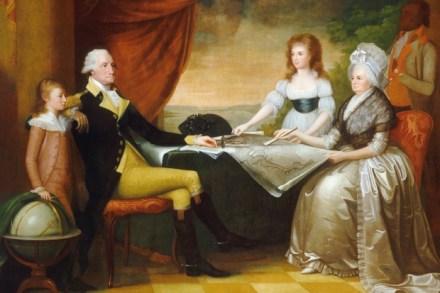
‘Would Washington have ever been commander of the revolutionary army, or President of the United States, if he had not married the rich widow of Mr Custis?’ asked John Adams. The answer, says Flora Fraser, is no. We like to see our ‘men of destiny’ as striding the world alone before stepping onto the customary plinth, so some might find it inconvenient to consider the role, in George Washington’s glorious career, of America’s first First Lady. But in her lifetime, no one put Martha in the corner. George and Martha Washington is a balanced and vivid account of a marriage which was both remarkable and strikingly down-to-earth.

Designing the swimming car, the Doodlebug and the Panzer tank was all in a day’s work for Ferdinand Porsche

From our UK edition

The aggressive character of the famous German sports car, in a sort of sympathetic magic, often transfers itself to owner-drivers. The joke goes: ‘When you get into a Porsche, you feel you want to invade Poland.’ In this fascinating and meticulously researched book, Karl Ludvigsen investigates the genetic spiral that gave Porsche cars the character of weaponry. All German manufacturers were forced to supply the Third Reich. The BMW-sponsored London Olympics 2012 were held on a site devastated by Luftwaffe planes powered by its engines.

Through the eyes of spies

From our UK edition

Spying is a branch of philosophy, although you would never guess it from that expression on Daniel Craig’s face. Its adepts interrogate the surface of reality — people, landscapes, texts — knowing that they will discover extraordinary hermetic meanings. They study fragments of documents, whispers of messages, and from these, they summon entire worlds. Possibly one of the reasons Max Hastings cannot pretend to be hugely impressed by the boasts of wartime spies is the philosophical nebulousness of what constitutes ‘results’ in secret-agent speak. Soldiers fight, shoulder to shoulder; battles are clearly lost and won.

An exquisite flowering of talent

From our UK edition

It seems odd that a singer, musician, television performer and sculptor who typified the 1960s as vividly as Rory McEwen should now be known principally for his botanical paintings. From the early 1950s until his tragically early death in 1982 he was everywhere and knew everyone, but as The Colours of Reality shows, McEwen was never more himself than when working within the discipline and timeless tradition of an art form that links him with the greatest flower painters of the past. Not every botanical painter can count Jim Dine, Joseph Beuys and Ravi Shankar as his friends, play the 12-string guitar, shoot at Balmoral, influence Van Morrison, bolster the fortunes of the Wakefield and North of England Tulip Society and drive a purple Ferrari with ‘Ecosse’ on the tail.

The Spectator’s Notes | 18 June 2015

From our UK edition

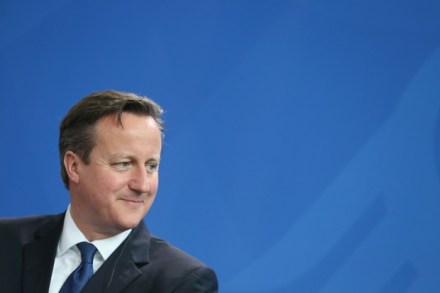
It is natural to assume that, if a majority votes No in the referendum on Britain’s EU membership, we shall then leave. It is not automatically so. After the vote, we would still be members. The government would then — morally at least — be mandated to negotiate Britain’s withdrawal. In theory, unlikely though it may currently seem, the EU could try to block this. Even assuming that it did not do so, the eventual terms of the withdrawal would not automatically be agreed by Parliament and would not necessarily correspond with the wishes of those who voted No. The context for our vote will be David Cameron’s presentation of a package secured with partners to persuade us to vote Yes. There is no negotiated package offered for those voting No.

If Cameron is deleting all No. 10 emails, who will write his history?

From our UK edition

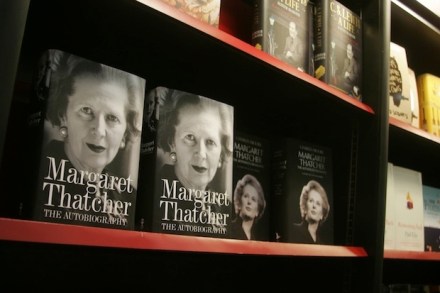
This is an extract from Charles Moore's Notes in this week's Spectator, out tomorrow. Subscribe from just £1. In a few weeks, I shall have finished the second volume of my threepart biography of Margaret Thatcher. I am now at the checking and revising stage — 3,000 endnotes to be made shipshape, 2,000 quotations to be cleared with interviewees, 300,000 words to be re-imagined as if read fresh. This involves the exchange of scores of emails every day. The question arises, ‘How did enterprises of this kind ever happen before computers?’ The answer, I think, is that the sources used were much narrower than they are today. Authors were extremely dependent on where archives physically were. Interviews were a rarity.

Blitzed on Benzedrine

From our UK edition

Lore has it that those viewing naughty books in the British Museum could once do so only with the Archbishop of Canterbury in attendance. Such pastoral care may be advisable for any institution ending up with the private archive of letters, diaries and artwork from which Joscelyn Godwin compiles this eccentric and nicely produced account of his parents’ lives from 1940 to 1948. Edward Fell Scott-Snell and Stephani Mary Allfree met in 1935 and set about cultivating Thessyros, a fantasy land Edward had already sown with overripe imagery and peopled with priapic cupids, ageing debauchees and, Godwin explains, ‘assorted gardeners, priests, and organists who gleefully seduce their willing, under-aged charges’.

Just sign here…

From our UK edition

This being the 800th anniversary of the signing of Magna Carta, it is not surprising that there should be two new biographies of King John; not surprising either that one should be billed as ‘The Making of a Tyrant’, the other as a story of ‘Treachery’ and ‘Tyranny’. King John has long been regarded as the worst English king: cruel, deceitful, avaricious, untrustworthy, incapable and cowardly. For some of us he remains indelibly the despicable younger brother of Richard the Lionheart, as so memorably portrayed by Claude Rains in the irresistible swashbuckling Errol Flynn movie The Adventures of Robin Hood.

Baiting the trap with CHEESE: how we fooled the Germans in the second world war

From our UK edition

Second world war deception operations are now widely known, particularly those which misled the Germans into thinking that the D-Day Normandy landings were merely a diversion. Great use was made of captured German agents in Britain who sent disinformation about invented army divisions and ships allocated to the supposedly ‘real’ landings still to come. Much less well known, though of arguably equal consequence, was a similar deception operation in the Middle East, based on an MI6 agent known as CHEESE.

The lost words of John Aubrey, from apricate to scobberlotcher

From our UK edition

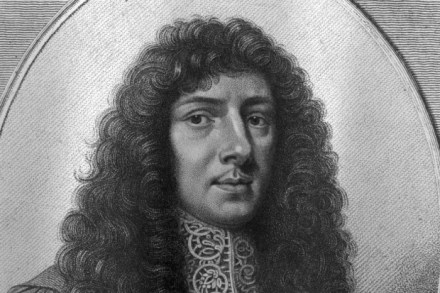
Hilary Spurling found a certain blunting of the irregularities of John Aubrey’s language in Ruth Scurr’s vicarious autobiography of the amiable man (Books, 14 March). It is true that his vocabulary was adventurous, though I’m not convinced that his age (that of Thomas Browne too) was more neologistical than Chaucer’s, Shakespeare’s, Thackeray’s or our own. Reading Aubrey (1626–97), we can overlook the Latinate words that have survived, and notice only those that did not catch on. One regrettable casualty was Aubrey’s apricate, ‘to bask in the sun’, from Latin apricari.

Drink, drugs and dressing-up: behind the scenes of the fashion industry

From our UK edition

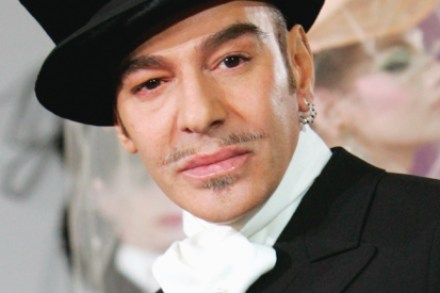
It’s a curious subject, fashion, and those who write about it rarely want to jeopardise future access to it on the altar of clear-eyed analysis. The business must pretend that there is a single genius at work here, whose vision creates not just clothes but the things that actually make the money. The catwalk shows are all very well, but they haven’t been the main business for decades, and it came as rather a surprise to the industry when a great mob of new customers emerged from nowhere, the wives of Russian oligarchs and American hedgefund traders, willing to spend six-figure sums every season on a new wardrobe.

William Marshal: kingmaker — or just king of the joust?

From our UK edition

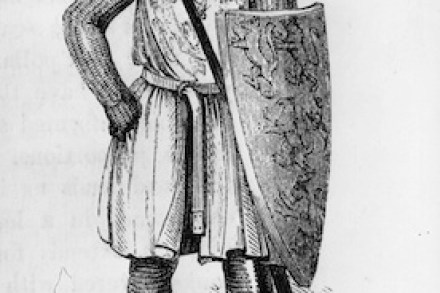
In February 1861 a 21-year-old French medievalist called Paul Meyer walked into Sotheby’s auction house near Covent Garden. He had been sent by the Bibliothèque Imperiale to bid on their behalf at the sale of the Savile collection of rare manuscripts, and though he did not have the funds to compete with the big players at the auction, he did at least manage to see, before it disappeared for the next 20 years into the insatiable collector’s maw of Sir Thomas Phillipps, a rhymed verse chronicle of 19,000-odd lines in Norman French that was to become the great obsession of his life.

This Winter Journey goes far beyond expectation

From our UK edition

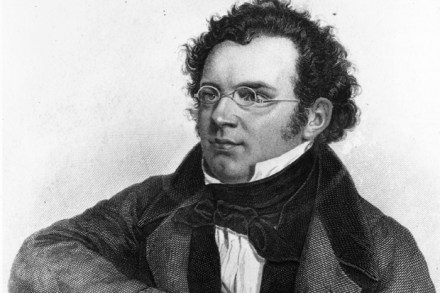
You can tell a lot about a book from its bibliography. It’s the non-fiction equivalent of skipping to the final page of a novel. Turn to the end of Ian Bostridge’s Schubert’s Winter Journey — a study of the composer’s celebrated song cycle Winterreise — and you’ll find monographs on ornithology, weeping as a cultural phenomenon and wood sculpture in Renaissance Germany, essays on Samuel Beckett and the history of the mail coach, and the rather forbidding ‘Regulation of floral organ abscission in Arabidopsis thaliana’. Intrigued? Who wouldn’t be? As academic disciplines go, musicology was a slow starter.

Sunday roasts and beaded bubbles: dining with the poets

From our UK edition

In December 1817 Benjamin Robert Haydon — vivid diarist and painter of huge but inferior canvases of historic events — held a Sunday luncheon to which he invited John Keats, Charles Lamb and William Wordsworth. Nearly a century later, in January 1914, seven poets and Lord Osborne de Vere Beauclerk met in Sussex to eat roast peacock at another Sunday lunch. Six of the poets (Yeats, Ezra Pound, Richard Aldington, Sturge Moore, Frank Flint and Victor Plarr) came from London to honour the seventh, Wilfred Scawen Blunt, at his manor house. Hilaire Belloc joined them for tea afterwards, and sang a ballad about cuckoldry. Robert Bridges and John Masefield declined their invitations.

Deng Xiaoping: following in Mao’s footsteps

From our UK edition

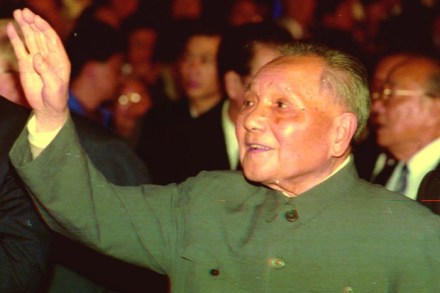
Much has been written about Deng Xiao-ping (1904–1997), most recently by Ezra Vogel in Deng Xiaoping and the Transformation of China. But apart from his fondness for eating croissants and playing bridge, and the fact that his second wife left him for a party colleague — Michael Dillon records the divorce only — we still know little about Deng himself. Mao Zedong’s personality, on the other hand, was often remarked on — from Edgar Snow’s first meeting with him in 1936 to Henry Kissinger’s in 1971(both men swooned in his presence). Dillon rightly notes that Vogel compressed a large part of Deng’s life into a mere 30 pages. In this biography the entire life and career are given appropriate space.