Biography

A diverting but unsurprising new history of the Astor clan

Mention “Astor” to most people and you immediately conjure up tales of fabulous wealth, the sort of Gilded Age beauty and excess expressed to perfection in the paintings of John Singer Sargent. The family name became synonymous at times with luxury and good taste, at others with greed, power and extreme snobbishness. The founder of the dynasty, John Jacob Astor, was a German immigrant and one-time fur trader who came to America in 1783 after the Revolutionary War. His descendants swiftly capitalized on his substantial achievements, creating a Manhattan property empire of unrivaled wealth. There was also plenty of Astor philanthropy and involvement in political and cultural life along the way but then, in the early twenty-first century, came a fall from grace as dramatic as the rise.

astor

An obituarist’s search for the soul

From our UK edition

‘“Deep breath”, says the doctor. I take one and hold it.’ Thus begins the fourth chapter of Ann Wroe’s Lifescapes. It is apt because, although the book is part memoir, part essay on the art of biography, it is really about the breath of life itself. Wroe’s writing is intense and visionary, at times almost ecstatic. Reader, dive in. Wroe has written weekly obituaries for the Economist for 20 years, seeking out seemingly ephemeral moments that unlock people’s lives. ‘Time and again,’ she says, ‘some incident in childhood is the key to a career.’ The composer Karlheinz Stockhausen was delighted by the sound his toy hammer made on pipes and buckets at his family’s farm.

The many lives of George Weidenfeld, legendary publisher and ladies’ man

From our UK edition

‘You can go ahead,’ said the voice at the other end of the telephone. ‘The DPP has decided not to prosecute.’ It was the call that allowed the publication of Lolita, one of the greatest gambles of George Weidenfeld’s career. The moment George – it is impossible to think of him as anything other than George – had read this controversial book, available from the Olympia Press in Paris, known for its pornographic list, he had wanted to publish it himself; but as the law then stood, it would have been pulped immediately, owing to its story of a middle-aged professor who becomes obsessed with a 12-year-old girl and kidnaps and sexually abuses her.

The conman who duped thousands with a patently absurd story

From our UK edition

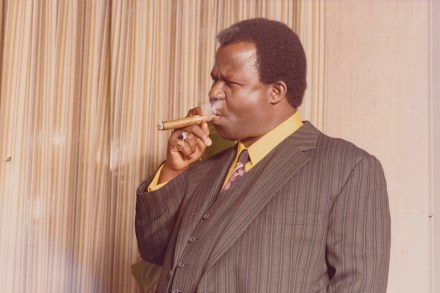
In the early months of 1981, investors in a Swiss fund stuffed with cash, diamonds and gold began arriving at a five-star London hotel to await an audience with the fiscal wizard making them fabulously rich. Dr John Ackah Blay-Miezah would turn up in his grey chauffeur-driven Rolls-Royce, clad in an immaculately tailored suit and clasping a big cigar in bejewelled hands. Then he would regale them with tales from his student days at the University of Pennsylvania, even singing the famous Penn fight song, and talk of developing Ghana using wealth plundered by his close friend Kwame Nkrumah, the country’s first post-independence president. ‘No one could create such a story,’ said one investor.

Complicated and slightly creepy: the Bogart-Bacall romance

From our UK edition

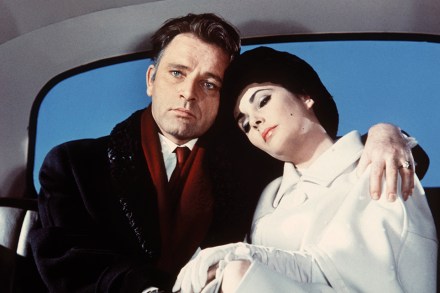
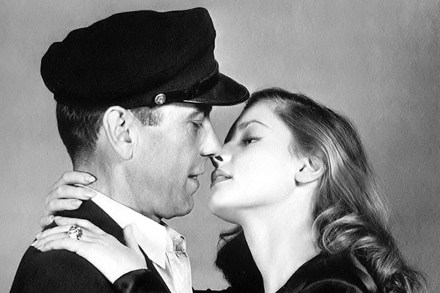
Whenever an actor and an actress begin an affair on the soundstage they like to believe they are the new Burton and Taylor. Actually they’ll be lucky to resemble Christopher Timothy and Carol Drinkwater, who had a fling on that vet programme – and now here are Humphrey Bogart and Lauren Bacall to live up to as well. Of their love story, William J. Mann avers: ‘It was wonderful; it was passionate; it was complicated.’ Also, it was creepy. Bacall was 19, Bogart 45. There was a ‘significant power differential between them’ when they met in 1944 during the filming of To Have and Have Not. Mann is probably pointing the finger at Bogart, the established Hollywood star.

A trip down Ronnie Lane: from child busker to international star

From our UK edition

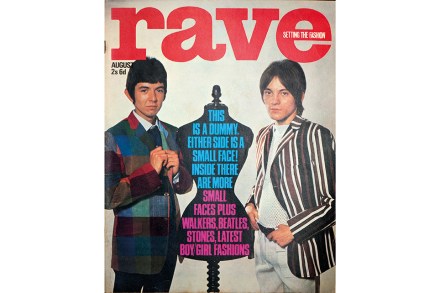
Thirty years ago, I worked for a while in a shop in Soho selling vintage newspapers and magazines. The holy grail for some customers might be the 1955 Playboy featuring Bettie Page or the 1976 Daily Mirror with the Sex Pistols’ ‘Filth & the Fury’ headline. But those of a born-again Mod persuasion were usually looking for 1960s publications with the Small Faces on the cover – preferably the August 1966 copy of the teenage music and fashion bible Rave, showing Ronnie Lane and Steve Marriott from that most style-conscious of bands, complete with a double-page poster of the group inside.

George Orwell’s unacknowledged debt to his wife Eileen

From our UK edition

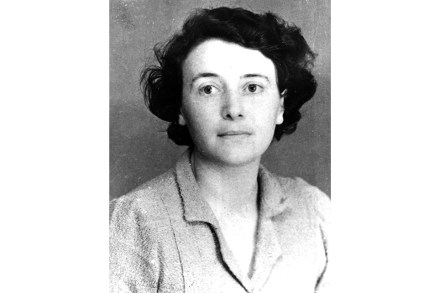
Anna Funder, the author of Stasiland, is a premier-league writer who can roll fiction, reportage, criticism and memoir into glinting prose, her sentences like handheld treasures you keep turning over, admiring their graceful contours and crafted precision. Lately she’s published little. In fact Wifedom is a book wrenched from the swirl of domestic duties that drown out women’s voices – the lifeline, in this case, being a chance find at a moment of ‘peak overload’ when she stumbles on a rare edition of George Orwell’s collected non-fiction. Eileen’s fingerprints are all over Animal Farm, a book that displays a psychological acuity Orwell lacked Diving into his essay ‘Why I Write’, she looks for self-recognition and pauses over a sentence.

The socialist thinker who imagined ‘transforming her body and soul into potatoes’ to feed the poor

From our UK edition

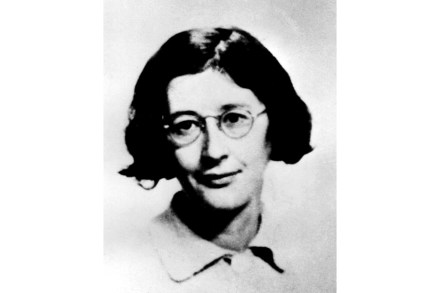
May you live in interesting times. The jury is still out on whether that sentiment is a blessing or a curse. There can be no doubt, though, that the heroines of Wolfram Eilenberger’s new book lived in interesting times and then some. Ayn Rand fled the Russian Revolution; Hannah Arendt fled the Nazis; Simone Weil took part in the French general strike of 1933 and fought for the Republicans in the Spanish Civil War; Simone de Beauvoir went to bed with Jean-Paul Sartre. Eilenberger calls his foursome The Visionaries. It’s an odd title, but then so was the one he gave his previous book, The Time of the Magicians. There is no more magic in the philosophy of Ernst Cassirer and Ludwig Wittgenstein than there is anything visionary about the thinking of these women.

Albrecht Dürer’s genius for self-promotion

From our UK edition

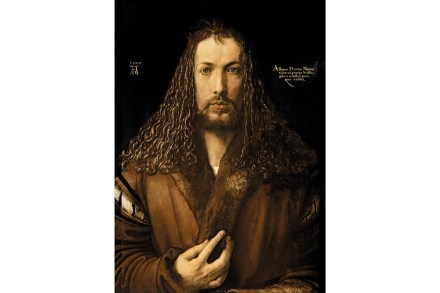
Albrecht Dürer, one of the most narcissistic artists that ever lived (and it’s a crowded field), would have loved this book. It lays out methodically, with academic brilliance, the marketplace, techno-aware basis of the ‘Dürer Renaissance’ and the artist’s rise to immortal fame. With a glorious accumulation of detail, assiduous research and – as she acknowledges before her exciting journey begins – the benefit of ‘magnificent institutional support’, Ulinka Rublack, a history professor at Cambridge University, delivers a deluxe book, with chapter and verse to support her grand subtitle: ‘Art and Society at the Dawn of a Global World’.

The Teutonic goddess who ‘created’ the Rolling Stones

From our UK edition

Feminism? Pfft! Marianne Faithfull practically spat the word at me when I interviewed her in 2017. Then she rowed back, conceding that she’d spent most of her life ‘standing up for women’s rights... I’ve had to.’ Pallenberg humilated, seduced, empowered, educated, bonded and divided the band as the whim took her In chronic pain with arthritis, she’d struggled into a comfy chair while directing me to squat on the mucky floor at her feet. Who could blame her? From the moment the record producer and impresario Andrew Loog Oldham first packaged her as a teenage ‘angel with big tits’, the media had refused to treat her with respect.

Why did Truman Capote betray his ‘swans’ so cruelly?

From our UK edition

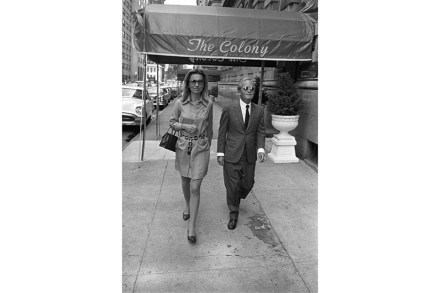
The first rule in John Updike’s code of book reviewing is: try to understand what the author wished to do and do not blame him for not achieving what he did not attempt. I should therefore not blame Laurence Leamer for failing to capture in Capote’s Women any sense of what made Truman Capote irresistibly attractive to all sorts of people – rich, poor, male, female and especially to his flock of high-society swans, the women of Leamer’s title. Nor should I blame him for failing to identify what made Breakfast at Tiffany’s and In Cold Blood both beloved by critics and hugely popular. I can’t blame Leamer, because what he has attempted is a book of undiluted gossip, and that’s what he has achieved.

A Blakean heaven or hell: fish with coloured lanterns and teeth like primeval beasts

From our UK edition

Sometime in the early 1940s, when he was living in exile in LA, Thomas Mann picked up a copy of the National Geographic. Leafing through it, he found an article whose strapline was a Jules Verne novel in summary: ‘Half a Mile Down: Strange Creatures, Beautiful and Grotesque as Figments of Fancy, Reveal Themselves at Windows of the Bathysphere.’ Next to dark, exotic images of what appeared to be alien life from the abyssal depths of the sea was an account of how the author, a scientist named William Beebe, had become the 20th century’s first aquanaut in exploits so sensational that live radio broadcasts were made of his dives, as though he were taking a walk on the moon.

Barbara Ker-Seymer – Bright Young Person in the shadows

From our UK edition

English Modernism was graced by five daring and gifted women who were in many respects well in advance of their native male counterparts: Virginia Woolf and Anna Kavan in prose, Edith Sitwell in poetry, Elisabeth Lutyens in music and Barbara Hepworth in sculpture. Barbara Ker-Seymer is not remotely in this class. She took some attractive photo-portraits before the war in her studio above Asprey’s and that was it. After leaving St Paul’s Girls’ School, Barbara was soon drinking, drugging and dancing round town Not that Barbara cared. Though trained at the Chelsea School of Art, she had a deprecating attitude to her activity which was characteristic of English amateurism and is absolutely maddening when it comes to the arts at a proper level.

The woman who put the Spencer family on the map

From our UK edition

The first woman to put the Spencer family on the map was not Diana, Princess of Wales, the youngest daughter of the 8th Earl Spencer, nor even Georgiana, Duchess of Devonshire, the elder daughter of the 1st. Rather, it was their Tudor forebear Alice, Countess of Derby, the subject of this absorbing biography by Vanessa Wilkie. Born at Althorp – then a modest, two-storey red brick manor house – in May 1559, six months into the reign of Elizabeth I, Alice was the youngest daughter of Sir John Spencer, a prosperous sheep farmer and sometime sheriff of Northamptonshire, and his wife Katherine, née Kytson. At the age of about 20, Alice married Ferdinando Stanley, Lord Strange. It was a brilliant match for her and the Spencers.

Fame came too late for Nick Drake

From our UK edition

A friend suggested I might bring a feminine twist to this review by imagining what it felt like to be Nick Drake’s mother. It was a startling thought. When I read artists’ biographies I tend to stand with them eye-to-eye, rather than conjure the perspective of an older generation. But the further we are distanced in time and age (the singer-songwriter died in 1974, aged 26), the more the picture morphs. Just as we’re supposed to grow out of liking Shelley (I never did) or learn to swap Mozart for Bach, our view of someone who was both an undoubted genius and the definition of callow inevitably matures.

Why is George Orwell so difficult to pin down?

Outside Broadcasting House, the BBC’s main center in London, is an imposing, eight-foot-high statue of a man. He leans over slightly, as if to accost passersby, and holds a cigarette. A sign behind him declares, “If liberty means anything at all, it means the right to tell people what they do not want to hear.” The man is the author and critic George Orwell and the statue was intended as a permanent commemoration of his writings and values, as well as his short-lived stint at the BBC during World War Two.

orwell

The philosophical puzzles of the British Socrates

From our UK edition

Imagine your donkey and mine graze in the same field. One day I conceive a dislike for my donkey and shoot it: on examining the victim, though, I realise with horror I’ve shot your donkey. Or imagine a slightly different scenario. As before, I draw a bead, but just as I pull the trigger, my donkey – perhaps more invested in this vale of tears than yours – steps out of the firing line and I shoot your donkey. Now here’s the question. When, in either case, I turn up on your doorstep with the remains of your donkey, how should I frame my apology to you? In his 1956 presidential address to the Aristotelian Society, J.L. Austin (1911-1960), White’s Professor of Philosophy at the University of Oxford, a man who, M.W.

Roger Deakin – at ease in the countryside as a poacher with deep pockets

From our UK edition

Few authors have left such an immediate legacy as Roger Deakin. When he died of a sudden illness in 2007, aged 63, he had written just two books: Waterlog, which set off the wild swimming craze, and the even more influential Wildwood, which helped kickstart the publishing phenomenon of nature writing. Yet both books only really became well known after his death. During his lifetime he was, at best, a cult taste. When I approached the BBC 20 years ago with the idea that he should present a televisual version of Waterlog in which he swam ‘across’ England, through its ponds, lakes and rivers, I was told no one was interested in wild swimming – and who was Roger Deakin anyway? Patrick Barkham has set out to answer that question.

The problems of being a Bee Gee

From our UK edition

For quite some time, the prospect of death has held a fresh terror. The British Heart Foundation’s step-by-step guide to cardiopulmonary resuscitation advises performing chest compressions ‘to the beat of “Stayin’ Alive” by the Bee Gees’. This means that the last sound some of us will ever hear is ‘Stayin’ Alive’, with our chests as the drums: Feel the city breakin’ and everybody shakin’And we’re stayin’ alive, stayin’ alive!Ah! ah! ah! ah!Stayin’ alive! Stayin’ alive! Despite their success, the Bee Gees have always been regarded as naff. They are to pop music what Fanny Cradock was to cookery or Julian Fellowes is to the world of letters. Bob Stanley is on a mission to rescue their reputation.

Tucker Carlson is the new Voldemort

Murdoch gets what Murdoch wants — and this time, it’s to erase any evidence that Tucker Carlson ever existed. The media mogul is so insistent that the “T”-word remain unspoken that he has purportedly banned any mention of the ex-host across the Fox networks.  This is bad news for Chadwick Moore, author and contributing editor at The Spectator after he announced his new book, Tucker, that comes out next month. Moore tweeted that he’d been blacklisted from the network after announcing the book, saying: “I’m not allowed on Fox anymore, because I wrote a book about @TuckerCarlson. I’ve been banned from the network.

vice president tucker carlson