Biography

The wit and wisdom of Margaret Cavendish

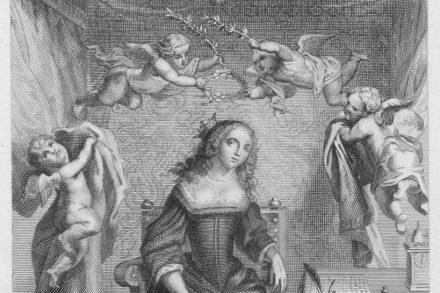
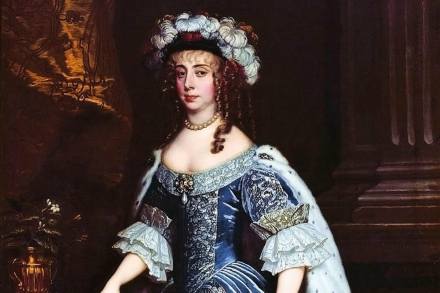
Margaret Cavendish, Duchess of Newcastle, who died aged fifty in 1673, was a divisive character whose life spanned one of the most fraught periods of English history. To some contemporaries, she was one of the wonders of the age, while others considered her one of the silliest writers ever to have taken up a pen. In her last two decades, Cavendish published over a dozen works of drama, philosophy and poetry, including what some consider her masterpiece, The Blazing World. Posterity has seen her obscured and dismissed, the fame she admitted craving granted only in 1929, when Virginia Woolf described Cavendish in A Room of One’s Own as “a giant cucumber” who “frittered her time away, scribbling nonsense and plunging ever deeper into obscurity.

Cavendish

Four dangerous visionary writers

From our UK edition

‘The production of souls is more important than the production of tanks... And therefore I raise my glass to you, writers, the engineers of the human soul.’ The quote is usually attributed to Stalin, though the phrase ‘engineers of human souls’ most likely came from someone else. Who’s to argue? Purges, executions, deportations – what’s a little light plagiarism in comparison? Whoever coined the phrase, it certainly struck a chord and indeed continues to ring various alarm bells whenever one comes across writers who deliberately set out to influence politics and ideas – and not just the big beasts, the Nobel Prize winners, say, or the shopfront-filling non-fiction authors hawking their wares, or the endless novelists with their little axes to grind.

The strangeness of Charles III

From our UK edition

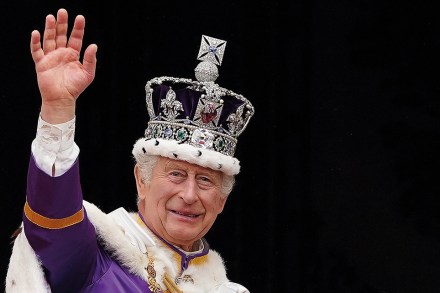
There are two narratives in Robert Hardman’s Charles III. The first is an account of the King’s first year on the throne. This is superbly researched and fascinating. We learn, for instance, that when Queen Elizabeth II died, the state trumpeters were on a plane to Canada and the bearer party was in Iraq. (Their first order on their return was to get a haircut. Their second to carry a comb.) The second is about magic, but since Hardman doesn’t admit this explicitly, the book has the flavour of an intellectual trying to cast a spell. I don’t understand why royalists can’t just say that a monarch occupies a space to prevent something worse occupying it. Monarchism is practical, is the royalist line, considering what people are. It is republicans who are dreamers.

reed

Relive Lou Reed’s wild, contradictory life

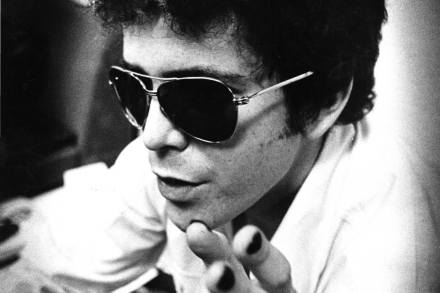
Before “Walk On The Wild Side” changed everything for Lou Reed in 1972, bringing him status and bolstering his bank account, he had been lead singer of the Velvet Underground, a group, as managed by Andy Warhol, that served up songs about drugs, gender-bending and sexual fetish, all designed to crash the boundaries of what polite America considered acceptable. The great thing about Velvet Underground songs was that musically, too, they transgressed: drone-based harmonies progressed glacially as rhythmic impetus stuttered. The big problem with the Velvets, in terms of finding any wider audience beyond self-confessed weirdos who hung out with Warhol, was that virtually nobody wanted to hear drone-based harmonies moving glacially or rhythms that fragmented. Where was the fun in that?

Hanif Kureishi – portrait of the artist as a young man

From our UK edition

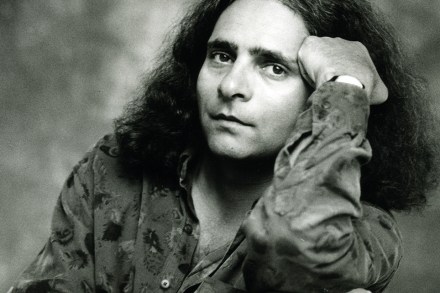
If any novelist, playwright or screenwriter of the past 40 years could be called ‘a writer of consequence’, to use the literary agent Andrew Wylie’s term, it would be Hanif Kureishi. While not shifting units on the scale of his near contemporaries Ian McEwan, Martin Amis and Salman Rushdie, Kureishi’s cultural influence – through his explorations of race, class and sexuality in novels such as The Buddha of Suburbia and films like My Beautiful Laundrette – is inestimable. In this first major biography, Ruvani Ranasinha tracks Kureishi’s progress from his birth in Bromley in 1954 to a Pakistani father and English mother, through his glittering, always provocative career, to the recent accident which rendered him unable to walk or use his hands.

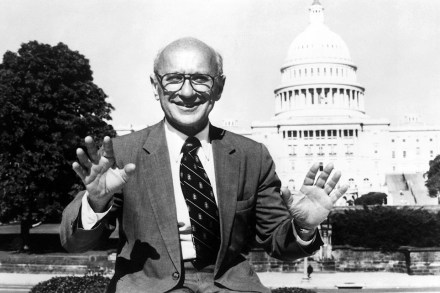
Milton Friedman – economic visionary or scourge of the world?

From our UK edition

The Keynesian economist Nicholas Kaldor called Milton Friedman one of the two most evil men of the 20th century. (Friedman was in distinguished company.) The ‘scourge’ he inflicted on the world was monetarism, a product of what Kaldor called Friedman’s Big Lie – of which more later. Moral judgments aside, how does Friedman rank in the world of 20th-century economists? By common consent, he stands with Friedrich Hayek and John Maynard Keynes at the apex of his profession. All wrestled with the defining problem of their age: the radical economic and political instability of the 1920s and 1930s. Their responses reflected their national situations.

A definitive biography of Liz and Dick, Hollywood’s most controversial and glamorous couple

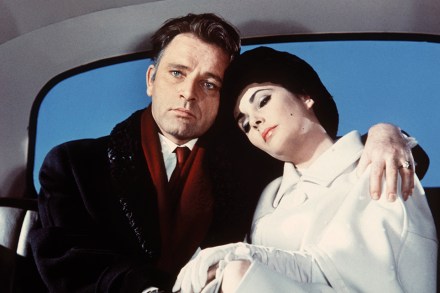
What is it about Richard Burton and Elizabeth Taylor that still hooks us in, thirty-nine years after his death and twelve years after hers? In his magnificent, definitive double biography, Roger Lewis nails down the answer. Liz Taylor was the last great Hollywood movie star, starting in the golden age in National Velvet (1944), aged twelve. As Lewis puts it, her origins were in the magazines and movies of the Forties: “the era of Bing and Bob, Big Bands, such as Glenn Miller, Bogie...Tom and Jerry, Disney.

lewis

The horrors of the ‘Upskirt Decade’

From our UK edition

The subject that Sarah Ditum addresses in Toxic is why the early part of this century was ‘such a monstrous time to be famous and female. It’s about how the concept of privacy came undone and why that was a catastrophe for women’. The concept of privacy was actually undone by a judge in Tulsa, Oklahoma in 2006. A 16-year-old girl was browsing through greetings cards in a shop when a man crouched down beside her and took photographs up her skirt. A security guard saw him and called the police. The whole scene was captured on CCTV, so there was no shortage of evidence. But the judge ruled that ‘the person photographed was not in a place where she had a reasonable expectation of privacy’ and an appeals court concurred.

The life of the revolutionary Albrecht Dürer

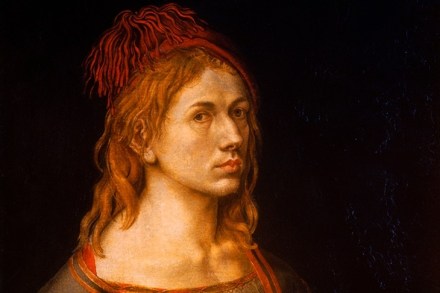
Great books make genres jump. It happened with W.G. Sebald’s The Rings of Saturn, which looked like a travelogue, claimed to be a novel and felt like neither. Albert and the Whale by Philip Hoare, which recalls and converses with Sebald, is such a work. An antic and original creation, it is not exactly a biography of the revolutionary Renaissance printmaker, painter and theorist of geometry and perspective. For the fuller story of Albrecht Dürer, turn to Erwin Panofsky’s mighty monograph, as Hoare does frequently. Instead, Hoare has made a book as much for Dürer as it is about him. Dürer’s life and art are thrillingly encountered.

Dürer

Meeting Margaret Cavendish

In the spring and summer of 1667, London began to see some odd goings-on. Seven years after the restoration of King Charles II to the throne — after England’s republican experiment under Oliver Cromwell ended in 1660 — and one year after the Great Fire had laid waste to the city, things were rather tense: the second Anglo-Dutch war was under way and, by the end of June, there would even be the fear of a Dutch invasion making its way up the Thames. But oddly, it wasn’t wars, invasion threats or geopolitical goings-on that caused the great and the good of London society to exchange frantic missives. At the beginning of April, a young man-about town wrote a rollickingly bizarre letter to his father.

The data-spew about Bob Dylan never ends

From our UK edition

When it comes to Bob Dylan, Clinton Heylin is The Man Who Knows Too Much. Since publishing his first biography, 1991’s Behind the Shades, he has become the world’s most committed Dylanologist, doggedly untwining the facts from the artist’s self-serving fictions. When he describes Dylan’s wildly unreliable 2004 memoir Chronicles: Volume One as ‘all a put-on... all a lie’, he has the receipts. As he never tires of pointing out, scholars and diehards are in his debt, but amassing data from sessions, setlists and now 130 boxes of Dylan’s formerly private papers is not the same as telling a good story. For someone innocently hoping to understand one of the cultural giants of the last century, the reading experience might resemble drinking from a firehose.

The force of nature that drove Claude Monet

From our UK edition

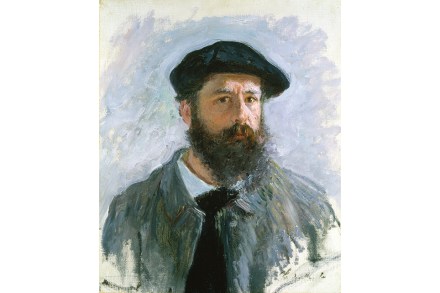
There have been some really good biographies of artists over recent years and what distinguishes the best of them is their sense of context and a lucid prose free from the jargon of the art historian. In the end, of course, any work of art has to be able to stand by itself, but for Jackie Wullschläger her appreciation of Monet’s paintings has been immeasurably deepened by her sense of the man behind them. ‘My approach,’ she writes, ‘stems from the belief that painters transform the raw material of experience into art’, and that material, both the familiar external events and, more illuminatingly, the inner man, is what she gives us here.

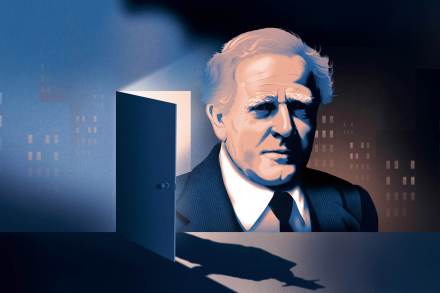
Adam Sisman’s new John le Carré biography entertains and disappoints

The fellow biographer for whom I always felt the most sympathy was James Atlas. Mr. Atlas, who has left an extensive account of his tribulations in The Shadow in the Garden: A Biographer’s Tale (2017), made the fatal mistake of writing a life of Saul Bellow while its subject was still alive. Bellow, you may not be surprised to learn, revealed himself to be a devious, shifty and manipulating old cuss. He interfered, blew hot and cold, disparaged his encomiast’s prose style, intelligence and research techniques and finally remarked, “I like you Atlas, but cut the crap.

le carré

‘We are stuck like chicken feathers to tar’: Elizabeth Taylor’s description of the fabled romance

From our UK edition

‘To begin at the beginning,’ intones Richard Burton with a voice like warm treacle at the start of the 1971 film Under Milk Wood. It’s hard to imagine an actor more obviously influenced by his own beginnings. The epigraph to this double biography is ‘The damp, dark prison of eternal love’, a line borrowed from Quentin Crisp. And if that’s an accurate assessment of Burton’s on-off-on-again relationship with the actress Elizabeth Taylor, it’s an even better summary of his childhood in Wales. Born Richard Walter Jenkins to a barmaid mother and a coal miner father (a ‘12-pints-a-day man’ who sometimes disappeared for weeks on end to drink and gamble), as a teenager he attempted a fresh start by moving in with a teacher named Philip Burton.

Keeping a mistress was essential to John le Carré’s success

From our UK edition

Adam Sisman is sensitive to the charge that a book about an author’s unknown mistresses is simply an exercise in prurience. ‘I am not one of those who believes sex explains everything,’ he declares defensively. An affair with the wife of a close friend led to the ménage depicted in The Naive and Sentimental Lover But this admirably concise volume justifies its title. Sub-themes such as the practice and ethics of biography, and the emotional toll taken by spying, run through it. But its core relates how, when writing his 2015 life of David Cornwell (John le Carré’s real name.) Sisman was prevailed upon to delete details of his subject’s many extramarital affairs.

Bill Stirling – the brains behind the wartime SAS

From our UK edition

‘The boy Stirling is quite mad, quite, quite mad. However, in a war there is often a place for mad people.’ Field Marshal Bernard Montgomery was referring to David Stirling, the man largely credited with raising the Special Air Service (SAS) in the summer of 1941. Myth has always surrounded the formation of the SAS and one of the most abiding legends is that it was down to one man alone, David Stirling, whose L Detachment of six officers and 60 men grew into 1SAS. Gavin Mortimer’s vivid and meticulously researched book, 2SAS, does a good deal to redress the balance. It acknowledges the importance – too long overlooked – of David’s eldest brother, Bill Stirling, who was to command 2SAS, and other remarkable men who were among the SAS’s founding fathers.

How the Aeneid was nearly destroyed

From our UK edition

According to legend, Vergil declared of himself ‘Mantua me genuit, Calabri rapuere, tenet nunc Parthenope: cecini pascua, rura, duces.’ (‘Mantua bore me, Calabria took me; now Naples holds me: I sang of pastures, fields, and leaders.’) In her rigorously researched biography, the American classicist Sarah Ruden shows that this is largely true – even if the author of the Aeneid was in fact born 30 miles from Mantua, in a little village called Andes, in 70 BC.  Ruden must necessarily rely on Vergil’s most influential biography, written by Suetonius more a century after his death.

Travels in Italy with the teenage Mozart

From our UK edition

Between the ages of 13 and 17, Mozart made three trips to Italy, spending some two-and- a-half years in ‘the country at the heart of the opera world’. He would never return as an adult. His mature Italian operas – The Marriage of Figaro, Don Giovanni, Così fan tutte, La Clemenza di Tito – can be traced directly back to these formative teenage encounters and experiences in Bologna, Venice, Rome, Florence and Naples. So argues Jane Glover in Mozart in Italy. A follow-up to 2005’s Mozart’s Women, the book is a lively account of journeys which the composer shared (mostly) with his father Leopold.

The astonishing truth about 007

From our UK edition

The novel as a form is a fundamentally capitalist enterprise. It was invented at the same time as capitalism – Robinson Crusoe tots up his situation in the form of double-entry bookkeeping. Its interests dwell on the disparate and unequal natures of human beings and feed off rivalry, social transformation, moneymaking, profit and loss. No rigid feudal society has managed to create an effective school of novelists; and having once struggled through Cement, Fyodor Gladkov’s classic of socialist Soviet literature, I would say that systems dedicated to forcible equality also struggle.

An admirable but flawed new biography of George Eliot

What to call her? The question troubled George Eliot, and challenges Clare Carlisle, her latest biographer. Even this book’s indexer plays along, providing more than one entry for its shapeshifting but steadfast subject. The Marriage Question shows us a woman fragmented, attempting to understand in her various existences how — and if — personal freedom can be achieved when your life is bound to another. Mary Ann (or Anne) Evans was born in Warwickshire, in the West Midlands of England, in 1819. On moving to London in 1850, hoping to make her living as a writer, she became Marian Evans.

Eliot