Here we go again – but this time, Je suis Berlin
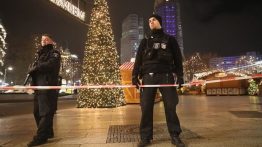
Well the year isn’t finished, but thanks to what looks to be the combination of the world’s most peaceable religion, a truck and a temptingly bustling Christmas market in Berlin I’m going to have reprise my most frequently written piece of recent years. So here we go again. On Monday night a truck was driven into a busy pedestrian area in Berlin. In the immediate aftermath the media were understandably wary. It could be a Glasgow-like accident or it could be a deliberate act. Struggling with this conundrum the BBC plumped for ‘Lorry kills nine at Christmas market.’ Naughty lorry. To date the attack still doesn’t have a hashtag that’s stuck. There was an early push for ‘Ich bin ein Berliner’, but for some reason it didn’t catch.