Belarus

Is Zelensky about to attack Belarus?

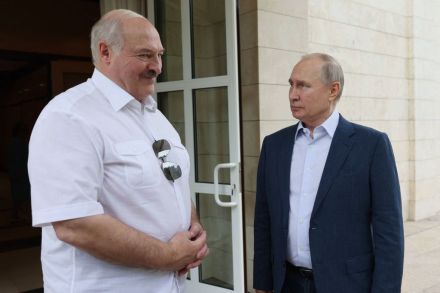
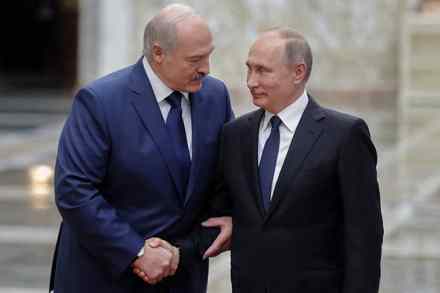
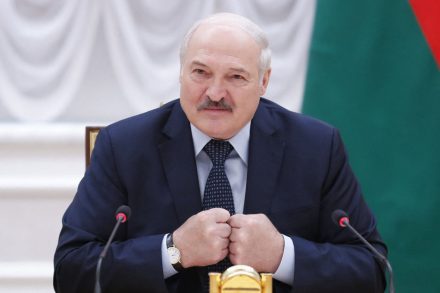
There has long been a worry that Russian escalation or miscalculation might see the Ukraine war widen into a broader European one. But what if it’s Kyiv, not Moscow, that starts this process? The flashpoint is Belarus. Minsk’s dictatorial leader, Alexander Lukashenko, is beholden to Vladimir Putin, but not a helpless vassal. On the one hand, he has refused to join Putin’s war directly, saying that he won’t allow Belarusians to become "mincemeat." On the other, he has been willing to let Russian troops use facilities in his country, and fly drones and missiles through his airspace.
A web of rivalries: The Extinction of Irena Rey, by Jennifer Croft, reviewed

Jennifer Croft is a translator of uncommon energy. In 2018 she won the International Booker Prize for her rendering of Flights by Olga Tokarczuk. In 2021, she took on Tokarczuk’s The Books of Jacob, a great big historical epic. Now she’s written a satirical page-turner set over what one character calls ‘seven toxic, harrowing, oddly arousing, extremely fruitful weeks’. Like members of some ancient mystery cult, eight translators fetch up in a house near a primeval forest in Poland on the Belarus border. The year is 2017. ‘Bedraggled and ecstatic’, they’ve come to translate Szara eminencja (Grey Eminence), a novel about art and mass extinction, by the Stockholm-worthy woman of letters Irena Rey – their host, their author, their Athena.

Exiled Belarusian opposition calls for army to rise against Moscow

With Vladimir Putin facing armed insurrection from Prigozhin’s Wagner Group, the exiled opposition in Belarus has called for its military to assert independence from Russia. Valery Sakhashchyk, Opposition defence spokesman, has released a video where he addressed his countrymen and the 38th Airborne Brigade, which he once commanded and is regarded as still loyal to him. His video (and my translation) are below: ‘All thinking people understood that the Russian Federation was built on lies, corruption and lawlessness and that it will fall apart sooner or later. We are witnessing the beginning of the active phase of this process. We do not know for sure what will happen tomorrow.

Europe’s last dictator: Lukashenko’s fate depends on Ukraine

A young man wearing combat fatigues and an extravagant moustache, and carrying a heavy machine-gun over his shoulder, nods towards some burned-out armoured vehicles. ‘We smashed the orcs today,’ he says, using the Ukrainian soldiers’ term for the invading Russians, a reference to the sub-human legion in Tolkien’s The Lord of the Rings. He goes on: ‘Putin, you are a dickhead – your Greater Russia will die together with you.’ The soldier – his uniform has a badge saying ‘Ivanov’ in Cyrillic – is not, in fact, Ukrainian. He is one of a small number of volunteers from Belarus, next door, a country that is certainly part of the Greater Russian project.

Why America needs a grand bargain with Russia

From our US edition

Russian is losing influence in a region it once dominated: Eastern Europe. Highlighting this newfound weakness are Ukraine and Belarus, two states that were once solidly in Russia’s sphere of influence and are now on the verge of completely falling away. In 2018, Ukraine enshrined in its constitution the goal of NATO membership and last year Belarus experienced massive pro-democracy protests; both of these events are in Russia’s eyes akin to westernization. The American foreign policy establishment acts as if Russia will ultimately accept being surrounded by Western-allied states. Instead, history shows that losing influence will cause Russia to lash out. If Ukraine moves toward NATO membership, it will incur a Russian invasion.

vladimir

How the EU hardened its heart towards refugees

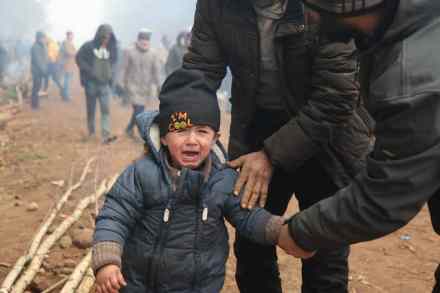
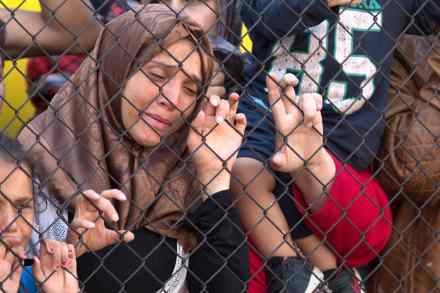
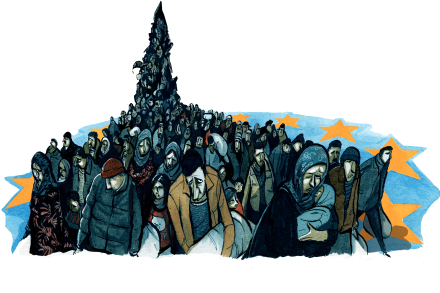
'They wanted me to fight, and I knew I had to leave, or die.' My translator, a former English teacher from Syria, was explaining how, after the army knocked on his door one day, he had fled the country and moved more than 2,000 miles to Liverpool. This was 2018, the bloody civil war was raging. Everyone we met in the north west – an old couple, a young family, single men – had said the same thing. As soon as it was safe, they just wanted to go home. Now, three years on, thousands of their countrymen are in a far more precarious situation, sleeping rough in tents and makeshift shelters on the Belarusian border, as temperatures plummet to below freezing at night.

Putin’s plan for Ukraine

Vladimir Putin’s message was as clear — and familiar — as his method. The Kremlin has begun another major build-up of troops along Ukraine’s border. The reason? Retaliation: last month, president Volodimir Zelenskiy flew to Washington to renew his plea that Ukraine be allowed to join Nato.  The massive show of force — the second this year — prompted US Secretary of State Antony Blinken to warn his European allies that Russia showed dangerous signs of invading its smaller southern neighbour.

France is using migrants just like Belarus

It was hard not to laugh, coldly, at the statement from western members of the UN Security Council that condemned Belarus for engineering the migrant crisis on its border with Poland. Following Thursday’s emergency UN Security Council meeting, western members published a joint statement, accusing Belarus of putting migrants’ lives in danger ‘for political purposes’. That's true, of course, but to hear such words from France. Quelle hypocrisie! There are far fewer migrants camping out in cardboard cities in Paris this year. Why? Because these camps have been broken up and the migrants – overwhelmingly young men from Africa and the Middle East – have headed north to Calais.

Lukashenko and Putin are exploiting Europe’s migration muddle

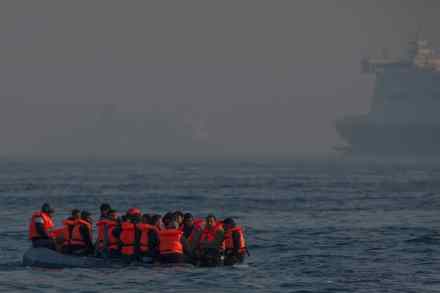
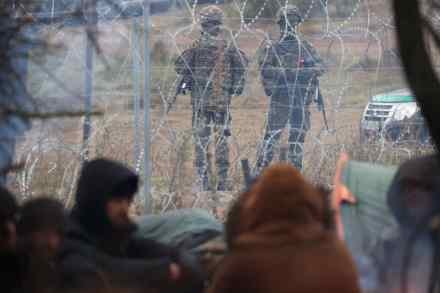
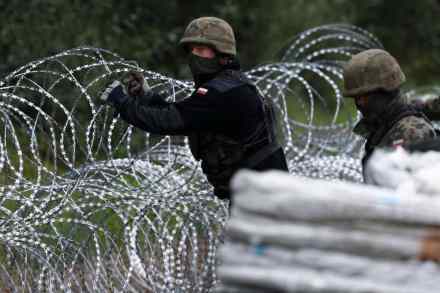
At the border of Belarus and Poland, camps of migrants wait for a chance to cross the border into the EU. Groups attempt to break down the razor wire fences standing in their way, Some 15,000 Polish soldiers stand ready to stop them. Belarusian soldiers urge them on and offer assistance. The Belarusian state shuttles more migrants towards the border by the day, hands out wire-cutters, and prevents them from turning back. Some 30,000 migrants have attempted to cross into Poland since August. That number is swelling by the day, with Belarus now running dozens of flights every week ferrying further desperate people to Europe’s eastern border.

lukashenko

The dictator behind Europe’s next migrant crisis

From our US edition

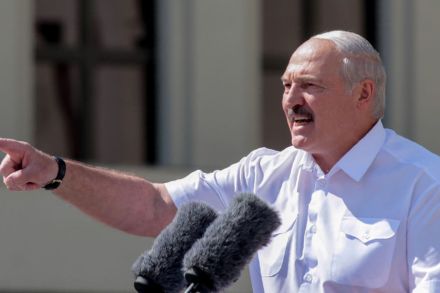
Belarus, the former Soviet satellite state, isn’t exactly a global heavyweight. Alexander Lukashenko, the country’s authoritarian president, is an international pariah who is better at concocting conspiracy theories than he is at running a country. At $60 billion, the Belarusian economy is about the size of Rhode Island’s. Other than petroleum, cheese and dump trucks, Belarus doesn’t offer much in the way of exports. A once promising information technology sector is now gutted, as Lukashenko’s crackdown on dissent forces highly educated talent to flee the country for the Baltics. Lukashenko, however, is smarter than he looks.

How Turkey is fuelling the Belarus-Poland migrant crisis

In the cold, damp forest lining the border between Poland and Belarus, thousands of refugees flown over from the Middle East have waiting to cross into the EU for days. Belarusian riot police are shoving them away from their gates and towards Poland, where only more forces await. The Belarusian dictator Alexander Lukashenko has recently been in conflict with the EU, which has imposed sanctions on his regime after last year’s contested elections which many believe to have been rigged. Lukashenko is pushing refugees towards Poland to be pawns in a fight, with the backing of Putin. The refugees find themselves between a rock and a hard place: in front of them, a Polish government who looks good appearing tough against migration and Lukashenko.

Poland’s Belarusian border conflict is becoming violent

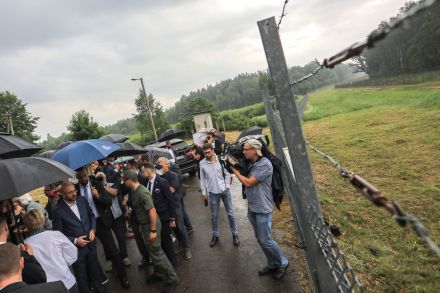
The EU’s conflict with Belarus is heating up. The simmering migrant crisis on the Polish border with Belarus exploded into a new level of intensity on Monday, as large groups of migrants marched through Belarus towards Poland before attempting to storm barbed wire fences and force their way into the Schengen zone. https://www.youtube.com/watch?v=Azz6sbIM5lA The Polish government responded to the violation of its border with military force. Twelve thousand troops are now being deployed along the border. When migrants managed to break a section of the fence near Kuznica on Monday, a rank of Polish soldiers filled the gap as a military helicopter flew low overhead in an attempt to deter the febrile group, which was chanting ‘Germany!

How will Europe respond to a wave of Afghan refugees?

On Tuesday, Franek Sterczewski made a break for the border. Wearing a long trench coat and carrying a blue plastic bag, he managed to outrun one armed soldier before being stopped by a line of officers. Sterczewski, however, wasn't fleeing his native Poland — he was trying to help those who desperately want to get in. https://twitter.com/jakwojtanowski/status/1430213700464545792?ref_src=twsrc%5Etfw August 24, 2021 Brussels has accused the Belarusian government of actively shipping in would-be refugees The rebellious 33-year old MP had planned to hand out medicine and water to the line of asylum seekers camped out on the eastern frontier with Belarus.

Fortress Europe is dreading the Afghan migrant crisis

Fortress Europe is pulling up the drawbridge. The takeover of Afghanistan by the Taliban is likely to being about a new wave of refugees heading west, and so walls and fences are being hastily built around the borders of the Schengen Area. As scars inflicted by the last migrant crisis re-open, the possibility of a new influx of refugees is causing deep apprehension throughout the EU. At Usnarz Gorny, on Poland’s border with Belarus, the migrant crisis is already beginning. Twenty four Afghan migrants currently sit stranded in no man’s land between Polish and Belarusian border guards. Left without food or clean drinking water for weeks on end, their situation has become a no-win moral dilemma for the Polish government.

Belarusians in exile aren’t safe from the iron grip of Lukashenko

This week has laid bare the terrifying situation faced by Belarusians in their home country and abroad. From Tokyo’s Olympic village to the streets of Kiev and the courts of Minsk, the iron grip of president Alexander Lukashenko only seems to be tightening. With athletes joining political opponents and exiled activists in being targeted by the regime, many are now asking the question: where can Belarusians be safe? Certainly not at home. On Wednesday, a behind-closed-doors trial began in Minsk for two opposition figures involved in organising the huge protests which swept Belarus last year following elections widely held to have been fraudulent. Maria Kolesnikova and Maxim Znak have been charged with incitement to undermine national security.

How Britain can really help Belarus’s embattled opposition

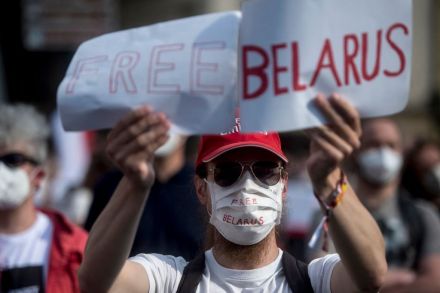
Belarus's opposition movement is gathering momentum. This week – just days after meeting president Biden – the country's opposition leader Sviatlana Tsikhanouskaya was in London to visit Boris Johnson and Dominic Raab. But what does this mean for ordinary Belarusians living under the rule of Alyaksandr Lukashenka, the brutal dictator still in charge of the country? Do they finally have cause to be optimistic about the future? As recently as April, Belarus’ democratic movement appeared to be running out of funding and impetus, with no clear strategy for ousting Lukashenka. Bolstered by a fearsome state security apparatus and Russian support, Lukashenka has unleashed a brutal crackdown on anyone who dares to challenge his 27-year reign.

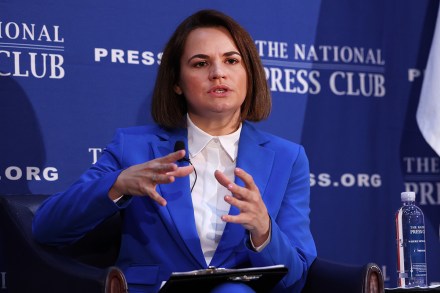
A DC evening with Svetlana Tikhanovskaya

From our US edition

A few years ago, in my capacity as editor of the National Interest, I sent out a sonorous query to a variety of contributors asking them to comment for a forum on the direction of American foreign policy now that the Cold War was over. I promptly received a tart reply from Ferdinand Mount: 'Almost every word of the National Interest’s question could itself be questioned: has the Cold War ever definitively ended? Vladimir Putin doesn’t seem to think so.’ How right he was! His words came back to me last night with particular force when I attended an event on behalf of Belarusian democratic opposition leader Svetlana Tikhanovskaya last night, co-sponsored by the Lithuanian embassy and the Atlantic Council.

svetlana

The EU’s growing migrant war with Belarus

The EU is building a wall — and they’re going to make Belarus pay for it. This week, the tiny Baltic nation of Lithuania began erecting a barbed-wire border fence on its frontier with its neighbour, Europe’s most notorious autocracy. Meanwhile, Brussels is ramping up economic sanctions against Belarus. Lithuania’s parliament has declared a state of emergency, citing a sharp rise in migrants attempting to illegally cross the border. More than 800 made the journey in the first week of July alone, coming from countries like Iraq, Iran, Syria and the Congo. In response, hundreds of troops have been deployed and construction of a 340-mile barrier is underway.

Lukashenko’s migrant warfare against the EU

When you have already forced a plane down with spurious claims of a bomb threat, just to arrest one dissident journalist, where do you go from there? For the Belarusian dictator Alexander Lukashenko, a man looking to punish the European Union after it imposed sanctions on Belarus, it seems that exploiting would-be migrants and asylum seekers is the way forward. Last week, the dictator threatened to send masses of migrants to the EU, in retaliation for the bloc’s sanctions against Belarus. ‘We will not stop anyone’, Lukashenko said, saying migrants would be on their way to a ‘warm and comfortable Europe’ soon.

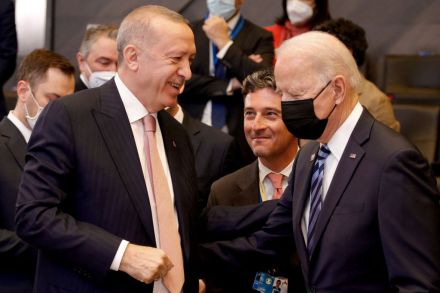
Biden shouldn’t bow to tyrants like Erdogan

From our US edition

Back in 2015, when Turkey downed a Russian jet on the Syrian border, relations with Moscow nosedived. Russia imposed sanctions on Turkey, and its government-controlled media laid bare financial and military links between radical groups in Syria and high-level Turkish government officials. Russian pressure on Turkey was so crippling that Erdogan had to write a letter to Russian president Vladimir Putin to apologize. Putin knows how to handle bullies — because he is one. Not only did Russia's pressure force Turkey to toe line, but it also turned Turkey into one of Russia's biggest allies. Ankara even purchased S-400 Russian anti-air defense systems at the expense of alienating its Nato allies.

erdogan