Banking

A reminder of two of the political battles ahead for the coalition

If anyone had any doubts about how difficult the politics of banking reform and planning would be for the Conservatives, they’ll be dispelled by a glance at a couple of tomorrow’s front pages.  ‘Osborne to let banks off the hook—for now’ screams The Independent. This a reference to the Chancellor’s plans to consult with the banks on the conclusions of the Vickers report—which the government has seen but is officially published tomorrow morning. The political problem for Osborne is that anything other than the immediate implementation of Vickers’ recommendations will be seen as a favour to the banks. But pushing the reforms through now could undermine an already weak economy.

How will Westminster respond to Vickers?

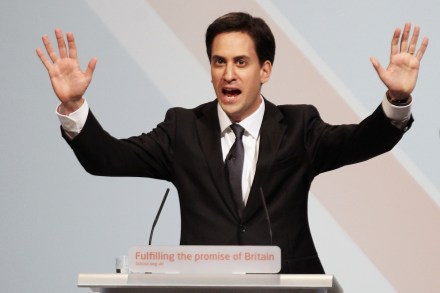
The Vickers’ report into banks will land on the Prime Minister’s desk tomorrow. It goes to the banks very early on Monday morning before being published later that day. The thing to watch for is how politicians react to it. We know that the report will propose some kind of ring fence. But what we do not know is how strict the ring fence will be and how quickly Vickers will want it implemented. As Robert Peston says the impact of the ring fence on the banks’ creditworthiness will be felt long before the actual ring fence comes into effect. Intriguingly, Ed Miliband is giving a speech to the TUC that day. This gives him a platform to call for the immediate implementation of the whole report.

Darling lifts lid on Brown’s chaotic government

Tieless, Alistair Darling appeared on Marr this morning to discuss his memoir. As with so many of these New Labour autobiographies, there was the strong whiff of a therapy session. At one point, Darling said "if Gordon is listening to this" before remarking that he still felt a huge amount of "residual loyalty" to him. It is not news that the Brown government was dysfunctional. But it was striking that Darling did not dissent when Marr suggested that under Brown, Labour had – collectively – not been fit to govern.

More banking worries

George Osborne wrote a strident article for the Observer last weekend, in which he called rich tax evaders “leeches”. As James Forsyth reveals in the cover story of this week’s magazine, Osborne is not alone among Tories in hounding the ‘undeserving rich’ at present. James goes on to argue that the Tories are ‘becoming particularly worried’ about the callous rich because the Vickers commission is poised to bring the emotive issue of banks back to the ‘political frontline’. The Vickers report has already irritated the coalition’s sore points, with disagreement allegedly rife between George Osborne and Vince Cable. Today’s FT offers a fresh angle.

The undeserving rich

Ever since the Elizabethan poor laws — if not before — society has tended to divide the poor into the deserving and the undeserving. But, as I write in this week's magazine, our politicians are now taking aim at a new category, the undeserving rich. Who you consider to be the undeserving rich depends on your ideological leanings. Russian oligarchs or the families of Middle Eastern despots are, perhaps, the most obvious examples. They have acquired huge wealth but often by illegitimate means. Then come those who evade, to use a favourite phrase of both David Cameron and Ed Miliband, "their responsibilities".

Vince being Vince

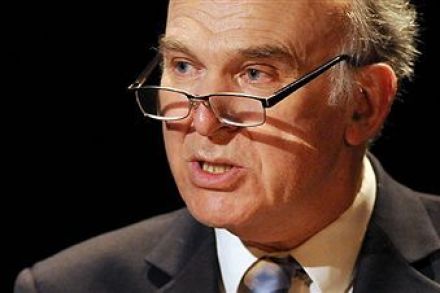
A sweeping and utterly typical performance from Vince Cable in his interview with the Times (£) today. Not only does he plunge his teeth into the exposed flesh of the bankers (criticising them for their "special pleading" over banking reforms), but he also offers another overarching diagnosis of the British economy (there won't be a repeat of 2008's financial crisis, he says, in case you were wondering, but slow growth could be a problem). I feel like a spoilsport for pointing out that, only four months ago, the Business Secretary was actually warning that "you can see" another financial crash happening. But aside from Cable's fiery rhetoric, it's worth noting that his demands are now more restrained than they have been.

Coalition prepares for bank bust-up

There’s a big coalition split coming down the road. Next month the Vickers’ review into banking reform, which is going to suggest a ring-fencing of the investment and retail arms of banks, will come out. The Liberal Democrats — led by Vince Cable — will push for the instant implementation of the report’s recommendations. The Treasury will argue that banks need to be given time to introduce these new rules. The result will be, as one senior Lib Dem source tells this morning’s FT, ‘a big fight’.   The tricky question for Cameron and Osborne is how do they win this argument when there’s a visceral desire for tough measures against the banks?

Fasten your seatbelts…

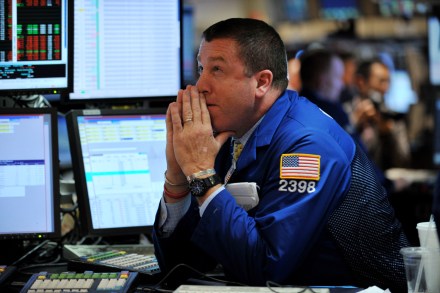
It has, to paraphrase Margo Channing, already been a bumpy night — and it's only going to get bumpier today. The latest news is how the Asian markets have trembled at what's happening in the West. Japan's main stock index is down 3.7 per cent. Australia's is down 4.2 per cent. Hong Kong's 5.3 per cent. And even oil futures joined in with the collective nosedive, which is continuing as the European exchanges open this morning. All of which adds to the catalogue of horror that was written yesterday. CoffeeHousers will read plenty of grim comparisons in the papers today, not least that yesterday's plunge in the Dow Jones was the worst since 2008.

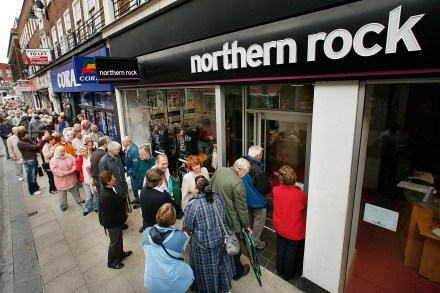
Osborne to sell off the Rock

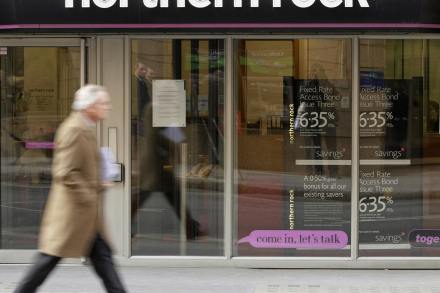
George Osborne will use his Mansion House speech tonight to, in the words of one source, "fire the starting gun" on the sale of Northern Rock.   Robert Peston, who had the story first, reports that "The chancellor hopes that the sale of Northern Rock will send a powerful signal that the banking industry is on a path back to more normal conditions, following the crisis of three years ago."   In an attempt to maximise return for the taxpayer, the whole of the "good bank" part of Northern Rock will be sold off to a single bidder. This means that the whole issue of discounted bank shares, which splits Osborne and Cable, with the Chancellor in favour, doesn’t arise.

Why the Vickers Review won’t harm the City’s global competitiveness

The headline measure in the Vickers Review—the need for a ring fence between retail and investment banking—should not harm the City’s global competitiveness as it only applies to banks with a UK retail operation. For everyone else, Vickers would leave London as a relatively good place to do business: far more certain than Hong Kong and less restrictive than New York once the new Dodd-Frank regulations are in place. In Conservatives circles tonight, there is a quiet confidence that the government will be able to accept the Vickers Review in full when it reports in the autumn.

Clearing up after the storm

The recession has made Britain's banks less competitive and they should be broken up, concludes the Treasury Select Committee. As the banking system spiralled towards oblivion in 2008, the market became more concentrated. ‘The financial crisis has resulted in significant consolidation of the UK retail market. Well known firms such as HBOS, Alliance & Leicester and Bradford and Bingley have either exited the market or merged with rival firms. A large number of building societies have merged, undermining the diversity of provision in the sector. Whilst these ‘rescues’ were necessary in order to preserve financial stability, the consequence has been to reduce competition and choice in the market.

On the whole, a qualified positive

To be sure, there was some good stuff in the budget, and I probably feel more positive about it than I expected to. The additional 1 percent cut in corporation tax, above and beyond what had already been announced, was perhaps the high point, although it will be the 1p cut in fuel duty (replacing a planned 5p rise) that draws the most favourable headlines. The rise in the personal allowance, meanwhile, is something the Adam Smith Institute has advocated for a (very) long time. Still, there were, as always, downsides. The goal to make UK corporation tax the most competitive in the G7 is a laudable one, and the Chancellor should be saluted for it. But as welcome as the corporation tax cuts are, they are only one part of the picture.

Going for growth

The government says it has a growth strategy. Speaking to the Confederation of British Industry's annual conference last October, the prime minister said his government would adopt a "forensic, relentless focus on growth" in the coming years. The strategy has three elements: creating a framework for enterprise and business investment; directing resources into areas where Britain has a competitive advantage – such as wind technology; and making it easier for new companies and innovations to flourish. But for all this and the denunciation of Gordon Brown's legacy, the coalition still seems to be reading from a core part of Labour's pre-crisis script: businesses are spoken of primarily as agents for social work.

Bad banking

No wonder the banks like Britain's corporation tax regime. This morning’s newspapers all tell that Barclays paid just £113m in corporation tax in 2009, despite making profits of more than £11bn. In a rare instance of justified anger, Labour’s chosen men have launched an attack on the government’s failure to ‘take the robust action needed to make sure that the banks which caused the crash pay their fair share, and will stick in the stomachs of small businesses struggling to borrow and ordinary people feeling the pinch of the government's austerity measures.’ Whatever the absurdities of Labour’s position, this news will ‘stick in the stomachs’ of the little people, whose wealth is withering before their eyes.

The coming coalition compromise on the banks

One of the questions that most fascinates Westminster is what would make Vince Cable walk out of the coalition Cabinet. Cable might be a diminished figure and have lost standing on the Lib Dem left by pushing through the tuition fees hike, but his departure would still shift the tectonic plates of politics. As James Kirkup blogs today, banking reform, or the lack thereof, is the most likely cause of Cable going nuclear. Cable is a firm believer that retail and investment banking need to be separated, a view that he pretty much reiterated on Marr this morning. Osborne and the Treasury are far more cautious on this front. Everyone in government is waiting to see what the Vickers Review recommends.

Rooting out the cause of the crisis

David Frum is doing a great series on the Financial Crisis Inquiry Commission report. The report is, obviously, US-centric but its argument that the problem was not with the regulation but the regulators strikes me as highly important: “[W]e do not accept the view that regulators lacked the power to protect the financial system. They had ample power in many arenas and they chose not to use it. To give just three examples: the Securities and Exchange Commission could have required more capital and halted risky practices at the big investment banks. It did not. The Federal Reserve Bank of New York and other regulators could have clamped down on Citigroup’s excesses in the run-up to the crisis. They did not.

The crash from an Austrian perspective

It’s not all politics at Westminster. There’s a pretty good think-tank scene too, with lectures on topics that you’re unlikely to read about in the newspapers. One took place today: the Adam Smith Institute hosted a lecture by Steven G. Horwitz, from St. Lawrence University, entitled “An Austrian perspective on the great recession of 2008-09”. As many CoffeeHousers will know, "Austrian" refers to von Mises, Hayek and the others whose analysis of bubbles and crises certainly seems to fit current events. My colleague Jonathan Jones was there, and took some notes – which I have moulded into a six-point briefing.  It’s not often we do a post based on a think-tank talk – we may do more, if CoffeeHousers find them useful.

The Guardian’s Wiki-spin

In today's Wikileaks revelations, it is Mervyn King's turn to be pushed through the mill. Did he act politically when pushing for a deficit reduction plan? Was he critical of David Cameron and George Osborne or just pointing out the obvious: that the Tory leaders had not held power before and - shock horror - were keen to get elected? The Guardian's reading of the cables suggests that the government's Batman and Robin (to keep with US diplomatic style) were unprepared for the task ahead. But re-read the key passages and it is clear that Cameron and Osborne were no different from any other opposition leaders - reliant on a small staff, and unprepared for the special pleading they would face as they entered government and tried to cut the deficit.

Iberian blues

I’m finishing a two-day trip to Spain and am about to board a plane, just as the bond markets turn their attention to the Iberian Peninsula. As James wrote yesterday, the gap between Spanish 10-year government bonds and those of Germany has widened to as much as 2.59 percentage points - the biggest gap since the introduction of the euro. For its part, the Portuguese government said it was under no pressure from the European Central Bank or other Eurozone member-states to accept financial aid to ease its debt and deficit problems. That sounds like the noise before the defeat. Portugal was brought to a halt yesterday by a strike in protest at the government’s spending cuts and tax rises, which aims to reduce the budget deficit from 9.

Why Spain matters to Britain

So far Ireland and Greece have been bailed out with relative ease. If Portugal required external assistance, Europe could run to that too. But bailing out Spain would be another matter entirely. As The New York Times points out today, the Spanish economy is twice as big as the Irish, Greek and Portuguese ones combined. Spain’s situation is not yet critical. But as the NYT piece sets out very clearly, there are some extremely worrying signs. The gap between Spanish and German gilt yields is now at the biggest point it has been since the introduction of the euro. Spanish banks are also heavily exposed to Portuguese debt.