Banking

Apocalypse now? Markets seem set on a self-fulfilling prophecy

All this talk of a new financial apocalypse, so soon after the last one, is starting to annoy me. Partly because investors as a crowd are so irrational; -partly because so much that governments and central banks have done to contribute to the current market mayhem seems to work against the sensible efforts of ordinary folk to build a bottom-up recovery. Markets first. We’ve had hissy fits about China, even though connections between the Chinese and UK economies are so marginal. We’ve had near-hysteria about the prospect of (and in the US, the start of) rising interest rates.

How is it where you live? A tale of two nations and a message for George

Upbeat or downbeat? I asked last month whether the mood where you live is energised by enterprise or demoralised by public-sector retreat — or both. Replies poured in while the news mostly got worse. Governor Carney warned that ‘the UK cannot help but be affected by an unforgiving global environment and sustained financial market turbulence’ as shares took another dive. BP and Shell announced profit falls and job cuts. The Brexit debate took off, but the migrant benefits row overwhelmed any sensible discussion of economic pros and cons, on which voters must so far be utterly confused. Then again, it wasn’t all bad: like-for-like retail sales surged by 2.

The banks have serious problems, but a European-wide crisis? Let’s be serious

A new European banking crisis. Seriously? Starting at Deutsche Bank? That’s the way markets were pointing on Tuesday as Deutsche’s shares plunged, inter-bank liquidity shrivelled, would-be investors in bank bonds hid in the toilets and speculative short-sellers did the work of the devil. And we all know there’s no smoke without fire, right? Let’s pause for thought here. The clue to whether Deutsche is ‘rock-solid’ (as its British chief executive John Cryan asserts) or tottering is in its name. Can anyone seriously imagine the German state and corporate establishment allowing the bank that bears their country’s name to go down? Of course they won’t.

I told you so: the UK electricity gap looms wider than ever

Amid all the turmoil in global energy markets, we should not lose sight of the UK power programme that we’re praying will keep our lights on a decade hence: it is, as you know, a hobbyhorse of mine. So how’s it going down at Hinkley Point in Somerset? My man with big binoculars in the Bridgwater Bay nature reserve tells me he’s seeing plenty of lorry movements on the nuclear site, but signals from EDF of France — which has a two-thirds interest in this £18 billion project, alongside Chinese investors — are very worrying. Having already spent £2 billion, the French state utility has deferred until at least the middle of this month a final commitment that was expected last week.

Another banking review is pointless: just carry on naming, shaming and jailing

Was the Financial Conduct Authority leaned on by the Chancellor to scrap its ‘review of banking culture’? Or did it decide pragmatically that its resources would be better devoted to pursuing individual cases of cheating and criminality? I suspect the answer is a bit of both. Acting FCA chief Tracey McDermott — a no-nonsense northerner and former litigation lawyer — is reputed to be just as tough as her predecessor Martin Wheatley, who was ousted by Osborne last year, apparently for being too much the turbulent priest. Tracey became a regulator because she was interested in seeing ‘if human behaviour could be improved’ — in particular, the behaviour of people who are not dishonest by nature but are swept along by the tide.

The human element: highs, lows and loose ends of 2015

Last year was a bumper year for mergers and acquisitions. Recovering prospects and relatively low price-earnings ratios made the takeover arena alluring: the global volume of deals looks certain to have passed the $4.3 trillion record of 2007. Among the new giants are Shell-BG, Heinz-Kraft, Pfizer-Allergan and monster brewer AB InBev-SAB Miller; bonuses reaped by London M&A bankers will fund basement diggings bigger than Crossrail. So you might expect me to name my deal of the year: but no.

After the Black Friday flop, shops can get back to what they do best

The high street flopperoo that was ‘Black Friday’ may have something to do with terrorism fears, or even the downturn of the Chinese economy: in last year’s ugly scenes of bargain-hunters wrestling over televisions, Chinese tiger--shoppers seemed to win most of the spoils. But this year you could have held a picnic in the entrance of an Oxford Street store without fear of being trampled; trade had migrated massively online, where total UK sales are estimated to have passed £1 billion in a day for the first time and to have peaked (how sad is this?) between midnight and one in the morning. Amazon alone processed 7.4 million purchases in 24 hours.

We must play the blame game over HBOS. How else will bankers learn?

‘Everyone remembers the names of Applegarth of Northern Rock and Goodwin of RBS, but history may judge the HBOS men to have been the worst of the lot,’ I wrote four years ago. Judgment has arrived at last in a Bank of England report on the 2008 HBOS collapse — plus a second report, by Andrew Green QC, on the adequacy of investigations by the now-defunct Financial Services Authority. The Bank does not go as far as I did with ‘worst of the lot’.

Letters | 19 November 2015

The NHS and politicians Sir: The NHS is indeed in need of fundamental reform, but Max Pemberton’s excellent article (‘The wrong cuts’, 14 November) exemplifies why politicians are least well qualified to conduct it. The public loves the NHS and has every reason to distrust political meddling. NHS England should become a public corporation with a five-year charter similar to that applying to the BBC. Of course politicians must decide the total budget and agree the strategic goals, but that is a far cry from deciding the pay and hours of every category of staff. Politicians have no managerial skills and should leave that to the professionals.

If the world economy crashes again, blame the central bankers

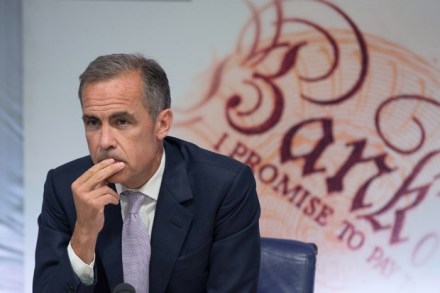
Like the Christmas pudding sampled by Hercule Poirot at Kings Lacey — but six weeks early — our Spectator Money supplement contains a little treasure in every portion, and perhaps even a priceless gem. I particularly commend the essays by Warwick Lightfoot and Subitha Subramaniam on interest rates, and why central banks have become so hesitant to raise them. In recent days we’ve had an indication from Mark Carney of the Bank of England that UK rates will stay at their current low well into next year, maybe until 2017; in the US, strong job numbers have pumped expectations that the first rate rise for nine years will be delivered by Fed chairman Janet Yellen in December.

I may have to revise my view that crypto-currencies are Satan’s work

I confess to being an out-and-out Luddite when it comes to bitcoin and other so-called crypto-currencies. To the extent that I think about them at all, I think that they are an ephemeral by-product of those creepy ‘virtual worlds’ in which obsessed gamers eventually go mad; that only such lost souls could seriously believe unregulated online money might eventually supplant the state-backed real thing; and that fashionable belief in them can only lead to fraud and loss. In short, I concluded some time ago, they are probably the work of Satan.

TalkTalk shows us the internet is only three clicks from anarchy

I’m not a customer of TalkTalk, the phone company which revealed last week that a hacker had potentially compromised the personal data of four million users. But I feel I’m on the front line of the cyberwar nevertheless. In August, someone unknown to me tried to spend £1,200 at House of Fraser on my credit card account. The bank, to its credit, sniffed a fraud, rejected the transaction, cancelled the card and invited me to speak to a nice young man in India who talked me through the corrective procedure, including deleting a false email address inserted by the fraudster and setting up a new password to add extra security for future contacts.

For better, for worse | 17 September 2015

Before I read this book, I wasn’t aware that I was a creationist. But Matt Ridley tells me I am, in his broad sense of someone who foolishly believes that any good can come of ‘human intentionality, design and planning’. With no little intellectual chutzpah, he offers to treat us to a ‘general theory of evolution’ of everything, surpassing Charles Darwin’s ‘special’ one that applied only to living organisms. According to the author, ‘top-down’ is always bad, ‘bottom-up’ is always good. By what evolutionary method he avoided consciously designing this book itself remains a mystery to the end. The book’s many short chapters are determined to find evolutionary virtues in different arenas.

Cheer up: we’re robust enough to withstand a shock from China

Home from the hot Aegean, huddled by the fire as rain ruins the bank holiday weekend, I’m thinking: what gloom has descended since I’ve been away — and doesn’t it call for a round-up of cheerful news? So here goes. The UK economy grew by 0.7 per cent in the second quarter and a respectable 2.6 per cent over the past year. US growth has been revised sharply higher to 3.7 per cent, scotching our claim to be the fastest growing western economy, but George Osborne can still say convincingly that ‘we’re motoring ahead’ — and weak first-quarter performance can be seen as a blip rather than the revelation of doom it was declared to be by Ed (‘Where is he now?’) Balls. Tax receipts are rising at an annual rate of 4.

The Libor trader’s long stretch is a big message to the banking world

Fourteen years is a long stretch. The punishment imposed on former UBS and Citigroup trader Tom Hayes for his role as ‘the hub of the conspiracy’ to rig yen Libor rates is the same as the maximum sentence for burglary with intent to commit GBH. Even though no public attempt has been made to quantify his fraudulent profits or identify victims, Hayes’s punishment is twice that imposed on rogue trader Kweko Adeboli, who lost UBS $2.3 billion — both having pleaded ‘not guilty’. With remission, Hayes will serve about half the term: Adeboli, jailed in late 2012, came out this June. But even so, the socially awkward Hayes has forfeited a chunk of his life for the spurious gratification of peer-group esteem and bonuses he did not seem to enjoy spending.

Angry, funny, timely

It’s not Paul Murray’s settings or themes — decadent aristocrats, clerical sex abuse, the financial crisis — that mark him out as original, it’s his handling: the wild plotting, the witty dialogue and the eccentricity of his characters. The follow-up to his widely admired second novel Skippy Dies swaps the adolescent funk of a Catholic boys’ boarding school for the testosterone whiff of a fictional investment bank in Dublin. The Bank of Torabundo rode out the demise of the Celtic Tiger thanks to its cautious and effective CEO, but he has now been replaced by a flamboyant financial genius whose last bank collapsed in tatters.

Farewell to the City’s stroppy regulator: a modest sop for the new bank tax

A City insider at last month’s Mansion House dinner told me the Financial Conduct Authority had become ‘a bit of an embarrassment’ — or rather, that was my bowdlerisation of what he actually whispered. So it comes as no surprise that FCA chief executive Martin Wheatley has resigned, having been told by the Chancellor that his contract would not be renewed. A former London Stock Exchange director and Hong Kong securities regulator, Wheatley has a knack of making enemies: Hong Kong investors, unhappy with his handling of alleged misselling of Lehman Brothers ‘minibonds’, once burned a funeral effigy of him outside his office.

Barometer | 2 July 2015

Bank job Should we buy shares in companies which print banknotes in expectation of one getting to print millions of drachma notes? — In May, according to the ECB, there were a total of 17.6bn euro notes in circulation. Given that Greece accounts for approximately 2.5% of the GDP of the eurozone, 441m of these were Greek, and might need replacing with drachma notes in the event the country leaves the euro. — However, there is already a good business in printing replacement euro notes. In May, 2.76bn notes were taken out of circulation and 2.88bn new ones were put into circulation.

The wrong man

For the final three years of his 18-year career at Goldman Sachs, Jim O’Neill, the Treasury’s new commercial secretary with responsibility for developing the Northern Powerhouse, served as chairman of Goldman Sachs Asset Management, the company’s least-regarded and most bothersome unit. While two younger executives ran the business, O’Neill was dispatched to faraway conferences to bore audiences of docile suits with his views on whether Nigeria or Malaysia offered a better investment opportunity. When finally in early 2013 he resigned his sinecure, he was not replaced and his title was mothballed. Since then, he has been all but marching up and down Whitehall wearing a sandwich board pleading for a government job.

Late news: what was really served at the Mansion House banquet

Last week’s deadline did not allow me to report from ringside at the Mansion House dinner, but there was so much to observe that I hope you’ll forgive a late dispatch. What a vivid guide to City psychology and precedence it offered. In the anteroom, Lord (Jim) O’Neill, the Treasury’s new Northern Powerhouse minister, could be seen chatting to ex-BP chief Tony Hayward, now chairman of mining giant Glencore Xstrata. At the top table, HSBC chairman Douglas Flint was carefully separated (by António Horta-Osório of Lloyds) from Governor Carney, so they could avoid discussing HSBC’s plans to move back to Hong Kong.