Austria

Will an Austrian detox really help me live longer?

From our UK edition

I had never thought much about longevity or even ageing. But once you hit your mid-50s, things shift in irritating ways: love handles become more stubborn, typefaces mysteriously blur, sports injuries take ages to heal and conversations in noisy restaurants start to become puzzles. You haven’t fallen apart but the factory settings no longer apply, and Philip Larkin’s poems increasingly seem more poignant than funny. I apparently am not the only man of a certain age to have had this realisation. Last September, at an autocrats’ conclave in Beijing, Vladimir Putin and Xi Jinping, both 72, wondered aloud if they might be able to extend their lives and therefore prolong their reigns indefinitely.
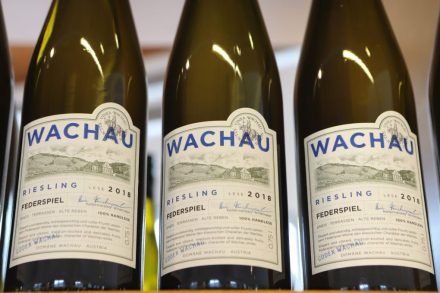
Four Twenty Five’s wine list is better than most

I was recently invited by friends to a small birthday fête at Four Twenty Five, Jean-Georges Vongerichten’s latest New York restaurant at (wouldn’t you know it) 425 Park Avenue. It was, as Bertie Wooster might have put it, oojah-cum-spiff, a worthy companion to the Terrace and Nougatine, those other famed New York refectories by Jean-Georges. I won’t bore you with the victuals, which were so far from boring themselves that it would take more than a column just to enumerate those toothsome morsels. Instead, let me mention a couple of the wines we enjoyed, noting for posterity that the wine list at Four Twenty Five is one of the most extensive and thoughtfully selected in New York City. I hope to have occasion to make a thorough study in the years to come.

WIne

The unfairytale life of two European princesses

From our UK edition

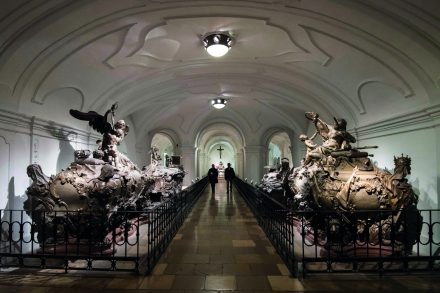
This hefty book is more about context – the turbulent years of mid-19th-century Europe – than it is about its two protagonists. Details of the many popular uprisings of the time, plus the jockeying for position of the main players and the battles and intrigues involved, are so packed into its pages that teasing out the stories of the two empresses is not always easy. The early married life of Empress Elisabeth of Austria, known as Sisi, sounds appalling. Her older sister had been groomed to marry the young Emperor Franz Joseph, but the moment he saw Sisi, then only 15, she was the one he wanted. It was impossible to turn him down. Much of the future of Bavaria (her parents’ kingdom), let alone that of her own family, depended on his goodwill.

The enlightened rule of the Empress Maria Theresa

From our UK edition

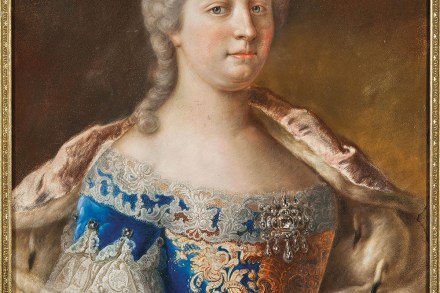
The role of personality and charm in running a state is one theme of Richard Bassett’s superb book, the first English biography of the Empress Maria Theresa since Edward Crankshaw’s in 1969. The different parts of the Habsburg monarchy – Austria, Tyrol, Bohemia, Hungary, Croatia and Milan – had little in common except dynasty, geography and Catholicism. Yet, partly owing to Maria Theresa’s force of character, this complex tapestry of nationalities remained a great power After she came to the throne in 1740, she felt ‘forsaken by the whole world’. Encouraged by France, Austria’s neighbours Prussia, Saxony and Bavaria invaded the monarchy in order to divide it between them.

Good riddance to 2024

From our UK edition

January. When the assisted dying bill comes in, I’ll be first in the queue. Non-stop nosebleeds, Covid-esque symptoms, leg cramps, a cough resistant to antibiotics, and unremunerated press interviews for my Burton/Taylor book. In the old days I’d be in New York, running amok with publicity handmaidens, going on television and racking up bills in the Gramercy Park Hotel. Now everything is done from the back-bedroom here in Hastings, where I dwell in the slum district, my window overlooking immigrants doing their laundry. Paul Bailey went to the trouble of getting his name removed from my acknowledgements. That’s real hatred February. First anniversary of my myocardial infarction, when I collapsed in Morrisons car park.

Austria’s far right is shut out of power, again

From our UK edition

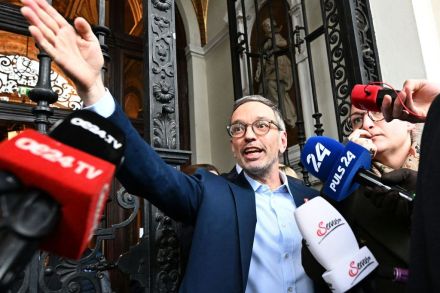
Austria’s mainstream politicians are combining to ensure that the winners of last month’s general elections, the far right Freedom party (FPO) are kept firmly out of power. The Alpine republic’s president, Alexander Van Den Bellen – aligned with the Green party – has invited the current chancellor, Karl Nehammer, whose centre right People’s party (OVP) came second in the elections, to form a coalition explicitly excluding the FPO, which topped the polls with 29 per cent, running on an anti-immigration, pro-Putin platform. Nehammer is now likely to form a ‘grand coalition’ Austria is the latest European ‘domino’ to propel a populist radical right party to the forefront of politics after the rise of the AfD in neighbouring Germany.

Swapping aprés ski for aprés spa 

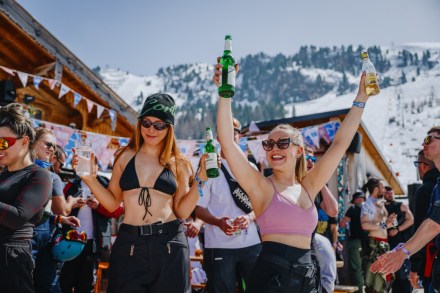
“Welcome to your thirties,” my friend Rich roared, throwing open the balcony door leading onto our hotel room’s private loggia. The sound of gushing water filled the room as I flopped, exhausted, onto the bed. The Ziller River rushed through the valley below, fast. Verdant hills stretched upwards to create a preposterously bucolic scene, practically begging for your best Julie Andrews impression, arms outstretched. I laid there, and took it in through the window. I pretended I didn’t mind that I was missing the party, Snowbombing Festival raging on in Mayrhofen town. The “Snolympics?” Didn’t sound like much fun. Pond skimming on skis, surely soggy and impractical.

Instead of stomping on the bar in our ski boots, we’d zipped home in a taxi to ZillergrundRock Luxury Mountain Resort, with high hopes

Steins and slogan tees at the Helen Oktoberfest

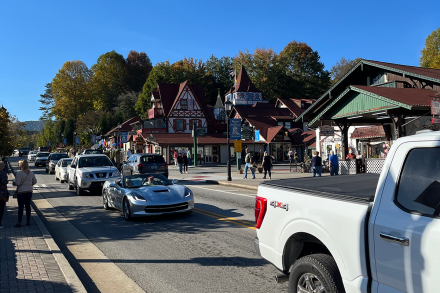
I am a Party City Bavarian: wearing Doc Martens, pulled-up cotton socks, a polyester smock and pair of buttock-hugging lederhosen. Drowning men have more breathing room. My range of motion is limited to a ceremonial waddle. Thankfully, I do not have far to travel — and there is plenty of beer. Allow me to explain: this weekend I took the trip ninety or so miles north of Atlanta to Helen, a small city not far from the North Carolina state line. In the late 1960s, city officials passed a zoning regulation to turn Helen into a replica of a Bavarian alpine town (hey, it was a weird decade). The result is a unique slice of Americana: an Oktoberfest in the foothills of the Blue Ridge Mountains, as Appalachian as it is alpine.

helen oktoberfest georgia

There’s more to Salzburg than The Sound of Music

From our UK edition

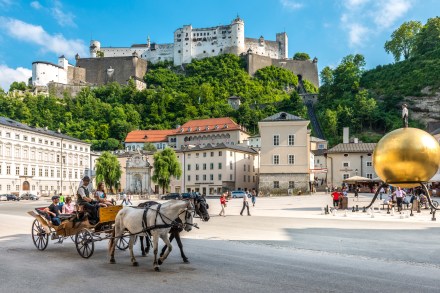
Returning to Salzburg last week, for the first time since Covid, I’d almost forgotten what a beautiful city this is. I’ve been here umpteen times, but each new arrival takes my breath away. An ornate cluster of domes and spires, set against a backdrop of snowcapped peaks, it’s implausibly picturesque, like the setting for a movie – which is apt, because for most Britons it’s still synonymous with that kitsch classic, The Sound of Music. Salzburg does have its schmaltzy side, but it’s also a highly sophisticated place, a city of classical music and antiquities, and it’s this blend of highbrow and lowbrow which makes it so appealing.

Austria is becoming a nightmare for the unvaccinated

From our UK edition

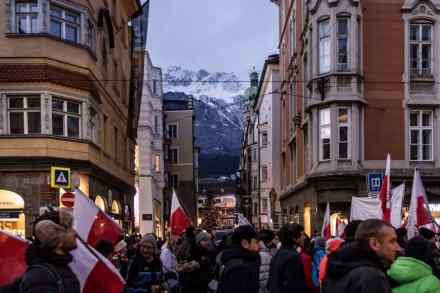
Salzburg, Austria Across Austria, the streets are alive with the sounds of drums and cow bells. Ever since the Austrian government announced a vaccine mandate in November 2021, with vaccine refuseniks set to face fines, potential bankruptcies and possible prison sentences from February this year, demonstrations against the proposed measures have not ceased. You can see why their fears are justified. Just a few days before the vaccine mandate was revealed, the authorities also stepped up their war on the unvaccinated by announcing that a new lockdown would be introduced – but that it would only apply to partially vaccinated and unvaccinated people.

The fifth wave could break Macron

From our UK edition

The fifth Covid wave has started in Europe. Some governments are already imposing lockdowns and wage cuts for the unvaccinated as hospitals are filling up. Mass protests against restrictions are popping up, some peaceful like in Austria, others turning violent like in the Netherlands and Belgium. A nationwide lockdown in Germany is unlikely, but local lockdowns may happen if hospitalisation rates continue to shoot up. Some patients in Bavaria have already been sent to Italian hospitals due to under-capacity, a reversal of what happened in the first wave. France is still counting on getting through the fifth wave with no restrictions. With only five months to go before the presidential elections, these decisions will decide the fate of Emmanuel Macron.

Europe gripped by a fifth wave

From our UK edition

How quickly things change. Just a month ago many EU countries were being praised for keeping some Covid restrictions in place, in many cases operating vaccine passport systems. By contrast, Britain was being attacked for removing most Covid restrictions in July. The UK suffering elevated infection rates ever since, leading to predictions that we could be back in lockdown by Christmas. Now, many EU governments are panicking as infection rates soar — and protesters have taken to the streets to oppose new lockdowns and, in the case of Austria, compulsory vaccinations from next February. What is the situation in the worst-affected countries?

Austria will regret mandatory vaccinations

From our UK edition

So, Austria’s experiment to persuade more people to get vaccinated by placing the unvaccinated in lockdown didn’t last long. A week, to be precise. From Monday, the entire country will be placed under stay at home orders and other restrictions — this, after it seemed that the era of lockdowns was over. But perhaps more significantly is Austria’s announcement this morning that from 1 February next year Covid vaccination will be compulsory, with large fines for those who refuse to be jabbed.

The trouble with Austria’s vaccine passport plan

From our UK edition

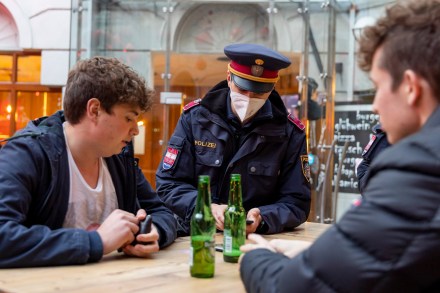
Are vaccine passports being used in other countries in an attempt to cut Covid infections – or to try and boost vaccine take up by curtailing the social lives of those who refuse? The latest change in policy in Austria would appear to confirm that for them, it’s the latter. From today, access to restaurants, bars and any event with more than 25 guests will be limited to people who can prove they have been fully vaccinated, that they have previously recovered from Covid or that they have had one jab and a negative PCR test. In four weeks’ time, only the double-jabbed and those who can show they have recovered from Covid will be allowed in. Austria, like many EU countries, has had a vaccine passport scheme for several months.

Love in a cold climate: Snow Country, by Sebastian Faulks, reviewed

From our UK edition

In the months before the outbreak of the first world war, Anton Heideck arrives in Vienna. Family life offered him the prospect of a job in his father’s meat factory, but he goes to the big city to start a career as a writer. What he finds is Delphine. They fall in love, move into a flat, then a house in the countryside outside Vienna; but when war breaks out the fragility of their happiness is brutally exposed. Snow Country moves from this doomed love to post-war Vienna, and to Lena, the daughter of an alcoholic part-time call girl. Lena eventually goes to Vienna, where she comes close to following her mother’s path, before finding work at a sanatorium near to where she grew up.

Austria’s ‘Islam map’ is dangerous

From our UK edition

Austria's government has unveiled a map detailing the locations of mosques and other Muslim associations all over the country. The publication has been swiftly condemned by Austrian Muslim groups, including the Muslim Youth Organisation which announced a lawsuit in response. But Austria's government is so far refusing to back down.  The ‘Islam map’ is a project of the government-backed Political Islam Documentation Centre and the University of Vienna. The map has been designed ostensibly in response to growing Islamist radicalism in Austria, especially in the aftermath of November’s Vienna shooting. It marks a continuation of chancellor Sebastian Kurz’s self-proclaimed fight against ‘political Islam’.

Radetzky marches on

‘The Radetzky March’ was composed by Johann Strauss the Elder as a tribute to Field Marshal Joseph Radetzky von Radetz. An aristocrat of Czech origin, he was one of the fiercely conservative soldiers who gave the Habsburg Empire its bad name. First performed in 1848, the year of revolt in Europe, the ‘March’ was an immediate success. Austrian bands men were playing it at the battle of Königgraetz in 1866, fought against the Prussian Kaiser. For the first time, the Prussians had machine guns, and their rapid fire bloodied the white uniforms of the Austrians. Prussian victory condemned Austria to be the lesser of the two German-speaking nations, and on the losing side in the two world wars.

habsburg

Germany’s border controls risk an EU rupture

From our UK edition

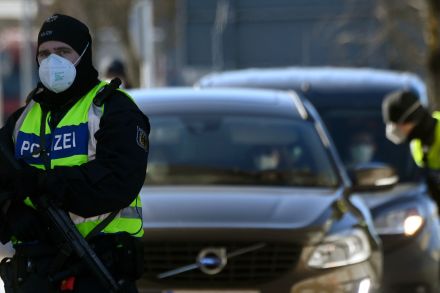
On Sunday, Germany halted most travel for those moving between the country and its neighbouring Czech Republic and Austria. After the South African variant was found in Austria and the British variant was detected in the Czech Republic, Germany designated these regions as ‘virus mutation areas’ and announced the measures on its east and southern borders on Thursday. Initially, the German government wanted to avoid any new border controls after briefly bringing in restrictions last year. However, the fear of aggressive variants and their threat to the end of lockdown in mid-March has exceeded any concerns over the negative fallout from border controls.

Europe’s cities are becoming a refuge for Islamist extremists

From our UK edition

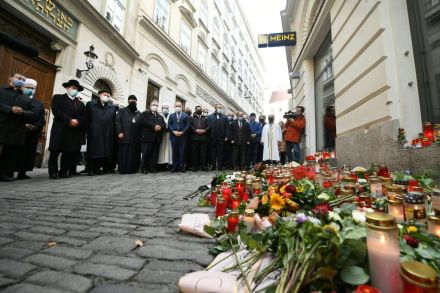
Britain’s terror threat level has been upgraded to ‘severe’ this week, following jihadist attacks in both France and Austria. Raising a terror alert is not enough though to stop more attacks. The government’s security and bureaucratic response to terror is always playing catch-up and constantly on the defensive. And unless we take the time to understand the enemy, we cannot force it into retreat and defeat. We must first of all be honest. Our country and compatriots depend on us getting this right. The threat we currently face is not about racism – which is why Christian Nigerians or Hindu Indians do not become terrorists in the West.

I went to hell and back to meet my new granddaughter

From our UK edition

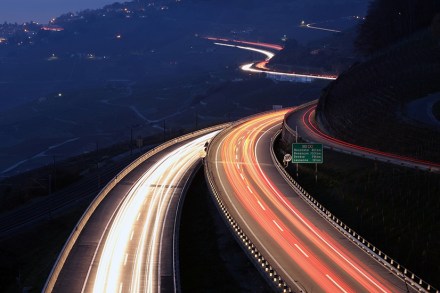
Wolfsegg, Austria I have finally understood what’s wrong with the modern world: motorways. These dehumanising slabs of asphalt covering our continents are Prometheus-like chains that lure us into non-stop movement and uniformity. But before you start screaming that you’ve been isolated for months and would give up a night with Jennifer Lawrence to roar down a highway, let me explain. It all began when Alexandra and I decided to visit my daughter and the new baby in Austria. It was my idea to drive there, the Swiss-German-Austrian borders having opened that very day. When the wife suggested a chauffeur, I said no. When the son assured me that I’d get lost, I threatened financial repercussions that I can no longer enforce.