I had never thought much about longevity or even ageing. But once you hit your mid-50s, things shift in irritating ways: love handles become more stubborn, typefaces mysteriously blur, sports injuries take ages to heal and conversations in noisy restaurants start to become puzzles. You haven’t fallen apart but the factory settings no longer apply, and Philip Larkin’s poems increasingly seem more poignant than funny.

I apparently am not the only man of a certain age to have had this realisation. Last September, at an autocrats’ conclave in Beijing, Vladimir Putin and Xi Jinping, both 72, wondered aloud if they might be able to extend their lives and therefore prolong their reigns indefinitely. Xi mused that ‘today 70 is considered young’ and speculated that ‘in this century people might live to 150’. Putin, who had given the matter some thought, advised his Chinese counterpart that ‘human organs can be constantly transplanted, to the extent that people can get younger, perhaps even immortal’.
That conversation may herald a grisly doom for some young and healthy political prisoners. But the dictators’ hopeful fascination with longevity is shared by Silicon Valley tycoons, narcissistic media celebrities, and increasingly, by many ordinary middle-aged people. Or rather, middle-aged men.
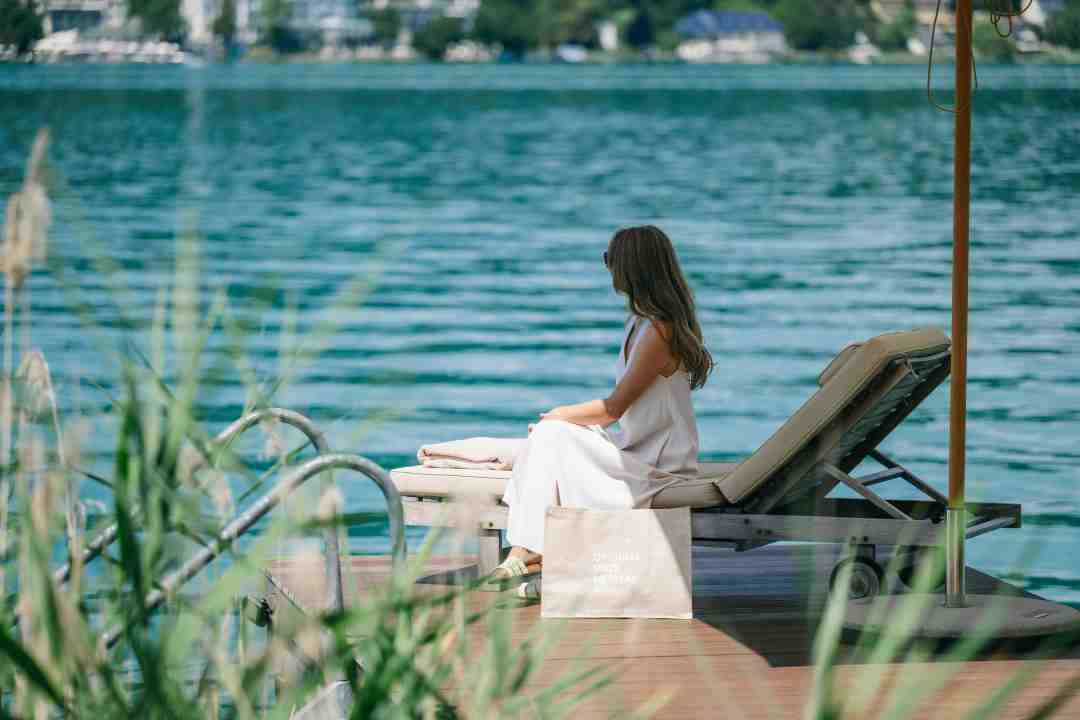
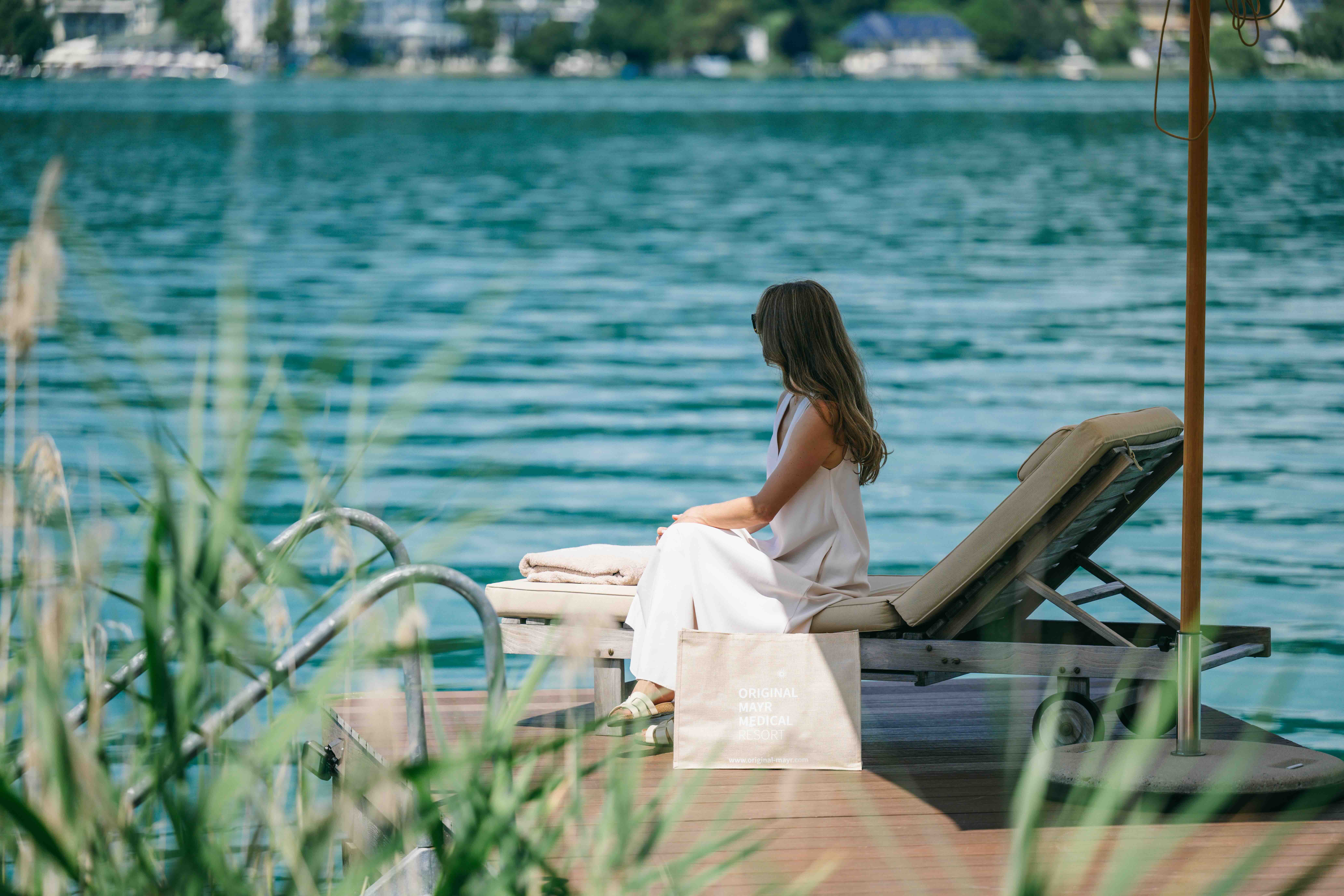
Though I do not hanker for indefinite world domination, I too would like to have a good number of healthy active years ahead of me. I saw that the Original Mayr Medical Resort in southern Austria – a place I visited a decade ago at the same time as The Spectator’s editor – now offers a ‘longevity and healthy ageing’ programme from €5,090 a week. With that in mind, I decided to jumpstart my own health initiative by taking a flight to Ljubljana and a taxi to the chalet-style clinic on the turquoise Wörthersee.
Since its founding 50 years ago, the Original Mayr has been a discreet sanctuary for upper-class Brits and health-conscious European aristos anxious to detox or lose weight. But it has always been more than a health spa or ‘fat farm’. In the Central European tradition, you go to the Mayr to ‘take a cure’ under the supervision of its resident doctors – not for AbFab-style pampering.
The traditional Mayr cure focuses on gut health. You eat very little – about 600 calories per day – and consume nothing but broth after lunch. There’s no sugar, no alcohol, no caffeine, no spices and nothing raw. The idea is that your digestive system gets to rest while you lounge, swim in the lake, take idyllic walks in the woods or have your back straightened by the genius osteopath. You are also given a nightly dose of Epsom salts to, ahem, clear you out (fortunately you are never more than a few steps from a loo).
I don’t know if a week at the Mayr added years to my life or just life to my years
The Mayr’s longevity programme tops its traditional gut reset with various medical tests and high-tech treatments that are supposedly good for cellular health – particularly your mitochondria, the power-plants within your cells.
The diagnostics are the type that either gives you peace of mind or set off alarm bells. My bloodwork showed slightly elevated levels of a liver enzyme, possibly related to excess consumption of tequila, so I was sent for an abdominal ultrasound. It’s an efficient test – it took just 15 minutes for the docs to check my liver, kidneys, pancreas, spleen, intestines, aorta, stomach and prostate. The Austrian health service gives one to everyone when they turn 50.
Many things that go wrong as you age are apparently linked to persistent inflammation, which makes you vulnerable to afflictions ranging from Covid to cancer. Being fat causes inflammation, as does stress. So does eating too much. Which is another reason why appetite-reducing drugs like Ozempic – and the Mayr regime – are anti-inflammatory. There are quite a few Ozempic-users at the Mayr – many of them learning how to come off the drug and then keep weight off naturally.
I tried several of the Mayr’s anti-inflammatory treatments including cryotherapy. The name puts you in mind of sci-fi astronauts whose bodies are frozen so they survive hundred-year journeys to distant planets or those tycoons who have their corpses freeze-dried in the hope of being resurrected centuries hence. Cryotherapy turned out to be an undignified process that involved standing for three minutes in a glass chamber chilled to minus-110C, wearing just your underwear and a fluffy hat and slippers. For someone like Putin, who routinely jumps into frozen lakes after broiling in the sauna, it would probably be a breeze. For regular mortals like me it feels astonishingly cold – almost unbearable unless you dance vigorously. Although ageing generally makes time rush by more quickly, while you’re in the cryochamber the seconds click by very, very, very slowly.
I don’t know if a week at the Mayr added years to my life or just life to my years. But I did leave feeling lighter, clearer-headed, energised. In a world chasing miracle drugs and billion-dollar bio-hacks, that’s no small thing, though I suspect it would not suffice for Putin or Xi.
Find full details of the Original Mayr Medical Resort’s programmes at https://www.original-mayr.com/en/






Comments