Susanne Mundschenk

Susanne Mundschenk

Susanne Mundschenk is co-founder and director of Eurointelligence.

France is in limbo as its politicians continue to battle it out

From our UK edition

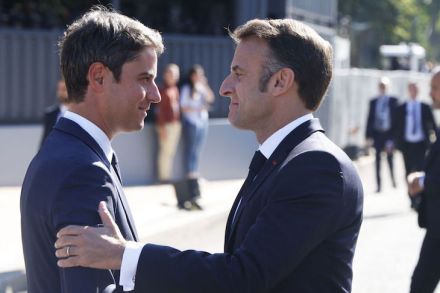
France's Gabriel Attal has resigned as prime minister. President Emmanuel Macron even made a ceremony out of it. And yet, here we are: still with Attal as prime minister in a caretaker role. They say this is likely to continue until September, or perhaps even longer. No government proposal has emerged since the elections. The left-wing alliance cannot agree over whom to nominate as prime minister and when. Forget the feverish haste after the elections. The left is now taking its time. Did they miss the moment, and will it be too late for them?
The end of Macronism

From our UK edition

The second round of French elections this weekend will not mark the end of Macron as president, nor will it be the end of his MPs in the National Assembly. But the radical centrist movement that carried him to power – on a neither left-nor-right mantra – is no more. What happens now? Macron’s potential successors are deeply divided. Edouard Philippe, former prime minister, Bruno Le Maire, a finance minister and Gérald Darmanin, the interior minister, all want to rebuild from the centre-right. Gabriel Attal, the prime minister, wants to anchor it on the centre-left. All of them seem to have turned the page on Macron already. All of these backroom deals and electoral pacts may prove to be too clever by half But none of them incorporate Macron’s vision any longer.

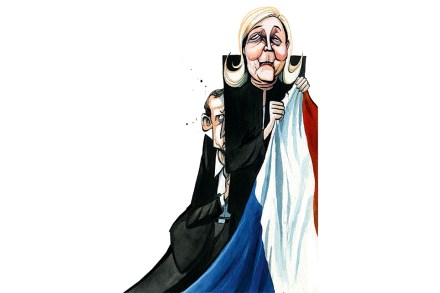
How Marine Le Pen could win

From our UK edition

Rumours that Emmanuel Macron could resign if Marine Le Pen wins a majority in parliament spooked French markets so much yesterday that he was forced to come out and reject the speculation. He will stay as president, he says, no matter what. The French government will still function if Macron’s party loses more seats in parliament (where he doesn’t currently have a majority). As president, he’ll still have the prerogative over foreign policy, the power to dissolve the assembly and can call a state of emergency. So France would not sink into chaos the day after those elections – but Macron could lose the ability to set a domestic agenda if the results are poor enough.  His ministers are sounding the alarm about their opponents.

The Netherlands is showing how not to tackle climate change

From our UK edition

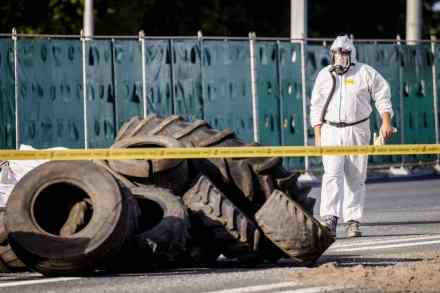
For weeks now, Dutch farmers have been protesting against the government’s plans on nitrogen emissions cuts, creating havoc in the country. Angry farmers have been withholding deliveries to grocery shops, dumping manure or tyres on motorways or at politicians’ homes, and blocking traffic. Farmers in other countries in Europe and North America have organised protests in solidarity with Dutch farmers and as a warning to their governments not to go the same way. Europe’s right-wing politicians used the protest movement to forward their own agenda. This may be just the beginning of wider unrest over agriculture. What is the trigger behind those protests? It started with manure that is produced plentifully by Dutch livestock farms.

The problem with euro-dollar parity

From our UK edition

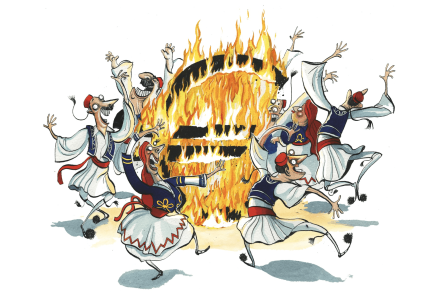
The euro is nearly level with the dollar. It should not matter in theory, because of the relatively low share of the US in EU trade. But it does in practice. Some predict that the euro will fall below parity. There is a straightforward explanation for this: the war in Ukraine and unpredictable Russian gas supplies to Europe make the dollar a safe haven for investors. On top of this, US interest rates offer a higher return on investment. But it is not only the dollar. Looking at the broader picture, the European Central Bank's measure of the euro's real effective exchange rate against 42 partner countries confirms this trend towards a new historic low: really bad news comes from the combination of the euro's falling value, the energy crisis, and the return of inflation.

Turkey’s grain diplomacy

From our UK edition

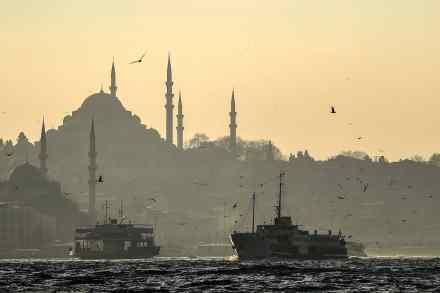
Recep Tayyip Erdogan is once again using Turkey's geopolitical position for his own ends, this time dictating grain shipments from Ukraine through the Black Sea. Turkish customs authorities detained a Russian cargo ship carrying Ukrainian wheat on Sunday, following a request of Kyiv. The Russian cargo ship Zhibek Zholy left the south-eastern port of Berdyansk over the weekend carrying 7,000 tons of grain, worth about £1.75 million. The Russian-appointed head of the occupied region had hailed it as the first commercial ship to leave a Ukrainian port after months of war. He said this would take desperately-needed supplies to friendly countries, according to Politico. The reality is, of course, that the shipment is a provocative move from Russia given it isn't Moscow's grain.

Marine Le Pen is the big winner in France’s anti-Macron election

From our UK edition

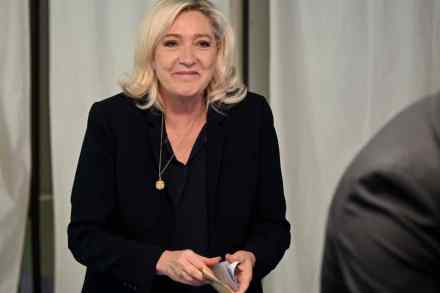
Emmanuel Macron has lost his absolute majority. The surprise winner was Marine Le Pen and her party, Rassemblement National, while the left alliance, Nupes, confirmed their place as the second-largest group, albeit with a less spectacular showing than the media and polls predicted. The latest results, as published by the interior ministry, counted 245 seats for Ensemble, 131 seats for Nupes, 89 seats for Le Pen's Rassemblement National and 61 seats for Les Républicains. The results are a disaster for Macron, and raise many questions about how he can govern with two extreme parties on the right and the left as the strongest opponents in the National Assembly. This vote was seen as an anti-Macron vote.

Where does Macron go from here?

From our UK edition

The French do not want Emmanuel Macron's party to win in the National Assembly, at least according to polls taken at the weekend. Expect revenge voting; Macron may lose his majority. How should he prepare for an eventual co-habitation of government and with whom? Macron promised in Marseille that his prime minister will be charged with implementing an ecological master plan, as proposed by Mélenchon. Does this mean a prime minister from the left? What if there is a better partner on the right around? After all, Macron has nothing to lose, since this is his last term as president, limited as he is by a two-term cap. But preparing for the after-Macron era will be part of his considerations. It will also depend on what will now happen on the left and the right.

Le Pen, Zemmour and the two French far rights

From our UK edition

Just about two months ahead of the French elections, a first poll for Le Parisién suggests that Marine Le Pen and Eric Zemmour are at the same level: 14 per cent. This is one out of many polls, most of which still show Le Pen ahead. But polls have been bad predictors in the past, and they can create their own momentum. Both Le Pen and Zemmour held big rallies this weekend. We now see two different economic visions emerging: one social, one liberal. The only economic point that the two have in common is that they both want social services to be accessible only to the French, not to immigrants. Le Pen’s vision is aimed at the electorate of Jean-Luc Mélenchon. Zemmour’s appeals to conservative France On everything else, the candidates are miles apart.

Europe’s emerging energy crisis

From our UK edition

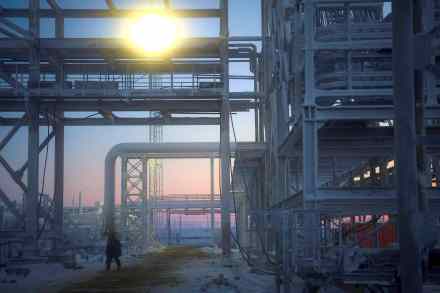
After the pandemic, is energy the next European crisis? Gas prices have hit new records, reaching $180 per barrel in the Netherlands, representing a fivefold increase over the past six months. This is driven by news that Russia has diverged gas flows from its main European pipeline to one that is going east via Poland. Experts are pondering over the reasons, be it geopolitical muscle-flexing or the fact that Russia is hit by a cold front of minus 20 degrees. The results are the same: Vladimir Putin promised more gas for Europe, and it is still not coming. The prospect of a Russian invasion in Ukraine just adds more uncertainty and pressure on the market. Europe still depends on Russian gas, amounting to 35 per cent of European supply. Will there be enough gas to get through the winter?

The fifth wave could break Macron

From our UK edition

The fifth Covid wave has started in Europe. Some governments are already imposing lockdowns and wage cuts for the unvaccinated as hospitals are filling up. Mass protests against restrictions are popping up, some peaceful like in Austria, others turning violent like in the Netherlands and Belgium. A nationwide lockdown in Germany is unlikely, but local lockdowns may happen if hospitalisation rates continue to shoot up. Some patients in Bavaria have already been sent to Italian hospitals due to under-capacity, a reversal of what happened in the first wave. France is still counting on getting through the fifth wave with no restrictions. With only five months to go before the presidential elections, these decisions will decide the fate of Emmanuel Macron.

Don’t underestimate Barnier

From our UK edition

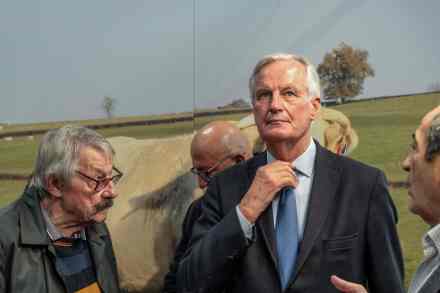
No one really expects Michel Barnier to be chosen as the Républicains's candidate for the French presidency. Success in Brussels does not make it easier to win at home. The most famous example of this rule is Martin Schulz, who returned from a long career in Brussels to become German SPD leader and chancellor candidate in 2017. He was seen as a political curiosity partly because he was unknown. But he couldn't keep up the momentum after German voters saw him on the domestic stage. Brussels insiders become detached from what's going on at home. It is much easier to go to Brussels than it is to come back. But don't write Barnier off just yet. He remained more connected to French politics than Schulz was to Germany.

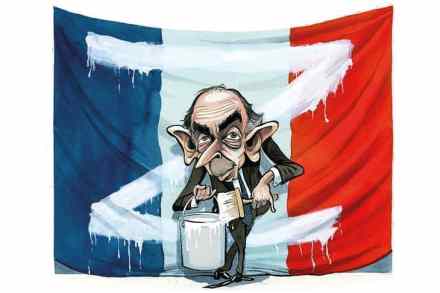
Is Eric Zemmour France’s answer to Trump?

From our UK edition

Eric Zemmour, a right-wing French essayist, has had a stellar rise in the media and public opinion. He has now reached 17 per cent in the latest Harris Interactive poll for the first round if he were to run as a candidate. After Macron’s ascent to power from nowhere only five years ago, will Zemmour become the Donald Trump of French politics? It looks unlikely. Zemmour certainly hit a raw nerve with his anti-immigrant theme, but whether he can dominate the campaign will depend on events outside of his control. If the voters' concern turns towards the energy crisis and purchasing power, Zemmour would be without an offer.

The EU’s carbon border tax hits roadblocks

From our UK edition

The European Commission's Fit-for-55 emission plan, with its extended emission trading scheme and the new carbon border tax, will be fighting an uphill battle. The carbon border tax scheme — the first of its kind in the world — could become Europe's opening bid to get moving internationally beyond mere discussions. If there is an international agreement in the end, it would have served a purpose. If not, it may only end up creating new battle lines between trading partners. There may be broad consensus on the goal of reducing carbon emissions, but questions remain: who is to shoulder the bill?

Should flights be taxed more?

From our UK edition

The European Commission is set to propose EU-wide minimum taxes on kerosene, the fuel for planes, as part of their EU energy taxation plans to meet the new eco 2030 targets. However, it remains to be seen if this tax will be agreed by all member states, as taxation issues require unanimity.  A leaked draft from the Commission proposes a minimum tax on flights inside the EU. Freight flights are to be exempted, so as not to give a competitive advantage to non-EU competitors, which could be seen as a muddled approach to satisfy too many objectives at once. And there are alternatives, such as including aviation companies in the CO2 emissions trading. Taxes are the prerogative of member states, though the EU can set minimum rates Why do planes not have to pay taxes on their fuel?

Is Marine Le Pen’s presidential bid doomed?

From our UK edition

Nothing went as predicted in France's regional elections. Marine Le Pen's Rassemblement National did not win a single region and Emmanuel Macron's La République en Marche failed to grow roots in local government, or even act as a kingmaker. All incumbent regional candidates were re-elected, sometimes with quite a comfortable margin. Does this mean we are back to the good old left-right divide in French politics? Regional elections are not national elections, of course. Abstention reached a record high in this election and voters from RN and LREM have shunned the regional vote more than left-wing and conservative voters.

France’s latest fiscal trade-off

From our UK edition

France’s deficit is set to reach 9.4 per cent of GDP this year, more than last year, even though France's first lockdown was more severe and lasted for a longer time. This may relate to accounting issues, as some spending is only reported this year even if it is related to last year. But these are details – the main issue is something else entirely. The journalist Dominique Seux wonders whether France has maxed out its spending capacity at the moment when environmental challenges require extraordinary efforts. Were France's spending choices last year done with full awareness of how they would compromise future fiscal room for manoeuvre? France was always amongst the high deficit countries in the EU.