Austria

The working-class vote explains the rise of Austria’s far-right

From our UK edition

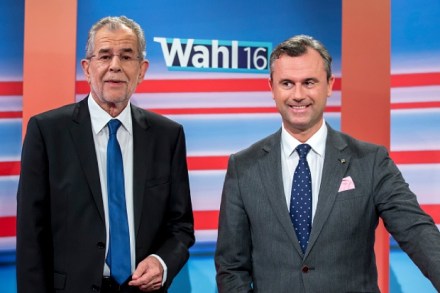
So Austria has a new leader. The radical leftist Alexander Van der Bellen, a former Green party leader running as an independent, has just edged out radical right-wing politician Norbert Hofer in one of the closest elections in European history. After postal votes were counted, Van der Bellen had 50.2 per cent and Hofer 49.8 per cent – a margin of just 0.4 percentage points. Most of the continent will probably breath a sigh of relief while still being disturbed at the size of the radical right vote; more shocking, perhaps, is the fact that among the working-class, there was almost unanimous support for Hofer, with the Freedom Party receiving 86 per cent of votes from workers.
Diary – 17 March 2016

From our UK edition

To while away the time at airports, I like to spot celebrities. But pickings have been slim. Where is everyone? On Saturday morning the only face I see is ex-Scottish Labour leader Jim Murphy, guiltily bolting a free bacon roll in the BA executive lounge at Heathrow. Check your privilege, Jim! To be fair, he was wearing a tracksuit, so I guess that’s OK. Part of the pain of being a newspaper feature writer is the constant demand to have your photograph taken. It’s hideous in every way. I don’t think I would have agreed to write about the Viva Mayr spa clinic in Austria if I’d known a snapper would be coming along to capture my every purging triumph. The good news? Mark is a really nice guy. The bad news?

Sins of the fathers | 19 November 2015

From our UK edition

This is a documentary in which three men travel across Europe together, but they’re not pleasurably interrailing, even though there are often times they probably wished they were. For two of them, Niklas and Horst, the journey is about confronting their fathers, who were high-ranking Nazi officials responsible for the deaths of millions of Jews, while for the third, the eminent British human-rights lawyer Philippe Sands, it means visiting the place where his grandfather’s family was exterminated. This place, Galicia, which straddles the modern-day border between Poland and Ukraine, is the exact place my own grandmother’s family were murdered. Her father lost every one of his seven siblings. She lost every aunt, uncle and cousin.

My Schubert cruise was a transport of delight

From our UK edition

'Blessed Cecilia, appear in visions to all musicians, appear and inspire…' Auden wrote his words for the young Benjamin Britten, who was born on St Cecilia’s Day, and who set them to music, but his poem would also be a tribute to the composer that Britten admired above all others except Mozart. Franz Schubert was born in Vienna in 1797, and died there 31 years later. ‘Let us honour the memory of a great man,’ he said, raising a glass after attending Beethoven’s funeral in March 1827, ‘and drink to the man who shall be next.’ Schubert died in November the following year, having heard only one concert in his lifetime dedicated to his own work. It is the greatest loss in the history of music, yet what riches he left behind!

Merkel’s folly

From our UK edition

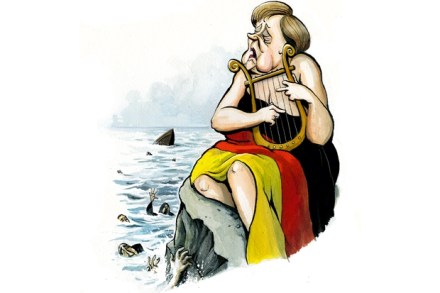
[audioplayer src="http://rss.acast.com/viewfrom22/merkelstragicmistake/media.mp3" title="James Forsyth and Holly Baxter debate Merkel's offer to Syrian refugees" startat=38] Listen [/audioplayer]Of all the irresponsible decisions taken in recent years by European politicians, few will cause as much human misery as Angela Merkel’s plan to welcome Syrian refugees to Germany. Hailed as enlightened moral leadership, it is in fact the result of panic and muddled thinking. Her pronouncements will lure thousands more into the hands of unscrupulous people-traffickers. Her insistence that the rest of the continent should share the burden will add political instability to the mix. Merkel has made a dire situation worse.

David Cameron admits he cries at the Sound of Music

From our UK edition

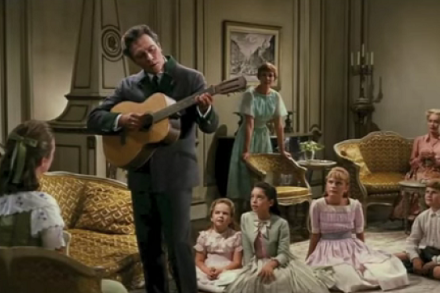
This morning the PM turned on the passion in a shouty performance in front of a room full of accountants. Complaints from the lower orders about a lack of zing to the campaign have clearly reached the top of the Tory tree as the new emotional Prime Minister was not done there. Cameron went on to admit in an interview with Classic FM that he cries when he watches the Sound of Music, when those brave Austrian patriots declare their love for their national flower: 'I do cry in films, The Sound Of Music. As soon as we get on to Edelweiss I’m reaching for the Kleenex.' With the songs lyrics including the line 'Bless my homeland forever', Mr S suspects that this is an audacious bid by Cameron to lure back those lost Ukip voters.

When Arnie met Ross

From our UK edition

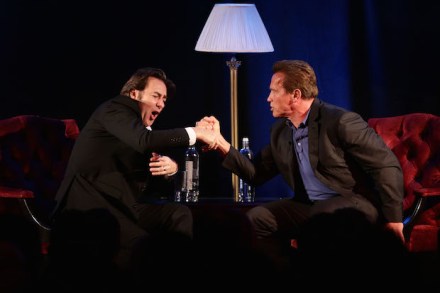
Arnie mania struck the capital last night. A thousand fans crowded into the Lancaster London Hotel to see Schwarzenegger in conversation with Jonathan Ross. He came bounding on stage, in a Club Class business suit, and peered out at us with a glazed, lipless smile. He has dark tufty hair, an ochre tan, and a hint of cruelty about the anvil jawline and the small unflickering eyes. A deferential Ross gave him an effusive welcome. They sat opposite each other, like bores in a Pall Mall club, in matching armchairs upholstered in blood-red velvet. Arnie compels our attention because his career is unparalleled. He began as a bodybuilder which is technically a sport even though it looks like narcissism communicated to the muscles via steroids and dumb-bells.

The Spectator at war: An accent of prejudice

From our UK edition

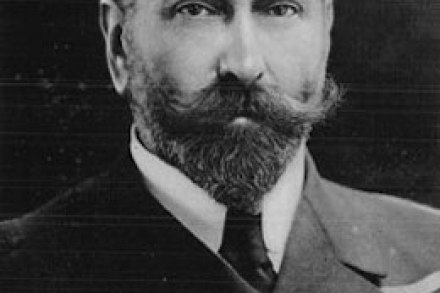
From The Spectator, 31 October 1914: We regret to record that a gallant and patriotic sailor, Prince Louis of Battenberg, has fallen a victim to the foolish prejudice that people with foreign names and of foreign birth cannot be loyal British subjects. It was announced on Friday that Prince Louis of Battenberg had resigned the office of First Sea Lord in a letter to Mr. Winston Churchill, the candour and simplicity of which do him the greatest credit.

Fischer’s is like visiting Vienna without having to go to Austria (thank God)

From our UK edition

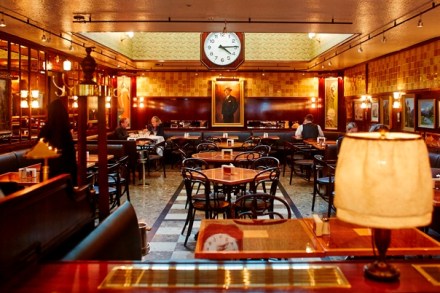
Fischer’s is Austria made safe for liberals, gays, Jews and other Untermenschen riffraff, because it is a restaurant, not a concentration camp, and because it is in Marylebone High Street, not Linz. It is the new restaurant from Chris Corbin and Jeremy King, who opened the Wolseley, the Delaunay and Brasserie Zédel, and it is more profound and lovely than any of them. There is always a clock in a Corbin and King restaurant, a big old clock from some fairytale train station, poised over the clientele as they stuff and age; for remembrance of mortality, I guess. Or maybe they just like big clocks?

Any other business: trouble spots in European banking

From our UK edition

‘1914: Day by Day’, the Radio 4 series by the historian Margaret MacMillan, is a gripping reminder that significant global events often arrive not in a single eruption but in a series of lesser happenings that only afterwards form an obvious pattern. Let’s hope that’s not what we’re watching in the banking sector as anticipation builds towards the results, due in October, of the European Banking Authority’s current round of ‘stress testing’. Last month’s trouble spot — with a certain resonance for the current centenary — was Austria, whose government forced losses on bondholders in the troubled Hypo Alpe-Adria-Bank by overriding a guarantee from the province of Carinthia.

Eurovision: It was the beard wot won it

From our UK edition

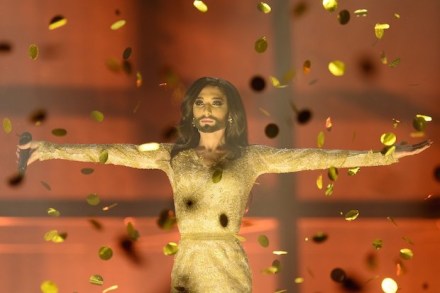
I enjoyed Fraser’s preview of the Eurovision Song Contest; I had not known that he was such a fan. You work with someone for years, oblivious to their dark secrets, their strange peccadilloes. It was typically brave of him to come out, in public. I watched the thing, again. I thought the entry from The Netherlands was the best song I have ever heard at a Eurovision Song Contest, and by some margin. But that may be because Europop makes me feel ill, and their song definitely wasn’t Europop. It’s the first time I’ve heard a pedal steel in this competition. That being said, the Dutch have form as purveyors of catchy, country-lite, soft rock – anyone remember “Mississippi” by Pussycat?

S&P to downgrade France and Austria

From our UK edition

The word is that France will be downgraded by Standard and Poor’s tonight. AFP is reporting that French officials expect France to drop to a AA+ rating, losing its treasured AAA status and increasing how much it will have to pay to borrow money. 2012 has, so far, been relatively quiet on the euro front. But expect the issue to return to centre stage over the coming weeks. There are the downgrades coming tonight – France is apparently not the only eurozone country that S&P will mark down with Austria set to lose its AAA rating too – and a coercive and chaotic Greek default seems increasingly likely.

European integration that we can get behind

From our UK edition

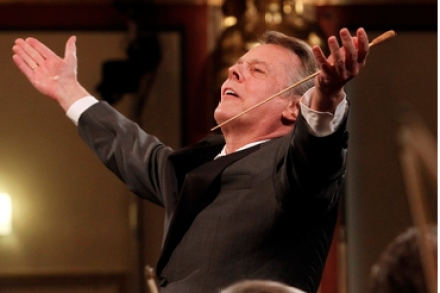
Part of the magic of the New Year's Day concert from the Vienna Philharmonic is knowing that millions are watching the same event live, right throughout Europe. It's perhaps the only cultural event that unites the continent in this way (other than Eurovision). Politically and economically, not very much binds us together, as the tensions within the European Union demonstrate. The continent is a model of diversity, which is why homogenisation attempts fail. But when it comes to culture, it's a different story altogether — with classical music being, perhaps, one of the strongest unifying factors. Turn up to a concert hall in Edinburgh, Leeds or Athens to listen to classical music, and the odds are it'll be from a relatively small number of central European composers.