David Prycejones

Radetzky marches on

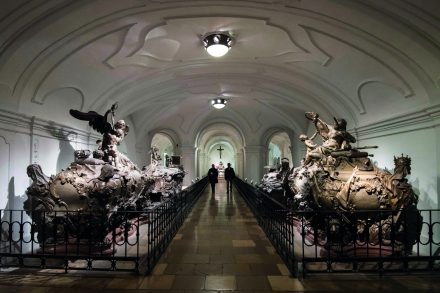
‘The Radetzky March’ was composed by Johann Strauss the Elder as a tribute to Field Marshal Joseph Radetzky von Radetz. An aristocrat of Czech origin, he was one of the fiercely conservative soldiers who gave the Habsburg Empire its bad name. First performed in 1848, the year of revolt in Europe, the ‘March’ was an immediate success. Austrian bands men were playing it at the battle of Königgraetz in 1866, fought against the Prussian Kaiser. For the first time, the Prussians had machine guns, and their rapid fire bloodied the white uniforms of the Austrians. Prussian victory condemned Austria to be the lesser of the two German-speaking nations, and on the losing side in the two world wars.
habsburg

Oracles of the Sybille

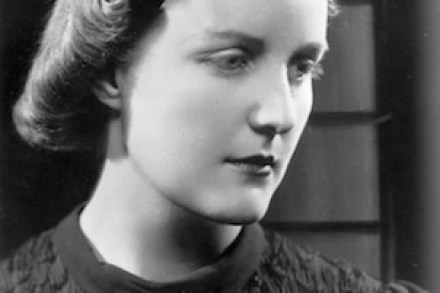
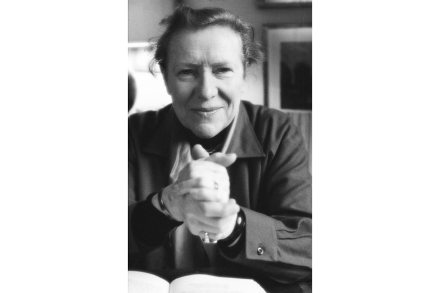
In 1975, I was commissioned to interview Sybille Bedford, by then a leading light in the literary world. She lived in a small house in Chelsea. As I got out my notebook, she said, ‘I hope you are not going to ask me about my life.’ She spoke freely about her work, though. A Legacy, the novel she published in 1956, had become an instant classic. Evelyn Waugh had reviewed it in The Spectator with all the authority at his disposal: ‘We gratefully salute a new artist.’ In a letter to Nancy Mitford he further praised the novel: ‘What a brilliant plot!’ A Legacy was high art at a time when the Angry Young Man and the kitchen-sink style were low art or no art at all. We found that we had friends in common.

sybille bedford

My debt to Royaumont

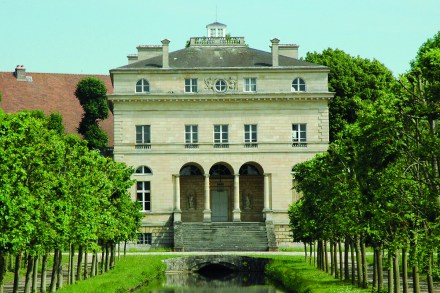
As ruins go, Royaumont is as good as any. French roads also being what they are, Royaumont is about 45 minutes from Saint-Denis, the cathedral in Paris where the kings of France are buried, and perhaps 20 minutes from Chantilly, where as much English as French is spoken on the racecourse. Beginning his reign in the 13th century, King Louis IX chose Royaumont as the site of one of the Cistercian abbeys he was building. Dying while on crusade in North Africa, he probably never saw what was reputed to be the most magnificent of all Cistercian abbeys in the whole country, the rival of Mont Saint-Michel or Fontevrault. Royalty notwithstanding, the Vatican singled him out for canonization.

royaumont

Articles of War

Universal genius is a law unto itself, but the personalities presented in Signatures at least deserve to be remembered by generations yet unborn. Ernst JüngerJournals, 1951 Researching for my book Paris in the Third Reich, I was just in time to catch some German officials or soldiers who had played a part in the occupation. Understandably, they tried to put themselves in the best possible light. Ernst Jünger was different. A staff officer, exceptionally intelligent and exceptionally observant, he kept a day-by-day record of his life in Paris. Much more than a timely self-portrait, these diaries fix for posterity the historic moment when the long-drawn contest for power in continental Europe appeared to have ended conclusively in German victory and French defeat.

war

Dedicated to literature

The convention is that if you happen to meet authors and have just bought or acquired a book of theirs, you ask them to sign it. Particularly stuffy authors might refuse, but in most cases they feel flattered and duly inscribe your name and theirs on the title page or the flyleaf of the book in question. If the mood is right, they may add ‘with best wishes’ or something of the sort. At a superficial level, of course, such signatures are only the equivalent of an autograph album. There’s more to it than that, however. Added value perhaps, but association certainly. The human race lives by the stories we tell ourselves about our identity and our purposes, and that signature helps to make the author’s story part of the reader’s story.

signatures david pryce-jones

‘You are always close to me’: Unity Mitford’s souvenirs of Hitler

From our UK edition

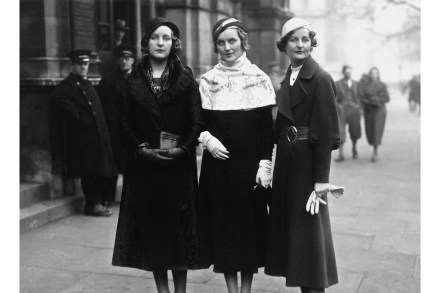
The English aristocracy has had its fair share of misfits, and one of the most far-fetched was Unity Mitford. No novelist would dare invent the story of a young woman of 19 who settles in Germany in 1933, determines to captivate Hitler, and succeeds. Eva Braun, the long-term mistress whom Hitler married in the last days of his life, gives way in her diary to jealousy and spite. There is evidence provided either by Unity herself or Nazi officials that Hitler held her hand, stroked her hair and called her ‘Kind’ (child). During his preparation for world war in the summer of 1939, he found time to arrange for a Jewish couple to be dispossessed from their apartment in Munich in order for Unity to have it. He also paid various expenses.

Chávez’s useful idiots

From our UK edition

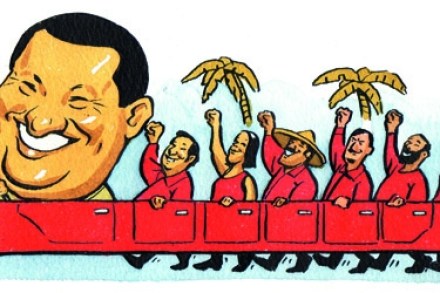
In the ranking of dictators, Hugo Chávez is in the welterweight class. President of Venezuela these past 14 years, he is supposed to be holding a ceremony of inauguration for yet another term of one-man rule and demagoguery. In anticipation, his supporters, the Chávistas in their uniform of red shirts, are singing and dancing in the streets of Caracas. But rumour has it that Chávez is on the point of death after surgery for cancer in a hospital in Cuba. Caution! The apparent popularity, the sympathy, the tenterhooks, the pseudo-Mandela image of the man, is largely the work of those strange modern-age political publicists known as fellow travellers.

Blood on their hands

From our UK edition

The first 100 or so pages of this book almost made me give up, so saccharine is the description of the childhoods of Jean-Paul Sartre and Simone de Beauvoir, with even a reference to the latter’s ‘dear diary’. I am glad I persisted. Mills and Boon duly evolves into Kraft-Ebbing. Carole Seymour-Jones may assert that she continues to admire this pair, but she has laid the foundations of a demolition job from which they should not recover. The relationship between these two goes back to a compact in 1929 whereby they decided to have a union but not a marriage. In practice, conflating love with sexual freedom, they deceived themselves, preyed upon their innocent victims, and persuaded many people in the wider world that their nihilism was really a philosophy for the times.

Captain of a dreadful crew

From our UK edition

Listing page content here To meet Oswald Mosley was a most unpleasant experience. You knew at once that you were in the presence of someone who had lost touch with everything except his own ego. So he bullied, so he lied, denying that he had been a willing agent of Hitler, that he would have proved a Quisling in the event of a German invasion in 1940, or that he had ever been an anti-Semite. On a television programme with him once, I read out some of the foul things he had said on platforms in the Thirties; his eyes turned red with rage, and I saw that he would have done violence to me if he could. If I did not suppress the book I had written about his sister-in-law Unity Mitford, Mosley and his lawyers threatened, they would not be responsible for the consequences.

Earning brownie points

From our UK edition

Prospect is a monthly magazine with high aims, and it is therefore welcome. To borrow from the old advertisement for Mars Bars, it fills the gap. It is hard to think of any comparable outlet in this country — as opposed to the United States — where it is possible to publish contributions of 5,000 words and upwards. David Goodhart had the idea of it, raised the money and is the editor. Top marks for all that, with excuses for the horribly arch pun in the title of this selection from ten years of publication. A monthly magazine of this kind ideally promotes its version of right opinion, and scotches its version of wrong opinion. T. S. Eliot’s Criterion, Cyril Connolly’s Horizon, or F. R.

The cured man of Europe?

From our UK edition

Mustapha Kemal, otherwise Ataturk, took the corpse of the Ottoman empire and re- animated it as Turkey. Break-ing both the old sultanate and the hold of Islam, he laid the foundation of a democratic state. It was an extraordinary achievement, not to be witnessed again until Mikhail Gorbachev broke the Soviet Union and the hold of the Communist party — and that was more by accident than design. In 1950 Turkey became the first Muslim country in history to replace its government through a free election. Politics since then, it is true, have been more a matter of strong personality than party and platform. As the guardian of Kemalist secular and nationalist virtues, the army has staged three coups. One unfortunate prime minister, Adnan Menderes, was hanged.

Scholar and Cold War warrior

From our UK edition

When not thinking and writing, Richard Pipes tells us in these memoirs, he is at a loose end. At different times he had ambitions to be an art historian or perhaps a musicologist, he also says, but settled to be a historian. The writing of history depends in the first place on scholarship. Vixi is the work of a man of immense learning, whose apposite quotations range through several classical and modern literatures from Praxilla of Sicyon in the fifth century BC and Seneca all the way to Trollope, Guizot and Sainte-Beuve. But selection of facts rests ultimately on the historian’s humanity and aesthetic sense. Most unusually, Vixi is also the work of an intellectual for whom beauty is truth, and truth beauty.

The dangers of Fisking

From our UK edition

In the www arena where the world speaks invisibly to itself, a new word has appeared: ‘fisking’, meaning the selection of evidence solely in order to bolster preconceptions and prejudices. Just as cardigans or mackintoshes are named after an inventive individual, so fisking derives from the work of Robert Fisk, the Middle East correspondent of the Independent, stationed these many years in Beirut. The preconceptions and prejudices that are immortalising Fisk in the English language express an unqualified contempt for America. For him, most Americans are ignorant and arrogant, and their leaders mendacious and cynical power maniacs leading everyone to perdition. Everything wrong with the Middle East is particularly their fault.

Where all parties are guilty

From our UK edition

Algeria is one of the most pitiful of failed Arab states. For ten years and more, the news has been coming in regularly that people somewhere in that country have been butchered. Qui tue qui? is the question Algerians themselves ask. Here is a civil war, all the more sinister for being undeclared and undefined. The ruling elite control the Front de LibZration National, the FLN, and the army, and they say that the killers are Islamists, extremists from the Front Islamique du Salut, the FIS. The Islamists counter-claim that the FLN and the army are responsible for atrocities. The truth is unobtainable, but seemingly all parties are guilty. There are at least 100,000 victims - twice as many by some estimates. Things ought to have turned out better.

Nothing to lose but their chains

From our UK edition

A war against Iraq might destabilise the Middle East, says David Pryce-Jones, but that is precisely what the region needs Iraq may soon be liberated. The Americans are building bases and runways in the Middle East, airlifting men and supplies, and passing the resolutions in Congress necessary to take military action. Regime change is what President Bush has set his heart on. Condoleezza Rice goes further: she calls for democracy, not only in Iraq but also in the wider Muslim world. From the reaction all over Europe, you might think that Washington was insisting on the sacrifice of the first-born.