Austria

Swanky, stale and sullen, the summer music festival has had its day

From our UK edition

‘Festival?’ said Nathan Milstein. ‘What is festival?’ I had naively asked the most immaculate of violinists where he used to play in the summer and he looked at me as if I had proposed an unnatural act. ‘Before the war,’ said Nathan, offering a glimpse of paradise lost, ‘Volodya and I would stay at Senar for six weeks with Rachmaninov.’ Volodya was Horowitz, his best friend. ‘In those days,’ he continued, ‘we liked to spend time with composers. A composer was someone you could talk to. He knew philosophy, literature, lepidoptery. Rachmaninov could name all the butterflies around Lake Lucerne. He liked me better than Volodya, maybe because I was not pianist.

Civilized caffeination

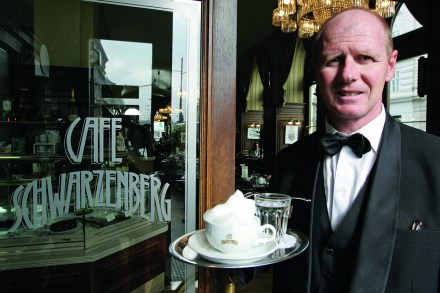
Palaces, art galleries, parks, composers’ houses, operas, concerts, Spanish Riding School horses, full-throated choirboys wearing sailor suits...yes, I go to Vienna for all these delights. But, deep down, probing my true desires and motives, I really go there for the coffeehouses. It’s just that to make the coffeehouse experience the most delicious it can be, you need to arrive cold, hungry, intellectually stimulated and with aching feet from visiting one of the above attractions. Then you’ll feel the warmth seeping into you as you sink down onto a coffeehouse banquette.

viennese coffeehouse

Tuning up to Linz

From our UK edition

You never know who you might meet on a river cruise. It was my 89-year-old father-in-law, Noel, who first recognised a tall, professorial man only a few years younger than him remonstrating with an uninterested official at Munich airport about a pre-paid taxi to Passau, where we were due to board our ship. ‘That’s Humphrey Burton,’ said Noel. ‘We worked together at the Beeb, though he was far more important than me.’ Noel is forever modest but you could argue that Burton was the Melvyn Bragg of his day — a description I later put to him but one from which he recoiled not exactly in horror, but certainly in mild disgust.

For the love of operetta

From our UK edition

It’s the lederhosen that grabs you first. Two gents were walking down the street ahead of us in full Alpine rig: long socks, collarless loden jackets, and hunting hats decorated with what looked like shaving brushes. Among the flowerbeds and fountains that surround the main theatre of the Bad Ischl Lehar Festival a posse of young women crossed our path, all wearing embroidered dirndls and laughing. By the time we took our seats in the auditorium, we were grappling with a deeply un-British notion: that none of this was ironic. We weren’t at Glyndebourne any more. But if you love the much-mocked art of Viennese operetta, a forgotten spa town at the far end of the Salzkammergut is exactly where you want to be.

High life | 28 June 2018

From our UK edition

Schloss Wolfsegg   I was watching two very old men slowly approaching the open doors of the Pilatus airplane I was leaning against when it dawned on me that they were the two pilots who were about to fly me to my daughter’s wedding. The one called Willy extended his hand, as did Alex, a short guy who looked as though he was in his nineties. ‘Ah, Herr Tennisman,’ he said, referring to a match I had won more than 50 years earlier when I was on the tennis circuit, ‘wie geht es?’ Willy then told me that Alex had retired from flying airbuses 30 years before, and now flew as insurance in case the pilot dropped dead en route. That was fine by me. The Pilatus is my favourite airplane, with six wide seats and one just behind the two pilots.

Austria is back on the political map – and Austrians are nervous about it

From our UK edition

Summer has arrived early in Vienna and the city of Strauss and Schubert has never looked lovelier. The parks are full of students, basking in the sunshine. The elegant cafes along the Ringstrasse are full of debonair businessmen and businesswomen, making contacts, doing deals. You could almost be back in the Habsburg Empire a hundred years ago, when Vienna ruled over a Reich that stretched from Trieste to Transylvania. However despite its prosperous appearance, all is not well here in the Austrian capital. The bad news for the Viennese is that Austria has become important again. Throughout the Cold War, surrounded on three sides by the Iron Curtain, Austria looked west, not east. However this was always a historical anomaly.

Is Sebastian Kurz Germany’s most important politician?

From our UK edition

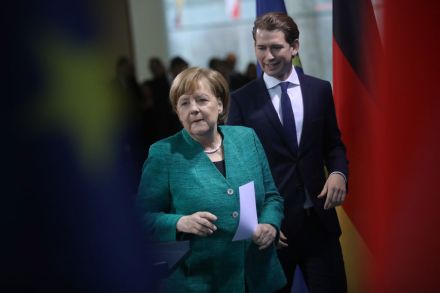
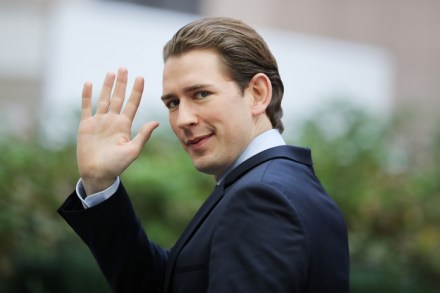
Who is the most important politician in Germany? Angela Merkel? No, it’s the Austrian Chancellor, Sebastian Kurz. Merkel remains a colossus on the world stage, but domestically her power is much diminished. Meanwhile German eyes are on Kurz, the world’s youngest national leader, as he strives to bridge the gulf between centrists and populists – and between east and west. Despite their vastly differing ages (Merkel is 63; Kurz is just 31), the German and Austrian Chancellors actually have quite a lot in common. They’re both leaders of centre right parties in prosperous Central European nations, where immigration is a growing concern, and the far right is on the rise.

Austria’s Sebastian Kurz should be praised for refusing to ignore the populists

From our UK edition

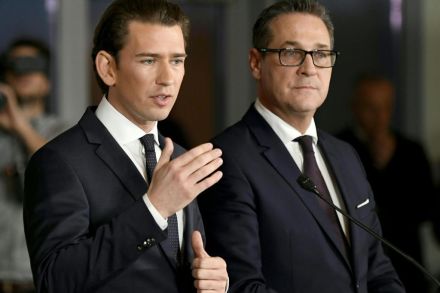
Today the world’s youngest leader takes his place at the top table of European politics, as Sebastian Kurz becomes Chancellor of Austria at the age of just 31. However the toasts in Brussels (and Berlin) will be distinctly muted, for Kurz and his centre-right People’s Party have formed a controversial coalition with Austria’s hard-right Freedom Party – a party shunned by centrist parties throughout the EU. It’s a sign that populism is alive and well in Central Europe. So is this new government merely an Austrian anomaly? Or does it mark the advent of a Pan-European trend? The specifics of this coalition may be peculiarly Austrian, but the generalities reveal a great deal about European politics as a whole.

How Russia stands to profit from Austria’s new government

From our UK edition

Yesterday, Sebastian Kurz, the leader of Austria’s conservative People’s Party, announced his intention to form a new coalition government with the far-right Freedom Party (FPÖ). The Austrian far-right have been in federal government before, as recently as the mid-2000s, and narrowly lost last year’s presidential election (which had to be re-run). While the opening of coalition discussions may come as little surprise, it is seen with extreme scepticism by many in Austria and abroad – some worry that such a right-wing coalition will clamp down on civil liberties, others that it might estrange Austria from allies inside the EU. In Moscow, in the meantime, the response to today’s announcement is likely to be positive.

What drives populism?

From our UK edition

What has led to the rise of populism? The conventional answer involves inequality, flattening wages – and general economic malaise. In Europe, one year after the vote for Brexit, Martin Wolf of the Financial Times claimed that the global financial crisis had ‘opened the door to a populist surge’. In America, thousands rushed out to buy J.D. Vance’s Hillbilly Elegy, a coming of age story about down-and-outs in poverty stricken Kentucky, as a blueprint on the Trump voter. Yet this take is deeply misleading. If populists only required economic hardship to thrive then they would be rocking in Portugal and Spain while collapsing in states that have had some of the lowest unemployment rates in Europe, such as Austria and the Netherlands.

Skiing with kids doesn’t have to be ruinously expensive

From our UK edition

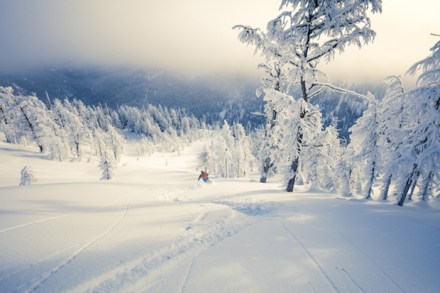
One day in February each year, my three children come home from school in London, but go to sleep in Germany. We pile into our old Rover 75 Estate, take the tunnel to Calais, then drive through France, Belgium and the Netherlands before collapsing into bed in Aachen: five countries in an afternoon. The next day we cruise down the Autobahn to Munich or Salzburg, potter around the city and have an early night. The following morning we are on the ski slopes, hours before the plane gang arrive. For a ten-night ski holiday in February half-term, the most expensive ski week of the year, our total spend is less than £3,500. For five people. That includes travel, accommodation, eight-day lift passes, ski lessons, equipment hire and food.

Populism is making a comeback in Europe, and Austria is leading the way

From our UK edition

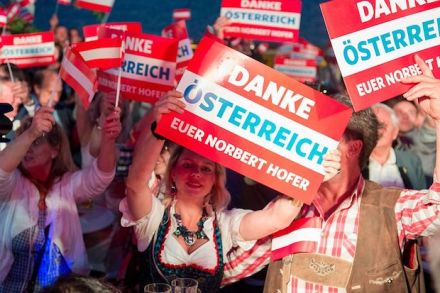
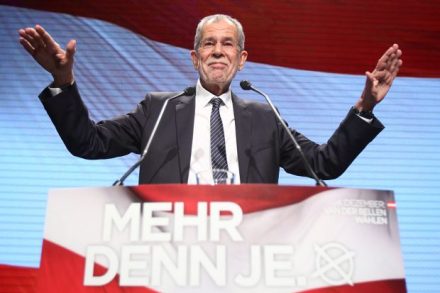
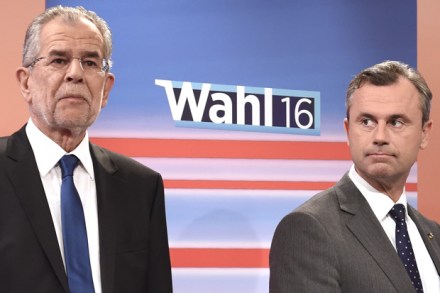
Last year's Austrian presidential election looked like a turning point for the European Union. Alexander Van der Bellen, a soft left Eurofederalist (narrowly) defeated Eurosceptic Norbert Hofer, of the hard right Austrian Freedom Party, and Continental Europhiles went into 2017 with fresh hope that they might halt the tidal wave of Brexit, before it engulfed the EU. Sure enough, this year France and Holland have both returned Europhile candidates, and Germany looks set to follow suit. The tide had turned, the pundits said. 2016 had been the high water mark of Populism. 2017 would be the year the EU fought back.

Old, unhappy, far off things

From our UK edition

August Geiger led an unremarkable life. Born in 1926, the third of ten children of a Catholic farming family in western Austria, the most unusual thing about him was his unwillingness ever to leave Wolfurt, the village where he had grown up. He built a house there, for his schoolteacher wife and their children, and refused ever to go on holiday. His wife had suggested that they go on a walk and call it their honeymoon, but August rejected even this slight change in his routine. It was, therefore, particularly poignant that when he developed Alzheimer’s disease, August’s dominant obsession became his desire to go home. Nothing could convince him that he was already there.

What the papers say: Is time up for the EU?

From our UK edition

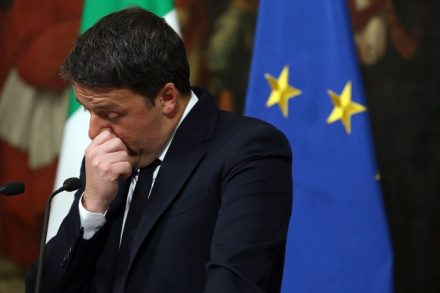
Something is happening across Europe, says the Sun - but EU leaders are still intent on burying their heads in the sand. Following Matteo Renzi’s defeat in the Italian referendum on Sunday and far-right Eurosceptic candidate Norbert Hofer’s good showing in the Austrian election, it’s clear that ‘voters across Europe are increasingly rejecting the EU’s self-interested ruling consensus,’ the paper says. But while the outcome for the continent does not look good, the signs of instability in Europe can arguably be only a good omen for Theresa May as she looks to negotiate Britain’s Brexit deal.

Thanks to Brexit and Trump, Austria lost its appetite for political upheaval

From our UK edition

Austria’s presidential election has been overshadowed by Matteo Renzi’s dramatic defeat in the Italian referendum, but Alexander Van der Bellen’s victory is significant nonetheless. It confirms there are now two Europes, north and south. Southern members like Italy are becoming increasingly hostile towards the EU, while northern members like Austria will do (almost) anything to keep the EU on track. So why did Austria buck the American trend, and chose a Euro-friendly head of state? Churchill said Russia was a riddle wrapped in a mystery, inside an enigma. He might have been talking about Austria today. The Austrian capital, ‘Red’ Vienna, has always been socially liberal and politically leftist.

Austria and Italian voters could plunge the EU into crisis

From our UK edition

Voters in Austria and Italy head to the polls tomorrow and could plunge the EU into a political and economic crisis, as I say in The Sun today. In Austria, the candidate of a genuinely far-right party—its first leader was a former SS officer—could become president. If the Freedom Party’s Norbert Hofer does win, and the race is too close to predict with any confidence, it’d show that the very extremist forces that the European project was meant to crush are now on the rise—and in part, because of the EU’s own failings. But it is the Italian referendum that could have the more immediate consequences. Italy bans polls just before votes, so we don’t have any up to date polling.

Revolution was in the air

From our UK edition

The Penguin History of Europe reaches its seventh volume (out of nine) with Richard J. Evans’s thorough and wide-ranging work on the 99 years from 1815 to 1914. It comes between two formidable books by formidable scholars: his fellow Cambridge historian Tim Blanning took the story from the close of the Thirty Years’ War to Waterloo, and the Hitler authority Ian Kershaw covered 1914 to 1949. Each of those volumes is much as one would expect of the author: Blanning’s shows his background as a polymath, and his expertise in the histories of more than one major European power; Kershaw’s puts the rise of the Third Reich and its consequences at the centre of his. But Evans developed under the influence of E.H.

Barometer | 16 June 2016

From our UK edition

Houses of ill repute The Austrian interior minister has suggested that his government will demolish the house where Adolf Hitler was born in 1889. Some other properties which have succumbed to the architectural equivalent of the death penalty: — 25 Cromwell Street, Gloucester, home of Fred West, was demolished in 1996 and turned into a pathway into the next street. — 5 College Close, Soham, where Ian Huntley murdered the schoolgirls Holly Wells and Jessica Chapman, was razed in 2004 and is now a patch of grass. — The cottage in Ceinws, Powys, where Mark Bridger murdered April Jones was demolished in 2014. — 10 Rillington Place, home to the serial killer John Christie, initially survived his trial in 1953, although the street was renamed Bartle Road.

Voters have no time for the flaccid centre

From our UK edition

A depression has settled on the Liddle household ever since Norbert Hofer narrowly failed in his bid to become the president of Austria. I like a man who keeps a Glock pistol in his jacket pocket, and there is something noble in the cut of his jib. Norbert was thwarted by the voters of Red Vienna and the usual fraudulent postal ballots, most of which will have come from immigrants, as happens time and again in this country. So he lost. Instead the Austrians are saddled with a lunatic, Alexander Van der Bellen, a hand-wringing Green halfwit representing what George Orwell was habituated to call the ‘pansy left’. Interestingly, both of the two leading candidates for the job of president seem to loathe Austria and wish for it to be abolished.

The only Eurosceptic in the room

From our UK edition

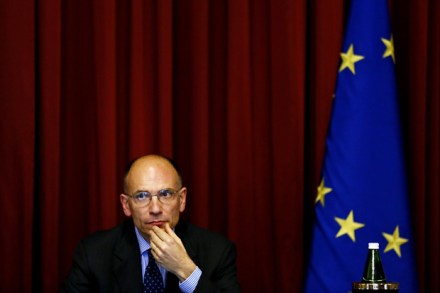
I was in Paris last week to take part in an EU referendum debate at Sciences Po, a French university that specialises in international relations. It’s not an exaggeration to describe Sciences Po as a finishing school for Europe’s political elite. Twenty-eight heads of state have studied or taught there, its graduates include five of the last six French presidents and the current dean is Enrico Letta, a former prime minister of Italy. My fellow panellists included Ana Palacio, the Spanish minister of foreign affairs from 2002 to 2004, and Hubert Vedrine, the French minister of foreign affairs from 1997 to 2002. I think it’s safe to say I was the only Eurosceptic in the room. I was listened to with polite amusement, but almost no one took the threat of Brexit seriously.