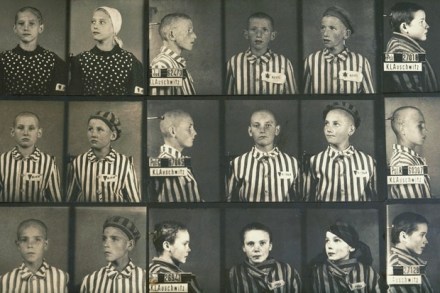
Auschwitz

The tragedy of Paul Celan – trapped in his own allusive poems

From our UK edition

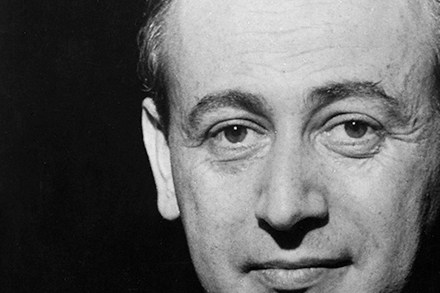
Some time in the late 1950s, Jacques Derrida and other intellectual luminaries at the École Normale Supérieure in Paris were surprised to be told that the excruciatingly introverted German-language instructor they had been avoiding in the corridors for several years was ‘the greatest living poet in the German language’. Paul Celan was reputed to be as ‘difficult’ as his poetry – rebarbative, then intriguing and finally unforgettable. His best known poem is ‘Todesfuge’ (‘Death Fugue’), which may refer to Jewish musicians in a Nazi death camp: ‘Black milk of dawn, we drink you at night...’ He can be heard online reciting the poem in a rising tone of suppressed hysteria.
Why one of Renoir’s most celebrated paintings languished unloved

From our UK edition

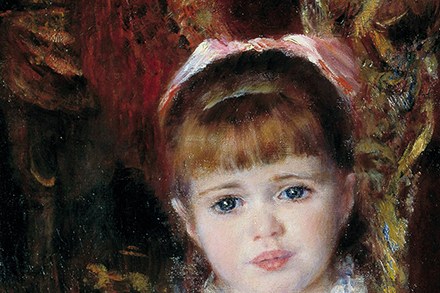
Shimmering off the cover of The Renoir Girls are sisters Alice (aged four) and Elisabeth Cahen d’Anvers (six), portrayed in all the promise and innocence of a pampered childhood by Pierre-Auguste Renoir. Aged 40, Renoir was then the coming portrait painter for the gratin of Paris, as he struggled to make ends meet with smart commissions from wealthy sponsors – a network of Catholic and Jewish banking families that included the Ephrussis (memorialised by Edmund de Waal in The Hare with Amber Eyes), Camondos, Rothschilds and Cahen d’Anvers.

Derided as ‘feminists’: the unsung witnesses of the Nuremberg trials

From our UK edition

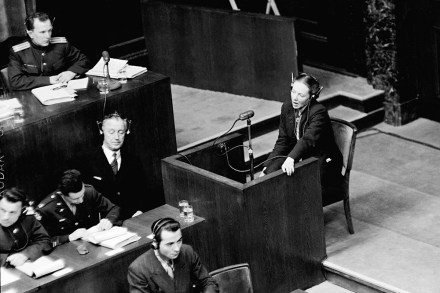
There are several things wrong with James Vanderbilt’s new film Nuremberg, least of all, some might say, the fact that it fails the Bechdel test. This 1985 metric assesses female representation in film by whether two named women have a conversation on screen about anything other than a man. If you are thinking, ‘So what? All the Nuremberg prosecutors were male, as was every defendant’, then you need to get hold of Natalie Livingstone’s revelatory book. While the public face of the trials was resolutely male, as were the indictments (there was no mention of rape, for instance, within the listed war crimes), the truth is that in the trials, as in the war, women played significant though often hidden roles.

Auschwitz-themed novels are cheapening the Holocaust

From our UK edition

Israel would not have been born when it was – 1948 – without Hitler’s genocidal war on European Jewry. Dispossessed Jews had to be provided with a home. In the rush to establish a Jewish state in Palestine, safeguarding Arab nationalism was not the most pressing concern. Israel’s foundation thus marked a turning point in the fortunes of the world more grievous than anyone could have anticipated. Most European nations supported Israel during the Arab-Israeli war of June 1967, when President Nasser of Egypt moved his troops into Sinai on the Israeli border and, as part of a violent pan-Arabist ideology, vowed to eliminate Jews (and Christians).

Anne Sebba: The Women’s Orchestra of Auschwitz

From our UK edition

37 min listen

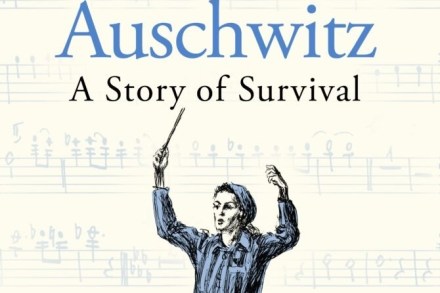
My guest on this week’s podcast is the historian Anne Sebba. In her new book The Women’s Orchestra of Auschwitz: A Story of Survival, Anne tells the story of how a ragtag group of women musicians formed in the shadow of Auschwitz’s crematoria. She tells me about the moral trade-offs, the friendships and enmities that formed, and what it meant to try to create music in a situation of unrelenting horror.

How Anne Frank’s photograph became as recognisable as the Mona Lisa

From our UK edition

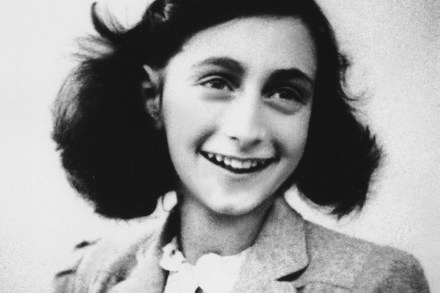
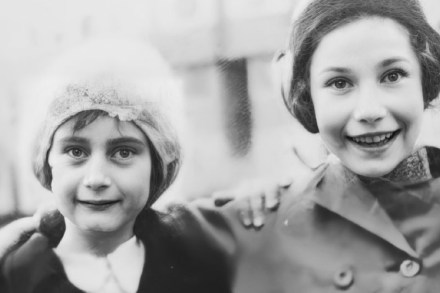
Anne Frank died of typhus in Bergen-Belsen in late February 1945. Her last days were spent in the sick barracks caring for her sister Margot, who had a high fever and smiled contentedly, her mind already wandering. Anne, too, had been feverish, but ‘friendly and sweet’, according to witnesses. Her last recorded words were: ‘Margot will sleep well, and when she sleeps I won’t need to get up again.’  Ruth Franklin’s superb and subtle book pivots around this moment, which is described in a starkly titled central chapter, ‘Corpse’. Half her study tells Anne’s story up to the tragedy of her death.

Cello explains how music helped escape a certain death at Auschwitz

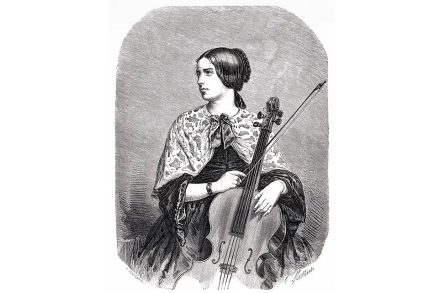
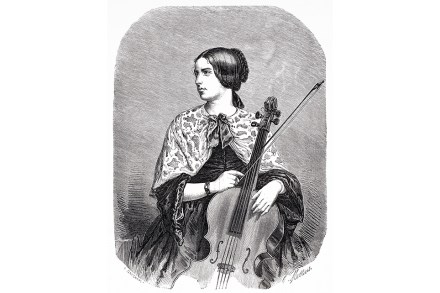
Bees and mammoth bones, a shipwreck, horse urine (preferably female), a seventeenth-century craftsman and a twentieth-century genocide. Playing an extended narrative game of Only Connect in her latest book, the musicologist Kate Kennedy takes a bird’s-eye view of four lives and five centuries as she turns her own instrument, the cello, into a prism. Part history, biography and auto-biography, with digressions into anthropology, acoustics and aesthetics and an intriguing cast of characters, Cello sings richly. But you have to be willing to lgo on the journey. Has publishing reached peak personality-stakes?

cello
lara logan

Comparing Fauci to Josef Mengele seems ill-advised

Cockburn always thought Thanksgiving was the holiday designated for sharing madcap political views that one day you'll regret saying aloud. So kudos to Fox Nation's Lara Logan for extending the tradition into advent, by offering a comparison between Anthony Fauci and Nazi doctor Josef Mengele on Monday's edition of Fox News Primetime. Logan, a former war correspondent, was invited on to discuss the Omicron variant. Presumably the logic behind the booking was that the variant emerged from her home country, South Africa. Here's the expertise she chose to provide: On Dr. Fauci, this is what people say to me. He doesn't represent science to them, he represents Josef Mengele. Dr. Josef-the Nazi doctor who did experiments on Jews in the second world war and in the concentration camps.

Saved from certain death at Auschwitz – by playing the cello

From our UK edition

Bees and mammoth bones, a shipwreck, horse urine (preferably female), a 17th-century craftsman and a 20th-century genocide. Playing an extended narrative game of Only Connect in her latest book, the musicologist Kate Kennedy takes a bird’s-eye view of four lives and five centuries as she turns her own instrument, the cello, into a prism. Part history, biography and auto-biography, with digressions into anthropology, acoustics and aesthetics and an intriguing cast of characters, Cello sings richly. But you have to be willing to go on the journey. Has publishing reached peak personality-stakes?

The Anne Frank story continues

From our UK edition

The first time a friend told me that Hitler had the right idea about the Jews I was six. Most of my classmates agreed, and quoted their parents in evidence – from which I conclude that anyone who suggests that they don’t understand how the Holocaust happened is either a fool or a liar. It was a team effort by popular demand. If the Germans had won the war, no one would have felt bad about it. But the Germans lost. How awkward. Anne was freezing, starving and dressed in rags. ‘They took my hair,’ she said. Then she disappeared It became necessary to convince non-Jewish Europeans that mass-murdering Jewish Europeans was wrong. It was a hard sell.

Nazi on the run: The Disappearance of Josef Mengele, by Olivier Guez, reviewed

From our UK edition

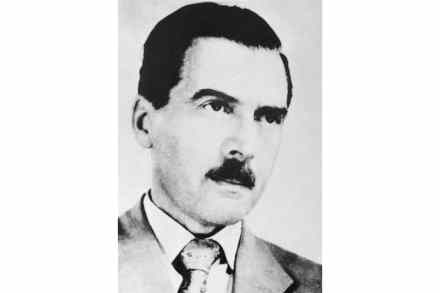
Who would have thought that someone would write a novel about Josef Mengele, the Auschwitz doctor and infamous experimenter on live human bodies? Other characters in the French writer Olivier Guez’s story are also from the Nazi gang of debased criminals: Adolf Eichmann, Franz Stangl, the concentration camp commandant, and Klaus Barbie, the Butcher of Lyons. This is a historical novel, and Guez has researched it well. He invests the structure of events with his imagination and has Mengele relate his experiences throughout his long avoidance of capture. There’s a vivid sense of reality about the crazed, unrepentant eugenist’s attempt at an acceptable fugitive way of life, and Guez holds our attention by building dramatic suspense.

The unimaginable horrors confronting the Allies in 1945

From our UK edition

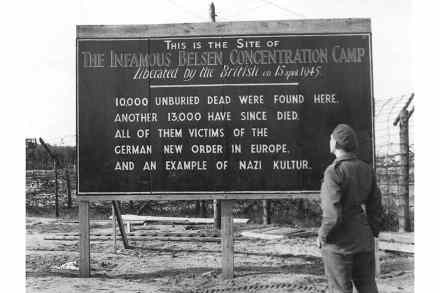
No one had prepared the Allied soldiers, as they began their invasion of the Reich early in 1945, for what they would find. The discovery by the Soviets of the extermination camp of Majdanek in July 1944, and Auschwitz in January 1945, had not really registered, not least because they had been partly emptied and demolished by the retreating Germans. In any case, no one – not the International Committee of the Red Cross, nor the Vatican, nor the British and American governments – had been able, or wanted, to believe what they had been told. The scenes of slaughter and horror that awaited the British, Canadian and American troops were unimaginable.

Should you take your children to visit Auschwitz?

From our UK edition

Is the Auschwitz museum suitable for children? I pondered that question on a visit accompanied by a plane load of secondary school teachers, organised by The Holocaust Educational Trust. The Holocaust was first included on the UK’s National Curriculum in 1991 and the Trust charters aeroplanes for a professional development course for UK teachers, taking them to Auschwitz and back within a day. It aims to increase their understanding of the atrocity so that they can teach it more effectively.

Mind over matter | 23 August 2018

From our UK edition

The return of Sue MacGregor’s long-running Radio 4 series The Reunion (produced by Eve Streeter) is a welcome reminder of just how good radio can be at taking us inside an experience while at the same time opening our minds to things we should know about. First there is MacGregor herself, such a vibrant, resonant voice, never too fast or too slow. Then there is her understanding of how to communicate. Each week she gives a short resumé of how and why the people she has gathered in the studio were first brought together, summarising complicated events in such a concise but clear way, giving all we need to know without burdening us with too much detail. When the conversation with her chosen guests begins, we know exactly why we should be listening to them.

Diary – 27 April 2017

From our UK edition

When Trevor Phillips stood down as chairman of the Equality and Human Rights Commission, he had served nine years. His period remains the longest of any UK equality commissioner. So when the confected outrage started over my Sun column about Everton footballer Ross Barkley I was not surprised to see a text pop up from Mr Phillips. I feared he would join the Liverpool bandwagon claiming I was a racist because I had compared the look in the eyes of Barkley with a gorilla. Actually I and every football fan I had ever met believed Barkley to be white. Unluckily for me, but luckily for my enemies in the north-west, that was not entirely true. It emerged that although Barkley looked white, his grandfather was half-Nigerian.

Filming the Final Solution

From our UK edition

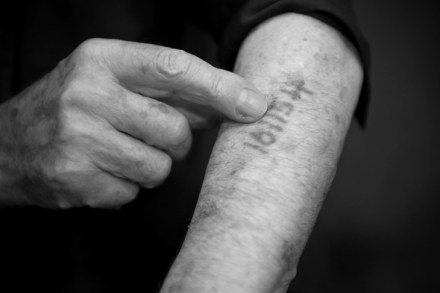
In July 1986, nine months before he died, I met the Italian author and Auschwitz survivor Primo Levi at his home in Turin. He was in shirtsleeves for the interview and the concentration camp tattoo 174517 was visible on his left forearm. (‘A typical German talent for classification,’ he tartly observed.) If This is a Man, Levi’s chronicle of survival, offers a warning to those who deliver facile judgments of condemnation: only those who have survived the Nazi camps have the right to forgive or condemn. Attempts to recreate the Final Solution on screen were mostly a ‘macabre indecency’, said Levi.

The house that Alfred built

From our UK edition

This is a book about boundaries — and relationships. At its heart is the eponymous house by the lake, which in 1927 was the first of many small wooden summer houses to be built in the village of Gross Glienicke. Both its situation, just outside Berlin in the lakeside area that would later abut Gatow airport, and its many occupants, from well-established German Jews to partying neo-Nazis, would expose the property to the more tidal waters of modern German history. But the house has not just provided a stage for human drama; arguably it has been integral to the action itself, helping to shape lives, just as it was itself transformed by Germany’s changing politics.

The brutal mask of anarchy

From our UK edition

In September 1939 Britain went to war against Germany, ostensibly in defence of Poland. One big secret that the British government didn’t know at the time — and not until much later — was that while the Anglo-Polish alliance treaty was being negotiated during the previous months, the Poles had been actively training and arming terrorists to kill British troops in the Middle East. I don’t normally believe in convoluted conspiracy theories, but this one happens to be true. In the 1930s the anti-Semitic government in Warsaw wanted rid of 3.5 million Polish Jews. Initially they tried to pack them off to Madagascar. But then the Poles hit on the idea of helping Jews create their own state in British-occupied Palestine.

Dizzying swirls of impasto

From our UK edition

With a career of more than 60 years so far, Frank Auerbach is undoubtedly one of the big beasts of the British art world. His personal reticence, however, and the condensed, impacted idiom of his painting have contributed to his enigmatic, somewhat opaque reputation. Catherine Lampert, who has sat regularly and patiently for him since 1978, is uniquely qualified to throw light both on the man and his art, but the tactics she employs here are very different from those of Martin Gayford in Man with a Blue Scarf, his intimate, engrossing account of sitting for Lucian Freud. Matching Auerbach’s reticence with her own, she keeps herself largely out of the story, focusing instead on observations made by the artist over the many decades of his career.

The lives of others | 14 May 2015

From our UK edition

‘I call Zelma Cacik who may be living in London,’ says the announcer, in the clipped RP accent of the BBC in the 1940s. ‘I call her on behalf of her 16-year-old cousin...’ The voice betrays no emotion, no feeling, it’s so matter-of-fact, but the script spares no punches as it tells the cousin’s story in blunt statements of fact. She was born in Poland, separated from her family when she was 12 and made to work in a munitions factory while her parents, her sisters and brother were sent to Treblinka extermination camp.