Art history

The first patrons of Modernism deserve much sympathy and respect

From our UK edition

If Modernism is a jungle, how do you navigate a path through its thickets? Some explorers — Peter Gay and Christopher Butler among them — have been fool-hardy enough to attempt an overall map, identifying factors common to a half century of music, art and literature. But the borders remain disputed and light cast on one area only leaves another consigned to the shadows. Philip Hook, however, has been less ambitious, confining himself to one patch of special interest: the painting and sculpture of the decade preceding the first world war.

Like burst balloons after a party: the last paintings of John Hoyland

From our UK edition

When the internationally acclaimed abstract painter John Hoyland died in 2011 at the age of 76, a large chunk of light, laughter and danger went out of the British art world. Hoyland, who was born in Sheffield and trained at the local art college before coming to London and the Royal Academy Schools, was a force to be reckoned with. Reaching maturity in the 1960s, his career was established by a solo exhibition at the Whitechapel Gallery in 1967, after which he divided his time for several years between London and New York. In the 1970s he settled back in London and Wiltshire, but travelled widely, often to the tropics. He lived hard and channelled his experiences back into his paintings.

The truth about beauty

In the late 1940s, the German art historian Hans Sedlmayr observed that ‘many things that are classified as “back-ward”... might be the starting-point of real inner progress’. At a moment when the art establishment has abandoned art for political attitudinizing, the path forward begins with a movement of recuperation. In an age when anything can be a work of art, the question of whether something is art has ceased to be compelling: what matters is whether something is a good work of art, and about this the art world has rendered itself hors de combat. Should we be pleased with this state of affairs? Or, to put it another way, is the celebrity of people like Damien Hirst or Marina Abramović or the Chapman brothers a good thing for art?

beauty

Why should art have ever been considered a male preserve?

From our UK edition

‘I’m a lady,’ insists the improbable damozel in David Walliams’s Little Britain sketch. I’m a lady, I kept thinking, reading these two books. More: I’m a lady art historian. Oughtn’t I to like books by other lady art historians about lady artists and ladies in art. Why don’t I? Why so out of sync with the sisterhood? Start with the positive. Jennifer Higgie’s The Mirror and the Palette follows an interesting, original line: ‘If she had access to a mirror, a palette, an easel and paint, a woman could endlessly reflect on her face and, by extension, her place in the world.

Apostle of modernism: Clive Bell’s reputation repaired

From our UK edition

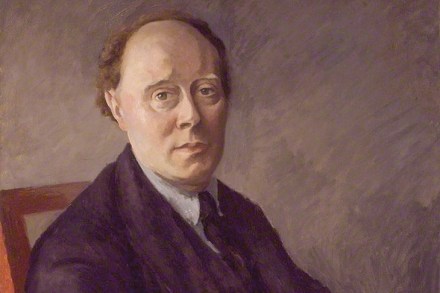
Clive Bell is the perennial supporting character in the biographies of the Bloomsbury group. The husband of Vanessa Bell, brother-in-law of Virginia Woolf and friend of Maynard Keynes and Lytton Strachey, he is often depicted as a witness to historical events rather than a participant in them, a sort of modernist Forrest Gump. At best he is a dilettante with good taste who didn’t quite belong with the intellectuals of Bloomsbury; at worst he is a womaniser with Nazi sympathies who took advantage of Virginia Woolf. In this useful book Mark Hussey lets him take centre stage and delivers a far more nuanced portrait. Bell liked to play up to his bad reputation — describing himself as ‘made for...

Ceramic art has been undervalued for too long

From our UK edition

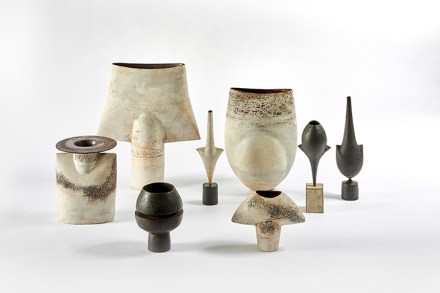
The use of ‘Ceramic’ rather than ‘Ceramics’ in the title of this book indicates Paul Greenhalgh’s passionate belief that ‘ceramic is a thing in itself: a many-headed but nevertheless singular entity, with an on-going intellectual discourse’ which he christens ‘the ceramic continuum’. He believes that this has been ‘actively denied its place as an artistic practice’ and that ‘its exclusion from the canon of art history is squarely to do with money, class and race’. The book is a prodigious attempt to right that wrong.

A new blossoming: David Hockney paints Normandy

From our UK edition

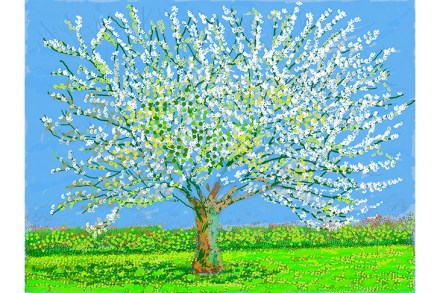
In 2018 David Hockney went to Normandy to look at the Bayeux Tapestry, which he had not seen for more than 40 years. He liked its great panoramic length and the absence of shadows. But while there he found himself seduced by the scenery of Normandy, its winding lanes and orchards of blossom trees. He decided he would like to paint the arrival of spring there, as he had in Woldgate, East Yorkshire, a decade earlier. He asked his long-standing assistant, Jean-Pierre Goncalves de Lima, known as J-P, to look into the possibility of renting a house. He was so delighted with the first one J-P showed him, La Grande Cour, that he exclaimed: ‘Let’s buy it!

Bright and beautiful: the year’s best art books reviewed

From our UK edition

When he was a student, the celebrated American modernist master Robert Rauschenberg once told me that his ‘greatest teacher’ — Josef Albers — would proclaim ‘art is svindle’ in heavily accented English at least ten times a day. By that provocative remark Albers probably meant not so much that art was a cheat but that intellectualising about it is usually bogus. He once thanked his lucky stars that his father was a painter-decorator rather than an intellectual. For him it involved simple forms, clear colours and no nonsense. Albers and his equally brilliant wife are the subject of a remarkable and visually beautiful joint biography, Anni & Josef Albers by Nicholas Fox Weber (Phaidon, £100).

From light into darkness: the genius of Goya

From our UK edition

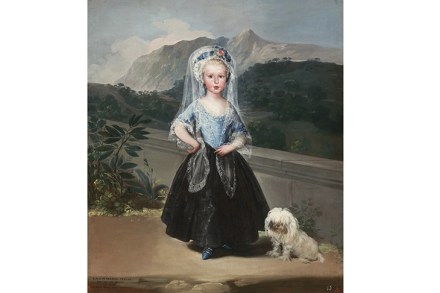
The great Spanish artist Francisco Goya was born in Zaragoza in 1746, the son of a gilder whose livelihood was doomed by the new fashion for marble. The young Goya first studied in his home town before graduating to Madrid, rising through academy and court circles and navigating his way through the reigns of three Bourbon kings and the intervening rule of Joseph Bonaparte before retiring to Bordeaux in his late seventies. From early commissions for religious frescoes, altarpieces and tapestry cartoons for royal palaces, he went on to paint celebrations of everyday Spain en fête and to establish a portrait practice encompassing all the leading figures of the wildly fluctuating political scene in the capital.

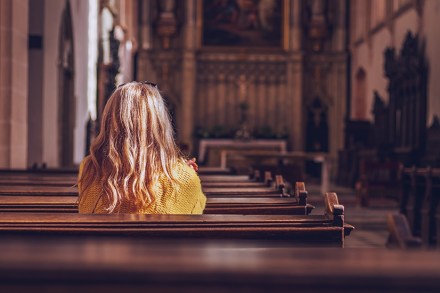
Will our churches ever reopen?

From our UK edition

There used to be a joke, repeated by English tourists in deserted piazzas, that the Italian for church (chiesa) and for closed (chiusa) were almost the same. Whatever the orari on the door, you were always several hours out. And so you would consult your guidebook, admire in miniature the Ghirlandaio, the Lippi, the really very special fresco — and go for a consoling ice cream. The joke was told with the smug Anglo-Saxon certainty that our churches were open to all-comers from before breakfast until after vespers. Not so now. And not during the months we weren’t in lockdown — for all the bishops are protesting about the new one. But even before the latest lockdown, it was hard to find an open church.

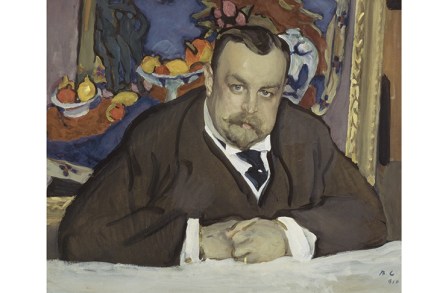
Ivan Morozov: the Russian businessman with a passion for the avant-garde

From our UK edition

If you want to see the very best of Gauguin and Matisse, go east. That was the case in 1914 and it’s still true today. The reason, then and now, lay in the collecting habits, both discerning and extravagantly acquisitive, of two men: Sergei Shchukin and Ivan Morozov. The first of these has already been the subject of a notable book by Natalya Semenova; the present work is its sequel. Although long since ‘nationalised’, the pictures these two men owned are still among the principal treasures of the Hermitage in St Petersburg and the Pushkin Museum, Moscow.

From Hogarth to Mardi Gras: the best art podcasts

From our UK edition

If you study History of Art, people generally assume you’re a nice, conscientious, plummy-voiced girl. Sometimes, people are right. It is the only subject I can think of that requires a student to describe what is already printed on the exam sheet. ‘In the foreground of the picture is a tree — in full leaf! — and on the horizon, a tower.’ It feels a little basic. But with art history podcasts description is everything. And to do it well is a real art in itself. The presenters of the Art Newspaper’s The Week in Art podcast were superb last week in their exploration of a portrait by William Hogarth.

Arthur Jeffress: bright young person of the post-war art scene

From our UK edition

The name Arthur Jeffress may not conjure many associations for those not familiar with the London post-war art world, but this wayward, flamboyant, controversial connoisseur and patron who left much of his ‘small but subversive’ collection to the Tate and the Southampton Art Gallery after his death in 1961 certainly deserves his footnote in history. ‘Small but subversive’ could describe the man as well as his collection: his fabulous wealth, inherited from Virginian tobacco plantation-owning ancestry, coupled with his rampant homosexuality, shaped a life of compulsive and conspicuous extravagance, in which art and sex vied with one another for supremacy against the backdrop of Belgravia and a palazzo just off the Grand Canal in Venice.

The Renaissance in 50 shades of grey

From our UK edition

The Mediterranean-centred era spanning a century or so either side of 1492 is filled to the brim with stories. There was the discovery of the Americas by a bold Genoese navigator; power struggles between wealthy Italian families, waged through conspiracies, poisonings and stabbings; a radical Dominican monk who managed to impose near-theocratic rule on a republican city before being burned at the stake; the advent of humanism and, subsequently, of a modern, power-focused theory of politics; and the maturing of the visual arts to a new level of sophistication, realism and emotional power. Such stories make up a significant part of the cultural inheritance of the West.

Stalin at Yale

Are we in our own revolutionary moment? Many of our leading institutions clearly believe so. Yale University has been working overtime to prove it is on the right side of history. ‘Problematic' colleges have been renamed. ‘Offensive’ stained-glass windows have been knocked out. Only the leadership of an Ivy League school could spread such a poisonous rash. Heading the charge against the Dead White Male has been a progressive Yale bureaucracy that is, for the most part, pale and stale. Now the task of dismantling Yale’s famous art history survey course has fallen to a scholar I respect, Tim Barringer. British-born, Barringer is the Paul Mellon Professor of the History of Art at Yale University and has been a leading curator at the Metropolitan Museum.

yale art history woolf

Only connect | 14 February 2019

From our UK edition

At the time of his death in 1900, John Ruskin was, according to Andrew Hill, ‘perhaps the most famous living Victorian apart from Queen Victoria herself’. He was a landmark — more or less literally. You could visit Brantwood, where he had his Lake District home in later life, and buy postcards of him. There were ‘Ruskin ceramics, Ruskin linen and lace products and Ruskin fireplaces’ available. In New Jersey, undismayed by the great man’s loathing of tobacco, there was a company that sold ‘John Ruskin’ premium cigars. Postmortem you could get Ruskin souvenir brassware or toasting forks and a scale model of the Ruskin monument near Keswick. But that, Hill also says, was about the peak of his fame.

Birth of a masterpiece

From our UK edition

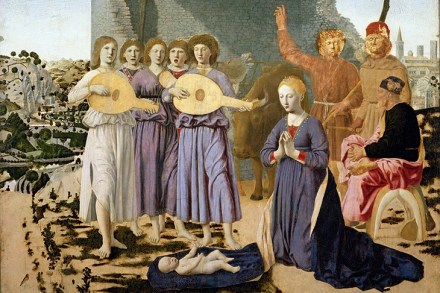
In the early 1370s an elderly Scandinavian woman living in Rome had a vision of the Nativity. Her name was Birgitta Birgersdotter, and she was later venerated as St Bridget of Sweden. In her account of the experience, transcribed by her confessor, she described herself as an eye witness. Her narrative began: ‘When I was present by the manger of the Lord in Bethlehem…’ Around a century later, Piero della Francesca (c.1412–92) used Bridget’s vision — or parts of it — as a starting point for a painting. This picture, now in the National Gallery, is one of the best-loved depictions of this immensely popular subject in the history of art. In some respects, Piero followed Bridget’s visionary account closely.

Mysteries unfold

From our UK edition

The striking yet subtle jacket image from Donatello’s ‘Madonna of the Clouds’ announces this book’s quality from the outset. Its focus is drapery, and the way that artists of the Italian Renaissance clothed their subjects, and furnished their narratives, to articulate veils of meaning that were infinitely suggestive. Marshalling a lifetime’s inquiry into the art of that era, Paul Hills — emeritus professor at the Courtauld, and author of the classic Venetian Colour — deploys an X-ray vision to drill beneath the skin, to find the pulse, the heartbeat of a painting or sculptural relief. He offers a key, a new entry point into works we thought we were familiar with; in doing so, he tweaks back a veil between us and them.

Albers the austere

From our UK edition

The German-born artist, Josef Albers, was a contrary so-and-so. Late in life, he was asked why — in the early 1960s — he had suddenly increased the size of works in his long-standing abstract series, ‘Homage to the Square’, from 16x16 inches to 48x48. Was it a response to the vastness of his adopted homeland, the United States? A reaction to the huge canvases used by the abstract expressionist painters in New York? ‘No, no,’ Albers replied. ‘It was just when we got a station wagon.’ In Charles Darwent’s new biography, Albers (1888–1976) comes across as a man as frill-free as the art for which he’s famous.

A violent ultimatum ended Giacometti’s brief flirtation with Marlene Dietrich

Those with long enough memories may remember Desmond Morris as the presenter of the hit ITV children’s programme of Zoo Time in the late 1950s and early 1960s. Or perhaps as the author of the 1968 bestseller The Naked Ape, in which he argued that, beneath our sophisticated veneer, humans are nothing more than primates. Now aged 90, he has written an uproariously funny book on the ostensibly unlikely subject of the Surrealists. I say ‘ostensibly’ because, before becoming a successful zoologist, Morris was actually a painter and even had a joint exhibition in London with Joan Miró. In The Lives of the Surrealists he takes on the role of a latter-day Vasari, penning mini-biographies of 32 artists who were associated with Surrealism.