Roger Scruton

Our gadgets are misleading us

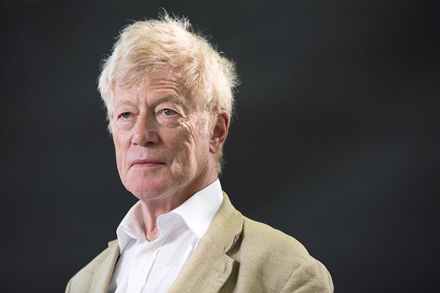
Human beings are wanderers who roam the world in search of adventure. And this love of adventure creates a need for home: homecoming makes wandering worthwhile. Hence human beings have devised instruments that help them to navigate, so as to guide them to their destination and — most importantly — to guide them back again, to the place where they are at home. The sextant was one of the most beautiful examples of this: an instrument for steering by the stars, which you held to your eye, and which reminded you of the vastness of the space across which you peered and the littleness of your own ambitions. Our ancestors who steered by the sextant never doubted the fixed background to human life, the unchanging heavens by which they navigated.

gadgets

Sir Roger Scruton: 1944-2020

From our UK edition

Sir Roger Scruton died today at the age of 75. In an article for the 2019 Christmas issue of The Spectator, republished here, he looked back on his year: January My 2018 ended with a hate storm, in response to my appointment as chair of the government’s Building Better, Building Beautiful Commission. But the new year brings a lull, and I hope and pray that the Grand Inquisitor enthroned by social media will find another target. February The 27th is my 75th birthday, and as it happens the last Wednesday meet of foxhounds for the season. We host the meet and celebrate with our neighbours.

Roger Scruton: My 2019

From our UK edition

  January My 2018 ended with a hate storm, in response to my appointment as chair of the government’s Building Better, Building Beautiful Commission. But the new year brings a lull, and I hope and pray that the Grand Inquisitor enthroned by social media will find another target. February The 27th is my 75th birthday, and as it happens the last Wednesday meet of foxhounds for the season. We host the meet and celebrate with our neighbours. Despite my wife Sophie’s protests, I maintain my resolve to give up hunting at 75, counting again the broken bones, sprains and muscular disorders acquired over 35 years in the saddle, or, rather, out of it. On my last hunt, I am glad to say, I stay in the saddle all day.

Roger Scruton on the interview that got him fired

From our UK edition

Roger Scruton has appeared on the Today programme to discuss the interview that got him fired. Here is the full transcript and recording of his conversation with Justin Webb: RS: I don't think I spoke intemperately. I speak as I speak and I discuss things as they are presented to me, according to my vision of them. But you know obviously the way in which it was presented in the New Statesman was such as to cause some kind of scandal. JW: At one stage, George Eaton, well he tweeted these words that he ascribed to you, 'each Chinese person is a kind of replica of the next one and that is a very frightening thing'. Let's listen to the context of that: There are difficulties around the corner that we are ignoring like the rise of China.

Roger Scruton: It’s time to release the tape that got me fired

From our UK edition

Miraculously my family forgive me for that interview. The children are adamant that there should be no resentment but even a measure of sympathy towards the journalist. He probably thought that you make friends on the left by making enemies on the right. I open the computer: hundreds of emails in support, but nothing official to say what I have done wrong. If there is evidence to incriminate me then obviously the New Statesman must make the tapes of the conversation public: how else will any of us know what we are allowed and not allowed to say, when working for this government?

Diary – 17 April 2019

From our UK edition

I travel back from London with the St Matthew Passion filling my head, after the moving performance from the Elysian Singers and Royal Orchestral Society under Sam Laughton at St James’s Piccadilly. Why does that last chord send shivers down the spine? The dark instrumentation, the sense that it is not an ending but a beginning, that this shadow-filled saraband will repeat itself for ever? Or is it just the story — surely one of the greatest narratives in all literature, in which nothing is redundant and yet everything is said? I arrive home with the chord still in my head, C minor with a B natural thrust like a sword into its heart. It foretells the week ahead. I devote the rest of the day to my report for the Building Better, Building Beautiful Commission.

Roger Scruton: An apology for thinking

From our UK edition

I recently gave an interview to the New Statesman, on the assumption that, as the magazine’s former wine critic I would be treated with respect, and that the journalist, George Eaton, was sincere in wanting to talk to me about my intellectual life. Not for the first time I am forced to acknowledge what a mistake it is to address young leftists as though they were responsible human beings. Here is my brief response to an unscrupulous collection of out of context remarks, some of them merely words designed to accuse me of thought-crimes, and to persuade the government that I am not fit to be chairman of the commission recently entrusted to me.

Home truths | 21 February 2019

From our UK edition

The creation of a commission to examine beauty in new building created a stir in the media, with the chairman subjected to a hate storm of unusual turbulence even by the standards that he regularly has to endure. Hate storms arise when powerful interests are threatened, and this was no exception. There is hardly a person in this country who is not aware of what Milan Kundera has called the ongoing ‘uglification of our world’ and who does not hope that something might be done about it. No one I talk to denies the need for a large number of new houses. But they all hope that this need can be reconciled with our deep-seated desire for beauty. Kant wrote that in judgments of beauty we are ‘suitors for agreement’.

The art of taking offence  

From our UK edition

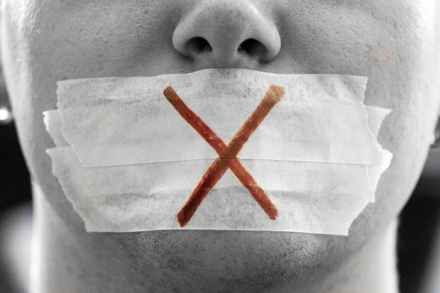
The emerging witch-hunt culture would be an object of half-amused contempt, were we still protected, as we were until recently, by the robust law of libel. It is still possible to laugh at the absurdity of it all, if you sit at home, avoiding contact with ignorant and malicious people, and getting on with real life – the life beyond social media. Unfortunately, however, ignorant and malicious people have discovered a new weapon in their unremitting assault on the rest of us, which is the art of taking offence. I was brought up to believe that you should never give offence if you can avoid it; the new culture tells us that you should always take offence if you can.

As the left surges back, Marxism’s bloody legacy is covered up

From our UK edition

As we approach the 100th anniversary of the Russian Revolution, it is fitting to ask whether we have learned what it tells us about its ideological root. Do we now appreciate that the Marxist ideology destroys legal order, political opposition and human rights? Do we have some idea of the death toll that has in every case followed the triumph of the ‘vanguard party’? Do we have an inkling of the human cost of collectivisation, or of what the gulag meant in terms of the humiliation and destruction of its victims? Of course the answer in each case is no. Our school curriculum dwells incessantly on the Holocaust. Several states have made denial of it into a crime, and museums and monuments to the victims of Nazism and fascism exist all across the continent.

Post-truth, pure nonsense

From our UK edition

For as long as there have been politicians, they have lied, fabricated and deceived. The manufacture of falsehood has changed over time, as the machinery becomes more sophisticated. Straight lies give way to sinuous spin, and open dishonesty disappears behind Newspeak and Doublethink. However, even if honesty is sometimes the best policy, politics is addressed to people’s opinions, and the manipulation of opinion is what it is all about. Plato held truth to be the goal of philosophy and the ultimate standard that disciplines the soul. But even he acknowledged that people cannot take very much of it, and that peaceful government depends on ‘the noble lie’. Nevertheless, commentators are beginning to tell us that something has changed in the past few years.

The only way to make a ‘safe space’ for conservatives at universities

From our UK edition

To Edinburgh for the book festival, where I am to explain Fools, Frauds and Firebrands to respectable middle-class Scots, who have an endearing way of suggesting to me that I, like them, am a thing of the past. They queue to buy the book, which is nice of them; however, the publisher has failed to deliver any copies, so the need to part with a few quid for politeness’ sake slips painlessly over the horizon. Only the students in the queue awaken me from my complacency. Where do we turn for comfort, they ask, when our reading lists are gibberish about which we can understand only that it is all left-wing? Is there no network, no secret society, no alternative reading list to get us through the next three years?

Diary – 25 August 2016

From our UK edition

To Edinburgh for the book festival, where I am to explain Fools, Frauds and Firebrands to respectable middle-class Scots, who have an endearing way of suggesting to me that I, like them, am a thing of the past. They queue to buy the book, which is nice of them; however, the publisher has failed to deliver any copies, so the need to part with a few quid for politeness’ sake slips painlessly over the horizon. Only the students in the queue awaken me from my complacency. Where do we turn for comfort, they ask, when our reading lists are gibberish about which we can understand only that it is all left-wing? Is there no network, no secret society, no alternative reading list to get us through the next three years?

Universities’ war against truth

From our UK edition

Young people today are very reluctant to assume that anything is certain, and this reluctance is revealed in their language. In any matter where there might be disagreement, they will put a question mark at the end of the sentence. And to reinforce the posture of neutrality they will insert words that function as disclaimers, among which the favourite is ‘like’. You might be adamant that the Earth is spherical, but they will suggest instead that the Earth is, ‘like, spherical?’ Whence came this ubiquitous hesitation? As I understand the matter, it has much to do with the new ideology of non-discrimination.

Flashmob rule

From our UK edition

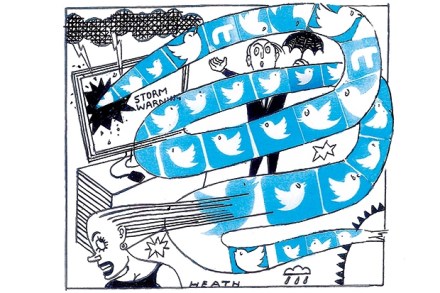
What should be the response of politicians to mass emailings and Twitter storms? The question is an urgent one, especially for Conservative MPs, given the general truth that mass petitions, in which complex issues are simplified to ‘for or against’ and emotion given a head start over reasoned argument, tend to come from the left. I was astonished to learn that a Tory MP decided his vote on the proposed Hunting Bill would depend on opinion polls in his local newspaper. In the event the Bill was withdrawn, largely, if Nicola Sturgeon is to be believed, as a result of online petitioning. Progressive causes such as the campaign against hunting have a familiar profile: the powerless against the powerful, victims against oppressors, the clean utopia against the murky reality.

Let’s face it – Ray Honeyford got it right on Islam and education

From our UK edition

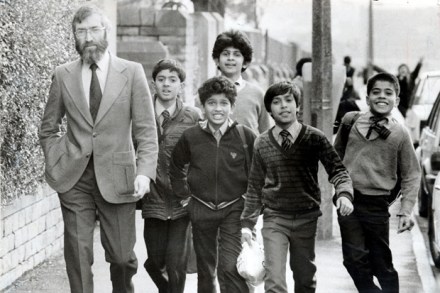
Thirty years ago, as editor of the Salisbury Review, I began to receive short articles from a Bradford headmaster, relating the dilemmas faced by those attempting to provide an English education to the children of Asian immigrants. Ray Honeyford’s case was simple. Children born and raised in Britain must be integrated into British society. Schools and teachers therefore had a duty, not merely to impart the English language and the English curriculum, but to ensure that children understood and adhered to the basic principles of the surrounding society, including racial and religious tolerance, sexual equality and the habit of settling conflicts by compromise and not by force.

Humans hunger for the sacred. Why can’t the new atheists understand that?

From our UK edition

Does the world have a purpose? The new atheists regard the question as absurd. Purposes emerge in the course of evolution, they tell us; to suppose that they could exist before any organism can gain a reproductive advantage from possessing them is to unlearn the lesson of Darwin. With the theory of evolution firmly established, therefore, there is no room in the scientific worldview for an original purpose, and therefore no room for God. Today’s evangelical atheists go further, and tell us that history has shown religion to be so toxic that we should do our best to extinguish it. Such writers describe the loss of religion as a moral gain — even though, for most ordinary believers, it looks like the loss of all that they most seriously value.

Schools need freeing from the right as well as the left

From our UK edition

Knowledge can be successfully transmitted and received only by those who recognise its value. If our governments have regarded education as valuable, however, it is usually as a means to some political goal unconnected with knowledge. As a result, our school system, once the best in the world, is now no better than the average developed country for numeracy and literacy. Many on the left see schooling as a form of social engineering, the purpose of which is to produce a classless society. Equality is the real value, and when knowledge gets in the way (as it often does) it must be downgraded or set aside. Many on the right look to education for the skills that the country needs in order to maintain our economic position in a competitive world.

Stand up for the real meaning of freedom

From our UK edition

When pressed for a statement of their beliefs, conservatives give ironical or evasive answers: beliefs are what the others have, the ones who have confounded politics with religion, as socialists and anarchists do. This is unfortunate, because conservatism is a genuine, if unsystematic, philosophy, and it deserves to be stated, especially at a time like the present, when the future of our nation is in doubt. Conservatives believe that our identities and values are formed through our relations with other people, and not through our relation with the state. The state is not an end but a means. Civil society is the end, and the state is the means to protect it. The social world emerges through free association, rooted in friendship and community life.

Roger Scruton’s diary: Finding Scrutopia in the Czech Republic

From our UK edition

Hay-making was easy this year, and over in good time for a holiday. I am opposed to holidays, having worked all my life to build a sovereign territory from which departure will be a guaranteed disappointment. However, the children have yet to be convinced of the futility of human hopes, and therefore must be taken for a week or so to places that renew their trust in Scrutopia, as the only reliable refuge from an alien world. As always we choose the Czech Republic; and as always it disproves my point. I don’t know what it is about Brno, but I am as home there as I can be anywhere. And Sophie and the children feel the same. We borrow the old cottage in the Moravian Sudetenland from which to explore a landscape wiped away by war.