Anti-semitism

Why are so many young people anti-Semitic?

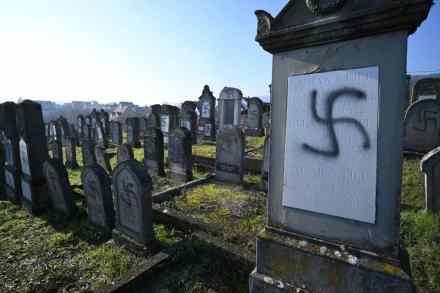
The surest way to work up a crusade in favour of some good cause is to promise people they will have a chance of maltreating someone. To be able to destroy with good conscience, to be able to behave badly and call your bad behaviour ‘righteous indignation’ – this is the height of psychological luxury, the most delicious of moral treats. Aldous Huxley, Crome Yellow Anti-Semitism ­– the socialism of fools – is a shapeshifter supreme. The oldest hatred has taken many forms, and is enjoyed by Christians and Muslims, communists and fascists alike. Now it can add another string to its bow. Anti-Semitism has become deeply fashionable. You might say it’s all the rage.

Who do the police protect?

The function of the police, one might have thought, was to protect the weak against the overbearing and the bullying. Unfortunately, a by-product of the Gaza crisis has been to suggest that, at least on the streets of London, a bit of carefully targeted thuggery against your political opponents can pay useful dividends. For some days now, the Campaign Against Antisemitism (CAA) has been raising awareness of the plight of abducted Israelis in Gaza by driving display vans around iconic parts of London. These vans are fitted with electronic billboards on the sides and back containing the names of children taken by Hamas from Israel a couple of weeks ago, and still holed up (assuming they are alive) in the Gaza Strip.

A deadly game of chance: The Story of a Forest, by Linda Grant, reviewed

‘Like a child in a fairy tale’, 14-year old Mina Mendel walks into a Latvian forest one day in 1913. With her basket and shawl, she looks like Little Red Riding Hood, but the wolves she meets – Bolsheviks, ‘agents of the coming revolution’ – are anything but mythical. Linda Grant begins her sweeping, ambitious ninth novel The Story of the Forest with this accidental encounter. From Latvia to Liverpool – and Soho to World’s End – she tells the story of one Jewish family in the 20th century as they live through plots to overthrow the tsar, the trenches of of the Great War, the racism of Liverpudlian suburbs and the horrors of the second world war It is a novel of chances: of lives changed by the ring of a phone, a meeting in a street, or the march of global history.

Is Candace Owens cashing in on Kanye West?

From our US edition

A great American poet once wrote: I went to the malls and I balled too hard/ “Oh my God, is that a black card?”/ I turned around and replied, “Why yes/ But I prefer the term 'African-American Express.’” How times change. Following a failed presidential run, a bitter divorce and two poorly reviewed records, for Kanye West, “balling too hard” now means buying a right-wing social media site from Candace Owens’s husband. It was announced today that Kanye, who now goes by Ye, is to buy the social media platform Parler, in a move the company characterized as “a bold stance against his recent censorship from Big Tech.

kanye west candace owens parler

Republicans endorse Kanye as everyone else slowly backs away

From our US edition

If there is one celeb to not rally behind right now, it’s Kanye West. Over the past few years, the rapper's mental health has steadily declined and his outbursts have become more regular. As he becomes more unhinged, friends who used to come to his defense have realized it’s in their best interest to quiet down. Yet in spite of all that, Cockburn can't help but notice that House Republicans have embraced Kanye. A tweet, which somehow has not been deleted, was posted on Thursday by the House Republicans Twitter account. It reads, "Kanye. Elon. Trump." Not only was the tweet ratio'd within minutes — with quote tweets such as "who are three people we really don’t need to hear from ever again?

A masterpiece: Rose, at Park Theatre, reviewed

Look at this line. ‘I’m 80 years old. I find that unforgivable.’ Could an actor get a laugh on ‘unforgivable’? Maureen Lipman does just that in Rose, by Martin Sherman, a monologue spoken by a Ukrainian Jew who lived through the horrors of the 20th century. In the opening sections, Lipman plays it like a professional comic and she fills the theatre with warm, loving laughter. Rose’s dad is a hypochondriac who spends all day in bed. ‘He never stopped dying but as far as we could tell there was nothing wrong with him.’ Eventually he loses his life when a wardrobe stuffed with pills topples on to him. ‘He was crushed to death by medicine.

Is T.S. Eliot’s great aura fading?

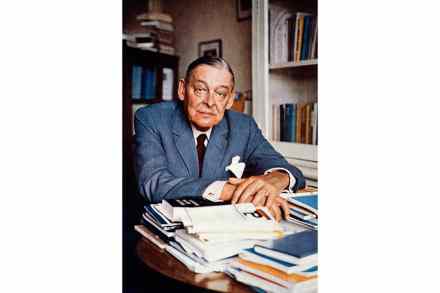
For much of his life T.S. Eliot was surrounded by an aura of greatness: people accepted it, and behaved accordingly. That kind of consensus is not helpful for a writer or his works, as Eliot himself clearly saw, observing that nobody had ever written anything significant after winning the Nobel Prize for Literature – true at the time and mostly true since. His work is now in the position of Hamlet when he wrote a famous essay on the play: that the universal agreement of its greatness had hidden an understanding of its failures, its strangeness and what it couldn’t do. We take the greatness of Eliot’s poetry pretty much for granted; but in the centenary of The Waste Land, some cracks are beginning to appear in a once unassailable reputation.

Was another tragic Jewish death covered up in France?

Not for the first time in France the death of a Jew is dominating the news, and not for the first time there are whispers of an attempted cover-up. Several candidates in Sunday’s election have paused from their campaigning to air their views on the death of Jeremy Cohen, a 31-year-old who was struck by a tram in Seine-Saint-Denis, north of Paris. The candidates portrayed by the commentariat as ‘extreme right’ were the most direct. ‘Did he die because he was a Jew?’ tweeted Eric Zemmour, himself a Jew. ‘Why is this case hushed up?’ Marine Le Pen also wondered on social media if ‘what was presented as an accident could be an anti-Semitic murder’.

Fit to print

From our US edition

In January 1936, Harold Nicolson, the British politician and author, reviewed Inside Europe, by the Chicago-born journalist John Gunther. He praised the “American type of wandering or perambulatory foreign correspondent” such as Vincent Sheean, H.R. Knickerbocker (known as Knick), the Mowrer brothers, John Gunther and (the only woman) Dorothy Thompson, as “one of those improvements to modern life that the British would do well to imitate.” According to Nicolson, the virtue of the book, which famously described Adolf Hitler as a “blob of ectoplasm,” was not merely that it was exciting but “so personal that it may seem dramatic and at the same time educative.

reporters

Eric Zemmour isn’t to blame for France’s anti-Semitism crisis

Emmanuel Macron sees anti-Semitism everywhere except where it really lurks. Earlier this month his government accused protesters opposed to the Covid Passport of giving the Nazi salute, a charge that was disproved by video footage and this week dismissed by the public prosecutor’s office in Paris. Yesterday, in a speech to mark International Holocaust Day, Macron warned of the return of ‘an ill wind’ blowing through the continent in some ‘political discourse’. He vowed that France would never cease to honour the memory of the six million Jews murdered in the Holocaust ‘particularly when some try to falsify it.

Malik Faisal Akram and our shoddy security state

From our US edition

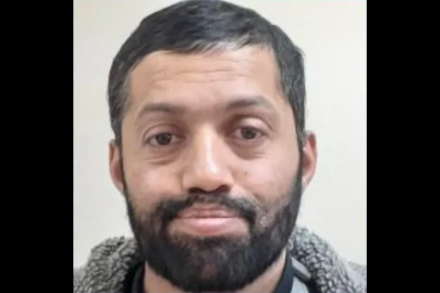
It wasn’t so long ago that an official at London’s Heathrow airport, warned by the scanner through which my luggage was passing, uttered an Archimedean Eureka! (or words to that effect), pounced on my suitcase and abstracted an incriminating bottle of shampoo, which he confiscated. “Over the limit, Sir,” he exclaimed, as a colleague asked me to step aside and extend my hands to be tested for evidence of contact with explosive materials. It’s not only in England, of course, that functionaries subject the populace to their petty tyranny. It’s the same drill in the US. “Oh, but it’s to keep you safe, you know, that’s why we spend billions on our intelligence services and elite crime fighting units, equipping like armies so they can protect us from the bad guys.

malik faisal akram

The dark story behind Bambi, the book Hitler banned

The extent of Walt Disney’s grasp of the natural world remains unclear. After the Austrian author Felix Salten sold the rights to his 1923 bestseller Bambi for a paltry $1,000, Walt is reputed to have suggested myriad unhelpful plot additions to the simple story. ‘Suppose we have Bambi step on an ant hill,’ he offered at one script meeting, ‘and then cut away to see all the damage he’s done to the ant civilisation?’ His writers knew better. The resulting 1942 forest fantasia, which leaps in swooning bounds from one extravagantly coloured and orchestrated natural history lesson to another, was nominated for three Oscars, and by 2005 had grossed $102 million. The original author did less well out of his gambolling creation.

Azeem Rafiq and the hypocrisy of victimhood

On the face of it, it seemed the most startling irony. Azeem Rafiq, the former Yorkshire spin bowler who has been giving tearful evidence to a select committee about racism at the club, was found to have made racist remarks himself. Well, anti-Semitic remarks. Which is just as serious, right? In the eyes of many, it was a case of pot and kettle. Here was a man making a very public display of his victimhood, who seemingly felt it was OK to mete out the same treatment to others. #Hypocrite, they cried. #Humbug. With almost no exceptions, reports focussed on the apology that Mr Rafiq gave and the fact that his anti-Semitism was only 'historic'. But not in the eyes of the media and liberal commentariat.

A troubling tide of anti-Semitism is sweeping Britain and France

A day after the Israeli ambassador to Britain, Tzipi Hotovely, was harassed as she left the London School of Economics, a murder trial in France reached its grisly conclusion. Yacine Mihoub was handed a life term after being convicted of stabbing 85-year-old Mireille Knoll multiple times and then setting her body alight in March 2018. The elderly woman, a Holocaust survivor, had known Mihoub since he was a boy, but he still snuffed out her life because she was a Jew. An accomplice claimed Mihoub screamed 'Allahu Akbar' as he stabbed Knoll. It was a murder almost identical in nature to that of Sarah Halimi, slain in the same arrondissement of Paris a year earlier. Her assailant also shouted 'Allahu Akbar' as he took the life of the retired Jewish doctor.

The sinister targeting of Israel’s ambassador at the LSE

A mob waving flags and chanting slogans hounds a Jewish leader, forcing her to be bundled into a car and driven off for her own safety. These were scenes that might have been expected on 9 November 1938, when the ‘Kristallnacht’ pogroms raged across Nazi Germany, marking the beginning of the Holocaust. Instead, they took place 83 years later, on 9 November 2021, outside that august institution, the London School of Economics, in the heart of the British capital. The recent BBC series Ridley Road smugly suggested that antisemitism in this country was confined to decades past; real life is far more worrying. Antisemitic, you say? That’s a bit strong.

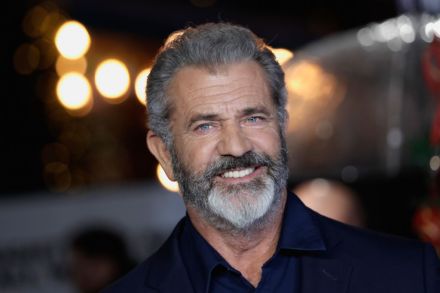
Mel Gibson defies the keyboard cancelers

From our US edition

News that the John Wick spin-off TV series The Continental has cast its lead actor has produced an unusual amount of vitriol. Was this because it was not an actor of color, a trans performer or some other member of a minority? No: it was because it was Mel Gibson, the walking bête noire for liberals in Hollywood. As many other outspoken conservative or simply unsavory figures (hello, Kevin Spacey! Greetings, Armie Hammer!) have found their careers curtailed for their antics, Mel Gibson’s continued ability to book high-profile acting roles has driven the sharp-fingered mob of social media into a frenzy of disdain. Granted, Gibson’s star has waned considerably since his heyday in the Eighties and Nineties.

mel gibson

Why does Kamala Harris refuse to confront anti-Semitism?

Kamala Harris’s pandering to anti-Semitism in a photo-op at George Mason University last week confirms that when it comes to the Democrats, the fish now rots from the head. What should a vice president of the United States say when a foreign student ambushes her with boilerplate lies – in this case, lies which fit her State Department’s own definition of how the more fantastical forms of anti-Zionism are in fact anti-Semitism? You don’t need to be a genius like Joe Biden to know the answer. Speak the truth. Push back against the corrosion of fake news and identity politics which is pulling American society apart.

The New York Times tips its anti-Semitic hand

From our US edition

After the House of Representatives decided yesterday that it would be, well, a bit much to leave millions of Israeli civilians at risk of being blown up in their own beds, the 'progressive' wing of the Democrat party was devastated. 'Minutes before the vote closed, Ms Ocasio-Cortez tearfully huddled with her allies,' ran a heartrending report in this morning's New York Times, describing the House’s 420-to-9 decision to approve funding for Israel’s Iron Dome missile defense system. 'The tableau underscored how wrenching the vote was for even outspoken progressives, who have been caught between their principles and the still powerful pro-Israel voices in their party, such as influential lobbyists and rabbis.

new york times

How Harvard went woke

From our US edition

On January 1, 1993, I arrived at Harvard to take up a newly endowed professorship in Yiddish literature. It seemed preposterous: me at Harvard, Yiddish at Harvard. The university had never figured in my aspirations. My impressions of the university had been formed mostly from what I knew of its program in Jewish studies, which was jokingly referred to as ‘the Yeshiva on the Charles’ because of its emphasis on Talmudic and medieval sources. Its almost exclusively male Department of Near Eastern Languages and Civilizations felt obliged to appoint a female. My gender played an even more prominent part in the deliberations of the Department of Comparative Literature where I was to hold a joint appointment.

ruth wisse harvard

Louis-Ferdinand Céline was lucky to escape retribution in 1945

They rather like bad boys, the French. Louis-Ferdinand Céline (1894-1961) is one, in a tradition that stretches from François Villon to the dyspeptic Michel Houellebecq. But provocation doesn’t always get you where you want to be, as the careers of Richard Millet and Marc-Édouard Nabe demonstrate. Journey to the End of the Night, Céline’s first novel, was a huge success when it was published in 1932 and made him a darling of the left, with applause from Trotsky and Jean-Paul Sartre. That didn’t last long. His virulently anti-Semitic pamphlets (so extreme that André Gide thought he was joking) and his arguments for accommodating Hitler resulted in him going on the run at the end of the second world war.