Anti-semitism

A profound account of the October 7 pogrom

From our US edition

I first learned about anti-Semitism at the age of eight, when my father explained to me that his closest business friend could not live near us because he was Jewish. This was 1961, hardly three miles from Mount Vernon, Virginia, in a new-build neighborhood that was racially segregated, as was my elementary school. Black children descended from George Washington’s slaves lived in a nearby rural ghetto called Gum Springs and were not welcome east of Fort Hunt Road. Somehow that memory – like John F. Kennedy’s assassination two years later and the view of his funeral procession from my father’s office window – is one of my earliest and starkest recollections.

Murray

Another spring, another round of anti-Semitism on campus

From our US edition

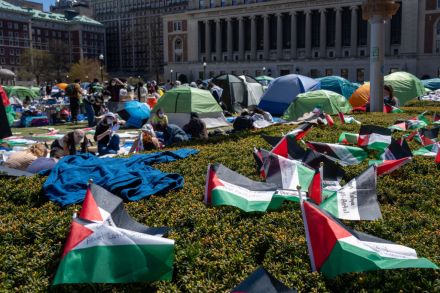
The weather is growing warm, which means anti-Semitic demonstrations are blooming at elite universities. The hatred of Jews is no longer hidden, as it was in the days when Jewish enrollment was quietly limited by quotas. Now, it is displayed openly by a campus coalition led by hardline American leftists (students, faculty, and administrators) and Muslim students, some from America, some from the Middle East.  Their hatred is screamed at Jewish students and pro-Israeli speakers—and then at anyone who dares support them or simply demands the basic right to speak or be heard. Any support for Israel is damned as “genocide” and then shouted down, shamed, or worse.

campus

Is Kanye West more powerful than Donald Trump?

From our US edition

There are powerful men, and then there is Kanye West. Or Ye, as he now calls himself. While the world spends its energy analyzing the muscle of nation-states, few seem willing to grapple with a far more disturbing, modern form of power: cultural invincibility. In that particular department, Kanye West is in a class of his own.How, I ask, are we to define power in the 21st century? Is it the ability of world leaders like Donald Trump to impose tariffs, pass legislation, launch missiles, control borders? Or the ability to say the unspeakable, do the unacceptable, and still survive – but thrive? If the latter, then it’s time we admit something uncomfortable: Kanye West may be the most untouchable man on the planet.Let me be very clear. This is not a celebration; it’s a diagnosis.

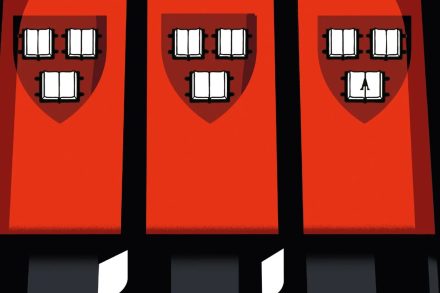
Harvard against America

From our US edition

This is drumming season.  That’s the time of year when the woodpeckers stake out their territories by tapping out tattoos on hollow trees.  Road signs or “no trespassing” edicts make an even more impressive racket.  I come to Vermont to get away from Midtown Manhattan’s horns and sirens – but this time of year, it’s just a visit to the percussion section.  But the real racket isn’t from the birds declaring their sovereignty over the woods.  It is from Harvard declaring its sovereignty over American higher education. In a letter dated April 14, the principals of two Washington law firms wrote a brief letter to three officials in the Trump administration telling them they need not worry about antisemitism at Harvard.

harvard

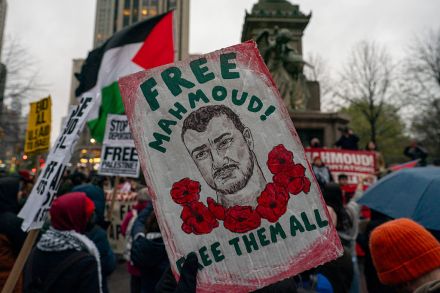
Mahmoud Khalil is not the victimized cuddlebear the media would have you believe

From our US edition

A federal immigration judge ruled on Friday that the government could deport Mahmoud Khalil, not a student, but a “Columbia University graduate.” Judge Jamee Comans, a former Mississippi police officer and a Biden appointee in 2023, said that Khalil’s political activities posed “potentially serious foreign policy consequences” for the United States, which is claiming that Khalil is undermining “US policy to fight anti-Semitism.”  Khalil supporters talk about him like he’s Nelson Mandela on Robben Island, Dr. King writing letters from Birmingham jail or Oscar Wilde staring wistfully at the moon from his cell in Reading Gaol. But anyone looking to ding the Trump administration on its deportation policy could find a better example of injustice.

The world is now inexorably divided – and the West must fight to survive

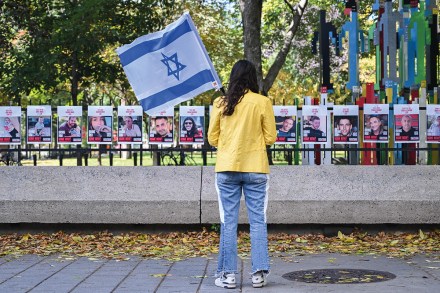
In The Builder’s Stone, Melanie Phillips reminds us forcefully that we must never forget how 7 October 2023 changed the world. On that day Hamas terrorists from Gaza invaded southern Israel and brutally raped women and butchered or burned alive 1,100 Jewish men, women and children. They also dragged 250 Israelis, including three-year-old twins, grandparents and young women whom they had already attacked, into Gaza as hostages. They filmed it all on their body cameras, and perhaps the most terrifying thing they recorded was the glee with which they carried out these atrocities. Phillips, a British writer who lives in Jerusalem and London, has spent many decades fighting Goliaths.

Jew and non-Jew: Unity Mitford and aristocratic anti-Semitism

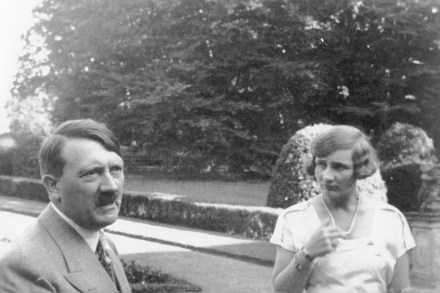
I was touched but not surprised that, despite his illness, the King attended the 80th anniversary of the ‘liberation’ of Auschwitz-Birkenau this week. His paternal grandmother, Princess Alice of Battenberg, was a rescuer. She hid the Cohen family in her house in Athens and is honoured as a ‘righteous’ gentile at Yad Vashem in Jerusalem, where she is buried on the Mount of Olives. A less friendly aristocrat was Unity Mitford, whose views were probably a more accurate reflection of her class. Her newly published diary describes her friendship with Adolf Hitler. Here is a typical entry: ‘Lunch Osteria 2.30. THE FüHRER comes 3.15 after I have finished lunch. After about ten minutes he sends the Wirt [owner] TO ASK ME TO GO TO HIS TABLE.’ She sounds like Bridget Jones.

The horror of Hungary in the second world war

I suspect Adam LeBor and his publishers must have struggled to come up with the title The Last Days of Budapest: Spies, Nazis, Rescuers and Resistance, 1940-1945. The book certainly does what it says on the cover, but its pages contain other Magyar-themed subjects. We are offered a wide-ranging reflection on Hungary in the first half of the 20th century, from the harsh measures of the 1920 Trianon treaty to the devastating arrival of the Soviet army in Budapest in 1944. LeBor switches between an Olympian view of European geopolitics, trawling diplomatic archives and political memoirs and focusing on individuals – Hungarian aristocrats, Zionists and nightclub singers – to show how history felt on the ground. He is particularly concerned with the fate of Hungarian Jewry.

Has the term ‘racist’ become devalued through overuse?

One of the key charges made by the hard of thinking is that because the devastating accusation ‘racist’ has been thrown around so casually in these days of febrile public discourse, it no longer has meaning. Similarly, ever since Rik called Vyv (and a bank manager and the BBC) a fascist in The Young Ones, that insult has been devalued to the point of meaninglessness. Or has it? One can never truly know the heart of another person, so short of them lighting a crucifix on their front lawn and perpetrating violence exclusively against one racially designated group over another, we are compelled to only assume that if you often say things that sound a bit racist you might be legitimately given the identity of ‘a racist’.

A world without Jewish artists

It’s Christmas, and the far left have a gift for us in their stocking: a cultural boycott of Jews. They don’t call it that, of course. Rather, they say it is a boycott of Israel, and that those who support Israel, and people who confuse Israelis with Jews – that  is, most people – are anti-Semites. That peace-seeking, leftist Israelis and Jews (good Israelis and Jews) will be those boycotted (I can’t see Itamar Ben-Gvir turning to romance fiction) doesn’t seem to bother them any more than murdering good Israelis and Jews mattered to Hamas on 7 October 2023. It was, rather, the point of it all. Hollywood Jews often hid their Jewishness. Sam Spiegel had a phase of calling himself S.P.

Wagner’s Ring is a mythic mishmash

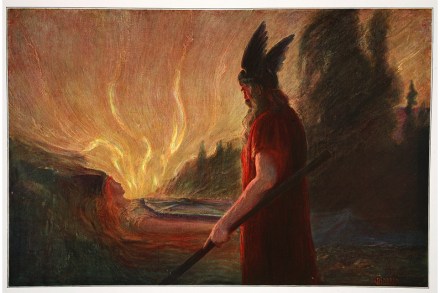
Wagner’s Ring is an ambitious cycle of four operas relating world history from Primal Swirl to End of Days. It took 26 years to write, takes 15 hours to perform, a double-size orchestra to play and a specially built opera house to stage. Michael Downes, the director of music at St Andrews University, places the fons et origo of the epic in Wagner’s frustration as a kapellmeister, when he wrote, unsolicited, to his boss the King of Saxony, proposing a total revamp of the royal music scene. No reply was forthcoming. A second proposal was also blanked. Furious, Wagner flung himself into the Dresden uprising of 1848, financing the manufacture of hand grenades and giving bloodthirsty speeches from the barricades.

Europe’s blind spot over anti-Semitism

You would think that we Europeans might have learned a thing or two about anti-Semitism over the past century or so – and perhaps come to understand pragmatically, if nothing else, that what begins with the vicious persecution of Jews usually moves on to murdering lots of other people, too. But no. Or if we did, then it has conveniently slipped our minds, as things tend to do in these complicated times. Or perhaps we think that the persecution of the Jews we are seeing right now in Europe is of a different marque to that which began in the early 1930s in Germany. Yes, it’s sort of anti-Semitism – but it’s of a nicer kind than that instigated by that psychotic little Austrian with the performative moustache. A little more excusable.

Letters: What is the Chancellor trying to achieve?

Zero-sum game Sir: Though troubled by the impact of Budget measures on employers and economic growth, I am more baffled by the regressive nature of those measures on the most vulnerable sectors – retail, hospitality, social care and students (‘Tax, spend, borrow’, 2 November). While the employer of a full-time employee earning £50,000 a year will see a cost increase of 2 per cent, the comparable increases for a full-time adult, a half-time adult and a 16-hour-a-week student on the minimum wage are 10.4 per cent, 13.1 per cent and a staggering 23.2 per cent respectively – and retail and hospitality are also hit by a major reduction in business rates relief.

The stark, frugal world of Piet Mondrian

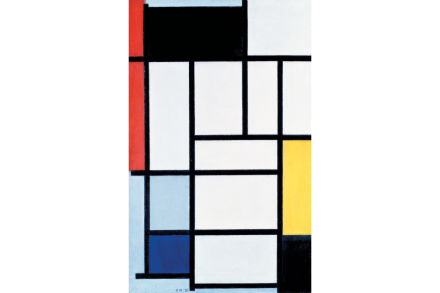
In September 1940 the Dutch abstract artist Piet Mondrian arrived in New York, a refugee from war and the London Blitz. He was 68, a well known figure in modern art circles in Europe but as yet little appreciated on the other side of the Atlantic. His visas, his travel and his accommodation had been sorted out for him by well-wishers in Britain and he was welcomed in America by Harry Holtzman, an artist some 40 years his junior. On the evening of his arrival, Holtzman entertained the stiff, fastidious, well-dressed Mondrian to dinner in his apartment and introduced him, via the phonograph, to boogie-woogie. He recalled: Mondrian’s response was immediate, he clapped his hands together with obvious pleasure. He sat in complete absorption to the music, saying, ‘Enormous! Enormous!

An outcast among outcasts: Katerina, by Aharon Appelfeld, reviewed

‘Nothing escape’s the wolf’s fangs,’ thinks the narrator of Katerina. Through an outlandish sequence of chances and choices, somehow its author did just that. Aharon Appelfeld, a child of assimilated parents, lived in the old Jewish heartland of Bukovina. In 1940, short-lived Soviet occupation gave way to Nazi control. His mother was murdered and his father disappeared. Young Aharon escaped the Czernowitz ghetto and survived as a wild child in the forests, sheltered by a village prostitute, then as the ‘slave’ of a Ukrainian bandit gang. When the Red Army arrived he cooked for them before, via a peril-strewn route through Italy, he migrated to Mandate Palestine.

The roots of anti-Semitism in Europe

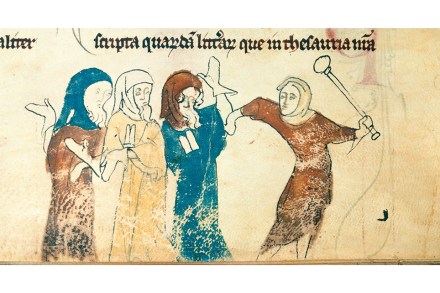
The medieval trope that Jews are inherently bloodthirsty has echoed down the ages. Forms of the blood libel have been disseminated ever since the myth emerged in England in the 12th century with claims that Christian children were being ritually murdered by Jews in re-enactments of the crucifixion of Jesus. In the aftermath of 7 October, Labour’s Rochdale by-election candidate Azhar Ali accused Israel of lowering its defences so that it could justify the shedding of innocent Palestinian blood. Gigi Hadid, the American model, shared a video which alleged that Israel is harvesting the organs of Palestinians.

Between the Iron Lady and the Wedding Cake: conflict in Belle Époque Paris

Between 1789 and 1871 Paris went through five kings, two Bonapartist empires, two republics, several revolutions and a Commune. Each had been an attempt to accommodate or neutralise one of two visions of France. The oldest was traditional and conventional; it mourned the ancien régime, and preferred the safety of autocracy over the chaos of democracy and God over science. The younger was progressive and eager for change, building on the ideas of the Enlightenment and the revolutionary ideals of 1789. We are taken through slums, cafés, law courts, theatres, brothels, strikes and demonstrations For Mike Rapport, ‘the friction between change and tradition is perhaps the defining characteristic of the modern condition’.

Congress speaks up on anti-Israel campus protests

From our US edition

Raucous anti-Israel protests at Ivy League Columbia University — which have spread to other campuses following the administration’s crackdown on encampments erected by student activists — are becoming a hot topic on Capitol Hill.Republicans are eager to point out the protests are merely a symptom of the larger rot within academia; college administrators for years tolerated left-wing activists breaking university policy (and often rewarded them for their efforts) while resisting the representation of conservative voices on campus. This posture has allowed radical, hate-filled movements to foment among increasingly progressive student bodies.

The Dreyfus Affair continues to haunt France to this day

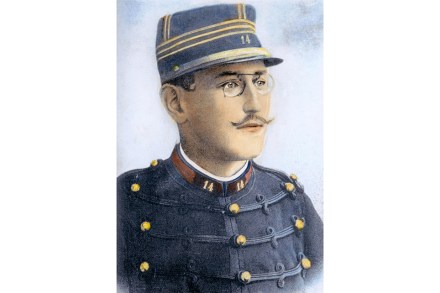
A short new book on Captain Alfred Dreyfus, the proudly patriotic French army officer who was falsely accused in 1894 of being a German spy, and whose court cases divided France into two warring camps, could not have been better timed. For the division sounds horribly familiar. Liberal, democratic, secular, cosmopolitan, urban France was pitted against provincial, religious, authoritarian, anti-immigrant, chauvinistic France. Dreyfus, an assimilated Alsatian Jew, was first sentenced by a military court, using faked documents and trumped-up charges, to life imprisonment on Devil’s Island, off the coast of French Guiana.

How on earth does Rishi Sunak keep going?

It’s my birthday this week and the end of my seventh decade (mathematicians will note that this does not make me 79). Looking at my long and generally happy life, I do wonder quite how we arrived where we are with this all-pervading sense of gloom and despondency. Gaza, Ukraine, Putin, Trump, Islamic State, Brexit… whichever way you look, there’s something you don’t want to see. The doomsday clock now stands at 90 seconds to midnight, the closest we’ve ever been to complete annihilation. Happy birthday to me. It’s not all bad though. Last week my son came home with a borrowed Apple Vision Pro, the wrap-around headset which retails at around £3,000.