American politics

The populism of Machiavelli and Jefferson

From our US edition

A few years ago a Marine turned novelist, G. Michael Hopf, captured a classic truth in a pithy formula. Inspired by cyclical theories of history — in particular the generational “turnings” of William Strauss and Neil Howe — Hopf wrote in his novel Those Who Remain, “Hard times create strong men, strong men create good times, good times create weak men, and weak men create hard times.” One need not put much stock in Strauss and Howe to appreciate the maxim. It could just as well be derived from Sallust or other classical sources. Or from Machiavelli: in his Discourses on the First Decade of Titus Livy, the Florentine philosopher considers where best to build a city.
Machiavelli

George Santos spent campaign money on OnlyFans, Botox, makeup and Hermès

From our US edition

The House Ethics Committee released its long-awaited investigative report into New York representative George Santos on Thursday. The document puts forward "substantial evidence,” showing that the congressman engaged in a “complex web” of criminal activity, knowingly breaking campaign finance laws. The committee, under the leadership of Chairman Michael Guest, has voted unanimously to adopt the report. In effect, the “substantial evidence of potential violations of federal criminal law” had been sent to the Department of Justice, which will determine what the next steps in the Santos case look like.

george santos

Battle cry of the politically listless

From our US edition

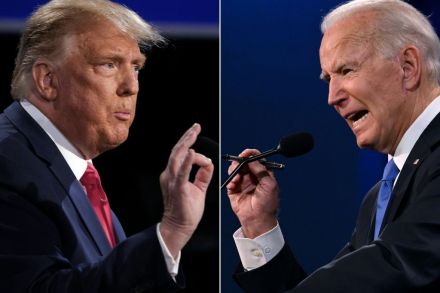
As we head into yet another election season, faced with what looks like an inevitable Trump-Biden rematch, it’s hard not to despair at the divided state of the nation. A quick scan of the political landscape, and the condition of our cities, leaves me struggling — everything seems fractured. It’s like a broken mirror: the shattered remains are all reflecting back at each other, bouncing light everywhere. We live in an America that seems familiar, but only because it’s composed of the broken shards of something that once was. There is a lot of talk about how America is in decline. This was a central theme in the first GOP debate. It was presidential hopeful Ron DeSantis’s opening line: “Our country is in decline, this decline is not inevitable, it’s a choice.

Elon Musk should make Twitter weird again

From our US edition

Before the internet, the town square was a weirder place. True believers — from those concerned about fluoride to those dedicated to stopping gay frogs — had to put in the work. There were cardboard boxes and Sharpies to procure in order to make signage. A milk crate wasn't necessary, but it did elevate the speaker above his audience. It was not a desk gig. People had to get up and hit the corner from morning until some point in the evening, blasting out their gospel to whoever passed by and, perhaps, stopped to listen. Those early content creators had angles. Some sang or played guitar. Others simply testified. Regardless, they were the righteous, willing to sacrifice time and effort for their art. Then Twitter happened.

Politicians are not ‘just like us’

From our US edition

Kenneth Minogue, the political philosopher from Down Under, devoted a career to the wholesale destruction of liberalism as a political, intellectual and moral system without liberals having ever noticed the fact. A decade ago, he observed that we now refer to our democratic rulers by their Christian names — Bill, Hillary, Barack, Joe, Boris and so on — as casually as we do baseball players, television anchors and rock stars. The casualness of the age is not a wholly sufficient explanation of the practice. Democratic politicians, American ones especially, have had nicknames attached to them by their constituents for at least two centuries: Little Jemmy, Old Hickory, His Accidency, Uncle Abe or the Tycoon, Old Rough-and-Ready, His Fraudulency and Amtrak Joe among numerous others.

politicians

A hazy afternoon with Bill Maher

From our US edition

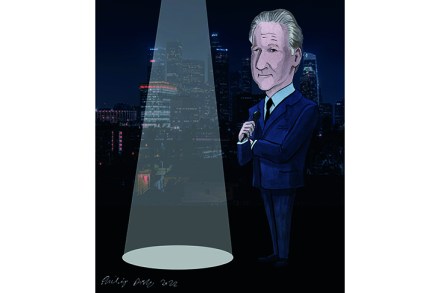
It’s a beautiful Saturday afternoon in Beverly Hills and Bill Maher — stand-up comedian, late-night television host, prophet of the great American silent majority — is ruminating on what the hell has gone wrong with the left: “It all comes, I think, from two terrible sources: bad parenting and insane universities. That’s where the craziness is coming from.” Maher is sitting with me in “Club Random,” the neon-light-festooned, decked-out bungalow he converted into a television studio in 2020, after social distancing requirements forced his weekly HBO show, Real Time with Bill Maher, to shoot remotely.

How to not argue at the dinner table

From our US edition

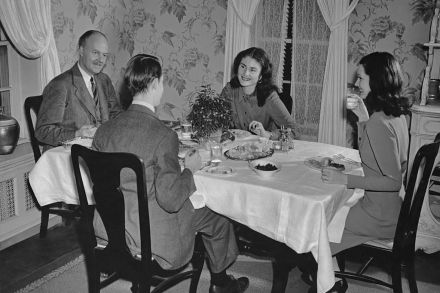
Family dinners, like almost every area of American life, have become a subject of fierce politicization recently. In the years following Trump’s election in 2016, readers of elite progressive outlets were treated to a long parade of thinkpieces urging Americans, in the words of a 2019 Atlantic essay from Ibram X. Kendi, “to liberate our relatives from their abusive relationship with Trump’s alternative reality.” “This Thanksgiving, It’s Time to Take on Your Conservative Relatives,” declared a headline in the Nation. Molly Jong-Fast called on readers to “Deprogram your relatives this Thanksgiving.” A 2017 GQ article was perhaps bluntest of all: “It’s Your Civic Duty to Ruin Thanksgiving by Bringing Up Trump.

family

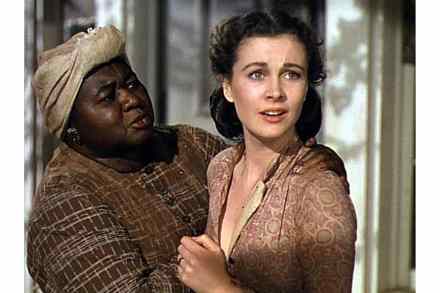
Is Gone with the Wind to blame for Trumpism?

‘America is merely a story the nation tells itself,’ the historian and cultural critic Sarah Churchwell writes in The Wrath to Come. Of the many American stories, few are more disturbing than the complex one represented by the rioter Kevin Seefried inside the Capitol on 6 January 2020. He carried the Confederate battle flag to a place it had never before been: the hall outside the United States Senate chamber. There is a photograph of him standing between two portraits – one of Charles Sumner, an abolitionist beaten half to death on the Senate floor for his views; the other of Senator John Calhoun, one of the South’s most ardent enslavers and advocates of disunion.

This Trump satire is too soft on Sleepy Joe and Cackling Kamala: The 47th at the Old Vic reviewed

Trump is said to be a gift for bad satirists and a problem for good ones. He dominates Mike Bartlett’s new play, The 47th, which predicts that the 2024 presidential election will be a run-off between Trump and Kamala Harris. Bertie Carvel’s Orangeman is a subtle and highly amusing spoof that never descends into exaggeration or grotesquery. The visuals are convincing: the sandy blond wig, the baggy golfing outfits, the spare tyre around the midriff. Excellent design work. And Bartlett captures the repetitive lullaby pulse of Trump’s rhetoric. Like a lot of liberals, he seems to admire Trump and this show reflects a perverse fascination with its target. The script is understandably soft on Sleepy Joe and his faltering brainpower.

AOC, America’s youngest congresswoman, has already been compared with FDR and JFK

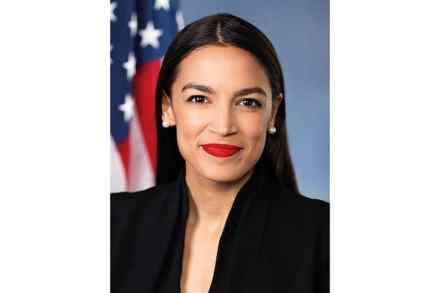
‘Who is AOC?’ the back cover of this book asks. ‘A wack job!’ says Donald Trump. ‘She needs to run for president when she turns 35,’ Cardi B explains. Alexandria Ocasio-Cortez is the youngest congresswoman in America. She goes by her initials (like FDR and JFK) and is a Latina from the Bronx and Westchester, with no background in policy making, a bartender. She has a boyfriend; she uses social media to communicate with fans and fight with political foes, and also to cook ramen noodles in front of millions of people while chatting with them about structural inequality and mass incarceration. And every one of these things winds up meaning so much. Take Up Space is a ‘kaleidoscopic biography’, assembled by the editors of New York magazine.

Why David Mamet went right

From our US edition

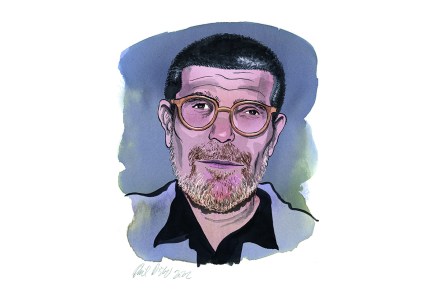
How did David Mamet spend the pandemic? The answer, as anyone familiar with the prolific, brilliant playwright and screenwriter would probably have guessed, is that he wrote. “I’ve been writing a lot of essays lately,” Mamet, seventy-four, says when we meet at his Santa Monica home on a cool January evening. “Because, you know, I don’t want to go and sit on a park bench. I’m a writer.” A collection of essays written during the tumultuous plague years is published this month by Broadside, an imprint of HarperCollins. Recessional: The Death of Free Speech and the Cost of a Free Lunch is combative, challenging, witty, and, as the title suggests, its prevailing mood is as dark as the “terrible” period in which it was written.

Mamet
democratic

A eulogy for the Democrats of yore

From our US edition

In my days as a budding political scientist — nipped, fortunately for the discipline, in the bud — I learned that party identification is frequently due to non-ideological, and to outsiders irrational, factors. I’m sure this is less true today, as corporate and social media herd us into Team Red and Team Blue cattle pens, but this knowledge offers comfort every biennium, when primary elections roll around and I wonder why the hell I remain a registered Democrat. The die was cast, I suppose, when as a tyke I discovered in my grandparents’ attic a “Peace, Preparedness, Prosperity” button promoting Woodrow Wilson’s 1916 reelection. (How was I to know that smug bastard lied?

Blues for Jimmy Duncan

From our US edition

Were Pulitzer Prize-winning “author” John F. Kennedy — I mean Ted Sorensen — to write Profiles in Courage today, taking his subjects from the contemporary political world, his pickings would be mighty slim. I suppose he might produce one of those comically brief novelty books, à la Steve Miller’s Higher Poetics or Hot Stuff by Mamie Eisenhower. For my part, I can’t think of a sharper modern political profile in courage than that cut by Tennessee Republican John J.“Jimmy” Duncan, Jr., who represented Knoxville in the US House of Representatives for thirty years before his retirement in 2019. Jimmy — full disclosure: I am a friend and admirer — was one of the six brave and prescient House Republicans who resisted intense lobbying by George W.

duncan

Where are the Henry Kissingers when we need them?

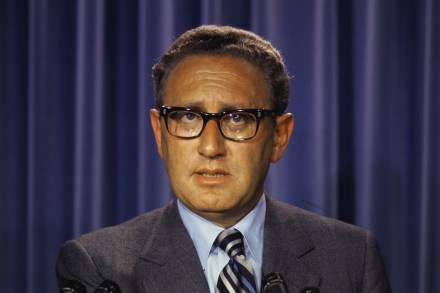
It was not until I went to Harvard in 1988 to take a year out from the Foreign Office that I came to realise how riven by ideology the world of US foreign policy had become. For 20 years I had been moulded by the resolute pragmatism of British diplomacy. My American sabbatical threw open the door to intellectual conflict in the study and practice of international relations unlike anything I had experienced. Two great warring clans — the realists and the idealists, those who took the world as they found it and those who saw the world as they would like it to be — were at each other’s throats. At the head of the realists towered Henry Kissinger, as he does to this day, aged 96. Kissinger remains a figure of profound and sometimes bitter divisiveness.

You’ll keep saying ‘I’m sorry, did I hear that correctly?’: Fiasco reviewed

Kevin Katke was quite a man. He had no military training, no political background and no espionage experience. Nonetheless, his hatred of communists and can-do attitude made him the pre-eminent idiot savant of private American intelligence throughout the Reagan administration. It was a peripatetic career that culminated with him spearheading a bungled plot to oust a leftist regime in Grenada while holding down a full-time job at Macy’s. Call it the American dream. I learnt this — along with dozens of other things to make you say, ‘I’m sorry, did I hear that correctly?’ — listening to Fiasco (Luminary), a political-history podcast whose second season retells the bizarre and shambolic story of the Iran-Contra scandal.

Oracles, perverts and the Dirtbag Left

For 500 years the State Oracle of Tibet has worked as a kind of angry immortal advisor to the Dalai Lama, a Tibetan hybrid of Dominic Cummings and John Dee. The current incumbent, like all previous ones, alternates between his human incarnation and his spirit version. ‘In Tibetan Buddhism, the unseen parallel world of spirits is not to be taken lightly,’ explains anthropologist David Sneath on Heart and Soul (BBC World Service). ‘There are so many other living species,’ the Minister of Religion and Culture tells Sneath, ‘many of which we don’t even see.

The pillars of Trumpworld are crumbling

From our US edition

Things are getting quite hairy at the White House. Apparently, senior adviser Stephen Miller reckoned that he needed to perform a cover-up before he went on national television this past Sunday. He seems to have sprayed on hair-in-a-canister to camouflage his glabrous head. Like many of the moves this administration has made, Miller’s gambit only drew more attention to what he wished to conceal. The Washington Post observed, ‘it emanated from Miller’s head like a physical manifestation of his personality — a follicle’d inferiority complex that was suddenly in charge of creating the nation’s policies.’ Since then, the White House has run into a fresh spate of bad news. Former Lt. Gen.

trumpworld

Trump’s polls slump is yuge

From our US edition

With the drop in his poll ratings to around 35 percent, Donald Trump faces a fresh peril. A further erosion in his numbers would threaten his ability to maintain his hold on a Republican Congress that he desperately needs to ward off the threat of impeachment. His old fighters from the primary campaign such as Corey Lewandowski have been urging him to cut loose as he did this past weekend at the annual meeting of CPAC. Their credo is ‘let Trump be Trump.’ But that would likely be a recipe for disaster. Trump’s popularity is sagging because he has been visibly floundering in recent weeks, from his mismanagement of his side Rob Porter, who was accused of beating several wives, to serial national security clearances for a variety of other aides.