Aids

Wham! How George Michael shot to stardom straight from school

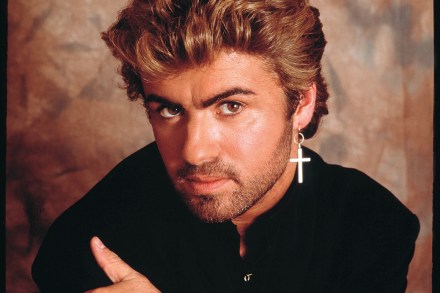
It turns out that the writer Sathnam Sanghera, ‘The Boy with the Topknot’, has been a besotted George Michael fan since the age of eight, when he started listening to his older sisters’ Wham! records. This was an unusual thing to be as a Sikh growing up in Wolverhampton and it got him teased at school. But he stuck with it. So when a friend suggested that he write something fun to compensate for the years of heavy historical research he’d put into his excellent book Empireland, he decided to set off on a sort of pilgrimage in search of his dead hero. First stop was Mondial Cars, a showroom in Northwood, north London, which used to be the Bel Air restaurant, where the teenage Michael worked as a DJ.

Growing up with thieves, murderers and heroin addicts

From our UK edition

‘You can’t pick your parents, but they get to pick your life,’ Jonathan Tepper points out at the beginning of this extraordinary coming-of-age story. And: ‘If your parents are missionaries, it changes everything... They decide where you’ll live, when you’ll pack your bags and go, and you’ll get roped into their work saving the lost.’ In the 1980s and 1990s Jonathan’s parents, Elliott and Mary, were American missionaries in San Blas, then the poorest part of Madrid: ‘Our neighbourhood was the biggest drug supermarket not only in Spain but in all of Europe.’ At a time when Spain hadn’t started spending on prevention or rehabilitation, Jonathan, aged seven, along with his two older brothers – all of them blond and blue-eyed – saw junkies lying dead in ditches.

The powder keg of 1980s New York

From our UK edition

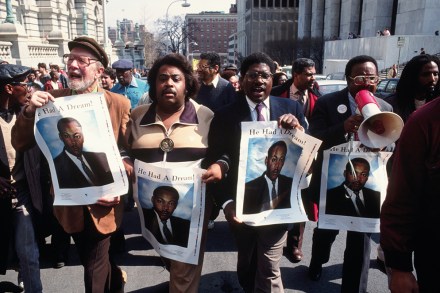
The Bonfire of the Vanities, Tom Wolfe’s romp through the status and racial anxieties of 1980s New York, begins with an unnamed mayor being Mau-Maued by Harlem activists. As he soaks up the abuse, he fantasises about the confrontation spreading: Come down from your swell co-ops, you general partners and merger lawyers! It’s the Third World down there!... Staten Island! Do you Saturday do-it-yourselfers really think you’re snug in your little rug? You don’t think the future knows how to cross a bridge? This fictional world, a collision of riches and poverty and criminal justice and electoral politics, maps neatly on to the period described in Jonathan Mahler’s new book.

Whether adored or despised, Princess Diana is never forgotten

From our UK edition

What happened to the condolence books? They swiftly multiplied, that mad week in September 1997. The original four at St James’s Palace had to be increased to more than 40. People queued for hours and often spent many minutes composing their contributions. That’s not even to mention the thousands of similar books organised by councils, embassies and private businesses. The official set were ‘offered’ to the Spencer family. Perhaps they are at Althorp. Edward White’s Dianaworld, about the phenomenon of the former Princess of Wales, shows an indefatigable resourcefulness. It is not really about the woman herself but about the effect she had on people who never laid eyes on her.

Sun, sex and acid: Thom Gunn in California

From our UK edition

San Francisco is a fantastic place... it’s terribly sunny... I am having a splendid hedonistic time here... I find myself continually going to marvellous orgies where I meet unbelievably sexy people... I dropped acid for Christmas Day... had sex for SIX HOURS... Then to New York, which I’ve never enjoyed so much... Some of the people I met introduced me to cocaine (one of the people was a singer for a pop group called Looking Glass), and that is a fine drug... Life is such fun here... I had an extraordinary three-way with two guys I met in a bar... I am really pretty happy... I’ve been doing a lot of nice acid this year... It was absolutely brilliant — a five-way on my 64th birthday. Age is apparently exactly the same as youth...

The sexual escapades of Edmund White sound like an improbably sordid Carry On film

From our UK edition

Edmund White grew up in a world where sex, and gay sex in particular, was an unspoken reality. In 1950s Cincinnati, ‘no one “came out” except drag queens and the campy peroxided waiter at the diner’, he writes in the first chapter of The Loves of My Life. That blanket of near-silence doesn’t seem to have inhibited him much. He was sexually precocious from the age of 12, as his autobiographical novel A Boy’s Own Story (1982) first suggested. But it may account for the determined frankness with which he has treated sex in both his fiction and memoirs. For an author who came of age in pre-liberation America, erotic candour has always been a political act, at least in part – never merely profligate.

When will Ronald Reagan get the recognition he deserves?

From our UK edition

The talented military historian Max Boot has published a well-researched life of Ronald Reagan that is fundamentally wrong. First the good parts: he has combed through lots of archives finding new information and has interviewed countless people who worked with or knew Reagan. His style also bears the reader effortlessly along. Yet his claim that Reagan was merely a lightweight pragmatist who had little effect on reviving the American economy, resuscitating the country’s self-esteem or winning the Cold War is absurdly revisionist. It says more about the author’s own rejection of the Republican party than it does about Reagan’s world-historical achievements.

The new Rock Hudson doc shows the fun side of Hollywood’s Golden Age

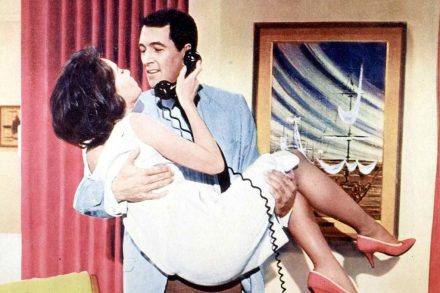
There’s a quote often but falsely attributed to Oscar Wilde that reads: “Everything is about sex, except sex. Sex is about power.” It’s universal truth, but the attribution to Wilde is not incidental. It’s a line that could only come from a gay man. Certainly, there are boudoir power dynamics between men and women, but they’re directed outward; at somebody whose attraction comes necessarily through their difference from yourself. But to love men, as a man, is a constant form of self-evaluation. As Daniel Mendelsohn best captured in The Elusive Embrace: When men have sex with women, they fall into the woman. She is the thing that they desire, or sometimes fear, but in any event she is the end point, the place where they are going. She is the destination.

rock hudson

The rise and fall of Tammy Faye

From our UK edition

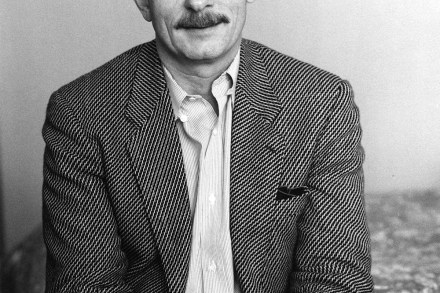
Tammy Faye Bakker was a chirpy, perky televangelist noted for her lavish mascara and her barrel-stave eyelashes. She once conducted an interview on her PTL (Praise the Lord) chat show for which she remains revered among gays. It was in 1985 and she was talking to Steve Pieters, a soft-spoken church pastor with a soup-strainer moustache. He had Aids, a disease that killed Rock Hudson that year and was scything through Reagan’s America. Tammy wanted to know all about Steve’s faith, his health and his orientation. ‘Have you given women a fair try?’, she asked rather naively. The pastor told his story and the interview deepened into an extraordinary confessional.

Admit it: monkeypox is kind of funny

When monkeypox crept onto the scene last month, with a handful of confirmed cases in the US, it seemed too absurd to be taken seriously by anyone who’d been paying attention over the last two years. Americans wised up to media malfeasance and career scammers in our health bureaucracies, rolled their eyes and thought, here we go again. The name itself, monkeypox, couldn’t be scarier — like something from a doomsday novel, or cooked up in an editorial meeting to provoke maximum panic. White liberals — the inexhaustible, ever-dutiful and poised-for-action enforcers of tyranny — had a different issue: the name’s racist.

A well-meaning but dull Official History: Olivier’s Normal Heart reviewed

From our UK edition

The Normal Heart is not about Aids. Larry Kramer’s play is set in New York in 1981 at a time when clinicians were struggling to find a link between a handful of rare diseases that struck only gay men and heroin addicts. The term ‘Aids’ wasn’t adopted until late in 1982. And this dampens the wheels of Dominic Cooke’s production. A playgoer is likely to stifle a yawn as the characters on stage try to discover medical facts that have been common knowledge for decades. There are other problems with Kramer’s ageing script. The story follows an indignant activist, Ned, who has to persuade the city authorities to take the plague seriously. He embarks on a laborious campaign whose numerous battlegrounds the script exhaustively covers.

What the fight against HIV can teach us about defeating Covid-19

From our UK edition

In the eighties, we were warned to beware an easily spread, deadly virus. The government’s ominous HIV adverts told us not to 'die of ignorance'. Thus a generation was educated through fear how to avoid infection by practicing safer sex and avoiding contact with the blood of those who are positive.  While those messages are still important today, HIV no longer represents the death sentence it once did. Still a life-altering and permanent disease, it can now be managed in a way that means people often live full lives with HIV, rather than die early because of it. No successful vaccination has been developed for HIV, but other medical developments helped to change the prognosis for those who contract it.

Nostalgia for seedy nightclubs reeking of sex and poppers

From our UK edition

Gay bar, how I miss you. Barely any lesbian joints have survived the online dating scene, and Grindr has replaced the cruising bars. Why get dressed up and brave the buses when all you have to do to get a date is access an app? I was keen to indulge in some nostalgia when I picked up Jeremy Atherton Lin’s Gay Bar: Why We Went Out. I would now prefer dinner with friends to seedy nightclubs reeking of sex and poppers, but as a youngster I loved a gay disco. Taking us through a personal, historical and political view of the gay bars of London, San Francisco and Los Angeles, Lin skilfully recreates the throb of disco, invoking the stench of beer and sweating men. ‘It’s starting to smell like penis in here,’ is a memorable opening line for any book.

You’ll wish you were gay: Channel 4’s It’s a Sin reviewed

From our UK edition

To promote his new drama series about Aids in the early 1980s, Russell T. Davies insisted in an interview that gay characters should be played only by actors who are actually gay. This was maddening for a number of reasons, starting with blatant hypocrisy. One of the things that made Davies’s Queer As Folk so watchable was Aidan Gillen’s mesmerising performance as the smirking, predatory, cocksure queen of the Mancunian gay scene Stuart Alan Jones. It was the making of Gillen, who went on to star as Petyr ‘Littlefinger’ Baelish in Game of Thrones. But Gillen, who has a girlfriend and two children, almost certainly fails Davies’s gay authenticity test.