Edmund Gordon

Sun, sex and acid: Thom Gunn in California

From our UK edition

San Francisco is a fantastic place... it’s terribly sunny... I am having a splendid hedonistic time here... I find myself continually going to marvellous orgies where I meet unbelievably sexy people... I dropped acid for Christmas Day... had sex for SIX HOURS... Then to New York, which I’ve never enjoyed so much... Some of the people I met introduced me to cocaine (one of the people was a singer for a pop group called Looking Glass), and that is a fine drug... Life is such fun here... I had an extraordinary three-way with two guys I met in a bar... I am really pretty happy... I’ve been doing a lot of nice acid this year... It was absolutely brilliant — a five-way on my 64th birthday. Age is apparently exactly the same as youth...

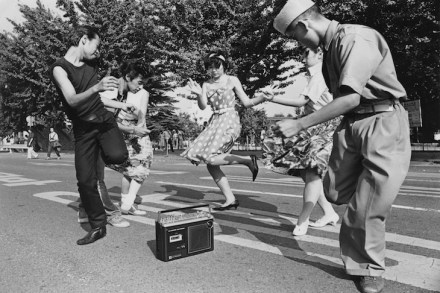
Tokyo through the lens

From our UK edition

In 1975, the 24-year-old Ian Buruma (now an award-winning essayist and historian, and the editor of the New York Review of Books) left his native Holland to study film at the Nihon University College of Art in Tokyo. It was a bold move. The 1970s was a wild, tumultuous decade in Japan, often known as the Showa Genroku, after the hedonistic period at the end of the 17th century, and Tokyo came as a shock to the few Westerners who went there: a teeming, neon-strafed megalopolis, where the trappings of hypermodernity jostled with elements of a sublime tradition, and the whole culture was drenched in eroticism.

Confessions of a Fedhead

From our UK edition

Good writing about sport is rare — and good writing about tennis is that much rarer — so it’s conspicuous that we’ve had so much of it about Roger Federer. The gold standard was set in 2006 with David Foster Wallace’s remarkable essay ‘Federer as Religious Experience’, in which the great novelist provided a dazzling analysis of the great player’s game. Then came Jon Wertheim’s Strokes of Genius (2010), an elegant account of the 2008 Wimbledon final between Federer and Nadal. In a letter published in Here and Now (2013), the correspondence between Paul Auster and J. M. Coetzee, the latter contributed an uncharacteristically lyrical bit of praise for the Swiss.