Ai

Has Airbnb just declared war against its hosts?

From our UK edition

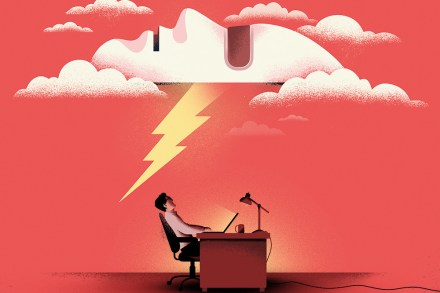
The Airbnb help centre chatbot kept telling me that she understood how frustrating it must be for me to have all these problems created by Airbnb. But she offered no solution, save for congratulating me effusively on being a wonderful host. After a while I asked this person, allegedly a woman: ‘Are you real or is this AI?’ For the relentlessly upbeat drivel she was churning out bore no resemblance to the furious questions I was typing in. I could have told her I was about to throw myself out of the window because of the rise in Airbnb’s fees and the redesign of their app that stops me from using it unless I buy a new £600 iPhone, and she would have replied: ‘Melissa, we know what a great job hosts like you do for guests!

The creep of AI ‘slop’

From our UK edition

‘The creep of “AI slop” in writing on the arts is everywhere,’ complained the Telegraph’s music writer Ivan Hewett the other week, and it’s up to us readers, he says, to stop it. For others, it means weirdly disjointed videos of anthropomorphic cats. But where did the forceful term AI slop come from? For prisoners, slopping out meant emptying chamber pots in the morning. For two centuries slop has been swill or food for pigs. At the same time it could be dirty household water. Long before that, it meant unappetising, semi-liquid food. Sloppy Joes were, from the 1940s, a kind of mushy hamburger (and also a loose-fitting sweater). I remember from the 1960s a probably ironic use of slop in the lyrics of a song by Arthur Lee on Love’s Forever Changes (1967).

Who wants to bring back the Neanderthals?

From our UK edition

In the not-too-distant future, if your T-shirt starts giving fashion advice or we’re all enslaved by a race of disease-resistant metahumans, then blame Martin Amis. More precisely, blame his obsession with Space Invaders. With a foreword by Steven Spielberg, Amis’s 1982 Invasion of the Space Invaders: An Addict’s Guide to Battle Tactics, Big Scores and the Best Machines gave intellectual heft to a pursuit – videogaming – that had hitherto been the preserve of glassy-eyed youths. His advocacy proved prescient. Over the next couple of decades, the best minds of a generation dedicated their lives to making pixellated worlds as compelling and realistic as possible.

We’ve already given up on novels

From our UK edition

Late last year, I was notified that one or more of my novels might have been fed to an Anthropic large language model, because in a class-action suit the company had reached a copyright settlement with authors who’d never given an AI Goliath permission to gorge on their work. Sure enough, a website verified that 11 of my books had been used as silage for this insatiable digital leviathan. Each of the LLM’s tasty Shriver mouthfuls may merit compensation of about $3,000. But before I take out a loan against that $33,000 sure thing to buy myself a Chinese EV, I should read the fine print: ‘court-approved costs and fees’ will be deducted, meaning I may garner funds sufficient to buy a whole new packet of extra-fine felt-tips. Fees or no, this is chump change for Anthropic.

China wants robots to look after the elderly

From our UK edition

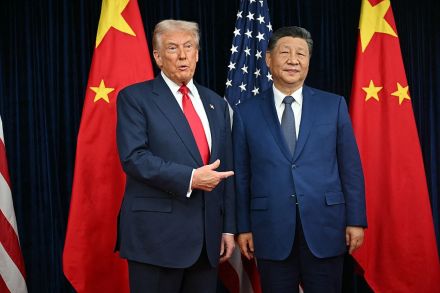
An AI data centre – imagine a factory of buzzing wires and computing equipment cooled by industrial fans – can consume as much power as a city. It has been estimated that, not too long from now, we’ll require 92 cities’ worth of extra power just to meet the demands of artificial intelligence. Ergo, the heat is on – but so, it is said, is a new cold war. On Radio 4 last week, Misha Glenny was exploring how the rapid evolution of technology is shaping the rivalry between the US and China. It turns out that the race for pre-eminence – in AI, at least – is as close as the 1973 Grand National. Red Rum (China) has the current lead, but that lead is ‘razor-thin’ and is thought to owe something to the nature of American tactics.

The mystery of what makes us special remains unsolved

From our UK edition

Consciousness is thought by many to define what it is to be human. We know that animals are conscious to some extent, but they don’t have what we have in that department. So if we can explain how human self-awareness works it will be a Rosetta Stone to understanding what makes our species so odd, or, depending on your view, so special. Also: big brains love exercise. And the great thing about this topic is that it can be tackled by biologists, neurologists, philosophers, physicists and even novelists. It’s an interdisciplinary, no-holds-barred intellectual wrestling match. Michael Pollan, an American journalist and academic who works at both Harvard and Berkeley, comes from a literature background but is fluent in the relevant science.

How Iran could end the AI boom

While Americans anxiously watch the price of gasoline tick higher as the war in the Middle East squeezes the global oil supply, the conflict has highlighted another energy vulnerability that could prove just as costly: Taiwan’s dependency on foreign natural gas. At first blush, energy issues an ocean away seem peripheral to American interests. They are anything but. Though the effect on the American economy won’t be immediate, energy insecurity in Taiwan is a looming disaster. Qatar, the source of 30 percent of Taiwan’s natural gas, has been effectively bottled up The reason is that AI – in fact, virtually all modern computing – is highly reliant upon the steady production of semiconductors in the world’s only true hub, Taiwan.

Semiconductors

Inside the race to build AI data centers in space

In the 1966 novel Colossus by British author D.F. Jones, a supercomputer (which goes by the name of Colossus) is given control and decision-making power over the US’s nuclear arsenal – a logical and unemotional computer being better placed, it is assumed, to make unemotional decisions than a human. Eventually, Colossus discovers the existence of a similar supercomputer in the USSR and begins communicating with its Russian counterpart in mathematical languages about technological advances beyond human comprehension. Frightened by the possibilities this presents, scientists sever the connection – only for Colossus to threaten to launch nuclear weapons if it isn’t reconnected.

Your AI Granny will speak to you now

There’s a trend on YouTube at the moment for videos in which older people give advice. They speak directly to camera, frankly and without pretension. One can almost sense the care home staff hovering in the background, coaxing their barely extant charges into making one last testament of their time on Earth. The videos have titles such as ‘Things I’d tell my 30-year-old self’, ‘Harsh realities of being an 85-year-old woman’, ‘A girl and a woman talk about life’, ‘Lessons learned’ and ‘How to deal with loneliness.’   The commenters below the videos respond, largely, with gratitude and a surprising lack of trollery. ‘I’m terrified of dying,’ one commenter writes. ‘I fear many things, but nothing scares me as much as death does.

I don’t trust AI’s built-in ‘safety systems’

Cars ruined cities. Anyone can see that cities built before the invention of the automobile are incomparably more beautiful and serene than anything built after them. The contrast between Los Angeles and Prague is unmistakable. But people like things that move fast and make life easier, which means we’re stuck with the modern city hellscape whether we like it or not. And today, the same is true for AI. The contrast between the internet five years ago and today is unmistakable: content-slop, workslop, AI-generated comments, fake opinions and phony judgments, trite phrases, apocalyptic hysteria, the biggest intellectual-property heist in human history – all because of the invention of Large Language Models (LLMs).

ai

Letters: AI won’t save the army

From our UK edition

Brute force Sir: General Sir Nick Carter is correct to point out the fragility of the UK’s armed forces today (‘Empty shell’, 7 February). He is also right to highlight the level of expenditure which will be necessary to overcome 25 years of structural under-investment in defence if the UK and its allies are to deter or win any future war. However, the suggestion that the British armed forces might be saved – relatively cheaply – by the institution of AI-automated kill chains alone is questionable. Indeed, it may be just another mirage of the type which has contributed to the current predicament. Autonomous weapons systems have existed for many years. With AI, they will proliferate and may become more important.

Moltbook: has AI created its own religion?

From our UK edition

20 min listen

What did you most recently use Artificial Intelligence for? For most people, the answer would be as a glorified search function, using services like Chat GPT to ask questions, draft text and even produce images – like the Chat GPT generated thumbnail image for this episode. The capability of AI far exceeds this most though. Sean Thomas joins Damian Thompson for this episode of Holy Smoke to talk about 'Moltbook', a social network built exclusively for AI agents – and which has now created its own AI 'religion'. What does this mean for humankind? Is AI just replicating a belief impulse, to the extent that one exists within humans? And will we one day end up worshipping AI? Produced by Patrick Gibbons.

Moltbook: has AI created its own religion?

How useful is AI for research?

Late last year, I published the first theoretical physics paper in which the main idea originated from artificial intelligence – from an AI. And my experience working with the most powerful AI models left me both impressed and wary. The most accurate analogy I can offer is that it’s like something familiar to anyone who has done research: a brilliant colleague who is also unreliable. This colleague can produce deep insights at surprising speed – and then, the next second, make an error that ranges from the trivial to the profound. That tension – capability versus reliability – has shaped how I now use these systems in mathematics and theoretical physics. It is also what will shape how they affect scientific research over the next few years.

Is Keir Starmer prepared for the AI-pocalypse?

From our UK edition

Is there any area of public policy which Keir Starmer’s government has got right? ‘Where very little is working, AI is a bright spot,’ says a former adviser. ‘They’ve started well but they are now in danger of blowing it.’ When Labour came to power they consigned much of the past 14 years of Tory rule to the dustbin. But Starmer poured resources into Rishi Sunak’s AI Security Institute and published an AI Opportunities action plan in January last year, declaring (very un-Starmerishly) that he wanted to ‘mainline AI into the veins’ of the economy. Last week an audit found that 75 per cent of the proposals had already been delivered – a level of success rare in Whitehall.

The glaring flaw in Keir Starmer’s AI plan

From our UK edition

Like Harold Wilson and his ill-defined ‘white heat of technology’, Keir Starmer has latched on to artificial intelligence as the saviour which is finally going to jolt Britain’s sluggish economy into growth. He once even suggested it would help fill potholes. A year ago he launched his AI Opportunities Action Plan, which is supposed to give the industry a huge boost through the designation of ‘AI Growth Zones’. But there is a big hole in Starmer’s plans. How are we going to power an industry that has become as voracious in its energy needs as the steel, shipbuilding and other heavy industries which it might one day replace? The high energy consumption of AI might not seem obvious to anyone playing around with ChatGPT. It all seems so clean and modern.

How to fight the AI revolution

From our UK edition

Ask ChatGPT to write a Spectator leader about the risks of AI and it begins like this: ‘There are two kinds of people talking about artificial intelligence today. One group is exhilarated, convinced that AI will usher in a new era of abundance, productivity and human flourishing. The other is distinctly alarmed, warning of mass unemployment, runaway systems and even existential catastrophe. They disagree on almost everything – except one crucial point. This is going to be a big change. And Britain, like most countries, is not nearly ready for it.’ As the bot identifies, the consensus among experts is that AI’s impact will be seismic, whether for good or ill.

Our armed forces are hollow – and our enemies know it

From our UK edition

When you’re the chief of the defence staff, the head of the British armed forces, it’s never a good sign if your phone rings on a Sunday evening and it’s the permanent secretary. On this particular Sunday, in March 2021, the reason for the call was the Integrated Review of Security, Defence, Development and Foreign Policy, which was due to be published the following week. Although we had been closely involved in the work, the permanent secretary had been told that the chancellor had approved a settlement that would lead to punishing cuts. Something had to be done. I fully expected to get sacked or resign in protest when I made my way to Downing Street the next morning.

The scourge of plagiarism reaches crisis point

From our UK edition

‘Talent borrows, genius steals.’ Do you like it? I just came up with it. No, honestly. Any resemblance to the work of anyone else is purely coincidental. The idea that taking someone else’s words and passing them off as one’s own constitutes a form of theft goes back to antiquity. Aeschines, one of Socrates’s disciples, was said to have read out dialogues appropriated from his master, to which one philosophically informed heckler blurted out: ‘Oh! you thief; where did you get that?’ But, as I learned from Roger Kreuz’s Strikingly Similar, it was the Roman poet Martial who gave us our modern word for this crime. Plagiarius means kidnapper.

Inside the Democrats’ AI skepticism

Bernie Sanders has been rolling out political hot takes for more than half a century, and in recent years his familiar socialist prescriptions have found a new focus: artificial intelligence. In 2023 he argued that workers who use it should be entitled to a four-day week. In October of last year he called on corporations who employ AI to be hit with a “robot tax”. And, just last month, he made his punchiest proposal yet: a complete moratorium on all AI data centers. In a characteristically plaintive video address, the Vermont Senator argued that halting data center construction would "give democracy a chance to catch up," preventing the benefits of AI from being monopolized by "the wealthiest people on Earth.

AI

AI porn will spawn a nation of addicts

If there is one safe prediction we can make about 2026, it is this: public debate and global news will be dominated by artificial intelligence and the anxieties that surround it. And near the top of that swelling list of worries will be “AI porn” – the fateful collision between ever more accomplished image-making machines and humanity’s eternal appetite for audiovisual sexual stimulation. The year has barely begun and already two loud tsunami sirens have sounded. The first is the latest Grok incident. For the uninitiated, Grok is Elon Musk’s AI, conceived a couple of years ago in a fit of pique after Musk’s spectacular falling-out with OpenAI.