Jonathan Boff

Accelerating the ‘kill chain’ – a terrifying glimpse of future warfare

From our UK edition

America possesses the most powerful military in history, but since 1945 it has not won a war against anyone other than Saddam Hussein. It appears not to understand why. In fact the only thing the US seems worse at than winning wars is learning lessons from its defeats. People such as the secretary of war Pete Hegseth think it’s all about woke. Lily-livered longhairs stateside stabbed the army in the back over Vietnam; then ‘stupid rules of engagement’ tied the military’s hands in Iraq and Afghanistan and caused the disasters there. The solution is to fight harder, if necessary even at the expense of ethics and the law. Another answer might be to get US forces fighting smarter.
Learning from history requires sophistication and skill

From our UK edition

If you reckon you have an understanding of international politics today, you probably haven’t been listening properly. Vladimir Putin, Xi Jinping, Benjamin Netanyahu and Donald Trump are making history too fast for most of us to keep up. Odd Arne Westad’s The Coming Storm seeks to make sense of the current geopolitical chaos by drawing parallels between now and the years before 1914. If you don’t find those comparisons reassuring, you aren’t supposed to. The point being stressed is that, unless we are careful, we risk sleepwalking into a Great Power conflict as terrible as, or worse than, the first world war. Westad is a leading Cold War historian from Yale and his comparisons are always thought-provoking and often accurate.

Clerical skulduggery on the far borders of 1830s Germany

From our UK edition

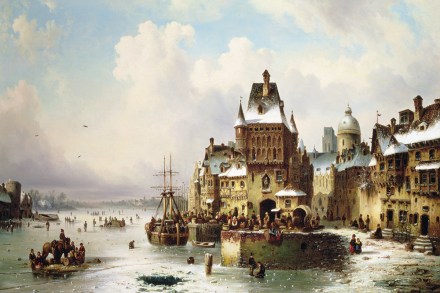
Königsberg is no more. Now known as Kaliningrad, it forms part of a small Russian exclave surrounded by Lithuania and Poland. It is probably here that the third world war will start. Before it was bombed flat and ethnically cleansed, the historic Baltic city formed one of the main centres of the German province of Prussia. Old Königsberg was a port and a -meatballs-and-potatoes kind of place, but also one of the battlefields of the Enlightenment. The philosopher Immanuel Kant was born, lived and died there. One of the questions he struggled with was how to reconcile the claims of human reason with the need for faith in the divine.

When ordinary men did extraordinary things – D-Day revisited

From our UK edition

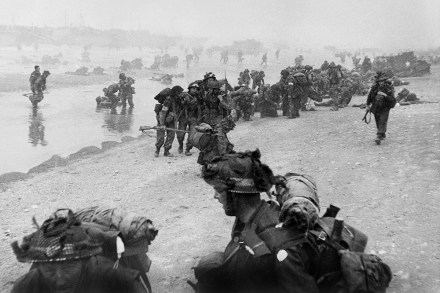
The ferry from Portsmouth to Caen is the most atmospheric way to visit the D-Day battlefields, if not always the most comfortable. As the Normandy coast emerges from the haze, the sand and shingle of Sword beach stretch away to starboard. This was the easternmost of five landing areas assaulted on 6 June 1944 with nearly 30,000 soldiers landed there that day. Over the port bow, on the far side of the River Orne, looms a ridge. Here the British 6th Airborne Division parachuted in by night to neutralise enemy artillery and guard the eastern flank. Out of sight ahead, some eight miles inland past the Pegasus Bridge, lies Caen, the largest city in the area and a strategic road junction.

When Britannia ceased to rule the waves

From our UK edition

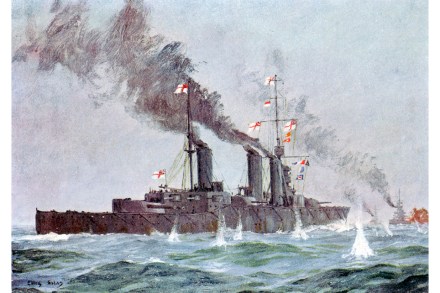
When the Royal Navy celebrated Queen Victoria’s Diamond Jubilee in 1897, 173 ships and 50,000 sailors filled the Solent. The Spectator (3 July 1897) described the ‘endless succession of battleships, cruisers, destroyers, gunboats and torpedo boats’ as offering ‘the most magnificent naval spectacle ever beheld’. More importantly, the fleet at Spithead ‘would have been able to beat any navy or combination of navies that might be brought against it’. It constituted, the magazine proclaimed, a purely defensive weapon, designed only to safeguard the shores of the British Isles, protect the colonies and police the seas ‘for the benefit, not of Englishmen alone, but of the whole world’. Not everyone was entirely convinced.

A romantic obsession: Precipice, by Robert Harris, reviewed

From our UK edition

London in the long hot summer of 1914. A city of gold sovereigns, chaperones and muffin men, but also a place where war looms, paranoia breeds and secret papers mysteriously disappear. The world that Robert Harris brings to life in Precipice is both close to that of Buchan’s The Thirty-Nine Steps and simultaneously very far away. In place of rugged heroes giving dastardly spies what for, he offers a subtle drama about the distasteful and ultimately destructive love affair between a young aristocrat, Venetia Stanley, and a man 35 years her senior who, not coincidentally, happens to be the prime minister H.H. Asquith.

What did Britain really gain from the daring 1942 Bruneval raid?

From our UK edition

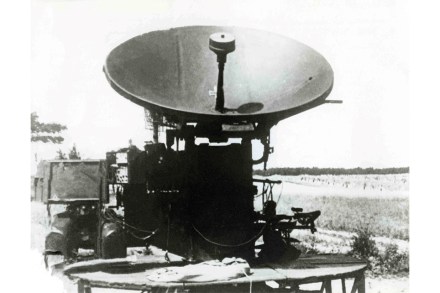
These days we use radar to help us park our cars, but during the early years of the second world war it was white hot technology and a closely guarded military secret. First used to detect aircraft in 1935, within a few years it had helped win the Battle of Britain and sink the Bismarck. It was so secret that work on it was forbidden even to physicists of genius who had fled the Nazis. (In the event, this freed up two such émigrés, Rudolf Peierls and Otto Frisch, to prove the viability of the atom bomb and thus kick-start what became the Manhattan Project.) Intelligence about what the enemy was up to with radar had a price above rubies.

A Guardsman’s life as not as glamorous as it might seem

From our UK edition

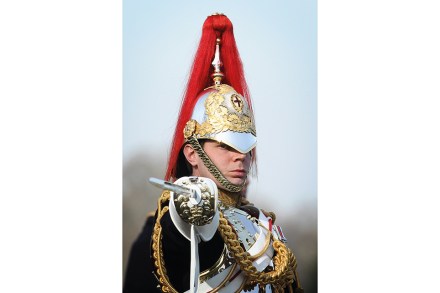
This book is the perfect present for the Guardsman in your life. It offers an authorised biography of the five regiments of Foot Guards and two of Household Cavalry from 1969 to the present day. In that half century the Guards have been under fire in Northern Ireland, the Falklands, Iraq, the Balkans and Afghanistan, with much of the time also spent maintaining a presence in West Germany. These were busy years. Units of the Household Division took part in no fewer than 24 operational tours in Afghanistan between 2006 and 2013, many of them involving intense combat. At the same time, the Guards have also had to keep up a demanding schedule of ceremonial duties.

Fighting every inch of the way: the Italian Campaign of 1943

From our UK edition

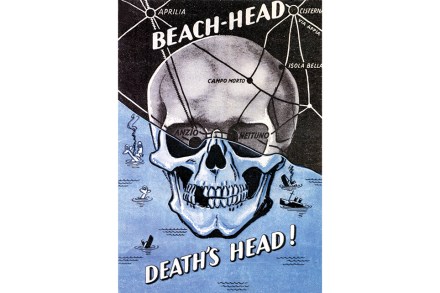
In Whitehall, visible to even the most short-sighted from the gates of Downing Street, stands an outsize statue of Lord Alanbrooke, the strategic adviser to Winston Churchill during the second world war. His job was to help the prime minister see the big picture and concentrate on the decisions that really mattered. This was no easy task. Churchill was both a tricky master and ‘tinkerman’, but Alanbrooke had Ulster blood and knew how to say no. One little village, San Pietro Infine, took more than a week and 1,500 American casualties to capture He also had a remarkable facility for explaining complex strategic problems in simple terms. There is good evidence of this in the BBC archive (and on YouTube) in a television interview he gave in 1957.

Operation Chariot succeeded because it was unthinkable

From our UK edition

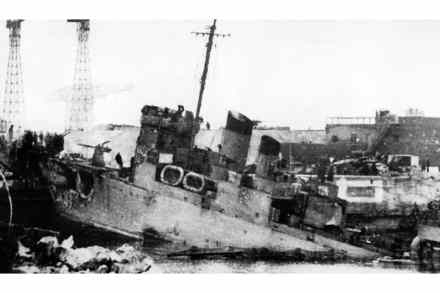
Eighty years ago, just after midnight on 28 March 1942, the British destroyer HMS Campbeltown crept up the estuary of the River Loire towards the heavily defended port of St Nazaire. Here lay an immense dry dock, the only facility on the west coast of France that German battleships such as the ferocious Tirpitz could use if they needed repair. Destroy the dock, and Tirpitz would be unable to sortie against the Atlantic convoys supplying Britain. The only way to do that, however, was to wreck the lock gate at the entrance. And that meant filling a ship with explosives, ramming it into the gate and blowing the whole lot up, while commandos jumped ashore to demolish the pumps, the winding gear and anything else they could.

New tactics are needed for the wars of the future

From our UK edition

The strategic bankruptcy of the West has twice so far this century demanded that our brave soldiers risk their bodies and minds to fight unwinnable wars. The lessons to be learnt from Iraq and Afghanistan, and indeed from Libya, Syria and the Sahel, are many; but the original sin was hubris, born of post-Cold War military preponderance and successes in Sierra Leone, Ulster and Kosovo. The consequence of our arrogance, when 9/11 demanded action, was that we failed properly to interrogate, and so to grasp, either the character of the specific conflicts into which we jumped, or the fundamental nature of war itself.

Spitfires of the sea: the secret exploits of the Royal Navy’s 15th Motor Gun Boat Flotilla

From our UK edition

Fast boats and fast women have been the ruin of many a poor boy. But they can also prove a triumphant mix, as the wartime exploits of the Royal Navy’s 15th Motor Gun Boat Flotilla, described in Tim Spicer’s highly enjoyable book, show. An under-cover unit run during the second world war by the Secret Intelligence Service, it used sleek 110ft motor launches to ferry agents and supplies between England and France. Leaving Dartmouth in the late afternoon, their mission was to race across 100 miles of Channel, evade German patrol boats, navigate the rocks and tidal races of the Brittany coast to a pinpoint spot under the noses of enemy sentries, paddle through the surf and, with luck, rendezvous with the Resistance.

How Churchill’s success hinged on a small Mediterranean island

From our UK edition

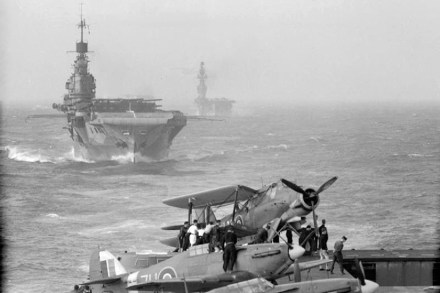
If you can tell the difference between Jack Hawkins and John Mills, and between a Stuka and a Sten gun, perhaps after long, wet afternoons watching black-and-white war films, this is the book for you. Max Hastings is a wily operator who knows exactly what his readers want and with Operation Pedestal he has produced it for them again. The latest book off the apparently unstoppable Hastings conveyor belt tells the dramatic story of one of the most ambitious and dangerous naval operations of the war, and tells it well. Malta, an island slightly smaller than Birmingham, sits at the crossroads of the Mediterranean, 60 miles south of Sicily.

The carnage of the Western Front was over surprisingly quickly

From our UK edition

This book does not mess about. It tells the story of the fighting on the Western Front between 1914 and 1918, just like it says on the tin. It offers a proudly traditional military history, from the opening skirmishes, through the titanic clashes of the Marne and Verdun, the Somme and Ypres, on to the often overlooked Allied sweep to victory of the Hundred Days. It describes what happened when, where and why. There is no discussion of why the war was fought in the first place or of what the men thought they were fighting for. The war here, as it was for that generation, is simply an inescapable fact. We learn enough about the political context and manoeuvring in London, Paris and Berlin to explain events on the battlefield, but no more.