Africa

The enduring charm of King Solomon’s Mines

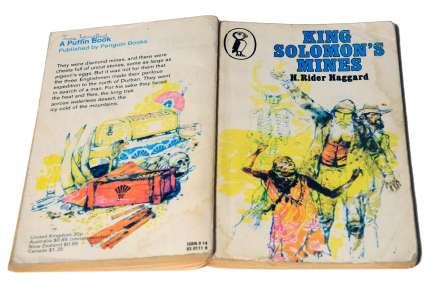
How many people under 40 in Britain today do you think have read H. Rider Haggard’s King Solomon’s Mines? Five, six… 50? It’s hard to know. If you’re lucky – or unlucky, depending on your point of view – you might have bumped into the 1985 film version with Richard Chamberlain, Sharon Stone and Herbert Lom in the unloved crevices of the TV schedule when only insomniacs or household spiders are deemed to be a risk. I ask the question because this year marks 100 years since the death of Sir Henry Rider Haggard as he was then, having been knighted in 1919, apparently for services to the British Empire – and things have obviously moved on a bit since then. Except, of course, they haven’t changed in his famous tale of adventure and lost treasure in Africa.

The inside track on racing syndicates

Billy Connolly once declared that Scotland had only two seasons: June and winter. Perversely, though, just as the northern swallows are setting their alarm clocks and checking departure times for Cape Town and Johannesburg, it has become the Oakley tradition to head for the Isle of Mull. In recent years the accompanying essentials, Mrs Oakley, a case of good wine, long wellies and a surf-addicted flat-coat retriever, have been supplemented by author Felix Francis sending me in late August his latest forthcoming ‘Dick Francis novel’.  When Motivator won in 2005 he had more owners than any Derby winner in history – 230 of them Racing’s continuance owes much to partnerships and syndicates.

Rwanda to Uganda: a cross-border quest

From our US edition

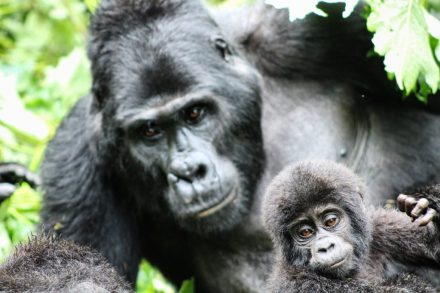
The shelves of my father’s study-cum-Tottenham Hotspur shrine, stacked with leatherbound match day programs and soccer players’ autobiographies, belie his life’s true obsession: gorillas. The clues are there, though. A small bronze statue of a silverback makes a heavy bookend. A wooden walking stick, its handle carved into the shape of an ape, is propped in the corner. Remove them — and our hazy memories of tracking black, fluffy balls of muscle through lush African forest could be chalked up to a fever dream. But we really did it. After a decade of idle talk, Dad and I devised our mission: we’d research gorillas in Rwanda and realize his life goal of tracking them in Uganda.

The fun of the Shergar Cup

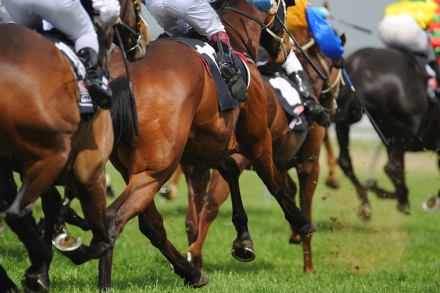
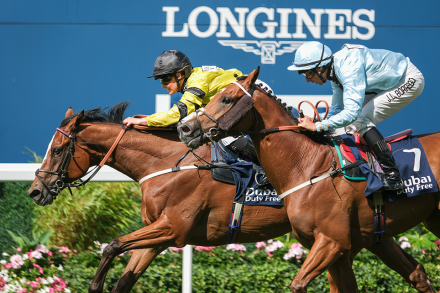
Gary Lineker once summed up football as ‘a simple game. Twenty-two men chase a ball for 90 minutes and at the end, the Germans always win.’ Ascot’s Dubai Duty Free Shergar Cup, a team contest in which four teams of three international jockeys, one of them restricted to female riders, compete for points on randomly drawn horses, is going the same way. In this month’s contest the Ladies team, led as usual by everybody’s favourite girl next door Hayley Turner and including Yorkshire’s Joanna Mason, won for the fourth time in six years. Hayley herself triumphed in two of the six races and for the third time collected the Alistair Haggis Silver Saddle for the most points.

Has there ever been a jockey like Oisin Murphy?

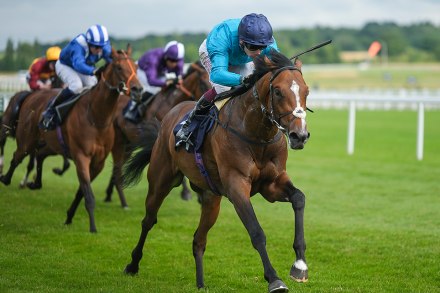
We are blessed these days with a rare stream of jockey talent including the likes of William Buick, Ryan Moore, Tom Marquand and Rossa Ryan. Well clear of the pack though in the chase for the jockeys championship is former champion Oisin Murphy, and five minutes in the winners’ enclosure rather than on the track left me convinced at Newbury last Saturday that if I still had shares in a horse, Oisin would be the one I’d want riding it – and not just because of the two trebles he notched up last week. Successful trainer Hugo Palmer wasn’t in evidence but surrounded by a gaggle of owners after the 4.10 Novice Stakes, Oisin truly earned his £162.79 rider’s fee by giving them a state-of-the-art debrief.

The hunt for the next Messi: Godwin, by Joseph O’Neill, reviewed

Those who remember Joseph O’Neill’s brilliant novel Netherland, which featured a multicultural cricket club and was set in post 9/11 Manhattan, will assume they know what they’re getting with Godwin, which purports to be about the hunt for the next Messi. A video file of an African teenager with legendary ball skills is circulating far from his homeland, wherever that may be. All that Mark Wolfe, ‘a blond, rangy man in his late thirties’ who works for a technical writing co-operative, needs to do is to help his half-brother, Geoff, a hapless young football agent, track down ‘Godwin’ – if indeed that is the boy’s real name.

A tale of two safaris

From our US edition

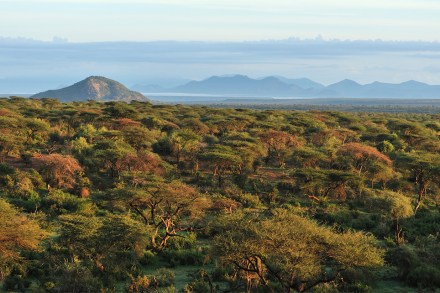
To grasp the untamed vastness of Samburu County, it’s necessary to get high. Above the thickets of acacia trees, thorny branches like barbed wire against the cloudless sky. Out of the Rift Valley’s rubbly trenches, dotted with bleached animal skulls and groves of candelabra-like doum palms clustered around some-time watering holes. To the peak of Sundowner Rock, for instance. After scrambling up its boulder-strewn slopes — wishing for the agility of the bug-eyed, Bambi-like dik-diks that prance about this terrain — I flop down on a sun-warmed granite slab and savor an eagle’s eye view of the bushland below. Legions of acacias and wiry shrubs mottle the red earth.

safari

My father vs the killer lion

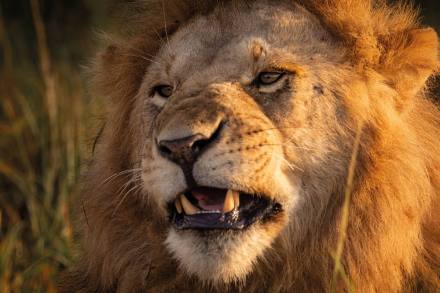
Laikipia, Kenya This month, in broad daylight on our Kenyan farm, a lioness mauled one of my bull calves. Before she could make a kill, a quick-witted herder intervened and drove the beast off. My son Rider loaded the injured calf into the pickup and brought it home, where he gently cleaned the tooth and claw wounds, then injected the poor creature with antibiotics and a painkiller. Big cat injuries go bad fast, but we all felt cheered that the calf, to my mind a future champion Boran bull, had survived and might pull through. The next morning the calf got to his feet and suckled his mother. What a sight that was. The morning after that, the mother was out grazing with her calf when she inadvertently bashed into a tree in which hung a beehive.

My battle with the dreaded ‘black cotton’

Laikipia, Kenya By the time I set off from the farm before dawn we’d had 22in of rain in the past month. At the bottom of the valley I saw in the headlights that our lugga, or seasonal watercourse, had become a roaring torrent of brown water after yet another downpour overnight. If I tried to cross the Landcruiser would be swept away in the flood. This rainy season the land has become a sea of mud, with a thousand streams of water splashing down from the plains, our days and nights serenaded by bullfrogs. Normally I would stay put, give up on any travel and wait it out. There have been times when heavy rains have made a wonderful sanctuary of the farm, surrounded by seas of mud and oomska, isolating us from the world for days or weeks at a time.

Am I having a heart attack? 

Nairobi Some of our medical practitioners in Kenya advertise their services on street corners. ‘Bad omens, lost lovers, broken marriage, BIG PENIS,’ say hand-painted notices nailed to telegraph poles. ‘Love potions, LUCKY RING, Do-As-I-Say Spells, business boosting magic, land issues, lost items, herbs from the underseas.’ I admit to needing help on many of these things, but on this day, my GP only wanted me to get an electrocardiogram. Feeling on top of the world, I skipped into a gleaming white clinic in Nairobi, paid the fee, lay down, got rigged up with electrodes and had a pleasant chat with the nurse.

How game ranching protects endangered species

From our US edition

Game ranching in Africa is big business, farming wild animals that unlike regular livestock have evolved there and don’t need much care. What they do need is space. South Africa’s most famous reserve, Kruger National Park, is an 8,000-square-mile chunk of wilderness on the border with Mozambique, but private land stocked with wildlife covers almost ten times that area. Ranchers stock their property at game auctions where animals are sold to ranchers who either want to introduce a species or add a new bloodline. In 2019, American cattle breeders were delighted when an Angus bull sold in North Dakota for a record $1.51 million. But in 2016, the winning bid for a stud buffalo in South Africa was close to $10 million.

game

How Hannes took on a buffalo – and nearly paid the price

Kenya Hannes became a professional hunter because, as he says in his fine book Strange Tales from the African Bush, he missed ‘the smell of cordite… the clatter of the helicopters and the memory of the blood brotherhood that few, other than soldiers under fire, are lucky enough to know’. He’s a 14th generation white African and a veteran of the famous Rhodesian Light Infantry that fought valiantly in that country’s civil war. He still loves Africa and lives in the Western Cape. When he visited our beach house on the Kenya coast, I managed to persuade him to tell me a few stories, fuelled with bottles of Tusker – a much-loved local lager which is named after the elephant that killed the original brewer.

How Africa fell out of love with France

On Wednesday last week, a new Gabonese military junta installed itself, having ousted President Ali Bongo, whose family have ruled the country since 1967. Just two days earlier, the French President Emmanuel Macron gave a speech to his ambassadors in which he spoke of an ‘epidemic of putschs’ in what was formerly France’s greatest sphere of post-colonial influence. Although most of these states have been independent for decades, Paris kept them firmly in the French orbit There have now been six coups d’état in francophone sub-Saharan Africa in three years – Mali, Chad, Guinea, Burkina Faso, Niger and now the small but wealthy nation of Gabon.

A farewell to alcohol

Laikipia Some are saved by Jesus and they are sober. For others, drunkenness is as natural as love-making, roasted meat and weekend football. In northern Kenya we brew a honey mead called muratina; then there’s a millet beer and strongest of all is a moonshine, changa’a, which you can smell from several huts away and it tastes like battery acid. Our neighbour Gilfrid produced an alcohol so pernicious the hangover hit as soon as it crossed one’s tongue Booze soaks into the corners of life in the village or the slum. I’ve been in places, on paydays for example, where the scenes resemble Pieter Bruegel the Elder’s tableaux of peasants committing all the seven deadly sins. A changa’a drinker isn’t just drunk, he’s catatonic with the onset of blindness.

Progress is coming to our remote corner of Kenya

Laikipia The principal of the local polytechnic was waiting for me in the kitchen. Frequently in the kitchen there is a chief or a surveyor, or geese, or the cats Omar and Bernini, the dogs Jock, Sasi and Potatoes, foundling lambs or calves gambolling about hoping for milk, or stockmen with news of a sick cow, or armed askaris clumping in after a hard night to lay assault rifles down on the counter before slurping mugs of sugar-loaded tea. Bees try to swarm behind the fridge and one day Milka, the cook, primly announced there was a big snake coiled on the shelf of pots and pans. In her Cold Comfort Farm Miss Stella Gibbons talked of ‘clettering’ the dishes.

The African exception to the population bust

From our US edition

Earlier this year, New York Times columnist Ross Douthat wrote a provocative piece making the case that there are two kinds of people in the world: “Those who believe the defining challenge of the twenty-first century will be climate change, and those who know it will be the birth dearth, the population bust, the old age of the world.” Douthat made this bold claim not just because he believes the population bust is the more important of the two challenges, but because, in his view, it is being comparatively neglected due to all the attention paid to irrepressible climate doomsayers.

african population

Listen: Kamala Harris’s Afrobeats playlist

From our US edition

Grab the aux! Vice President Kamala Harris has released a playlist of African artists for her trip to the continent this week, in a move mimicking a trend former president Obama started in 2015. Cockburn wonders if this a sign of Kamala’s well-known ambitions to reach the highest office in the land, by channeling her inner Barack. Joe better watch out! The list consists of songs by musicians from the three countries — Ghana, Tanzania and Zambia — where Harris is stopping during her visit. Harris’s stated intent for her playlist is to “amplify artists and sounds from my travels around Ghana, Tanzania and Zambia.” Included in the twenty-five-song list are Moliy’s “Ghana Bop,” Chile One Mr. Zambia’s “I Love You” and Alikiba’s “Mahaba.

kamala harris spotify playlist

Is Cote d’Ivoire the perfect place to have an affair?

‘Côte d’Ivoire, eh?’ said the businessman in the seat next to me on the Air France flight from Paris to Abidjan, as he flicked through the wine list. ‘Perfect place to have an affair.’ Seriously? I’d had endless friends prior to my departure sniggering that I – middle-aged white female – was tragically going to West Africa as a sex tourist, to patrol the bars and beaches, barnet possibly culturally appropriated into dreadlocks, in the hope of snagging a ripped Rasta (will I get cancelled for writing all that?) or two. And Mr 7A was now indicating it was an ideal destination for a planned romantic getaway too. Crikey! I pondered his words as he hesitated between the Chablis and the Pouilly-Fumé.

The Woman King is satisfying but it sanitizes African slavery

From our US edition

Every large-scale historical drama is a product of its time. The introduction to Cecil B. DeMille’s beloved The Ten Commandments explicitly outlines the film’s anti-communist agenda: “Are men the property of the state or are they free souls under God? This same battle continues throughout the world today.” Similarly, Gladiator, released in 2000 at the height of neoliberal dominance, anachronistically portrays the arc of Roman history as bending away from despotism towards democracy. 2022’s The Woman King is no exception to this rule. It centers on a fearless female leader who defends a pan-African, antislavery vision while reckoning with her own private traumas. Historically questionable? Yes. A satisfying movie? Also yes.

When will the West start to deal with Africa on its own terms?

Kenya Suddenly all the great powers are courting Africa. Like emissaries to the 14th-century Malian monarch Mansa Musa in his adobe Timbuktu palaces, foreign officials from West and East compete for attention in multi-country tours across the poorest continent. Recent visitors include the US Secretary of State Antony Blinken leading caravans of Washington officials, Moscow’s Sergei Lavrov and Emmanuel Macron of France. Invitations arrive for trade summits; speeches plead forgiveness for past wrongs, pay tribute to Africa’s new influence and offer the return of artefacts looted by imperialists; while Beijing – well, the Chinese came to stay a long time ago.