Afghanistan

The buck stops with Biden

From our UK edition

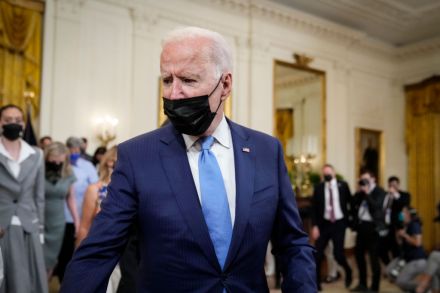
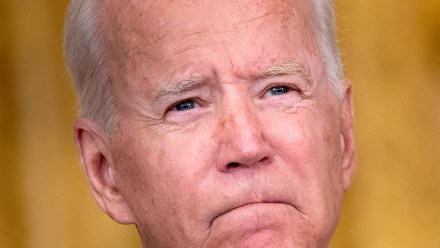
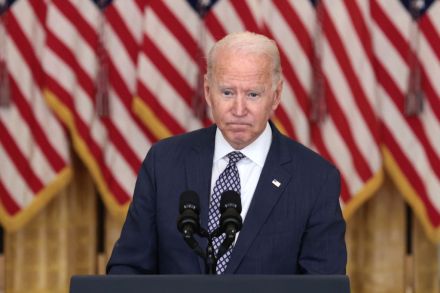
Joe Biden is unfit to be President of the United States. It was obvious when he was running for office that he lacks the physical stamina and mental acuity for the job. It has become increasingly obvious since January that the part-time President has either hidden from the media or stumbled through the kind of scripted press conferences that Americans rightly used to deride as the hallmark of banana republics. The handling of the withdrawal from Afghanistan has exposed Biden's incapacity. The painful truth is now undeniable. He must go — even if that means Kamala Harris, who has been similarly wrong about Afghanistan and much else besides, taking over. They say success has many fathers, but failure is an orphan. This failure is a two-parent family.

China’s Great Game in Afghanistan

From our UK edition

China greeted America’s chaotic retreat from Afghanistan and the Taliban seizure of power with a mixture of glee and trepidation. Its well-oiled propaganda machine has revelled in the fall of Kabul, but Beijing is fretting over the threat of instability on its doorstep – and there is a very real possibility that China will become next power sucked into the ‘graveyard of empires’. The humbling of the United States in Afghanistan fits nicely into the Chinese narrative of American decline, but Beijing has also used the withdrawal to pile pressure on Taiwan, warning the self-governing democratic island that Washington is an unreliable ally. ‘Afghanistan today, Taiwan tomorrow,’ ran a headline in the Global Times, a communist party tabloid.

My love for old Kabul

From our UK edition

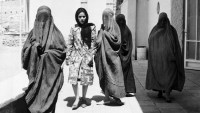
They say the city you most fondly remember is the one you grew up in. In my case that’s Kabul. I spent my formative years in the Afghan capital in the mid-1960s. It was a very different time and Afghanistan a very different country. But the Kabul that’s imprinted on my mind belongs to that decade. It was a happy city. No other description does it justice. Of course, it was poor, conservative and hierarchical but people were always smiling. They were warm, welcoming, courteous and generous. This was most obvious in their attitude to children. Everyone called me ‘bacho’. When Mummy took me out, shopkeepers would slip Hershey’s chocolates or spearmint gum into my hands and then seal my lips with their fingers.

Panjshir valley and the last resistance to the Taliban

From our UK edition

The Panjshir valley, about three hours’ drive north of Kabul, has a mythical hold on the Afghan imagination. It is a natural fortress, a long lemon-shaped valley surrounded on three sides by 13,000-foot-high mountain ridges, with the only entrance a narrow road in a deep winding gorge to the south, cut by the Panjshir river. It is a place of stunning beauty, with green fields either side of the river laden with apple blossom in the spring, irrigated by ingenious canals. The walls between the fields, and sometimes the houses themselves, are buttressed with rusting metal war remains – the wheels of a tracked vehicle, armour plating, bridges formed of shell cases.

Defence contractors were the real winners in Afghanistan

From our UK edition

The fall of Kabul, like the fall of Saigon, will be taught in classrooms for decades to come. But the dramatic images coming out of Afghanistan don’t necessarily hail the beginning of a post-American world. If America learns the right lessons, it has the chance to pursue a more sustainable foreign policy. One lesson it could learn is to stop outsourcing its war-making and foreign policy to overpaid private firms. In a less politically correct era, these groups would be called what they really are: mercenaries. The corruption and graft expended on contracts of dubious value is legendary. In one episode, some £20 million was spent on forest camouflage for the now-collapsed Afghan National Army.

Afghanistan and the end of the American hegemony

From our UK edition

We used to sneer at the way the Russians were chased out of Afghanistan by a ragtag of mujaheddin armed only with Kalashnikovs and American Stinger rockets. No longer.  The last superpower to be defeated in Afghanistan withdrew in good order, having negotiated the arrangements with Kabul and the mujaheddin. They left behind a competent government, and an Afghan army capable of fighting the mujaheddin to a standstill. That government survived as long as the Russians went on supplying food and ammunition. Then the Russian government, close to meltdown, stopped deliveries. The mujaheddin swept to victory and fell straight into a bloody civil war. Many Afghans were relieved when the Taliban restored order.

Is Theresa May in any position to criticise the PM?

From our UK edition

When Theresa May told a joke at her own expense at a reception of Tory MPs held to celebrate Boris Johnson’s landslide election victory in December 2019, the assembled audience breathed a sigh of relief. Many had expected the freshly re-elected May to be a thorn in the side of her successor during the ensuing parliamentary term. But her deferential joke, about her own botched 2017 election campaign, seemed to amount to an acknowledgment of the superior appeal of Boris Johnson. In fact, the pessimists were right first time, and this has been underlined by May’s extraordinary speech about Afghanistan in the Commons this week. Almost everything she said appeared designed to cast the Prime Minister in a negative light.

Biden’s press conference was a feast of disinformation

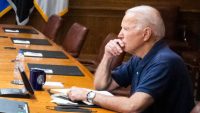
Joe Biden emerged from his cave, saw his shadow, and told us there will be three more years of winter. That winter, descending on America’s position in the world, was on public view at Biden’s Friday press conference about Afghanistan. Standing behind him was the Vice President, the secretary of defense, the secretary of state and the national security adviser, a stark contrast to the sad photo of Biden alone on a video call from Camp David with those advisers. Why have them stand there, mute? To convey to the public that the administration was united...and to convey to his advisers that they were all on this sinking ship together.

press

Is Joe Biden OK?

Just before the Christmas holiday in 2018, then-President Donald Trump canceled his planned vacation to his Mar-a-Lago resort, citing the partial government shutdown: 'I will not be going to Florida because of the Shutdown — Staying in the White House! #MAGA.'  The administration determined it would be poor optics for the president to spend 16 days in sunny Florida during a major political standoff. President Joe Biden has refused to take the same approach, even as his poorly planned withdrawal of troops in Afghanistan led to the Taliban's rapid ascent to power and the stranding of thousands of American citizens in Kabul. As I wrote previously, we did not see the President for nearly three days as the Taliban seized the capital city.

biden ok agenda

How America squandered its moral authority in Iraq

Day by day, you could almost see America’s moral authority draining away in Iraq. The weapons of mass destruction that the US had invaded the country to find didn’t exist. And it sometimes seemed as if a monstrous trick had been played on American troops: they were promised a welcome with ‘flowers and sweets’; they got roadside bombs and suicide attacks. In 2004, a year after the invasion, a 19-year-old Marine — outside the US for the first time in his life — looked up at a minaret sounding the call to prayer and asked me: ‘What are they saying? “Kill Americans?

iraq

The last war for democracy

Twenty years after 9/11, the War on Terror has come full circle. Everyone expected the Taliban to surge back to power as soon as American forces left Afghanistan. Instead, the surge began while America’s embassy in Kabul was still open, inviting unwelcome flashbacks to Saigon in 1975 and Tehran in 1979. There are piquant memories of 1989, too — not of the Berlin Wall’s fall or a young Francis Fukuyama’s publishing ‘The End of History?’ in the National Interest, but memories of an Afghan insurgency’s triumph over a superpower. That triumph would inspire and ultimately contribute in the most concrete ways to a decade of terrorism, culminating in the 9/11 attacks.

war
taliban kabul

What exactly was the plan in Afghanistan?

The collapse of the Afghan army and state was so rapid and so total that, mercifully, talking heads have already moved on from debating whether the country might have been saved from a Taliban takeover. Everyone now agrees that was impossible, and the trillion dollars spent to prevent it was thoroughly wasted. Instead, because pundits and politicians must fight over something, the scrum has been over the frantic manner of America’s withdrawal. Was the Biden administration warned that Afghanistan would collapse in the amount of time typically reserved for a test cricket match? And if so, did it simply ignore those warnings?

France is nervous about welcoming a wave of Afghan refugees

From our UK edition

Emmanuel Macron has once more infuriated many in France, but this time it has nothing to do with Covid passports or mandatory vaccination. In an address to the nation this week, the president discussed the disturbing scenes from Kabul as the Taliban invaded the capital of Afghanistan. France, he said, would be a haven for those Afghans 'who share our values' but nevertheless the country must 'anticipate and protect ourselves against significant irregular migratory flows that would endanger the migrants and risk encouraging trafficking of all kinds.' His rhetoric went down badly with much of the French left.

Europe has been a helpless bystander in Afghanistan

From our UK edition

America’s allies in Europe understood months before President Joe Biden’s fateful April speech to the American people that a full and complete US troop withdrawal from Afghanistan was a very real possibility. Biden talked about the urgency of getting the United States out of what he termed ‘forever war’ conflicts which required tens of billions of dollars a year (not to mention thousands of US troops on the ground) to maintain.

How America failed to learn its lessons from Vietnam

From our UK edition

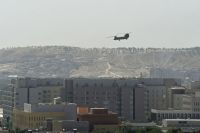
The hasty withdrawal from Kabul has inevitably been compared to the Fall of Saigon at the end of the Vietnam war. Pictures of a Chinook flying over the US embassy in the Afghan capital to pluck staff to safety did bear something of a resemblance to the airlift of 1975. But is the comparison fair? Joe Biden, at least, has been keen – for understandable reasons – to deny that Afghanistan is anything like Vietnam. A month ago, Biden told a reporter he saw ‘zero’ parallel between the Vietnamese and Afghan withdrawals: ‘The Taliban is not the same as the North Vietnamese army. They’re not remotely comparable in terms of capabilities.

The Afghan state was dying before the Taliban took over

From our UK edition

To understand how Afghanistan is going to change in the future, you have to first understand what the ‘Islamic Republic’ established by the United States was like. Even before the Taliban took over, Afghanistan’s democracy had been deteriorating for some time, with three presidential elections in a row ending in bitter controversies over vote rigging, manipulation and fraud on a massive scale. The parliamentary elections attracted less attention but were no less controversial. Voter participation had declined constantly and in 2019, when the latest elections were held, turnout probably did not exceed 10 per cent, although it is hard to know the exact figure. Persistent insecurity and high levels of corruption weakened the legitimacy of the Republic.

How much trouble is Dominic Raab in?

From our UK edition

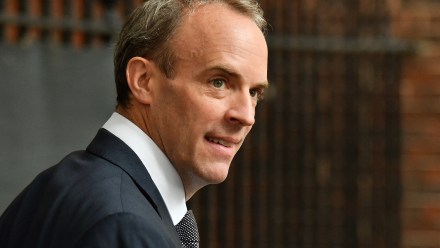
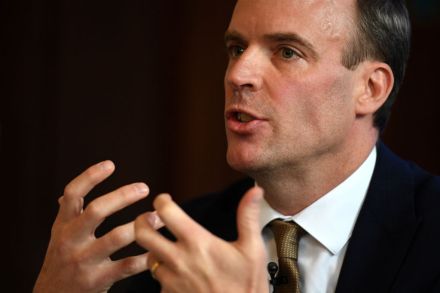
When MPs returned to parliament on Wednesday to debate the situation in Afghanistan, it was Joe Biden who received the most criticism during the debate. But a close second in the firing line was the UK Foreign Secretary. After Dominic Raab waited until Sunday night to fly back from his holiday in Crete, opposition MPs were quick to go on the attack. When Raab asked Starmer what he would do differently give the complexity of the situation, the Labour leader replied: 'I wouldn't go on holiday when Kabul was falling'. The SNP's Ian Blackford also joined in – suggesting Raab ought to be ashamed of himself.

The Taliban’s lightning victory was no surprise

From our UK edition

As the debacle in Kabul unfolds, in Washington and London the mud slinging about who is to blame is beginning. British Generals are blaming ‘spineless Johnson and Biden’ and the ex military MP, Tom Tugendhat, contends that we should have stayed put. That the spectacular ending of Afghanistan’s brief interlude in ‘Western Liberalism’ appears to have been such a surprise only underlines the utter delusion of the last twenty years. I worked for an aid agency in Kandahar at the height of the Taliban regime and remained in Afghanistan until just prior to the British deployment to Helmand.

Afghanistan will once again become a breeding ground for terror

From our UK edition

'Bin Laden is dead and al Qaeda is degraded in Afghanistan and it's time to end the forever war'. So said Joe Biden earlier this year when he announced his decision to pull US troops out of the country. The scenes of chaos that have followed that departure makes it vital that this myth – that western troops had already outstayed their welcome in Afghanistan – is not allowed to go unchallenged. The reality is rather different: Biden's decision to 'end' the war (or at least America's involvement in it) was a politically motivated one, which suited the president.