Afghanistan

What can we learn about Afghanistan from Alastair Campbell?

From our UK edition

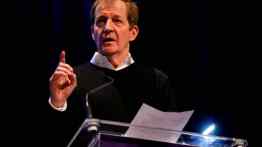
Alastair Campbell can’t write. If that sounds like one of the less significant charges one might level against Tony Blair’s former spin-doctor then stick with me. Because anyone who can spill out thousands of words and still be so unoriginal and lacking in insight or self-perception must have things they are trying to hide. That is why the laborious ‘long-think’ that Campbell wrote this week for the equally laborious ‘Tortoise’ website is worth pausing over. For those who have missed it, Campbell was this week invited by Tortoise to write a multi-thousand word piece on the recent events in Afghanistan.

Pakistan is relishing its role as kingmaker in Afghanistan

From our UK edition

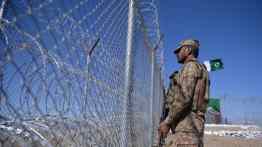
The details of engagements involving the head of MI6 are, unsurprisingly, usually kept secret. But not so Richard Moore's meeting with the head of the Pakistani army, General Qamar Javed Bajwa. Officers from Britain's intelligence service are also said to have met the Taliban, both in Kabul and Qatar. How do we know? Because hours after Moore met Bajwa, the news was plastered all over Pakistani media, much to the dismay and horror of British officials. Pakistani leaders have spent much of the past fortnight basking in the Taliban’s triumph. Imran Khan lauded the Taliban for breaking the ‘shackles of slavery’.

Ken Cuccinelli: Afghans flown to US ‘not being vetted’

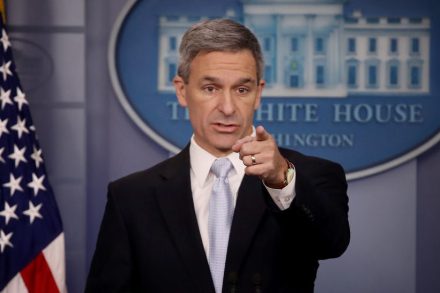
Former deputy secretary of Homeland Security Ken Cuccinelli said Thursday that the United States has flown in thousands of Afghan nationals that have not been properly vetted in the aftermath of the military withdrawal of Afghanistan. According to data published by the Washington Post, 23,876 'at risk' Afghans have already arrived in the US out of the more than 120,000 individuals that were evacuated from the Kabul airport. Cuccinelli explained during an interview on WMAL's O'Connor & Company that these individuals are being 'paroled in' to the US because there has not been enough time to conduct a thorough security screening and confer them legal status. 'They're not being vetted. They're being what's called "paroled" in,' Cuccinelli said.

ken cuccinelli

‘Britain is not a superpower’: an interview with Ben Wallace

From our UK edition

Britain’s evacuation of Kabul began with an admission of defeat. Ben Wallace, the Defence Secretary, said that the UK would probably leave having failed to assist everyone who had been promised safe passage. ‘Some people won’t get back,’ he said in tears in one interview. When asked why he was taking it personally, he replied: ‘Because I’m a soldier.’ He’s the first defence secretary for 29 years to be able to make such a claim. He served with the Scots Guards in Germany, Cyprus, Belize and Northern Ireland before entering politics. His experience in uniform, he says, has given him different insights into the job: in this case, recognising just how unpredictable retreats can be.

Letters: The agony of the forgotten Australians

From our UK edition

A glimmer of hope Sir: After the debacle of the West’s shambolic withdrawal from Afghanistan, it was comforting to read two of the articles in last week’s Spectator (28 August). The first was Rod Liddle’s explanation as to how we got there in the first place (‘I blame Tony Blair’) and the second was John Casey’s piece about Ahmad Massoud and the mention of his late father, the messianic Ahmad Shah Massoud (‘Fatherland’). Very often out of a dire situation something positive can appear. It may be that the arrival of Ahmad Massoud as the leader of the National Resistance Front, the potential he has of being the head of the Tajiks, along with his understanding of Afghani divisions, will give Afghanistan the hope of a settled future.

Portrait of the week: Britain leaves Afghanistan, hurricane hits New Orleans and Gove goes clubbing

From our UK edition

Home Britain brought its last troops home from Afghanistan, having flown out more than 15,000 people since 14 August; but the operation failed to evacuate perhaps 1,000 eligible Afghans, some of whom had worked for the government, and 100 to 150 British nationals. Pen Farthing, who runs an animal charity in Afghanistan, returned in an aeroplane he had chartered with 94 dogs and 79 cats; ‘Meanwhile my interpreter’s family are likely to be killed,’ commented Tom Tugendhat, the chair of the Foreign Affairs Select Committee, who has served in Afghanistan. In the seven days up to the beginning of the week, 765 people had died with coronavirus, bringing the total of deaths (within 28 days of testing positive) to 132,376. (In the previous week deaths had numbered 697.

The boys who never grow up: Sad Little Men, by Richard Beard, reviewed

From our UK edition

I can’t recall reading an angrier book than this. Richard Beard has written what I hope for his sake is a cathartic denunciation of the private boarding school system, and his rage is on two fronts. The first is how being sent away at the age of eight damaged and twisted him and just about everyone else who experienced the same; the second is about what these damaged children as adults have done to the country. He pays special attention to the Prime Minister and his predecessor but one. I suspect that The Spectator has quite a few readers who went to boarding school, and who even think the government is doing a good job. So you may either have given up on this review already or will have no intention of reading the book.

Is the world we value falling apart?

From our UK edition

From time to time, people get worried and ask one another: ‘Is the world falling apart?’ I imagine this is a universal phenomenon, but my experience of it is largely confined to the West (here meant more as a cultural than a geographical expression). It happened in the 1930s, when the broadly correct answer to the question was ‘Yes’, and in the 1970s, of which more later. It happened more recently, after 11 September 2001 and during the financial crash of 2008/09. Some asked the question after Brexit. I have heard it asked again by many highly disparate people in the few days since the American-led Nato scuttle from Afghanistan. What is the answer? My own first encounter with these gloomy discussions was in the 1970s.

America, the Taliban and a farewell to arms

From our UK edition

It was quite the handover at Kabul airport this week. The last American troops to exit Afghanistan reportedly left facing an ‘elite unit’ of the Taliban. In a season finale that the most dystopian screenwriter would have struggled to invent, the elite Taliban unit was itself bedecked in US military kit. That is, they were not only wearing uniforms and protective kit provided by the fleeing US army, but were parading the airport with US-provided guns in US-provided vehicles. This was the culmination of a fortnight that the White House is still trying to present as a success. One of the biggest airlifts in history, they insist. In reality the Biden administration has pulled off a feat few of us thought possible.

The delusion of Dominic Raab

From our UK edition

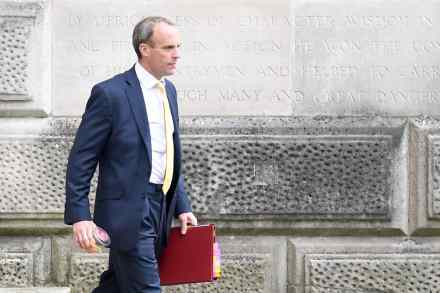
Boris Johnson will never sack ministers for being tawdry, lazy and incapable of doing their jobs — if he did, he would have to sack himself. Nevertheless, the Commons Foreign Affairs Committee’s investigation into the Foreign Office’s complicity in the Afghanistan catastrophe showed the consequences of the collapse in standards in ministerial competence better than any public inquiry I have seen. The autopsy was all the bloodier because Tom Tugendhat, who should be foreign secretary, was asking the questions, and Dominic Rabb, who really shouldn’t be foreign secretary, was ducking them. Raab’s demonstration of what he did not know was almost awe-inspiring. Did he, for example, know how many ministers were overseas right now? Maybe he did.

Raab faces an Afghan grilling from MPs

From our UK edition

After a week of hostile briefings over his future as foreign secretary, Dominic Raab appeared before MPs this afternoon to face the music. As a blame game gets underway in Whitehall over the chaotic response to the Taliban takeover of Afghanistan, Raab has found himself in the firing line. One government source suggested his handling of the crisis meant he 'has about as much chance of being in a top four position by next spring as Arsenal' when it comes to a cabinet reshuffle. This afternoon, Raab came out swinging — defending his department's handling of the situation and pointing blame in the direction of others.

Watch: the four most awkward moments from Raab’s evidence

From our UK edition

Fresh from his Crete holiday, Dominic Raab appeared at the Foreign Affairs Committee looking tense and awkward. The Foreign Secretary has been dragged to an extraordinary meeting of the panel specially convened in spite of the parliamentary recess to answer questions about the collapse of Afghanistan and rushed evacuation of the Western powers. Raab's session overstretched to almost two hours and saw a range of hostile questions from right across the House. A glowering Tom Tugendhat ambushed the embattled minister with his department's principle risks report from July 21 warning of collapse of Afghanistan while a deluge of questions about the Crete holiday were met by Raab's insistence that such queries were just a 'fishing expedition.

Joe Biden’s victory lap around Afghan defeat

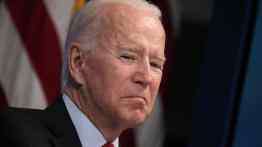
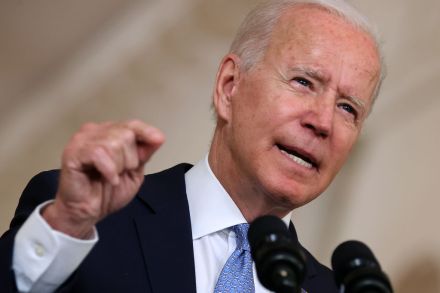
President Biden walked to the White House podium on Tuesday and proclaimed the US withdrawal from Afghanistan an ‘extraordinary success’. He relied on the unanimous advice of military leaders and strategic advisers for these wise decisions. If there were any failures, they were due to Donald Trump. Never in history, he said, had there been such a successful airlift. Of the Americans who wanted to leave, we got out an amazing 90 percent. Surely that’s a success all around, despite the collapse of the Afghan army, which nobody expected. Of course, as a far-sighted leader, Biden said he had ordered plans for that, too.

biden

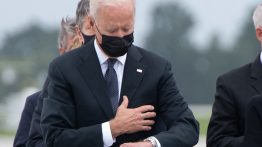
Joe Biden is not the grief whisperer

Since when is the President of the United States everyone's therapist? Since the 2020 presidential election, when Democratic politicians and the media designated the commander-in-chief as our nation's collective grief counselor. Enter: Joe Biden This election, we were told, was about character. Joe Biden, having suffered his own immense personal losses, was in a unique position to help the nation heal and unify after a tumultuous four years of President Donald Trump.

grief President Joe Biden looks down at his watch (Getty Images)

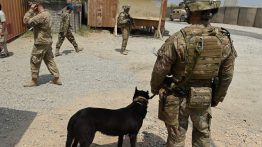
Should we love Afghan hounds more than American soldiers?

Dogs are not people. Now, I love my dogs and couldn’t imagine life on our little farm without them. But when we establish false equivalencies, we don’t elevate dogs; we degrade humanity. And that's what we're doing with the dogs of war left behind by the Biden administration in Afghanistan. It is unclear how many dogs were stranded at Kabul airport when the last US flight departed. It’s also unclear how many Americans were stranded. And how many weapons were left. And how much cash...in fact a lot of the disastrous withdraw by the Biden administration is unclear, first and foremost being: why did it happen this way at all?

A US army soldier and military dog keep watch in Afghanistan (Getty Images)

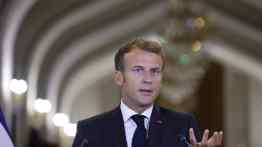
Afghanistan could fatally undermine Macron’s election strategy

From our UK edition

To nobody’s great surprise, France’s Minister of Health, Olivier Véran, announced last week that the Covid Passport may have to be extended beyond 15 November – the initial expiry date of the government’s controversial measure, first introduced in July. I’ll hazard a guess that come April 2022 the French will still have to show their passport to enter cafes, shopping centres, sports clubs and cinemas. April, of course, is the date of the presidential election and Emmanuel Macron is banking on his response to Covid helping him to secure a second term. His belief is that the electorate, particularly the over-50s, will be reluctant to change presidents in the midst of a pandemic. Better the devil, and all that.

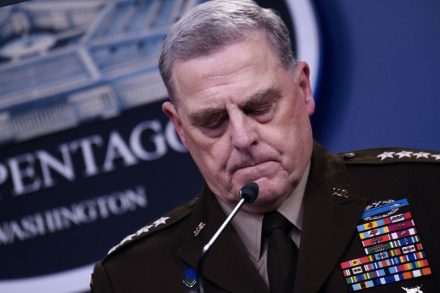
Does America still work?

For nearly two years, Americans have engaged in a great woke experiment of cannibalizing themselves. American civilization has invested massive labor, capital and time in an effort constantly to flagellate itself for not being perfect. Yet neither America’s resilience nor its resources are infinite. We are now beginning to see the consequences of what happens when premodern tribalism absorbs Americans. There are concrete consequences when ideology governs policy or when we take for granted the basics of life to pursue its trappings. Who cares whether the blow-dried media is woke if it cannot report the truth and keep politicians honest? Once journalists became progressive poodles rather than the watchdogs of government, the Biden administration had no fear of audit.

mark milley work woke

Who lost Afghanistan?

America's longest war draws to a bloody end. As the pullout deadline approaches, the probability of more atrocities like the suicide bombing last Thursday that killed 13 of our troops, and more than 90 Afghans, remains nauseatingly high. The American public was ready for us to leave Afghanistan. It was not prepared for just how ugly leaving could be. President Biden bears responsibility for the lives lost, just as he bears responsibility for those lost throughout the course of this conflict and the similarly ill-premised Iraq War — both of which he helped to launch while he was in the United States Senate. He has made grave mistakes. One mistake he has not made, however, is to waver from the decision to withdraw. He has not let terrorists change our timetable.

press

How the Taliban will govern Afghanistan

From our UK edition

When the Taliban ruled Afghanistan for five years in the late 1990s, the key power lay in a modest room in a house in Kandahar. There was just a simple iron bedstead and a box as furniture, and no door but a curtain separating it from the rest of the house. Sitting on rugs on the floor the Taliban founder Mullah Omar issued orders, made appointments and took money from the box. The ministries in Kabul operated on fiats issued from this room. His successor as Emir, Haibatullah Akhunzada, does not enjoy the same unquestioning authority. He was known as a scholar and ideologue not a fighter, and emerged as a compromise leader in 2017 after Omar’s successor Mullah Mansour was killed by an American drone strike. Akhunzada has since promoted extreme violence.