Afghanistan

Did ‘gender studies’ lose Afghanistan?

Twenty years of war in Afghanistan are over. What comes next is 20 years, or even more, of recriminations and blame for why the war ended as it did. Scholars and partisans still argue over the reasons America lost in Vietnam, so why should Afghanistan be any different? On the plus side, the debate promises to be far more interesting. When it comes to Vietnam, partisans debate rules of engagement, bombing strategies, funding levels and the Tet Offensive. With Afghanistan, the question could be: did gender studies cause America to suffer its most humiliating defeat ever? Cockburn wishes he was joking. Traditionally, nations have waged war by mustering armies, defeating their enemies in battle, and despoiling their lands and cities.

gender

Did parliament’s Afghanistan debate matter?

From our UK edition

Today’s Commons debate on Afghanistan was unusually and surprisingly good. It had the benefit of speeches from many MPs who had themselves served tours of duty in the country, or were veterans of military action elsewhere. It had the advantage of a former Prime Minister speaking with all the authority of someone who knows just how difficult these matters are, rather than the criticisms of backbenchers who had only run their own constituency office. It was a full day’s session operating under usual rules, rather than the hybrid parliament of the past year and a half. This meant that MPs could intervene on speeches, amid the normal hubbub of the Chamber. So what did we learn from the government in today’s session?

The German Greens can’t make up their mind on Afghanistan

From our UK edition

The situation in Afghanistan has suddenly dominated the debate in the middle of a sluggish German election campaign. Candidates to succeed Angela Merkel are having to declare their positions. Military intervention is out of the question without US backing. The question then becomes a repeat of the Syrian crisis: will Germany once again open its doors to potentially hundreds of thousands of refugees and migrants? It’s an unequivocal ‘nein’ from the government. ‘There will not be another 2015’ came the strong response from the ruling coalition of Angela Merkel’s CDU/CSU and the SPD. The Green party, currently in opposition but the second strongest party in most polls, are fudging the issue.

Joe Biden’s shabby treatment of the Afghan army

From our UK edition

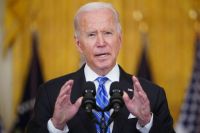
Is a Taliban takeover of Afghanistan now inevitable?The President: No, it is not. Q. Why? The President: Because you — the Afghan troops have 300,000 well-equipped — as well-equipped as any army in the world — and an air force against something like 75,000 Taliban. It is not inevitable… Q. Do you trust handing over the country to the Taliban? The President: No, I do not trust the Taliban. Q. So why are you handing the country over…? The President: It’s a — it’s a silly question. Do I trust the Taliban? No. But I trust the capacity of the Afghan military, who is better trained, better equipped, and more re- — more competent in terms of conducting war.

Tom Tugendhat’s speech was a masterclass in oratory

From our UK edition

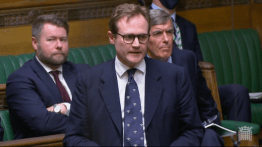
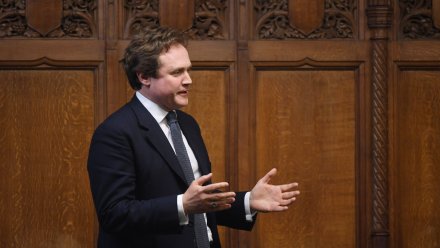
An ounce of emotion, it has been said, is worth a ton of fact. Tom Tugendhat’s remarkable speech to the Commons today was delivered with a current of emotion – pathos, as scholars of oratory call it – that was all the more electric for its restraint. His jaw clenched and trembled; his voice, now and again, seemed on the verge of faltering. As he said in his opening words: 'Like many veterans, this last week has been one that has seen me struggle through anger, and grief, and rage. The feeling of abandonment of not just a country but the sacrifice that my friends made. I’ve been to funerals from Poole to Dunblane. I’ve watched good men go into the earth, taking with them a part of me and a part of all of us.

Harry and Meghan’s glib Afghan statement

From our UK edition

Finally, some news to cheer us all up on this grim, relentless August. The Duke and Duchess of Sussex have been rendered ‘speechless’ by the news from Afghanistan and Haiti. No doubt, there’ll be no more Oprah interviews or birthday messages. And there’ll be no more lectures from Harry on the importance of imagining how it feels to be a raindrop or from Meghan on the importance of people asking her if she is okay. At least, that’s what we should assume, right? Surely being left ‘speechless’ is a sign that you are about to shut up? Unless, of course, you are Harry and Meghan. In their world, being ‘speechless’ requires the release of a 200-word public statement.

May and Starmer hold Boris’s feet to the fire over Afghanistan

From our UK edition

Boris Johnson has had a very uncomfortable start to today's Commons debate on Afghanistan. Not only did he have a series of critical interventions from his own backbenchers when he was speaking, he then had to sit through an unusually powerful speech from Sir Keir Starmer. The Leader of the Opposition criticised the PM's 'careless leadership', slammed the Foreign Secretary's 'dereliction of duty' in remaining on holiday as the situation worsened, and pointed to an 'unforgivable' lack of planning over the 18 months following Donald Trump's deal with the Taliban.  This was swiftly followed by an equally furious Theresa May.

Boris Johnson opens Afghanistan debate to frosty reception

From our UK edition

Boris Johnson opened the debate on the situation in Afghanistan to a packed house. With virtual parliament rules now gone, MPs on both sides crammed into the Commons Chamber to take part in the debate. But the large audience didn't actually help the Prime Minister. In fact, it served to highlight the criticism the government is facing both from opposition politicians and its own MPs. Within minutes there had been critical interventions from Labour and Tory members.  Johnson began his statement by looking back on the 9/11 terror attacks, which saw the UK – along with other allies – join forces with the United States to enter Afghanistan. The Prime Minister said the aim was to stop further terror attacks being planned there and to stabilise Afghanistan.

biden

Joe Biden and the grand battle of ideas

Well, Donald Trump doesn’t seem so bad now, does he? I don’t say that because Joe Biden has turned out to be as competent or less, but because at his press conference in reaction to the fall of Kabul, he sounded Trumpian. By which I mean, honest. Honest that staying in Afghanistan so long was a mistake, that their government was corrupt, that if its army wasn't prepared to defend itself then we shouldn't do it for them, and that this is what a withdrawal looks like: horribly, brutally honest. The endgame was a disaster because America’s intel was wrong, so the US had less time to get out than it thought, and because Biden lacks the acuity to respond to changing conditions. Biden looks like Brezhnev after heart-attack number seven.

Why is Britain refusing to save Afghans who helped us?

From our UK edition

Screams for help are coming from Afghanistan, and echoing around the world. Mine comes from British consultancies and charities the UK government funded to run state-building projects in Afghanistan. As a fair number of Conservative politicians and activists read The Spectator, I am publishing them here in the hope that you will alert your leaders to the desperate need for sanctuary for people who have every right to expect help, but are being abandoned. I am not writing it in the polemical 'this is the worst government in modern British history' spirit. (There will be more than enough time for that.) Nor is it the moment to say that the Johnson administration failed in the basic political task of imagining a worst-case scenario and having a contingency plan ready for when it hit.

Why didn’t the UK rescue Afghan interpreters sooner?

From our UK edition

We lost. Whatever hope we had that we could help Afghanistan crawl out of its misery has been shattered. The dreams of the 14 million women in Afghanistan or the tens of thousands of Kabul university graduates, who had grown-up after the expulsion of the Taliban, are now in ruins. Afghanistan has been broken again, by the Afghans’ inability to bury their personal or ethnic differences; by the perfidy of the Pakistanis, who have harboured and nurtured the Taliban; and by the actions of a foolish old man who happens to be US President. Caught in this web of misery are those who supported the Allied forces and those who participated in the Afghan renewal and modernisation programme.

For Afghan Christians, the Taliban takeover is a nightmare

From our UK edition

Christians in Afghanistan have been paralyzed with fear at the news that the Taliban has taken control of the country. Nadine Maenza, chair of the US Commission on International Religious Freedom said the Taliban takeover ‘is the worst possible development for religious minorities. While most from these communities left Afghanistan in recent years, those that remain, and women in particular, are now in imminent danger.’ News received by Aid to the Church in Need echoed reports that leaders of underground house churches in Afghanistan had received letters from the Taliban warning them that they 'know where they are and what they are doing'. According to Pew, around 90 per cent of the 37 million population is Sunni and 9.7 per cent Shia, with the remaining 0.

How did US intelligence get Afghanistan so wrong?

From our UK edition

It may well go down as the understatement of the year. In a quite extraordinary address to the nation after the fall of Kabul to the Taliban, the US President made this admission: ‘The truth is this did unfold more quickly than we had anticipated. So what’s happened? Afghanistan’s political leaders gave up and fled the country. The Afghan military collapsed, sometimes without trying to fight.’ https://www.youtube.com/watch?v=OUrivUGaATM If this were the only intelligence failing of recent years, then maybe a little indulgence could be shown More quickly? Than we had anticipated? As recently as 10 August, US intelligence said that it would take the Taliban up to 90 days to take Kabul.

The hitch with Hitchens

From our UK edition

It hasn’t taken 20 years to work out that Christopher Hitchens was a dud, but this week’s collapse of Kabul obliges us to reexamine the Hitchens back catalog — because Hitchens had an outsized influence on debates about the supersised errors of post-9/11 foreign policy. The briefest of looks exposes the deficits of the neoconservative mind. An even clearer picture emerges of the hubris that led American policymakers, and the West in general, to justify the invasions of Afghanistan and Iraq as the spread of liberal enlightenment, rather than subjecting them to the tests of Realpolitik. Never trust a man whose favorite sport is politics.

The Taliban’s win will unleash the next wave of global jihad

From our UK edition

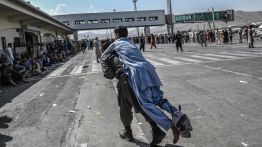
The Taliban retaking Kabul has been inevitable for almost the entirety of the 20 year war, and certainly since Barack Obama announced the US troop withdrawal from Afghanistan in 2011. And yet the manner in which Kabul has fallen, with images of despair and the Taliban’s unopposed march to the presidential palace, heralds a global tectonic shift. For Islamist militia, regardless of their orientation, it signifies jihad’s biggest win of the decade. Jihadist outfits from Africa to the Middle East and South Asia, including groups that have been facing off against the Taliban in Afghanistan, will bask in the ‘triumph of Islam’.

Pakistan is the true winner from the Afghan debacle

From our UK edition

'Everyone is getting out – and fast', the man tells me over a crackling line. He is tired, clearly subdued. A UN staff member, he was in Afghanistan until very recently and is still trying to process what happened. 'We knew this was going to happen,' he continues, 'but everyone was caught by surprise at the speed of the Taliban advance.' UN staff are now being evacuated to Almaty in Kazakhstan, from where they will make their way to their respective countries. But what about the local Afghans that worked with them? 'Our Afghan colleagues were given letters of support for country visas in the region: Iran, Pakistan, and India.

NIxon

Saigon and Kabul: what would Nixon say?

Having worked with former president Richard Nixon during the last years of his life, I’m often asked what his view would be about some present-day issue. Given the rampant comparisons between the calamitous fall of Afghanistan to the Taliban following the Biden administration’s precipitous withdrawal and the disastrous fall of Saigon in 1975, Nixon’s perspective would have been invaluable. He believed, like all strong, effective US presidents, that American strength means greater stability and peace and American weakness begets instability and conflict. With the end of the cold war and the bipolar international system, the US became the global hegemon, nearly solely responsible for a stable global order.

Western deterrence now looks hollow

From our UK edition

The efforts of a 20 year war took only a few weeks to overturn: the Taliban has completed its takeover of Afghanistan. As parliamentarians return to Westminster on Wednesday to discuss the situation, the focal point of the debate should be damage control. One of the major challenges will be restoring deterrence. The withdrawal of troops, which was done hastily and without an organised exit strategy, gave the Taliban the opportunity to make quick advances, often even without the need to use violence. The last few days also saw images of western nations rushing to evacuate remaining personnel. The way these events have unfolded depicts the US and its European allies as weak, risk averse and war-weary — it undermines the West’s deterrence.