Europe

The sinister rise of Churchill revisionism

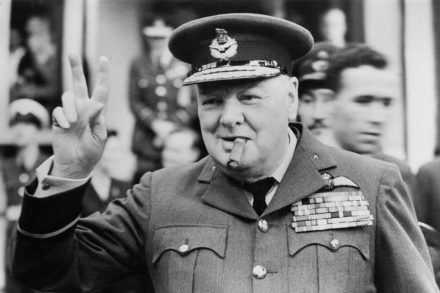
Winston Churchill is one of Britain’s enduring symbols. His relentless drive, deep conviction and steadfast leadership means that he remains admired by millions around the globe. Yet for years, the political mainstream has been compelled to defend his memory from spurious attacks from the left, such as the British politician John McDonnell calling him a “villain.” Depressingly that threat – and the same pernicious desire to denigrate one of the West’s greatest heroes – can now be found on the right. Spawned from a sinister fringe of the ultra-MAGA movement, these views have been propagated to millions. Tucker Carlson hosted the pseudo-historian Darryl Cooper on his podcast in an episode that has attracted over 33 million downloads.

winston churchill

Macron has declared war on free speech

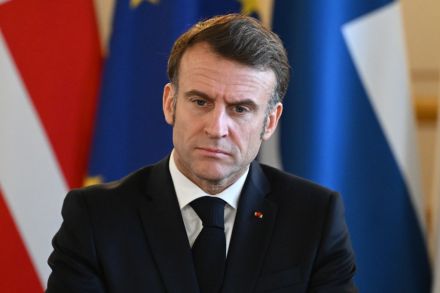
Emmanuel Macron says Europeans should stop relying on social media for their news and turn back to traditional public media. Speaking in Paris on Wednesday, he said people were “completely wrong” to use social networks for information and should instead depend on journalists and established outlets. Social platforms, he argued, are driven by a ‘process of maximum excitement” designed to “maximize advertising revenue,” a system he said is “destroying the foundations of democratic debate.” He accused X of being “dominated by far-right content” and added that the platform was no longer neutral because its owner had “decided to take part in the democratic struggle and in the international reactionary movement.” TikTok, he warned, was no less dangerous.

Why the French are dreaming of a Donald Trump à la française

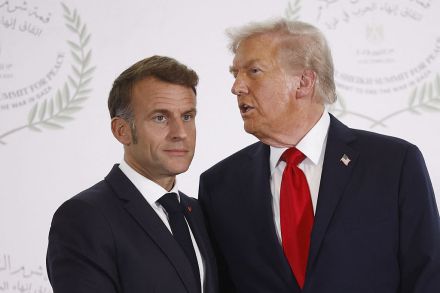
A year ago Donald J Trump was still roundly disliked by the French commentariat. Even the conservative Le Figaro newspaper held its Gallic nose in disdain, running a haughty article headlined "Trump, vulgarity runs rampant." The left still loathe the president of the United States but for the right in France he has become a role model. The same Le Figaro now writes approvingly of Trump and admits it got him wrong. "We expected an isolationist Trump, focused solely on American interests," it declared on Friday. "But in nine months, the president has established himself as a peacemaker in multiple international crises." The French perhaps more than any European nation have never got The Donald.

Trump France

Trump admonishes the United Nations

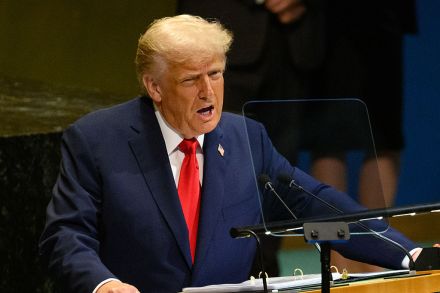
Was there a plot against President Trump at the United Nations? Upon his arrival, the escalator apparently stopped working. Next his teleprompter failed. Small wonder that Trump was in less than a concessive mood as he delivered his speech denouncing the UN itself as a colossal failure. The result was the kind of talk he would give to a political rally – except it was to an unreceptive, if not hostile, audience. Throughout, Trump made it clear that his estimation of his abilities is very different from his view of the UN. “I’m really good at this stuff,” he declared. “I’ve been right about everything.” As for everyone else: “Your countries are going to hell.

Donald Trump

The concept of ‘the West’ seems to mean anything you like

From our UK edition

A hundred years ago, T.S. Eliot wrote to Geoffrey Faber, for whose publishing company he had just started work, complaining: ‘The Defence of the West… is a subject about which everyone thinks he has something to say.’ Plus ça change? Back then, people were coming to terms with a war that had shown the West to be neither as unified nor as civilised as had been assumed. A century on, American isolationism, demographic decline, mass immigration, Islamism and a slow but decisive shift in global economic gravity are giving commentators the opportunity to bloviate endlessly about the decline/suicide/end/decay/of the West. But what exactly it is that we are defending or lamenting is far from clear. Georgios Varouxakis’s The West attempts to answer that question.

Poland’s Nawrocki heralds a more mature populism

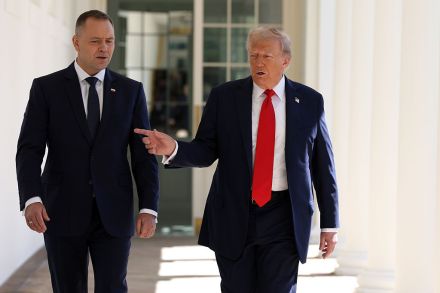
Yesterday, September 3, President Trump welcomed Karol Nawrocki, the newly inaugurated president of Poland to the White House. It was a stirring occasion, replete with a surprise military fly-over of F-16 and F-35 fighter jets flying in “missing man” formation to honor  Major Maciej “Slab” Krakowian, the Polish pilot who died in a crash in Radom, Poland, last Thursday.  Nawrocki, who narrowly won the presidency in June, is often described as “the Polish Trump.” It’s an accurate epithet. Nawrocki is as much a “Poland First” president as Trump is an “America First” president. The 42-year-old historian (Nawrocki holds a PhD in history) supports a list of policy initiatives that could have come right out of the MAGA playbook.

Nawrocki Trump

Europe is giving up on free movement

From our UK edition

Ten years ago on 31 August 2015, Angela Merkel told the German press what she was going to do about the swell of Syrian refugees heading to Europe. With the three fateful words ‘Wir schaffen das’ – ‘We can handle it’ – she ushered in a new era of uncontrolled mass migration, not just for Germany but for the rest of the European Union too. The then chancellor, so often described by her supporters in the press as the ‘queen of Europe’, was adamant that Germany was a ‘strong country’, which had the resources to support the sudden influx of migrants. ‘We will provide protection to all those fleeing to us from wars,’ she insisted. Whether or not other European leaders shared her confidence was immaterial.

RFK Jr. faces down M&M’s

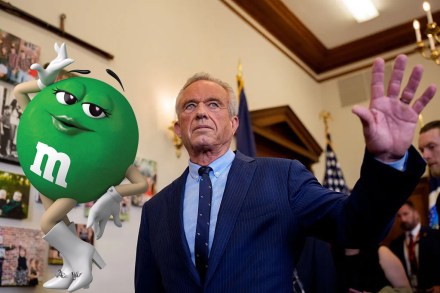
Robert F. Kennedy Jr. may have finally met his match: the green M&M. Mars, which manufactures various popular candies including M&M’s recently announced it will be changing direction from its 2016 goal of removing "all artificial colors from its human food portfolio globally"... because Americans like their candy Red 40 red, rather than beet-red. The Health and Human Services Secretary has a plan to remove American children's spoons from their "toxic soups of synthetic chemicals." It's contingent on an "understanding" he has with major food companies that Americans don't want to be poisoned. Yet it seems his and the candy industry's mutual "understanding" is breaking down.

M&Ms rfk
roundabout turning circle

Europe’s favorite novelty is causing pile-ups in the US

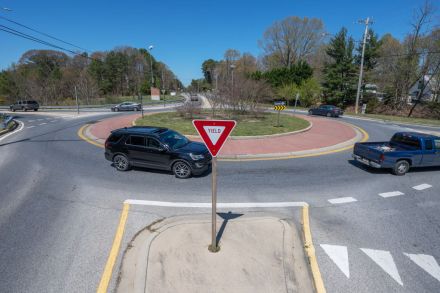
Talk to a Brit about their preference in social structures, and the first thing they'll likely tell you, as an American, is that you’re wrong. Whether it’s healthcare or guns, public transport or urban walkability, the American way of being is often at odds with our English cousins, and indeed the rest of the Europe. While we mostly resist conforming, the quietly irksome traffic circle – or, yeesh, “roundabout” – is quickly taking root in America’s vast suburban sprawl. And you could soon find yourself in a pile-up before you even know it. Europe’s favorite novelty is still relatively rare in America, but they are springing up fast. The UK has over 25,000 roundabouts, while the entire US has only about 11,000. Yet that figure has doubled over the last ten years.

Putin orders new offensive

From our UK edition

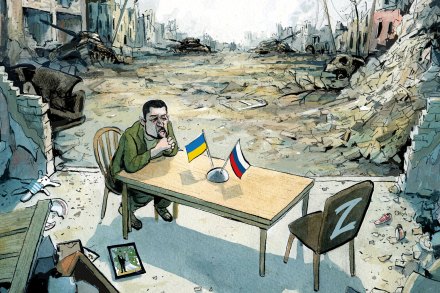
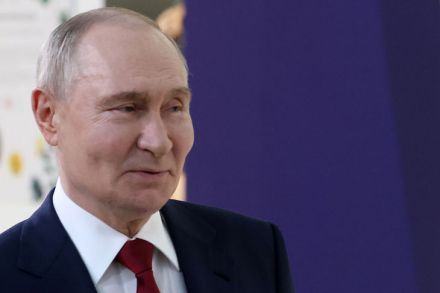
‘You want a ceasefire? I want your death,’ said Russia’s chief propagandist Vladimir Soloviev during prime time television, the camera zooming in on his face. His message was aimed at both Ukrainians and Europeans urging the Kremlin to stop the war. Soloviev, alongside a chorus of other Kremlin loyalists and military experts, has lately been gloating about how Vladimir Putin weathered western pressure and secured Donald Trump on his side. There will be no peace, they say, until Ukraine capitulates to Russian demands. Putin, as if to prove the point, announced yesterday that he had ordered the military to begin creating a ‘security buffer zone’ along the Ukrainian border – which is not quite the peace process Trump has been calling for.

How English are you really?

From our UK edition

I’ve struggled to ascertain from afar the true nature of Germany’s Alternative für Deutschland. Progressive media love to quote its supporters’ politically off-key comments, but no party can answer for a membership’s every daft remark; even the odd dodgy politician comes with the territory. Yet the country’s two mainstream but increasingly unpopular parties – a disenchantment Brits will recognise – portray the AfD as chocka with swastika-waving Nazis building scale models of Treblinka in their basements. After anti-Trump Democrats screamed ‘Hitler! Hitler! Hitler!’ until they were blue in the face last year, I can’t help but view the German elite’s hyperventilation with scepticism.

Is Poland’s revival a mirage?

From our UK edition

In 1988, when I was six months old, my British father and Polish mother took me to meet my family in Krakow. My parents brought an extra suitcase filled with disposable nappies because such luxuries weren’t sold on the other side of the Iron Curtain. At the time, there was only one shop in Krakow that sold foreign goods, but my father was pleased to discover that a gallon of whisky could be bought for only $8. He was a member of the House of Lords and, I’m told, we were trailed for our entire stay. Everywhere we went, a large Polski Fiat 125 driven by a suited man followed us. My parents always said that apart from drinking in people’s homes, there wasn’t a lot to do in Krakow back then. There were a couple of run-down cafés in the main market square but that was it.

The real battle for Europe

Donald Trump hates Europe – that suspicion had grown so widespread by mid-April that J.D. Vance was moved to declare in an interview: “I love Europe.” Even its people, he claims. Of course, Americans have taken sides in European rivalries from the outset: Thomas Jefferson was a France man after the French Revolution, while John Adams preferred England. FDR preferred Pétain, while Eisenhower preferred de Gaulle. But hate Europe outright? The idea is absurd. Though our ancestors are not 100 percent European, our country is. You can imagine President Trump calling for a Wienerschnitzel and a tub of mayonnaise more easily than you can imagine him calling for a bowl of hủ tiều nam vang and a bottle of nưởc mắm.

Europe

Why are Europeans so untroubled by their ignorance of America?

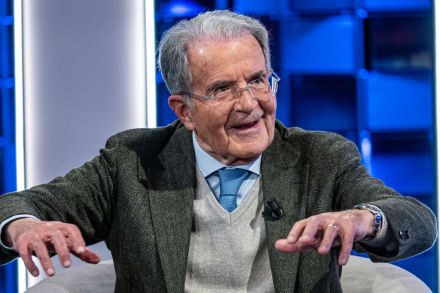
Laramie, Wyoming Americans are infamous on the eastern side of the Atlantic for knowing little or nothing about European culture, history and politics – and for being proud of the fact, as Richard Hofstadter, the late Columbia historian, described in them in Anti-intellectualism in American Life, the winner of the Pulitzer Prize for non-fiction in 1964. Much less widely recognized is how little Europeans know about America, Americans and their own civilization – an ignorance that troubles them not at all, perhaps because they seem to be unaware of the fact.

prodi italian europeans

Europe is its own worst enemy

Vice President J.D. Vance’s speech condemning Europe’s abandonment of basic western values was a seminal moment in US-European relations. It provoked immediate praise from American conservatives and disparagement from European leaders, including German Chancellor Olaf Scholz. Critics and admirers both recognized the significance of Vance’s message. The February 14 speech, which Mr. Vance gave on his first trip abroad as vice president, yielded millions of views on X and spawned dozens of op-eds in response. At the Munich Security Conference – typically a venue to discuss defense spending and the like – Mr Vance told the entire European leadership class that they themselves are the biggest threat to European security.

Trump’s war on Europe should not surprise anyone

Has there been a more cataclysmic year for US-Europe relations than 2025? It began with J.D. Vance’s “sermon” to EU leaders at the Munich Security Conference last month, in which he berated Western Europe for its policies on immigration and free speech. This year has also seen the growing threat of NATO falling apart after 76 years of peace in Western Europe, with the White House seemingly tilting toward Russia and Trump demanding that alliance members such as Germany, France, and the U.K. dramatically increase their defense spending. This week, as the Trump administration imposes tariffs on Europe and Europe retaliates, there are even signs of a full-scale trade war.

Europe

Landlord Trump, the tenants’ best bet

Donald Trump is the world’s largest landlord — not in his own capacity, perhaps, but in his role as leader of the most powerful nation on earth. He’s the CEO of America, and his development corporation owns the Western hemisphere. It also owns property in Europe, where the tenants are troublesome and are always behind on their rent. There are just a few other landlords on the planet, notably Vladimir Putin, who isn’t a rival, and Xi Jinping, who is. This might sound like a perspective on world politics for someone who rose to prominence in the cutthroat environs of New York real estate. Yet the truth is that government is always about who’s the landlord and who’s the tenant.

landlord

Debunking the myths about the ECHR

From our UK edition

This year the European Convention on Human Rights and its Strasbourg court are 75 years old – the age at which British judges are obliged to retire. Is it time for Britain to retire from this ageing institution? Not according to the Attorney-General, Lord Hermer, a former human rights lawyer, who recently pledged that under Labour Britain would never leave. Apologists for the ECHR invariably turn to myths to make their case, foremost of which is the creation myth. The ECHR, they say, was a British invention. It was inspired by Winston Churchill and drafted by David Maxwell Fyfe. It codified historic British rights and the UK was the first country to ratify it.

How long will Starmer’s ‘war bounce’ last?

From our UK edition

11 min listen

Trump has been stealing the headlines when it comes to Ukraine this week, but Europe – and whether it can stay united in the face of the US pulling its support – remains an important subplot. At a summit yesterday, 27 countries backed the plan to increase spending on defence, but when will the cracks start to show? Thankfully, it seems that the Prime Minister is good in a crisis. Back at home, he has seen a modest bounce in popularity and he is making a good impression in Brussels, coming across as assured without grandstanding. He has also been leading on defence spending – could defence be the way in for Starmer to renegotiate a new position within the EU? Is Starmer having a good crisis?

Why Europe needs to take the Putin threat more seriously

Russia’s war on Ukraine presages a dire future for all of Europe unless Vladimir Putin’s military is decisively defeated. That is the powerful and persuasive argument advanced in Keir Giles’s new book. To appreciate fully the importance of his contentions, you must acknowledge not only Giles’s own status as a supremely well-connected senior fellow at the famed Chatham House think tank in London but even more so the all-star cast of international military luminaries who have publicly endorsed his analysis: the now-retired US generals John Allen and Ben Hodges, UK general David Richards, Australian general Mick Ryan, plus former Estonian president Toomas Hendrik Ilves. Giles’s assertions thus should be taken with the utmost seriousness.

Giles