Europe

Nick Lloyd takes you through the horrors of the Eastern Front

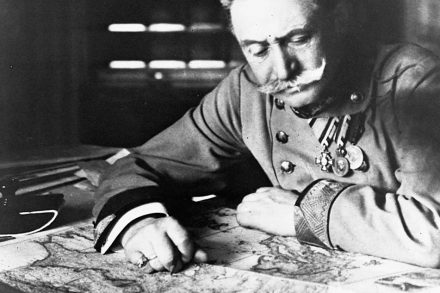
Ten years ago David Cameron, as the British prime minister, pledged $65 million for the centenary of World War One. The focus was on “capturing our national spirit in every corner of the country, something that says something about who we are as a people.” Beyond a celebration of the Tommy on the Western Front and a belated acknowledgement of colonial Britain’s sacrifice, it was a missed opportunity. There was little attempt to better understand the region where the war began — and where, according to Nick Lloyd’s exhaustive The Eastern Front, it never really ended.

Lloyd

Rewilding the world

I recently found myself scrolling World Cement Weekly in search of news of a massive rewilding project in northern Mexico, created and funded by the cement giant Cemex. The growing success of the rewilding movement is strangely little known — though there are now places that are wilder, more vibrant, more teeming with life than they have been for centuries, few outside the movement know anything about them. Two decades ago, a nature-loving chief executive of Cemex decided that the company would acquire 346,000 acres of degraded land on Mexico’s border with America, an area larger than Los Angeles, renamed the El Carmen Nature Reserve.

rewilding

The danger of a Labour supermajority

From our UK edition

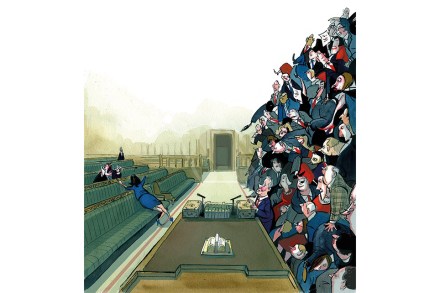
We are witnessing what could well be the last few weeks of a constrained Labour party. Sir Keir Starmer is saying as little as possible about his agenda and is instead listing what he won’t do (raise income tax, etc). He is rightly fearful that the Conservatives may do better than the opinion polls suggest. That has happened in the past. There may be a ‘shy Tory’ effect in the polls as there was in 1992, 2015 and 2019. Who would admit to voting Conservative in the current climate? Regardless, power now looks certain to come Starmer’s way – perhaps with a majority bigger than that of any modern prime minister. It doesn’t much matter that he has not enthused voters with his promises.

The EU ‘elections’ vindicate Brexit

From our UK edition

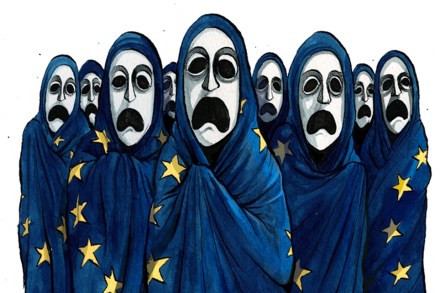
If Britain had not left the European Union, we would be going to the polls this week as well as on 4 July. The European parliament elections have come round again and it is likely that there will be a mass revolt against the direction of the EU project. Across the continent, voters disillusioned with the EU model of democracy are turning to the Eurosceptic right. Marine Le Pen’s National Rally is on course to become the biggest single party in the European parliament. AfD is polling in second place in Germany. Geert Wilders’s Freedom party is comfortably ahead in the Netherlands. Chega, a new far-right party from Portugal, is expected to make big gains, as is the Freedom party in Austria and the Croatian Homeland movement.

Is Europe ready for Trump 2.0?

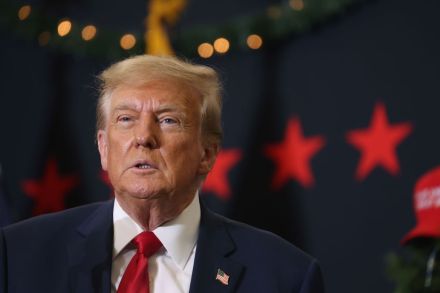
The 2024 presidential race between Joe Biden and Donald Trump is a dead heat. At most, a few percentage points separate them in the polls. Thousands of miles away, however, European leaders are operating as if Trump has already won, not wanting to be caught flat-footed yet again. When Trump defeated Hillary Clinton in 2016, European officials scrambled to establish contacts with the incoming administration. This time, the same wonks are proactively reaching out to Trump-friendly lawmakers and think-tankers, not only to understand what Trump’s foreign policy would look like in a second term but to press their own priorities. The Europeans, of course, are right to be worried.

Trump

What Xi wants in Europe

From our UK edition

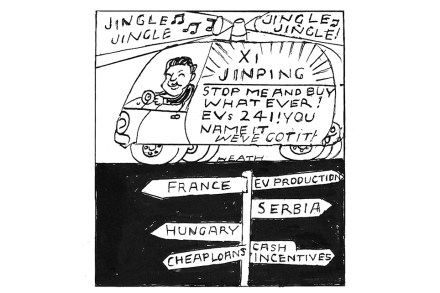
On a quiet street in Belgrade, a bronze statue of Confucius stands in front of a perforated white block, the new Chinese Cultural Centre. This is on the former site of the Chinese embassy which in 1999 was bombed by US-led Nato forces during the Kosovo war. Three Chinese nationals were killed. The Americans said the bombing was an accident, but the deaths allowed China and Serbia to share a common anti-Nato grievance. This week, timed to coincide with the 25th anniversary of the bombing, Xi Jinping visited Belgrade and talked about the Sino-Serbian ‘bond forged with the blood of our compatriots’. He had been expected to visit the embassy site but seems to have decided that that would be too provocative against Washington.

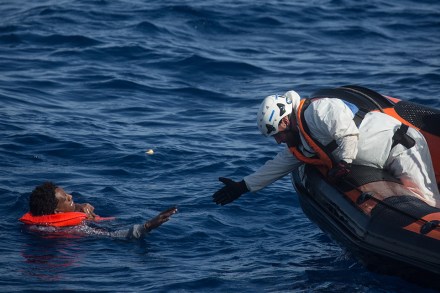
Europe has no answer to its immigration problem

From our UK edition

Pulling off the rhetorical trick that Brexit would undermine the Northern Ireland Good Friday Agreement, Michel Barnier, the EU negotiator, said in 2018 that the agreement meant removing borders not only from maps, ‘but also in minds’. Even a single CCTV camera on the North-South roads was considered a threat to the peace process. Now it turns out, which is grimly amusing, that the Irish government has not banished the border from its mind. The Republic is upset that asylum seekers are crossing the border that it does not believe in, fleeing the threat of deportation to Rwanda from the United Kingdom. It talks of sending them back, ignoring a recent decision of its own courts that Britain is not a safe country.

In defence of the EU

From our UK edition

Eastern Europe is the graveyard of empires. Rome failed on the Danube, Napoleon on the Dnieper. The epic struggle between the empires of Austria, Russia and Turkey in the first world war ended with the destruction of all three and the fragmentation of eastern Europe, giving rise to the word ‘Balkanisation’. Driving through the Balkans today, I am continually reminded that history has no full stops. Every empire leaves its ghosts to haunt its successors. Vienna, like London, is an imperial city without an empire. The ethnic antagonisms of the Balkans, which provoked the first world war, survived to divide Yugoslavia in the second and then destroy it in the 1990s. The region still wears the robes of the past.

Megève’s enduring magic

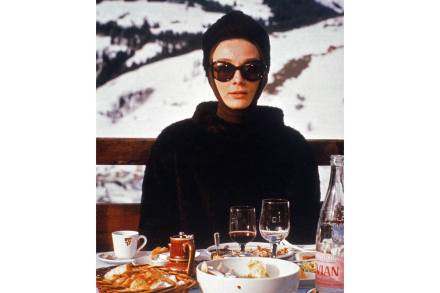
Kitted out in black Givenchy, huge sunglasses blocking out the snow glare, Audrey Hepburn is lunching al fresco in the French Alps when a meet-cute with Cary Grant ensues. It’s the opening scene of Charade, filmed just over sixty years ago in Megève — the chichi winter resort for both Hollywood royalty and true bluebloods during the 1960s. Back then, Brigitte Bardot, Yves Montand and Jean Cocteau were often seen swooping down its pistes. Imagine a snow-dusted Saint-Tropez and you’re on the right track. This medieval market town was hardly destined to become a darling of the beau monde. Megève was something of a backwater (the name even translates to “village in the middle of the waters”) until 1920, when Baroness Noémie de Rothschild spotted its potential.

Megève
plogging

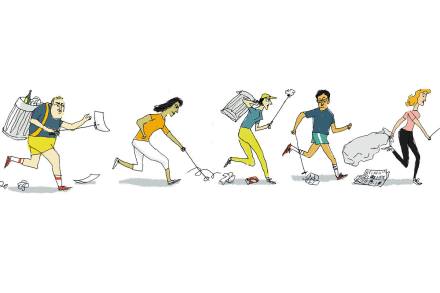
Plogging: Europe’s bizarre eco-friendly fitness craze

The first finisher crossed the line sweaty, tired and almost black with dirt, his white Decathlon shirt turned gray and his standard-issue blue gloves transformed into a deep midnight. He dragged behind him a refrigerator-sized plywood box, piled high with swollen rubbish bags and secured with a hooked rubber bungee cable — where he grabbed that, nobody knew. Yet José Luis Sañudo Lamela’s smile was wide, and he laughed heartily when onlookers and fans expressed amazement at his feat. But despite Lamela’s assuredness that he would take home top billing in the annual World Plogging Championships, one man outdid him — if not in diversity of goods, in pure heft.

Judgment call: the case for leaving the ECHR

From our UK edition

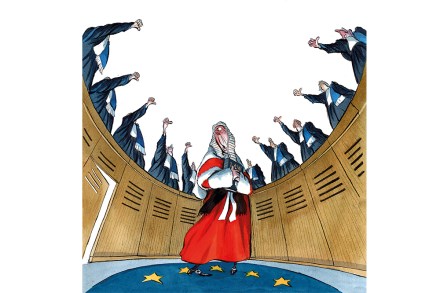
The debate about the European Convention on Human Rights is in danger of being diverted into irrelevant byways. Hostility to the convention has become a trademark of the right wing of the Conservative party, which invites unnecessary partisanship. This is unfortunate, because the United Kingdom’s adherence to the convention raises a major constitutional issue which ought to concern people all across the political spectrum. It is far more important than Suella Braverman’s battles with boat people and ‘lefty lawyers’. Yet so far, the debate has rarely risen above the level of empty slogans, meaningless mantras and misleading claims.

NATO’s post-Cold War strategy has been a disaster

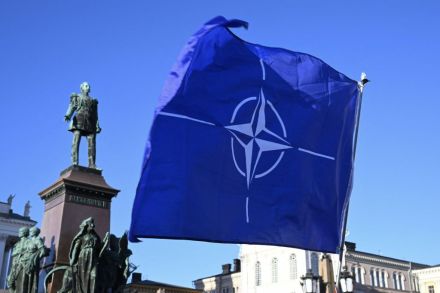
NATO is fighting for its life — and dying. The alliance has only grown larger as a result of Russia’s invasion of Ukraine. Now Finland is a member — and Sweden is on its way to becoming one. Ukraine and Georgia would like to join, too. All this is a sign of failure, however, not success. Whichever way one looks at the picture, NATO’s post-Cold War strategy has been a disaster. Either NATO did not expand far enough, fast enough — to the point of including Ukraine and thereby preventing the Russian invasion — or NATO’s continual expansion gave Russians reason to fear that they were being boxed in.

NATO

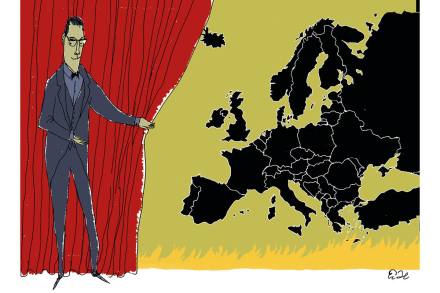
Europe is not a museum

The temperature, at last, is starting to drop — and for Europeans that only means one thing: peak season is over. The crowds in the piazzas and on the beaches are starting to thin. And in the tavernas that were TikTokked you can finally think about getting a table. It’s time. Like the clockwork of migrating swallows — the Americans are going home. And knowing you can finally count on a breeze and far fewer strong-dollar spenders than a few weeks earlier, a stingier tipping class of European grande bourgeoisie in West London or the 8ème arrondissement — that has long since given up on July and August for the Mediterranean — is now contemplating a holiday. It’s still, however, at least conversationally, Europe season in the United States for a few more weeks.

europe museum america

You think British trains are bad? Try German ones

From our UK edition

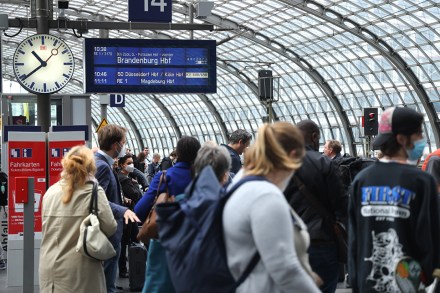
I found Jean-Pierre standing at a half-open window gulping down lungfuls of stale Dutch air as our night train chuntered, unseeing, through an expectoration of towns: Zutphen, Eefde, Gorssell. He was 79 years old, he told me, and returning to Berlin for the first time in 61 years for a meeting with an old friend. Our steward made it absolutely clear he couldn’t give a stuff that there was no buffet car Back in 1962, Jean-Pierre had been a very young Belgian Jesuit employed in smuggling hard currency from West to East Berlin, which he did by stuffing the notes inside a plaster cast which covered his right leg. There was nothing wrong with his leg, of course.

My verdict on Eurovision

From our UK edition

I had the sudden suspicion, at about ten o’clock on Saturday night, that I was the only straight male in the United Kingdom watching the Eurovision Song Contest. Or perhaps the only one watching it voluntarily. A little later a Dutch presenter, when reporting her country’s scores, said: ‘Hello girls and gays.’ It wasn’t a slip of the tongue but an accurate summation of the audience – the one in Liverpool and the rest of us, sitting in front of our televisions. There was a merciful absence of all faux-seriousness and any song which got political didn’t do well Eurovision, like Crufts, has been a gay domain for the best part of a quarter of a century, of course, but it is so gay now that it doesn’t even need to advertise its credentials with rainbow flags.

Europe is turning against net zero

From our UK edition

The contrast couldn’t be greater. In Britain a wealthy cabinet minister goes on television to boast of how he is installing a heat pump in his home – something his government is proposing to force on millions of British homeowners over the next few years in spite of them costing many thousands of pounds more than a gas or oil boiler. Meanwhile, in France, the President makes a speech calling for a ‘regulatory pause’ on green issues in order to push for the ‘re-industrialisation’ of his country. So far, Britain and the EU have moved more or less in tandem on climate change – which is not all that surprising given that until three years ago Britain was a member of the EU and therefore within its regulatory orbit.

The EU is alienating eastern Europe

From our UK edition

For most of its 66 years of existence, a vital part of the EU’s mission has been the inexorable expansion of its power to tell member states what to do. It now has to grasp though that in future it will need to backtrack. Unless Brussels morphs pretty quickly from a centralised technocracy dispatching orders to its vassals, into an organisation based on broad consensus between elected governments, it is likely to find itself side-lined or even facing a continental schism. If you were looking for the most inept way to run an organisation like the EU, this comes close The latest illustration of this arises from a sudden glut of Ukrainian grain. For the last nine years or so this has enjoyed largely tariff-free access to the EU.

Turkey’s heavy price for pressuring the Russians

If you enjoyed the weeks-long intra-NATO spat about whether to send heavy tanks to Ukraine, then you’re going to love the ongoing kerfuffle about whether Sweden and Finland should be admitted into the transatlantic alliance. Whereas Germany was the lone holdout in the first instance, Turkey is the obstacle in the second — and going by the fiery words of Turkish President Recep Tayyip Erdogan, the squabble won’t end soon. Erdogan, in the midst of his toughest election campaign in two decades, has been using his veto over Sweden's and Finland’s NATO memberships to press both countries on one of his top priorities: cracking down on the Kurdistan Workers’ Party, a group Turkey, the US, and the European Union all label a terrorist organization.

greece

Poland is Europe’s next great military power

As Russia’s war in Ukraine rages into its eleventh month, there is one country that can truly be said to have learned its lesson: Poland. By the mid-2030s, when the majority of its equipment purchases have been delivered, Warsaw will command one of the most modern, well-equipped armies in Europe. It’s not cheap, but Poland is taking decisive action to be able to face the threats of tomorrow. Poland's $20.5 billion 2023 defense budget is a huge increase over the previous year, and is over 3 percent of gross domestic product (well above the NATO-suggested 2 percent). Aside from equipment, this money will be used to help expand the manpower that Poland can bring to bear, upping its active-duty forces from 140,000 to 300,000 troops.

Germany’s Faustian entanglement with China

Back in November, German Chancellor Olaf Scholz met with Chinese Communist Party (CCP) chairman Xi Jinping. His visit to China was the first by a G7 leader in three years. Facing heated domestic and international pushback, Scholz framed his visit as an effort to “further develop” economic cooperation between Berlin and Beijing. In this context, such “further development” means further cementing Germany’s Faustian bargain with China, one in which European-based players, like Airbus and Volkswagen, claim immediate revenue — but at their long-term expense and at great strategic cost.