Europe

Why is America determined to pick a fight with Poland?

Until very recently it was hard to find more stalwart allies of America in Europe than the Poles. Poland was an early supporter of Washington’s policy to expand Nato and actively pushed for a stronger US role in central and eastern Europe. The Poles also stood up as an enthusiastic member of every US-led military coalition, taking leading roles in Afghanistan and Iraq. It was to Warsaw that US President Joe Biden traveled – twice – in the wake of Putin’s invasion of Ukraine to give barnstorming speeches affirming that America would stand by Kyiv.  All the more surprising, then, that the recently-appointed US ambassador to Warsaw chose to pick a diplomatic fight that threatens to snowball into a profound rupture between the two onetime allies.

The world after New START

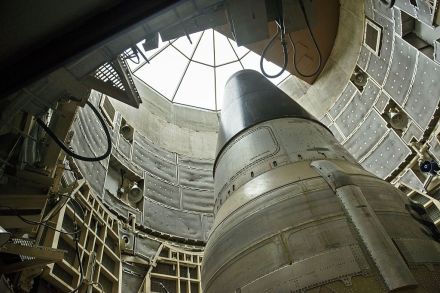
When the New Strategic Arms Reduction Treaty (New START) expires tomorrow, the United States and Russia will, for the first time since the early 1970s, operate without a binding agreement limiting their strategic nuclear forces. That fact alone is striking. What is less obvious – and more consequential – is what the expiration reveals about the state of nuclear order in a world increasingly shaped by authoritarian ambition and multipolar competition. Signed in 2010, New START capped each side at 1,550 deployed strategic warheads and restricted the number of missiles and bombers that could carry them. Equally important were the verification provisions: inspections and data exchanges designed to reduce uncertainty and prevent worst-case assumptions.

France

France has a nasty case of Trump Derangement Syndrome 

The French IT giant Capgemini has put its US subsidiary on sale because of its association with the work of ICE in America. All hell broke loose last week in France after it was revealed by the state broadcaster that Capgemini’s software was being used by Immigration and Customs Enforcement to identify foreigners on US soil and track their locations. According to the BBC, Capgemini multi-million dollar contract with ICE was agreed last December and was scheduled to run until 15 March. It has now been curtailed after the company found itself in the eye of a storm following the deaths last month of two anti-ICE protestors in separate incidents in Minneapolis. Union leaders in France demanded an "immediate and public cessation of any collaboration with ICE.

How Trump’s Greenland strategy could imperil his legacy

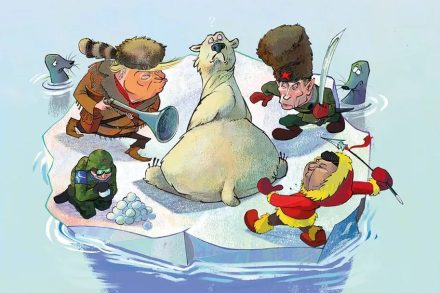
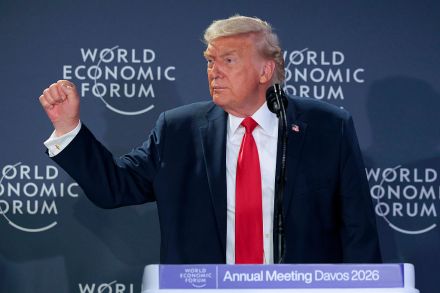
President Trump has returned home from Davos, Switzerland, basking in the glow of his latest diplomatic Houdini act. For weeks, the President made Europe shudder with fear and sputter with rage as he abruptly escalated his demand for a total US takeover of Greenland. He said he was ready to launch an invasion or reignite a trade war to do it, even in the face of threats that such an act would destroy NATO. On Truth Social, the President shared a post suggesting NATO was a greater threat to America than Russia or China, along with AI slop depicting not just Greenland but also Canada under US dominion.

greenland

Are you long on America?

Donald Trump has completed the first year of his second presidency – and remains a truly divisive figure. He may have pulled back, after an absurd escalation, from his apparent threat to annex Greenland by force. But European leaders continue to berate him for his turbulent behavior in international affairs, and a growing number of Republicans are turning against his erratic foreign policy. Last week, the cry on global markets was “Sell America,” after the President ratcheted up trade hostilities with long-standing US allies by announcing yet another round of punitive tariffs on several European countries for refusing to agree that America should own Greenland outright.

Will Trump face a domestic backlash over his Greenland caper?

It began, as most things do under Donald Trump, with an idea that struck outside observers as a lark. An interested party – in this case, billionaire Ron Lauder – suggested to the President during his first term that the United States should acquire Greenland, a move that would represent the largest expansion of US territory since the purchase of Alaska from the Russians more than 150 years ago. The notion was reportedly considered and then left on the shelf, like so many ideas in Trump’s first term. Yet time away from the presidency gave it more resonance. Now the President is back on the case – and he seems very committed to the move, to the shock and horror of European observers who never took his Arctic ambitions seriously.

greenland

The radical networks that hijacked the 1970s

Airplane hijacking, like the mode of transport itself, became common in the 1960s. A practice largely confined to the United States, it was invariably a means for ordinary criminals to extort ransom money or flee to Cuba. In 1968, the hijacking of an El Al flight by the left-wing Popular Front for the Liberation of Palestine revealed the political utility of the act: in exchange for the safe return of its plane and passengers, Israel released 16 Arabs from its prisons. Encouraged by this outcome, the PFLP launched a spate of similar operations. One such mission, the hijacking of a TWA flight in 1969, revealed that prisoner exchanges and ransoms weren’t the only upside of this new tactic.

Greenland and the new space race

Donald Trump’s desire for Greenland is not just about access to oil, minerals and control of the new strategic and commercial corridors opening in the region. It’s also about data. Specifically, the most important data in the world. For decades, Pituffik Space Base – formerly Thule – in Greenland has been central to US space defense and Arctic strategy. It’s the US military’s only base above the Arctic Circle and their most northerly deep-water port and airstrip. It’s home to the 12th Space Warning Squadron. Its massive AN/FPS-132 radar has 240 degrees of coverage surveying the Arctic Ocean and Russia’s northern coast, especially the Kola peninsula where it has concentrated its strategic nuclear weapons.

greenland

George Clooney has been seduced by a French fantasy

Bonjour and bienvenue to the Clooneys. Gorgeous George, his wife Amal and their eight-year-old twins have been granted French citizenship. The Hollywood actor has long had a deep streak of Europhilia, owning luxury properties in Berkshire and Lake Como, Italy, as well as his pad in Provence. Located near the village of Brignoles, the Clooneys’ €9 million ($10.5 million) wine estate spans 425 acres, including an olive grove, swimming pool and tennis court. In an interview last month with a French radio station, 64-year-old Clooney declared (in English) that "I love the French culture, your language, even if I'm still bad at it after 400 days of courses." He also praised France’s privacy laws, citing them as the principal reason he and his wife want to raise their children there.

Europe’s self-deception over Greenland

As Donald Trump weighs up taking control of Greenland, Britain and the EU has fallen back on a familiar strategy: talk tough, and do nothing. The UK joined France, Germany, Italy, Poland, Spain and Denmark yesterday in making a joint statement affirming that "Greenland belongs to its people." Arctic security, it said, must respect "sovereignty, territorial integrity and the inviolability of borders." Invoking it Article 5 the United States would expose NATO’s limits rather than overcome them If Donald Trump decides to take Greenland, Europe’s initial response would be loud, formal and legally impeccable. Europe and the UK would protest loudly, threaten, – and then do almost nothing at all.

Jack Rankin: No to Reform

From our UK edition

No to Reform Sir: Perhaps because I have been candid about the Conservative party’s failures in office, I am mooted as being of interest to Reform by your political editor (‘14 questions for 2026’, 3 January). But acknowledging failures is not a prelude to defection; it is the necessary starting point of renewal. When Reform speaks of a ‘uniparty’, it implies that swapping politicians is enough. It is not. The crisis of the British state runs far deeper. Governments are in office, not power, because of the pernicious shift we have seen over the past 30 years from a political constitutionalism to a legal one.

Boris Johnson: will cowardly Europe betray Ukraine again?

Boris Johnson has urged European leaders to hand $247 billion of frozen Russian central bank assets to Ukraine – but says he fears they “lack the courage” to do so, in an interview with The Spectator. The former British prime minister also warned that Trump is at risk of “morally polluting” himself if he caves to Putin’s demands in peace negotiations and encouraged his negotiating team to stop the “nauseating deals” they are discussing about joint business ventures.“I think Europe is at a very difficult point because Europe has got to do the reparations alone,” Johnson said. “And I'm worried that they lack the courage. They must do it. I think that's the only way to get the Americans to take Europe seriously.

Boris Johnson

Trump’s brave new world

No one ever tucked themselves up in bed to read a government document – at least not in the expectation of enjoying it. The standard format is one of hundreds of pages of impenetrable jargon yielding no more than nuggets of significant ideas. The Trump administration has admirably cut through that tendency to produce a National Security Strategy (NSS) that is worth reading: a coherent outlining of America’s strategic intentions on the world stage. Originally composed by Michael Anton, a brilliant mind who is sadly leaving the State Department, the document concisely lays out a Trumpian vision of America’s role in the 21st century.

Yes, Europe’s civilization is being erased

Last week the Trump administration expressed its fear that Europe faces "civilizational erasure." Its concern was articulated in a 33-page National Security Strategy that outlined Donald Trump’s world view and how America will respond economically and militarily. The sentence that caused the most reaction on the other side of the pond was the assertion that, if current trends continue, Europe will be "unrecognizable in 20 years or less." Those trends are mass immigration and what conservative French commentators call the "Islamification" of Europe. If Europe doesn’t address these trends, the Trump administration predicts the continent’s "civilizational erasure.

Meet the e-girls selling European decline to America

Earlier this year, a striking 28-year-old woman, dressed head to toe in a vivid shade of crimson, stepped up to the podium at a conference in Hungary. “Ladies and gentlemen: hello Budapest. I’m so thrilled to be here again,” she began, adjusting the twin microphones and gently swiping a strand of long blonde hair from her forehead. “As some of you might remember, last year I gave here a speech as well, about the ‘great replacement,’” she continued, confidently glancing around the assembled audience. “I wanted the whole world to know that the ‘great replacement theory’ was, in fact, not a theory, but reality. White people are becoming a minority in their own homelands at an exceptionally fast rate.

e-
copper

The world needs more copper, but there’s a catch

Copper has a nickname in the commodities market. It’s known as “Doctor Copper” because it’s so deeply integrated into the physical fabric of our lives and all the technology we depend on that its price reflects the health of the economy. “Gold is money, everything else is credit,” said J.P. Morgan more than a century ago. But copper is more than money. It’s modern human life. It is used in every corner of our technology, from houses to windfarms to warehouses. Which is why I think, while everyone’s still obsessing about gold, it’s worth taking a look at copper. Since the global financial crisis in 2008, stock markets may have reached new highs but the physical world of construction, infrastructure and manufacturing has never quite regained its old growth rate.

Nick Thomas-Symonds: ‘The Brexit architects essentially ran away’

From our UK edition

With his owlish expression and affable manner, Nick Thomas-Symonds looks more like the academic that he was, rather than the political bomb disposal expert he has become. Brexit is the greatest political issue for a generation, yet Keir Starmer has chosen to put this softly spoken Welshman in charge of defusing it. The Cabinet Office minister, responsible for post-Brexit negotiations with the EU, is following in the footsteps of Olly Robbins and David Frost, but his lack of public notoriety says much about how things have changed as we approach the tenth anniversary next year of the vote to Leave.

Why Europe can’t go it alone on Ukraine

Who will pay for Ukraine’s war effort now the Trump administration has turned off the financial taps? European leaders have expressed themselves ready and willing to take up the burden, with European Commission President Ursula von der Leyen affirming that “if we continue to believe that Ukraine is our first line of defense, we need to step up our assistance.” Individual countries have come up with generous funding packages – most open-handed of all being Germany, which has recently pledged more than €3 billion in direct funding. But that’s just a drop in the ocean compared to what Ukraine says it needs.

zelensky ukraine
azov enemy ukrainian

How the Ukrainian far right is preventing peace

Since the start of the Russian invasion of Ukraine in February 2022, discussion of the Ukrainian far right has been verboten in western media, largely because one of Vladimir Putin’s stated war aims is the “denazification” of Ukraine. Putin’s claim that Ukraine is a Nazi state has been recycled by Russian propagandists and the western party line has consistently been that while the Ukrainian military does have far-right strains, they are marginal and inconsequential. This may have been true in 2022, but things have changed significantly after almost four years of war. Today, far-right figures control some of Ukraine’s strongest military units, and neo-Nazi ideology is displayed openly in the Ukrainian ranks.

g&t

How America fell in love with the G&T

The gin and tonic has had quite the journey. From humble beginnings protecting British explorers against malaria, it has become the country’s favorite cocktail. Abroad, Italians grown tired of spritzes now opt for it come aperitivo hour. The Japanese bow before it. The world stumbles after it. Yet there is one land the G&T has been slow to conquer: America, the land of vodka sodas and zero-calorie seltzers. In recent years that has begun to change. While overall consumption of spirits is down, sales of gin in the US are on the rise and expected to grow some 6.5 percent a year for the rest of this decade. Craft distilleries are in the vanguard: in California, gin is infused with citrus and coastal herbs. In the South, it might be perfumed with watermelon rind or magnolia blossoms.