Europe

What Europe gets wrong about the far right

From our UK edition

The head of America’s ‘Department of Government Efficiency’ (Doge) has written to all federal workers in the US asking them to explain in a brief email what they did last week. The exercise is intended to take no more than five minutes but has already lead to howls from many employees. How could anyone expect them to perform such a task? How can one explain the intricacies of supporting transgender opera among the Inuit in such short order? Happily, the new editor is not putting those of us on The Spectator’s payroll through any similar exercise. Nevertheless, something in the global vibe-shift perhaps impels me to mention a little of what I have been doing with my time.

Europe learns the facts of MAGA life

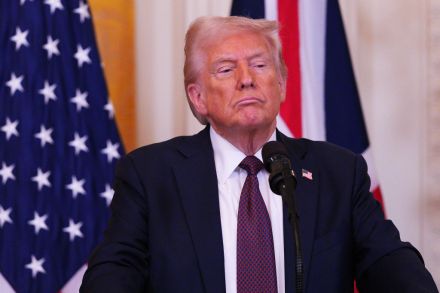
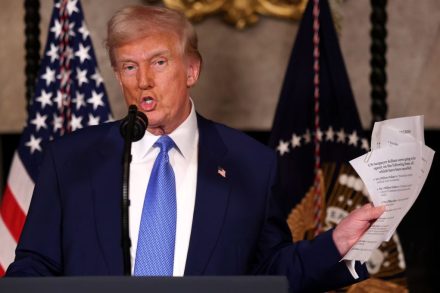
Panic, even hysteria, has swept Europe. Its leaders realize that in their case Trump should be taken literally as well as seriously, and he seems prepared to trade the transatlantic alliance for détente with Russia. Eight decades of good times for the continent might be coming to a dramatic end. Trump demonstrated contempt for Europe during his first term; however, his top aides moderated his antagonism, carrying on policy as normal. While out of office he evidently decided never again. Today he is firmly driving American foreign policy. As ever, Trump’s tactics are often dubious, even counterproductive. However, only shock treatment is likely to cause Europe to take its own defense seriously.

europe

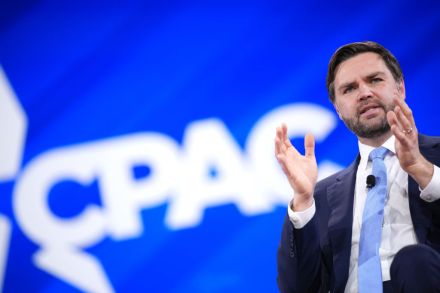
VP Vance touts border security, energy and humor at CPAC

Vice President J.D. Vance took to the Conservative Political Action Committee stage moments ago for a sit-down interview with Mercedes Schlapp.   In his signature earnest-yet-easy style, Vance reiterated his boss’s main, shared goals one month into the new administration: secure the southern border and grow the economy by unleashing American energy. While casting plenty of blame on the Biden administration throughout his talk, Vance touted the Trump administration’s early accomplishments; border crossings are already down 90 percent, he said, and “we’re just getting started.” In response to a question about fixing the economy, Vance said the key is, “Drill, baby, drill.

jd vance

Can Starmer be the bridge between Europe and the US?

From our UK edition

14 min listen

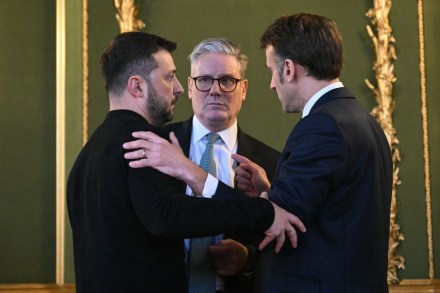
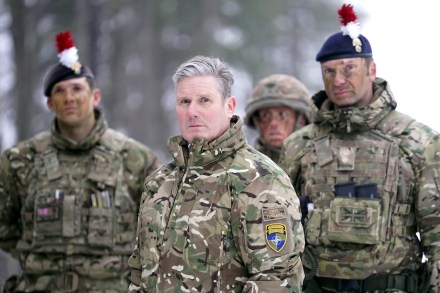
There is lots to make sense of today in a huge week for European and world politics, with the fallout of the Munich Conference and today’s emergency summit in Paris. European powers are trying to navigate peace in Ukraine in the face of a belligerently isolationist Trump administration. The UK is caught between preserving its privileged position with the US and the desire for a European reset, as well as the need for an end to the war in Ukraine without giving in to Russia. Can Starmer bridge the transatlantic chasm that has opened up? Do the Europeans want us, and do the Americans need us?  Events in Europe will be incredibly consequential here in the UK.

Europe

The Europe of American imaginations no longer exists

Since the United Kingdom left the European Union five years ago, the pair have been in battle to prove who has performed better. But the real story of the past five years is not a stagnant UK falling behind a buoyant EU, but of Britain and Europe being trapped in the same cycle of relative decline. It’s America that has quietly raced ahead of Europe this century. Following the pandemic it has become impossible to ignore the gulf in economic vitality between the US and Europe, the former growing by 16.3 percent per capita since 2008. There are very good reasons for America’s success, or rather, Europe’s decline. The EU and the UK increasingly treat their industries as pieces of heritage which must be preserved against disruptors and foreign competition.

Europe should listen to America’s uncomfortable truths

From our UK edition

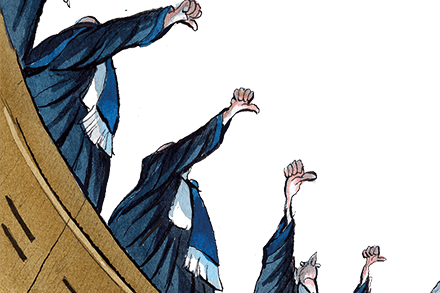
The response in Europe to J.D Vance’s speech at the Munich Security Conference last Friday was one of predictable outrage. Media outlets described it as a ‘rant’ or a ‘sermon’, and politicians and diplomats queued up to criticise the vice-president of America. Kaja Kallas, the EU's High Representative for Foreign Affairs and Security Policy, accused the Trump administration of ‘try[ing] to pick a fight with us, and we don't want to a pick a fight with our friends’. Apparently, there were ‘dry laughs’ from some of the audience when Vance talked about ‘shared’ values.

The Super Bowl spectacle is marketing genius

It’s easy to not quite get the Super Bowl. What exactly is it: a sporting event, a music show, a fashion parade for the world’s coolest pair of shades, a new version of the Chippendales with the hunks wearing tight trousers and skid lids? Or, in its latest incarnation, a chance for the world’s most frenetic lawmaker to sink his last putt in a round of golf with Tiger Woods, board Air Force One and say: "Fly me to New Orleans." Or is it a chance to watch several vast and amiable black guys bulging out of their suits and bantering away about a possible three-peat, while Trombone Shorty plays a touching version of "America the Beautiful" and an announcer calls for a moment’s silence to mark the importance of "faith, family and football"?

Super Bowl

A ‘Trump tornado’ is about to hit Europe

There is a wind of change blowing through the West. It emanates from Washington DC, where President Donald Trump continues to dash off executive orders; more than fifty by the end of last week, the highest number in a president’s first 100 days in four decades. The liberal mainstream media is rattled. The New York Times magazine ran a piece at the weekend in which it described Trump as "the leading light of a spate of illiberal leaders and parties flourishing in democracies around the world." The paper namechecked some of them: Poland, Holland, India, France, Germany, Italy, Brazil, Hungary and Russia. What unites and motivates these "illiberal" parties is their opposition to what the NYT called "liberal creep," which they regard as a civilizational threat.

Trump

A pleasant respite from the tumult in Cambridge

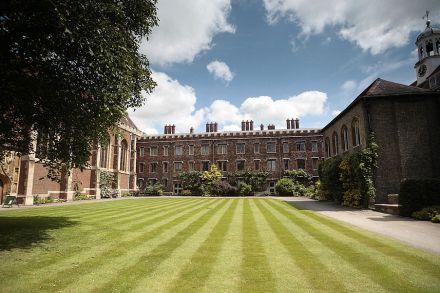
Cambridge, England Inscribed on the lid of a two-manual harpsichord in Holy Trinity Church at Hildersham in Cambridgeshire is the Latin tag Musica Donum Dei — music is a gift of God. It was a sentiment I could hardly quarrel with as I listened in the little twelfth-century church to a variety of baroque sonatas for violin, recorder, cello and harpsichord. They were expertly performed by the Azur Ensemble, which is comprised of recent graduates of the Royal College of Music. A particular standout was the French harpsichordist Apolline Khou, who has performed widely in Europe and in a solo concert for King Charles III.

Cambridge
Trump

A symbol of hope for Europe

Considering the way history has been going for the past quarter of a century, it seems not merely Panglossian but naive and sentimental to the point of bad taste to find grounds for historical optimism now. Nevertheless, positive facts ought to be recognized as well as negative, and without embarrassment. The world appears to have entered upon a new era when the author of a leader in the London Sunday Telegraph is comfortable writing: “Europe has many things to its credit — and the reconstruction of Notre-Dame stands in notable contrast to our own inability even to decide what to do with the Houses of Parliament. But if we are to retain global relevance and restore economic dynamism, it seems increasingly clear that we have more to learn from America.

Is Europe really faring better than Britain?

From our UK edition

Five years ago this week, Boris Johnson was celebrating the achievement of leaving the European Union and wondering how he might take advantage of Britain’s newfound freedoms. A virus had other ideas. Covid-19 didn’t just turn our lives upside down and cost many lives; it robbed the then government of the chance to seize the initiative and prove that Brexit was worth the pain and inevitable disruption. For frustrated anti-Brexit campaigners, the pandemic provided them with ammunition to claim that their worst predictions had been realised. Falling economic growth, rising inflation, empty supermarket shelves – all these came to be blamed on Brexit, ignoring the rather large spanner which had been thrown into the works of the global economy.

How Eastern Europe is leaving Western Europe behind

I'm in the tiny riverside town of Virpazar, in the little Balkan country of Montenegro; and under the white geisha face of a late summer moon I am warily ordering the celebrated local delicacy. It is carp — caught from the nearby, slivovitz-clear waters of Lake Skadar (biggest lake in the Balkans!). But what makes me wary is the preparation. The carp is apparently marinated, and served cold, with boiled potatoes and greens. Cold slimy fish with hot spuds and spinach? It sounds like some nightmare culinary “specialty” from the old communist bloc (of which Montenegro was once a part, within Yugoslavia). I’m veteran enough to remember a few of these. “Famous” flatbreads that came with rancid lard.

Eastern

The life and legacy of Mavis Gallant, an American in Paris

"God help the English if she ever starts on us,” remarked Jonathan Keates in a blurb for Mavis Gallant’s Paris Notebooks. Far from being the ubiquitous “love letter” to a city, the essays and reviews within revealed people and their lives as they were, not as ideals. What Keates didn’t realize was that in Gallant’s short stories, everyone, regardless of nationality or gender, was fair game for her sometimes vicious, often dryly funny, always unblinking gaze. When she died in 2014, aged ninety-one, an obituary noted her profound irritation at her critics’ focus on The Collected Stories of Mavis Gallant: “Everyone who has reviewed it so far mentions exile.

Gallant

Europe’s blind spot over anti-Semitism

From our UK edition

You would think that we Europeans might have learned a thing or two about anti-Semitism over the past century or so – and perhaps come to understand pragmatically, if nothing else, that what begins with the vicious persecution of Jews usually moves on to murdering lots of other people, too. But no. Or if we did, then it has conveniently slipped our minds, as things tend to do in these complicated times. Or perhaps we think that the persecution of the Jews we are seeing right now in Europe is of a different marque to that which began in the early 1930s in Germany. Yes, it’s sort of anti-Semitism – but it’s of a nicer kind than that instigated by that psychotic little Austrian with the performative moustache. A little more excusable.

The slippery business of catching a snake

From our UK edition

Dante’s Beach, Ravenna It is strange how events elide and create a pattern whose significance remains elusive. I had just returned from a raid under the cover of the night on a huge field near our house a mile from the sea. I had about 50kg of ripe tomatoes in plastic bags in the back of my battered old seven-seater Land Rover Defender and was wondering if, as an impoverished father of six, I could use the Thomist defence: ‘It is not theft, properly speaking, to take secretly and use another’s property in a case of extreme need: because that which he takes for the support of his life becomes his own property by reason of that need’ (Aquinas, Summa Theologica). ‘Not until you flog the Defender you can’t,’ I heard the chorus of faces in the ancient gallery chant.

Stalemate over Taiwan is the best we can hope for

From our UK edition

The United States of China, anyone? The idea that a federal China might be able to accommodate within it a relatively autonomous Taiwan is one of the more radical solutions mooted to the thorny problem of Taiwan’s status. The difficulty, of course, is that neither the Chinese Communist party nor Taiwan’s leaders would find such an outcome remotely acceptable. The CCP will not countenance a loosening of its control over mainland China; the Taiwanese, for their part, see in Hong Kong’s recent sad trajectory a vision of their own future should their politicians ever accept an offer of special status within China.

Albania has long lived in Italy’s shadow

From our UK edition

Albanians are descended from the most ancient of European peoples, the Illyrians. The country came into existence only after 1912 with the demise of Ottoman power in Europe. Its first ruler, the glorified Muslim chieftain King Zog, was hounded out by Mussolini when fascist Italy invaded in 1939. (Zog was put up in London for a while at the Ritz.) Five years later the Nazi Germans were expelled by the Albanian resistance fighter Enver Hoxha. Outwardly a Stalinist, the artful Hoxha was a Muslim-born Ottoman dandy figure who terrorised his Balkan fiefdom through retaliatory murders, purges and the trap-door disappearance of class enemies. Albania has long lived in Italy’s shadow.

How the EU turned on Ireland’s low-tax project

From our UK edition

First, the good news. The Irish government is about to receive a €13 billion windfall in the form of back taxes from tech giant Apple, after the European Court of Justice (ECJ) ruled against the company. That should pay for a good few social homes in a country that has an even bigger housing crisis than Britain’s. It could even go some way to providing universal free public healthcare (at the moment most adults have to pay something, even at public hospitals). Why should countries which have been successful at managing their finances be forced to jack up tax rates? Now the bad news. Ireland doesn’t actually want to receive the money any more than Apple wants to pay it. It has spent millions of euros fighting the European Commission (EC), which initiated the case.

My teenage Interrailing adventures

From our UK edition

Dante’s Beach, Ravenna In my life I have nearly killed myself mainly with cigarettes and alcohol and dangerous journeys into the night. I have experienced what awaits you in those places but it is not the sort of thing you can easily talk about or even put into words. It is perhaps too secret. I am also usually skint, so all in all I do not exactly fit the bill as a solid and reliable father figure who commands respect. Yet I have six children, aged nine to 21, who live with me and their Italian mother, Carla, and I try to do my best. We have been talking about whether we would allow two of our daughters Magdalena (16) and Rita (15) to travel round Europe alone for a month on Interrail tickets.

What’s behind Starmer’s ‘reset’ with Europe?

From our UK edition

16 min listen

Keir Starmer has been in Germany today visiting Chancellor Olaf Scholz, before heading to Paris to meet President Macron. This is part of his plan to 'reset' relations with Europe - but how close does he want to get to the EU? And, given Brexit wounds are still raw, what's achievable?  James Heale is joined by Katy Balls and Sophia Gaston, head of the foreign policy unit at Policy Exchange to discuss. Produced by Megan McElroy and Patrick Gibbons.