Get ready to flee socialist America



All the latest analysis and commentary







The latest magazine
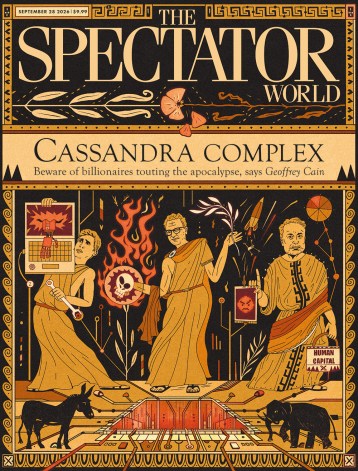
Beware of billionaires touting the apocalypse
Two recent stories sum up the state of Donald Trump’s presidency and underscore the growing gap between him and his working-class support base. First, it emerged that Donald Trump Jr. had his wedding paid for by Umar Kremlev, a Russian oligarch who is also a friend of Vladimir Putin. Kremlev is believed to have stumped up a good proportion of the costs, which included hiring a $100,000-a-night island in the Bahamas as well as a $70,000 firework display. While Trump’s son is not a government employee and therefore not subject to the rules on political gifts, alarm bells ought surely to have been ringing.
Two recent stories sum up the state of Donald Trump’s presidency and underscore the growing gap between him and his working-class support base. First, it emerged that Donald Trump Jr. had his wedding paid for by Umar Kremlev, a Russian oligarch who is also a friend of Vladimir Putin. Kremlev is believed to have stumped up a good proportion of the costs, which included hiring a $100,000-a-night island in the Bahamas as well as a $70,000 firework display. While Trump’s son is not a government employee and therefore not subject to the rules on political gifts, alarm bells ought surely to have been ringing.
The good, the bad and the ugly in books, exhibitions, cinema, TV, dance, music, podcasts and theater.
The right has its own unwritten rules of political correctness. There are forbidden words, and while they might not be met with censorship, they do elicit eye rolls. One proscribed term is “misogyny.” It also happens to be the most accurate description of the right’s mood and trajectory these days. The right’s response to this trend has been to downplay it, or even deny that it is happening at all. But ignoring it will not make it go away. Political discourse often operates like a ratchet: the intensity around a given topic is constantly turned up, but the mechanism is not designed to dial back.





Cartoon
Cartoon
Cartoon