Peter Wood

Peter Wood is the President of the National Association of Scholars. He is author of 1620: A Critical Response to the 1619 Project and A Bee in the Mouth: Anger in America Now.

Mamdani vs monarchy

Mayor Zohran Mamdani of New York has faced what others might consider awkward moments in office, as when two Islamists, inspired by ISIS, tried to immolate anti-Muslim protesters outside Gracie Mansion. He passed it off with aplomb by saying the two bomb-carrying individuals were “suspected of coming here to commit an act of terrorism.” In a later statement he acknowledged that the two men had proclaimed “their allegiance to ISIS.”  That counts for boldness on Mamdani’s part. He is considerably more comfortable denouncing Israel, defending the “globalize the intifada” slogan and lamenting anti-Muslim bigotry, than he is in acknowledging New York’s history of terror attacks by Islamists.

zohran mamdani

Every unhappy generation is unhappy in its own way

The Kids Are All Right was a 2010 movie that attempted to reassure audiences that the teenage children of a lesbian couple are psychologically just fine. The movie is largely forgotten but the title has lingered, often as a springboard for observers who say that today’s kids are not, in fact, all right. The diagnoses of what ails the current generation of young folk are many and various. They are the products of infantilization, feminization, iPhones, cancel culture, digitalization, narcissism, social-justice intoxication and nihilism – among other maladies.

The dangerous rise of ‘Chinese Bezique’

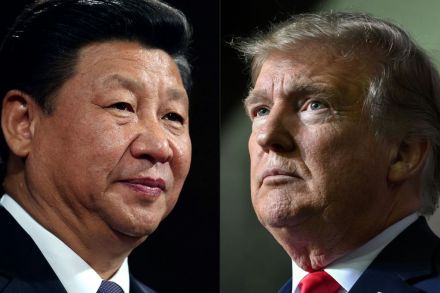
In one of Joseph Conrad's early stories he mentions an old seaman who delighted in a card game he called "Chinese Bezique."  Captain Lingard considered the game as "a remarkable product of Chinese genius – a race for which he had an unaccountable liking and admiration."  This passage somehow popped into mind as I read the New York Times expose, "How China Influences Elections in America's Biggest City." The article has nothing to do with card games – or Borneo, where Conrad's novel is set-but it exemplifies the same odd combination of admiration and disdain. The four authors of the Times' article are clearly impressed with the elaborate efforts of the Chinese consulate in New York City to recruit the City's Chinese social clubs into instruments of Beijing's foreign policy.

The education of Zohran Mamdani

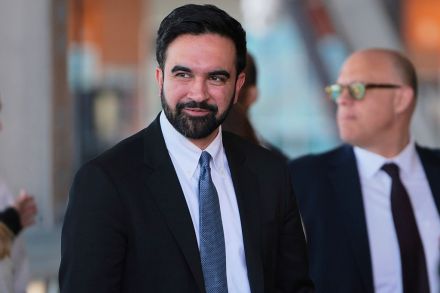
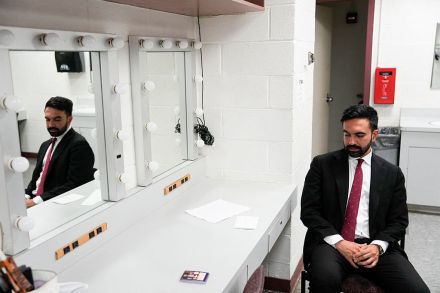
Zohran Kwame Mamdani, having secured the Democratic nomination for New York City mayor, is in the national spotlight. At the age of 33, he ran as a Democratic Socialist having previously held elected office as a New York State Assemblyman. He has no record of significant achievement in other walks of life. He composed and produced rap music, but to no acclaim. The National Association of Scholars (NAS) is a non-profit organization (501(c) 3) that does not endorse political candidates or parties, and in this respect we take no position on Mr. Mamdani’s candidacy. That matter will be decided by the voters of New York City this November. We do, however, take special interest in Mr. Mamdani’s educational background.

Zohran

How Harvard lost America

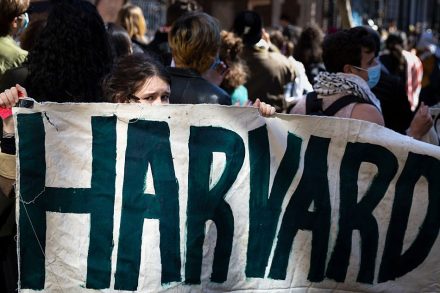
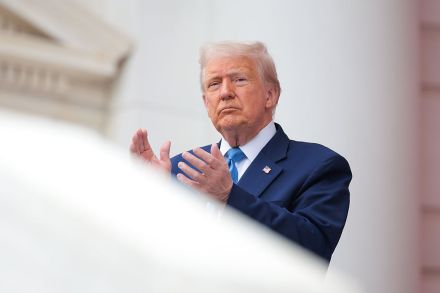
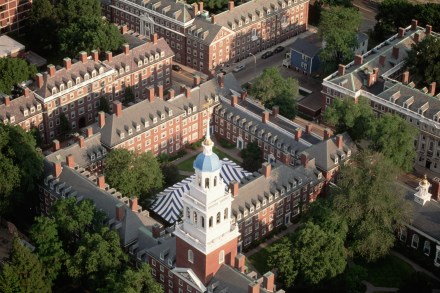
President Trump’s proclamation, “Enhancing National Security by Addressing Risks at Harvard University,” pays a compliment to that crossroads of brilliance and turbidity. It treats Harvard as a serious educational institution, and one that in its misbehavior “presents an unacceptable risk to our Nation’s security.”    Trump was not referring to the risk of immersing some of America’s brightest and most ambitious students in a toxic soup of anti-Semitism, DEI and disdain for our republic. Nor were the “risks” he had in mind “everybody-gets-an-A" grade inflation or a curriculum that wastes the students’ intellectual talents on courses that sound more like entertainment (e.g.

harvard

The fight to make science great again

If one were looking for dismal assessments of the Trump administration’s contributions to the vitality of American intellectual inquiry, the editorial eructations of Holden Thorp would likely be at the top of the list.   Thorp is the editor-in-chief of Science, the weekly journal of American Association for the Advancement of Science (AAAS). This makes him one of the most influential figures in the academy and in American science as a whole. Few weeks go by without an editorial from Thorp denouncing the havoc wrought by Trump. The May 8 issue is mildly titled, “The New Reality for American Academe,” but the mildness ends there.

science

Anna Peterson’s New York Times article has restored my faith

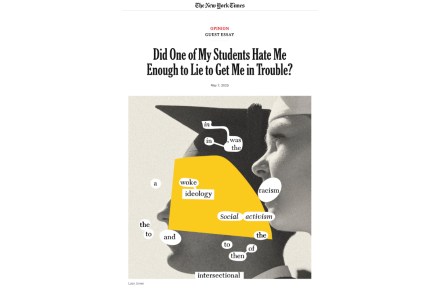
Are contemporary faculty members at risk from false accusations made by supporters of Governor DeSantis? Or more generally President Trump? Has a crackdown begun that instills fear into the hearts of classroom teachers? Is there an epidemic of self-censorship that has gripped the campus?  Anna Peterson, professor of religion at the University of Florida, believes all this is true.  She presented her testimony in a New York Times guest essay last Sunday, “Did One of My Students Hate Me Enough to Lie to Get Me in Trouble?” I am among those naturally disposed to doubt pretty much everything in the Times that has a political slant – and few of its articles don’t. Nonetheless, I’m an assiduous reader of the newspaper.

times

The unforgiving history of student loans

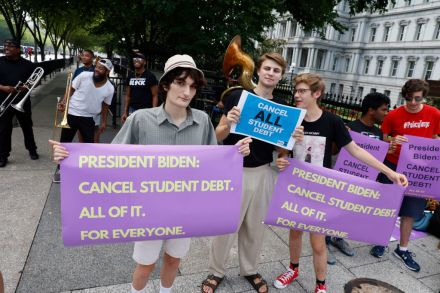
Republicans in the House are considering a bill to make major changes in federal student loans for college, and President Trump is floating the idea of making colleges responsible for borrowers who fail to repay. For decades student loans and their repayment are never far the center of controversy, but it wasn’t always that way. I grew up in the era before massive student debt. Student loans were available in 1971 when I went off to college, but they didn’t dominate the terrain like a Tyrannosaurus rex. They were more like Barney, the joyful purple denizen of PBS, who had a ferocious appetite for public funds but had not yet evolved into the carnivore who preys on the livelihoods of college graduates.   But the student-loan monster had already been born.

student loans

The Trump administration is giving us excellence, not equity

Americans are not a naturally gloomy people. We don’t necessarily expect things to go our way, but when they don’t, we can laugh it off. In my part of Vermont there’s a place called Hateful Hill, for example, so-named by stagecoach drivers who had a tough time with the steep road. But Hateful Hill is also a beautiful elevation. Today, even those who don’t “get” Donald Trump need to start seeing the upside. He doesn’t always get his way, which is probably a good thing, but he is leading a long-overdue revival of the American spirit and allowing for the return of optimism and the pursuit of excellence.

Trump

What the Singer Sewing Machine teaches us about student loan repayment

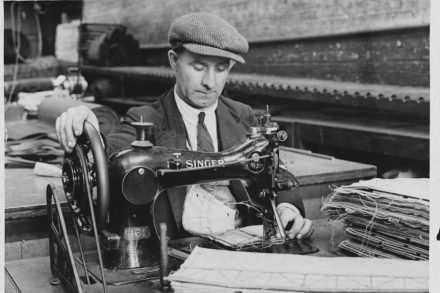
The Singer Sewing Machine Company is credited – that’s the right word – with popularizing the idea of the installment plan. Starting in 1856, a customer could buy a sewing machine for a very modest down payment and a rather lengthy commitment to further payments. Isaac Singer copied the idea from a piano company, but he turned it into a model of aggressive marketing to the average household. His “dollar down, dollar a week” slogan launched the era of consumer credit on a mass scale, and helped to marry mass production of durable goods to middle-class household economy. The idea spread quickly. By early in the 20th century, people could buy “washing machines, refrigerators, phonographs and radios” on the installment plan. The idea faced some resistance too.

singer sewing machine student loan

Harvard against America

This is drumming season.  That’s the time of year when the woodpeckers stake out their territories by tapping out tattoos on hollow trees.  Road signs or “no trespassing” edicts make an even more impressive racket.  I come to Vermont to get away from Midtown Manhattan’s horns and sirens – but this time of year, it’s just a visit to the percussion section.  But the real racket isn’t from the birds declaring their sovereignty over the woods.  It is from Harvard declaring its sovereignty over American higher education. In a letter dated April 14, the principals of two Washington law firms wrote a brief letter to three officials in the Trump administration telling them they need not worry about antisemitism at Harvard.

harvard

Trump vs Harvard

From our UK edition

23 min listen

Freddy Gray speaks to Peter Wood who is the President of the National Association of Scholars about Trump's decision to block Harvard funding after the university denied the President's DEI demands.

Luigi Mangione’s bad education

Luigi Mangione is officially the “suspect” in the murder of UnitedHealthcare CEO Brian Thompson, but he is plainly the culprit, and public discussion has moved on to his motives. Why would a young man possessed of intellectual gifts, friends, family, good looks, a winning personality and, apparently, lots of money, gun down a man he had never met? This isn’t the kind of question my organization, the National Association of Scholars, normally takes up. We concern ourselves more with academic standards and questions of state and federal policy. But I’ve been nudged several times with questions about Luigi’s academic background. This has two parts: Luigi’s high school and Luigi’s college.

Minouche Shafik and the great tragicomedy of Diversity in our time

Minouche Shafik has reigned as president of Columbia University. Culture wars, like the kind involving actual armies, have casualties. Shafik is the fourth Ivy League president to step down in the last nine months. She was proceeded by Liz Magill at the University of Pennsylvania and Claudine Gay at Harvard. Magill and Gay were casualties of their hapless testimony before the House Education and Workforce Committee hearing on December 5 and, in Gay’s case, the subsequent revelations about her serial plagiarism. She was also proceeded by Martha Pollack, president of Cornell University, who hung up her mortar board in June, without an assist from the House committee but citing the “enormous, unexpected challenges” of having to deal with antisemitism and Islamophobia.

Newsom is better than Biden

From our UK edition

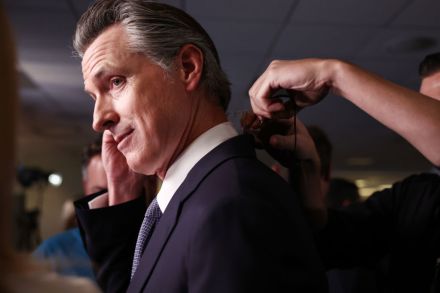
I have on the desk two yo-yos. One is from the brand Duncan – the ‘Imperial’ model. The other is from the brand Yomega – the ‘Fireball’. Which is better?  The Imperial is the top-of-the-line Duncan model, a classic, that gave warrant to company’s 1960s slogan: ‘If it isn’t a Duncan, it isn’t a yo-yo’. The Imperial is the vintage Rolls Royce of yo-yos. It’s elegant but not for the racecourse. The Fireball, introduced in the 1990s, was part of the new generation of ‘transaxle’ yoyos, which allow for sustained spin and complex tricks. It is a sports car – though since superseded by much higher performance models. While you weigh that choice, let’s give some thought to the situation of Governor Newsom, governor of California.

How NPR became a national laughing stock

From our UK edition

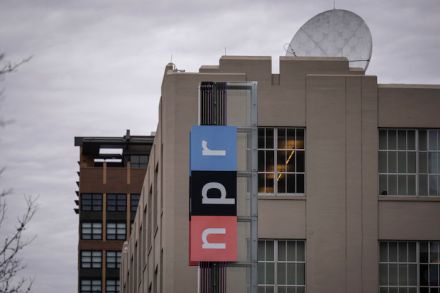
The smug world of public radio in the United States received a smart slap in the face last week. It was delivered by Uri Berliner, a long-time NPR reporter, who went public with his inside story of how NPR cooks the news. NPR responded by suspending him and then securing his resignation. As this unfolded, NPR’s recently appointed president, Katherine Maher, faced ridicule for her own past statements. National Public Radio, NPR, is a cousin (or perhaps a grandchild) of the BBC. It was created in 1970, just shy of 50 years after the Beeb started sending its signals into the stratosphere.

The fight for civilization in higher education

The idea that Western civilization ushered in an age of oppression, cultural destruction, environmental degradation and all manner of human exploitation, is bittersweet. I don’t mean that it tastes like coffee or dark chocolate. I mean bittersweet the vine, Celastrus orbiculatus, with the colorful orange-red berries. This kind of bittersweet grows at a phenomenal rate, ascending into the canopy and strangling trees. If you drive north out of New York City, you will pass endless miles of arboreal carnage. Tens of thousands of roadside trees are draped in the deadly vine. It is an invasive Asian species that, once established, is impossible to eradicate. And while its fall berries are attractive and make for good floral arrays, they are inedible.

civilization higher education

Claudine Gay is gone – but Harvard’s radical clerisy remain

From our UK edition

In the end, Barack Obama, Penny Pritzker, 700-some members of the faculty, the mighty voice of the Harvard Crimson and the entire nomenclature of the Diversity, Equality and Inclusion movement could not save her from herself. Claudine Gay resigned as president of Harvard University after a month of relentless criticism. In principle, her feckless performance on 5 December before the House of Representatives' committee on education and the workforce should have been sufficient to persuade Harvard’s board (which aristocratically calls itself the Harvard Corporation) to cut her loose. But it took wave after wave of revelations about alleged Gay’s plagiarism to break the hauteur of Ms. Pritzker and the ten other members of that Corporation.

Why plagiarism matters

Harvard president Claudine Gay’s troubling history of appropriating other people’s idea and words and passing them off as her own has a well-worn name: plagiarism. Every college and university in the United States prohibits plagiarism. Most present students with explicit rules against it and lay out the possibility of drastic punishments, such as failing a course and, depending on the severity of the offense, expulsion from the college. Typically, instructors in freshman English include lessons on the proper ways to quote, paraphrase and cite sources.  Why? What is so wrong with plagiarism? We don’t punish actors for reciting their lines and failing to add, “Mr. William Shakespeare wrote that.

plagiarism

The perils of Harvard and Claudine Gay

History sometimes rhymes. You can’t expect things to work out the same way every time. But sometimes events are so nearly opposite each other it is as though they rhyme, like hired and fired, acclaim and blame, or adore and deplore. The names “Claudine Gay” and “Scott Gerber” don’t have that phonetic somersault, but they rhyme the other way: nearly simultaneous events that are perfect opposites.  Before I get to that, let me return to, “History sometimes rhymes.” Many readers will recognize that as a paltry paraphrase of Mark Twain’s comment, “History doesn’t repeat itself, but sometimes it rhymes.” Those readers would be wrong because Twain never said this.